
Finding the Perfect Sleeper Sofa for Small Spaces
Furnishing a small room can feel like solving a puzzle — but a well-chosen sleeper sofa for small spaces usually solves two problems at once. Today’s compact sleepers aren’t the bulky, awkward pull-outs many people remember. The better modern designs look like real sofas, convert smoothly, and deliver a sleep surface that’s far more guest-friendly than the old “metal bar” era.
The Secret to Maximizing Your Small Space
If you’ve ever stared at a studio or one-bedroom and wondered how you’ll fit both a sofa and a bed, you’re not alone. The trick isn’t cramming in more furniture — it’s choosing pieces that do more without taking over the room.
That’s where modern sleeper sofas come in. The right one gives you comfortable seating during the day and a bed at night, without making the room feel like a storage unit. This guide walks through the practical stuff that makes or breaks a purchase: measuring, mechanism types, compact widths, and mattress options that actually feel decent.
Why a Compact Sleeper Is Your Best Ally
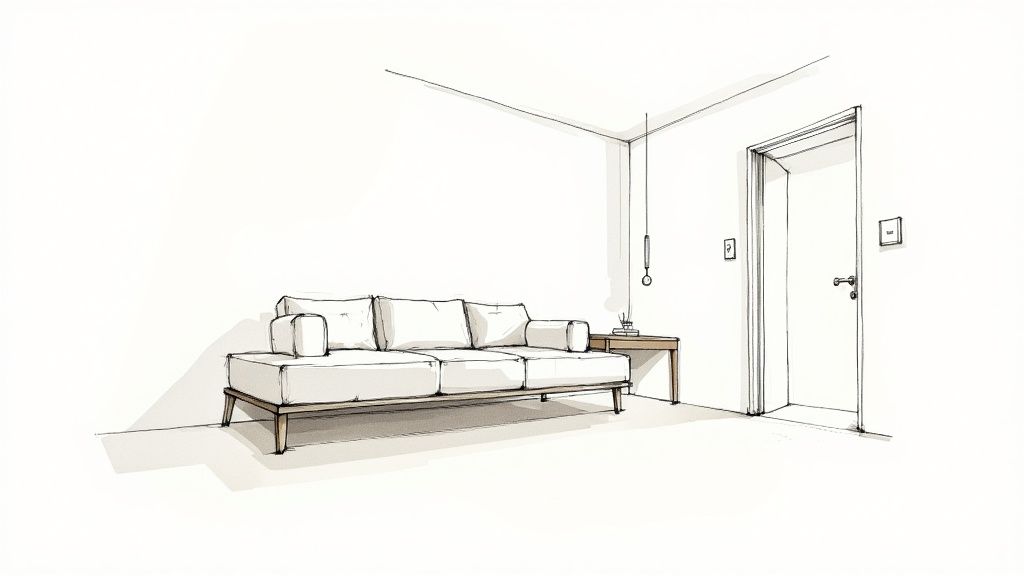
For studios, one-bedrooms, or a home office that needs to double as a guest room, a compact sleeper sofa buys you flexibility. You get a place to lounge, read, or work on a laptop — and when someone stays over, you’re not dragging out an air mattress or giving up your own bed.
Here’s what we’ll cover:
- Smart measuring techniques: How to confirm it fits as a sofa and as a bed — plus how to avoid delivery headaches.
- Mechanisms made for tight layouts: Pull-outs vs click-clack vs “zero-wall” designs (and why it matters).
- Ultra-compact standouts: What to look for in sleepers under 59 inches wide.
The right sleeper doesn’t just save space — it changes how you use the room. A single-use corner becomes a guest setup, a studio feels more organized, and you stop rearranging furniture every time plans change.
More Than Just a Sofa Bed
A sleeper is often the anchor piece in a small room, which means the supporting cast matters too. In a studio layout, pairing your sleeper with room dividers can help create a visual split between “living” and “sleeping” zones — even if the room is one open rectangle. That bit of separation makes the space feel more intentional (and a lot less like your bed is always on display).
How to Measure Your Space for a Perfect Fit
Before you fall for a fabric swatch or a silhouette, measure. Not just the wall where the sofa will sit — measure the room like you’re planning a move-in route.
Map Your Sofa and Bed Dimensions
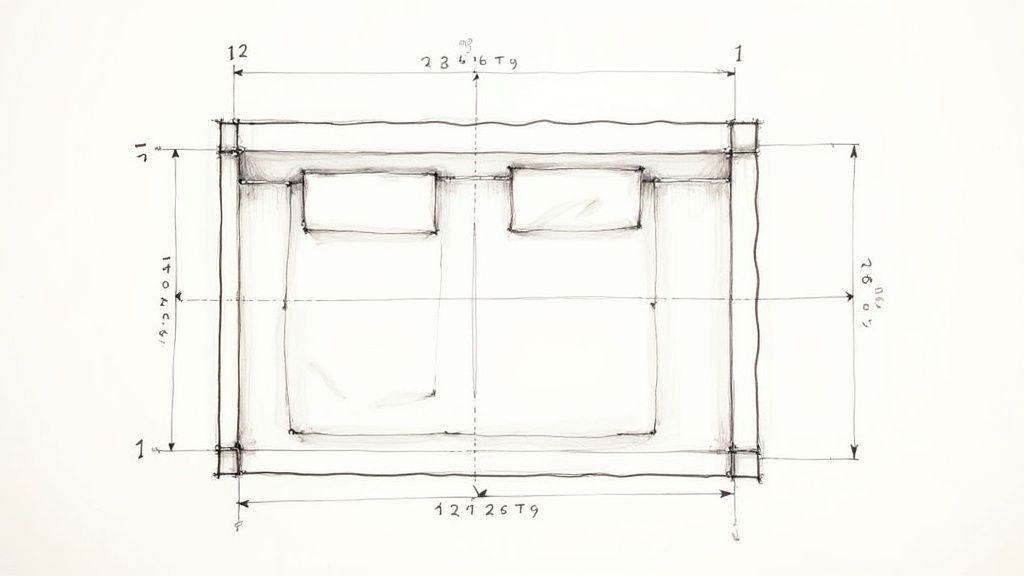
Start with the “sofa footprint”: the width and depth of the spot where it will live. Then check the “open” dimensions (as a bed). Don’t assume you’ll “make it work” — use painter’s tape to outline the bed size on the floor. That one step will tell you everything you need to know about traffic flow.
Aim for 24–30 inches of clearance around the bed if possible. If you’re tighter than that, it can still work — but you’ll want a mechanism that opens efficiently and doesn’t demand a huge runway.
For a quick reference on standard footprints, use the sleeper sofa sizing charts.
Think Like a Delivery Professional
A sleeper that fits your room can still fail at the front door. Measure:
- Doorways: Clear width and height (account for handles and trim).
- Hallways and corners: Especially the narrowest point and any turn you need to make.
- Stairwells: Width, headroom, and landing space.
- Elevators: Door opening and interior dimensions.
If a model ships in multiple pieces or has removable arms/backs, that can be the difference between “delivered” and “returned.”
Plan for Functionality and Flow
Once it’s in place, picture your day-to-day: where will you put a drink, a laptop, or the bedding? If you need to move a coffee table every single night, you’ll feel it quickly. That’s why mechanism choice matters so much in small rooms.
Understanding Sleeper Sofa Mechanisms
The mechanism is the sleeper’s personality. It affects how much clearance you need, how easy it is to convert, and whether your sofa can sit tight against the wall.
The Traditional Pull-Out Method
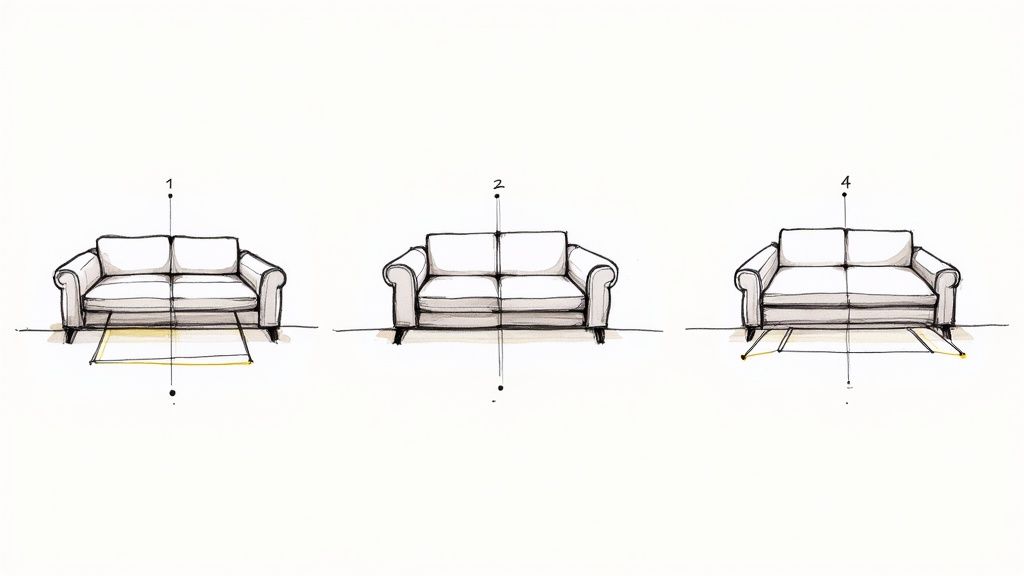
This is the classic: remove cushions, pull out a folded frame and mattress. It’s familiar — but in a small space it can be annoying because it usually needs a clear path in front to open fully. If you’ll use it often, ask yourself if you’re okay shifting furniture nightly.
The Simple Click-Clack Mechanism
Often seen on convertible sofas and futons, the back clicks and lays down flat to form a sleeping surface. It typically needs less clearance in front than a pull-out, but it can require some room behind the sofa to recline.
Convertible “Zero-Wall” Designs
These are built for apartments. The seat slides forward first, then the back folds down — which means the sofa can sit close to the wall and still convert cleanly.
If you’re short on room, “zero-wall” or slide-forward designs are usually the most forgiving. You’re not dragging the whole sofa forward every time someone stays over.
A strong example is the Twist Loveseat Sleeper. Its compact width and conversion style make it a practical option for tight layouts, and it’s part of our broader lineup of convertible sofa beds.
Sleeper Sofa Mechanism Comparison for Small Spaces
| Mechanism Type | Typical Width | Ease of Conversion | Best For |
|---|---|---|---|
| Traditional Pull-Out | 68–88 inches | Moderate: Cushions off, frame pulls out | Rooms with open floor space in front |
| Click-Clack | 65–75 inches | Easy: Back lays down flat | Narrow rooms; may need some wall clearance |
| Convertible (Zero Wall) | 55–70 inches | Very Easy: Slides/folds with minimal fuss | The smallest spaces; best against a wall |
Spotlight on Sleepers Under 59 Inches
When you’re working with a truly tight spot — micro-apartment, narrow studio, or a small office — width becomes the dealbreaker. Sleepers under 59 inches wide are designed to solve that exact problem. These aren’t just “smaller sofas.” They’re usually built with space-saving decisions baked in: armless profiles, slim arms, and conversion systems that don’t demand a big footprint.
Case Study: The Twist Loveseat Sleeper
The Twist Loveseat Sleeper is a standout in this category. At 55 inches wide, it fits into spots where a standard loveseat won’t. The armless design also helps visually — it doesn’t “block” the room the way chunky arms can.
Its conversion style is built to be practical in tight layouts. Instead of needing a long runway, it’s designed to transform without forcing you to redesign the room every time it becomes a bed.
In small rooms, the best sleeper is the one you’ll actually use. A compact width and an easy conversion style matter more than almost any other spec.
Exploring Other Ultra-Compact Options
For more choices in the same footprint range, browse convertible sleepers under 59 inches wide. You’ll notice a few patterns that make these models work so well:
- Armless or slender arm designs: The quickest way to save inches.
- Integrated storage (on select models): Helpful if you need a place for bedding in a studio.
- Supportive foam sleep surfaces: Less bulk than an innerspring pull-out, with more consistent comfort.
Choosing the Right Mattress and Materials
A sleeper sofa needs to feel good twice: as a couch and as a bed. In small spaces, the mattress and upholstery do a lot of heavy lifting — comfort, durability, and day-to-day livability.
Decoding Your Mattress Options
Many modern compact sleepers rely on foam-based sleep surfaces for a simple reason: they’re lighter, quieter, and easier to support in a smaller frame.
- High-density foam: A reliable option that stays supportive and holds up well for sitting and sleeping.
- Memory foam: Adds contouring and pressure relief, especially helpful for side sleepers or anyone who finds futons too firm.
In a compact sleeper, the mattress isn’t an afterthought — it often is the seat. If the cushions feel flimsy as a sofa, they won’t magically feel better at night.
If you want a deeper primer on firmness, materials, and what “supportive” actually means, our guide to choosing the right futon mattresses covers many of the same comfort basics that apply to convertible sleepers.
Selecting Upholstery That Fits Real Life
Upholstery isn’t just style — it determines how your sleeper holds up to daily use in a small room where it’s constantly being sat on, leaned against, and converted.
- Performance fabrics: Designed for easier cleanup and better resistance to stains and wear.
- Woven polyester blends: A practical middle ground — durable, flexible, and available in many textures.
- Leatherette (faux leather): Easy to wipe clean and visually sleek, especially in modern apartments.
Styling Your Sleeper Sofa in a Small Room
A sleeper sofa for small spaces is a functional anchor — but with the right styling, it won’t look like you designed the room “around a bed.” A few layout decisions can make the whole space feel larger and more intentional.
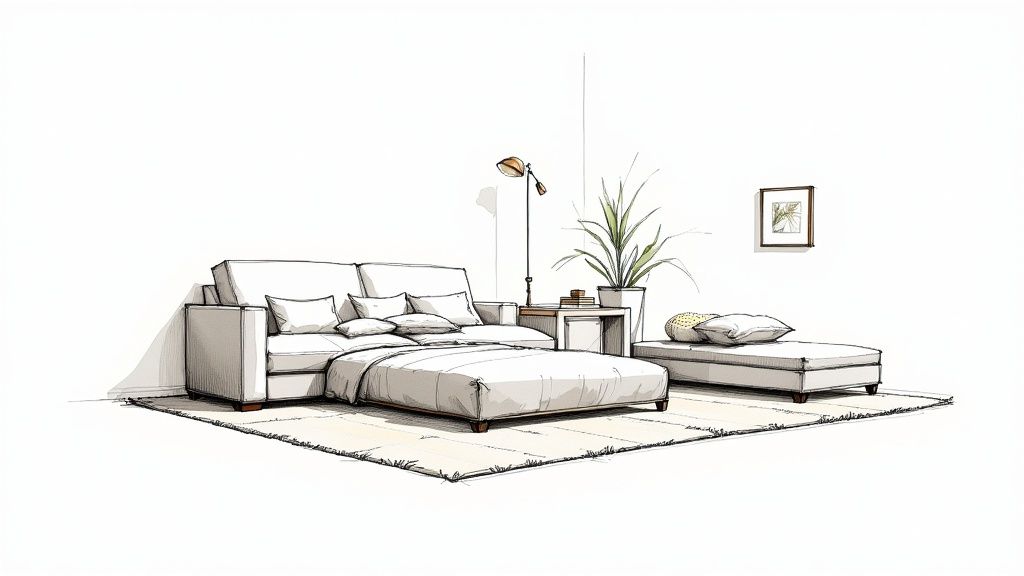
Create Distinct Zones in a Studio
- Anchor with an area rug: Even a small rug under the front legs of the sofa helps define a “living zone.”
- Use lighting to signal function: A floor lamp by the sofa reads as a lounge area; a separate lamp near where the bed opens keeps the room from feeling one-note.
- Float the sofa when possible: If the layout allows, floating a sleeper can create a natural division and a better walkway — especially useful in long, narrow rooms.
Pair with Multi-Functional Companions
In small spaces, the best setups are the ones where every supporting piece earns its footprint.
Storage ottomans and slim C-tables are two of the easiest wins. An ottoman can hold bedding and double as a coffee table. A C-table can slide over a cushion for laptop time, then tuck away when guests arrive.
Make It Look Like a Sofa (Not a Bed in Disguise)
- Throw pillows: Mix sizes and textures to make the sofa look finished and intentional.
- A single good throw: Adds warmth and makes the space feel lived-in without clutter.
- Fast-stow bedding: Choose bedding that folds small enough to store neatly — either in a closet or in storage furniture nearby.
Frequently Asked Questions
Are Compact Sleeper Sofas Comfortable for Daily Use?
They can be — as long as you prioritize the right construction. Look for supportive foam options (high-density foam or memory foam), a sturdy frame, and a conversion style you won’t dread using. The most common “daily use” mistake is buying a sleeper that’s compact, but built like a temporary guest solution.
How Do I Get a Sleeper Sofa into a Small Apartment?
Measure the delivery path first: doorways, hallways, corners, stairs, and elevators. Then compare those numbers to the boxed dimensions (not just the sofa dimensions). If you’re working with tight turns, models with removable backs or arms can make delivery far easier.
Can I Find a Stylish Sleeper That Doesn’t Look Like a Sleeper?
Yes. Many modern sleepers are designed to look like stationary sofas first — clean lines, better upholstery, hidden mechanisms. The bed function should feel like a bonus, not the whole personality of the piece.
For a compact example, the Twist Loveseat Sleeper keeps a clean profile while staying extremely small-space friendly. You can also explore similar footprints in our under 59-inch sleepers collection.
Ready to find a sleeper that fits your layout and your day-to-day routine? Explore our convertible sofa beds — including compact sleepers designed specifically for small rooms and apartments.