Folding Beds in Cabinets: Your Guide to Saving Space
When you’re tight on space but refuse to compromise on comfort, a folding bed in a cabinet is your secret weapon. These aren’t your grandpa’s clunky wall beds. Today’s designs, from sleek freestanding Murphy cabinet beds to fully integrated systems like wall beds with piers, hide a real mattress inside a beautiful piece of furniture. It’s the perfect marriage of style and function, giving you back your floor space without asking you to sacrifice a good night’s sleep.
Reclaim Your Space with Cabinet Beds
Are you staring at a room that needs to be both a productive home office by day and a welcoming guest suite by night? You’re not alone. This is the modern living puzzle, and it demands a solution that doesn’t just save space—it completely transforms it. Forget those flimsy cots or lumpy sofa beds. High-quality, stylish folding beds in cabinets let you hide a real, comfortable bed in plain sight.
This dual-functionality is the key to unlocking a room’s full potential. It means you get back all that valuable square footage for your daily life without thinking twice when friends or family need a place to stay. Suddenly, any room can do double duty.
The Rise of Smart, Space-Saving Furniture
The move toward adaptable furniture isn’t just a fleeting trend; it’s a smart response to how we live now. The folding furniture market, which includes both wall beds and cabinet beds, was valued at around USD 4.42 billion and is expected to hit USD 7.61 billion by 2030. That’s a huge jump, and it shows just how much people in cities and smaller homes are looking for clever ways to make their space work harder.
This cabinet bed, for example, blends right into the room’s decor, looking like any other piece of furniture until it’s time to sleep.
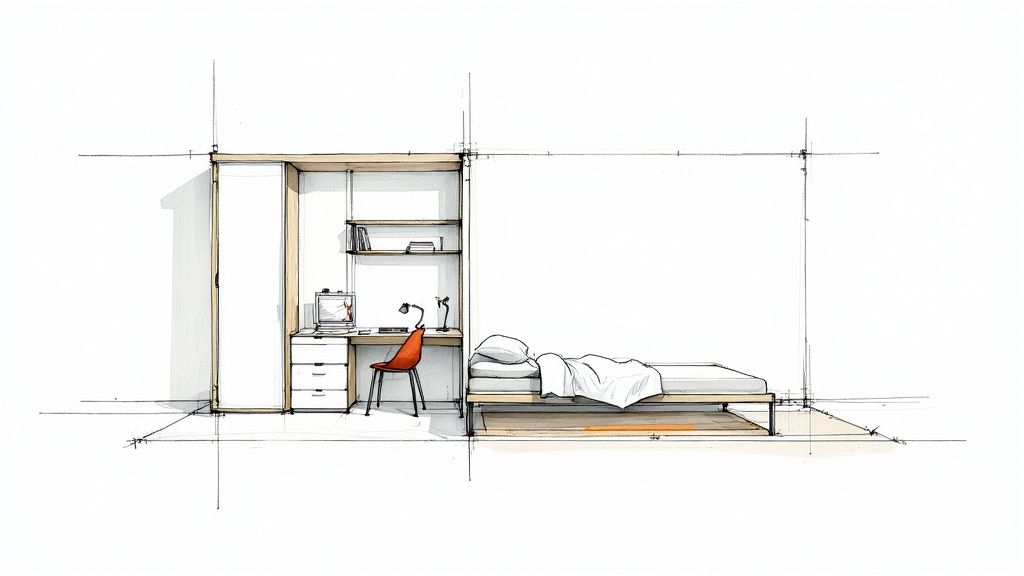
As you can see, the unit works perfectly as a stylish console or media stand during the day, making it a genuinely practical addition to any multi-purpose room.
The core idea behind a cabinet bed is efficiency without compromise. You get back an entire room’s worth of usable space while ensuring guests have a genuinely restful night’s sleep on a proper mattress.
Maximizing Your Home’s Versatility
Adding a cabinet bed is a great first step, but it’s just one piece of the puzzle. Digging into broader space optimization strategies can really amplify the benefits, making your cabinet bed even more effective in a compact home.
You can also get creative with how you define different zones within a single room. For instance, our guide on how to use room dividers can show you how to visually separate your workspace from your sleeping area, creating an environment that feels more organized, intentional, and peaceful.
Decoding Your Options: Cabinet Beds vs. Wall Beds
Not all hidden beds are created equal. When you start exploring folding beds in cabinets, you’ll quickly find two main players: the freestanding Murphy cabinet bed and the classic wall bed, often enhanced with storage piers. Both are brilliant at hiding a bed in plain sight, but they go about it in completely different ways, each with its own strengths. Understanding the distinction is the key to picking the right one for your home.
The Clever Freestanding Cabinet Bed
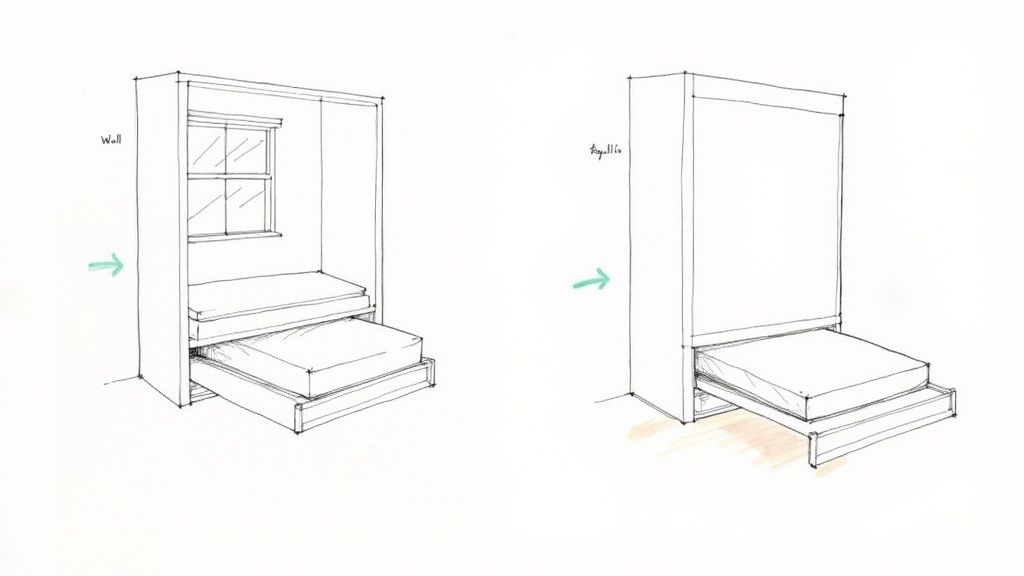
Think of a Murphy cabinet bed (often called a chest bed) as the ultimate master of disguise. When it’s closed up, it just looks like a handsome, low-profile credenza or sideboard—a piece of furniture you’d be happy to have in any room.
The magic is that it requires absolutely no wall mounting. It’s a completely freestanding unit. To open it, you just unlatch the top and glide the front panel forward, which unfolds a sturdy base for the mattress. The mattress itself is usually a tri-fold memory foam pad designed to tuck away perfectly inside.
This design makes it incredibly versatile. Its low height means you can place it under a window or a piece of art without blocking anything. You could even use it as a TV stand. And because it’s not permanently attached to the wall, it’s a perfect solution for renters or anyone who likes to rearrange their furniture.
The Integrated Wall Bed System
A traditional wall bed, on the other hand, is more of an architectural solution. It’s designed to become a seamless part of the room, storing a full-size mattress vertically inside a tall cabinet. For safety and stability, these units must be securely anchored to wall studs.
This built-in nature is their biggest advantage. They can be flanked by matching piers—like bookcases, wardrobes, or desks—to create a complete, custom look that truly maximizes your floor space and storage. To see just how customizable these can be, check out the different wall beds with piers available and imagine how they could transform a room.
A wall bed essentially “borrows” vertical space to free up horizontal floor space. When folded away, it leaves almost no footprint, making it feel as if the bed simply disappears into the wall itself.
Cabinet Beds vs. Wall Beds: A Head-to-Head Comparison
So, which one is right for you? The choice often boils down to a few key factors: your installation comfort level, your room’s layout, and the features you need. This table breaks down the essential differences to help make your decision a little clearer.
| Feature | Murphy Cabinet Bed (Chest Bed) | Traditional Wall Bed |
|---|---|---|
| Installation | Freestanding; no wall mounting required. | Must be securely anchored to wall studs. |
| Footprint | Takes up floor space like a console table when closed. | Minimal floor footprint when closed; uses vertical space. |
| Placement | Highly flexible; can be placed under windows or moved easily. | Fixed placement; requires sufficient wall space and ceiling height. |
| Mattress | Typically uses a folding foam mattress (up to 6 inches). | Accommodates a standard mattress (often up to 11 inches). |
| Ideal Use Case | Rooms with low ceilings, rental properties, flexible spaces. | Permanent installations, dedicated guest rooms, home offices. |
Ultimately, both are fantastic space-saving solutions, but they serve slightly different needs. If you need flexibility and want to avoid drilling into walls, the cabinet bed is your go-to. If you want a fully integrated system that makes a bed vanish, the wall bed is unmatched.
A Note on Other Convertible Concepts
While cabinet and wall beds are the premium tier of space-saving sleep solutions, it’s worth knowing the other options. Sofa pull-out sleepers are common, but they often sacrifice comfort with thin mattresses and clunky support bars. More basic solutions like budget folding beds or roll-away cots offer portability but lack the style and permanence of real furniture. Even simpler concepts like fold-away tatami mats provide a sleeping surface but offer minimal support.
In the end, folding beds in cabinets—whether it’s a Murphy chest bed or a full wall unit—stand apart by offering a real bed experience. They don’t just give you a place to sleep; they enhance your room’s decor and day-to-day function, delivering a solution that’s both elegant and incredibly practical.
Finding the Perfect Fit: Space and Size Planning
Choosing the right folding bed is a game of inches. More than just style, a successful setup depends on precise measurements and a real-world understanding of how the bed will actually function in your room. This is truly a “measure twice, buy once” situation, making sure your new furniture fits perfectly from day one.
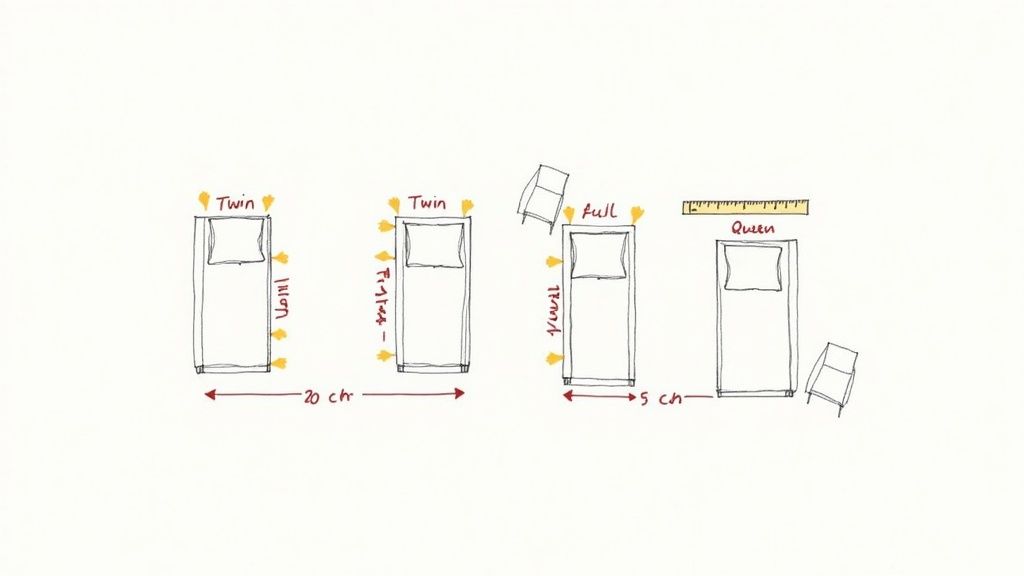
Before you get too attached to a specific model, grab a tape measure. It’s not enough to know if the closed cabinet will fit against the wall—you have to account for its full, extended footprint. I always tell people to imagine taping an outline of the open bed on their floor. It’s a simple trick, but it gives you a crystal-clear visual of exactly how much real estate it will occupy.
Measuring for Clearance and Functionality
Think about the bed’s projection into the room. When it’s fully open, will it block a doorway or make a closet inaccessible? You’ll want to leave a comfortable walkway of at least 30 inches around the sides of the open bed so people can move around easily without squeezing by.
Here are the key measurements to nail down before you decide:
- Cabinet Dimensions: Note the height, width, and depth of the unit when it’s closed. This is what determines where it can even go. A low-profile chest bed, for instance, can slide right under a window, while a tall wall bed needs a solid, unobstructed wall.
- Open Bed Projection: This is the most critical measurement of all. It tells you exactly how far the bed will stick out from the wall when it’s ready for sleep. Compare this number to your room’s available floor space.
- Ceiling Height: This is less of an issue for freestanding cabinet beds, but it’s absolutely essential for vertical wall beds. You need enough clearance for the bed to pivot down without smacking into light fixtures or ceiling fans.
Busting the Comfort Myth with the Right Mattress
One of the biggest wins for modern folding beds is that they can use a real mattress. This completely busts the old myth that space-saving furniture has to be uncomfortable. But hold on—not just any mattress will do. The folding mechanism is a precisely engineered system that’s designed to work with a mattress of a specific height and weight.
A mattress that’s too thick will stop the cabinet from closing all the way. On the flip side, one that’s too light might not provide enough counterweight for the lifting mechanism to work smoothly, while an overly heavy one can strain the whole system.
Most Murphy cabinet beds are designed for mattresses up to 6 inches thick, often using a surprisingly comfortable tri-fold memory foam design. Wall bed systems can usually handle a standard mattress up to 11 inches thick, giving you an even more traditional sleep experience.
To make sure you get the perfect fit for both your room and your mattress, you can find all the details you need by exploring comprehensive bed and mattress sizing charts. These break down the standard dimensions for Twin, Full, and Queen sizes. When you’re planning your space, it’s also helpful to look at broader small house design ideas to see how you can maximize every square foot. This kind of thoughtful planning ensures your cabinet bed isn’t just a clever use of space, but a genuinely comfortable place for you or your guests to get a great night’s sleep.
Weighing the Pros and Cons of a Cabinet Bed
Buying a folding cabinet bed is a big decision, and like any piece of furniture that’s going to be a real workhorse in your home, it’s got its own set of pluses and minuses. It’s smart to take a good, honest look at both sides of the coin. This way, you can be sure you’re making a choice that truly fits your space, your budget, and how you actually live.
The upsides go way beyond just tucking a bed out of sight. These things are true multi-taskers, completely changing what a room can be used for in just a few seconds and adding real value to your home.
The Clear Advantages of a Cabinet Bed
Picture this: you’ve got a kids’ playroom that’s a whirlwind of toys all day. But in less than a minute, you can transform it into a genuinely comfortable guest room for visiting grandparents. That’s the practical magic a cabinet bed brings to the table. You’re not just hiding a bed; you’re unlocking the true potential of your home’s square footage.
- Exceptional Space Efficiency: This is the headline feature, no doubt. A cabinet bed gives you back an entire room’s worth of floor space. Suddenly, your home office, craft room, or workout area can pull double duty as a welcoming place to sleep, without you having to permanently sacrifice the room’s main function.
- Superior Guest Comfort: Let’s be honest, no one enjoys sleeping on a pull-out sofa with that dreaded metal bar digging into their back. Most folding beds in cabinets are designed to hold a real mattress, giving your guests a supportive, restful night’s sleep that won’t leave them aching in the morning.
- Enhanced Home Value: A well-made, cleverly integrated hidden bed is a seriously attractive feature for potential buyers. It shows that you’ve made smart, efficient use of your space—a huge selling point in today’s real estate market.
- Stylish and Discreet Design: Modern cabinet beds aren’t clunky contraptions. They are beautifully crafted pieces of furniture. When closed, they look like stylish credenzas, media consoles, or sideboards that blend right in with your decor.
Potential Downsides and Considerations
Now for the flip side. There are a few practical things you need to think about before you click “buy.” Knowing about these potential challenges ahead of time just means you’ll have a smoother experience from start to finish. This isn’t like picking up an air mattress; it’s a piece of furniture you’ll have for years.
The upfront investment for a quality cabinet bed is higher than for a basic futon or sofa sleeper. However, this cost reflects its durable construction, sophisticated mechanism, and dual-purpose functionality, making it a lasting investment rather than a temporary fix.
It’s also worth noting that adaptable furniture is a booming market. While the Asia-Pacific region currently leads, North America is catching up fast, with projections showing a compound annual growth rate of 19.4% from 2025 to 2032. The entire portable beds market, which includes folding beds in cabinets, was valued at USD 5.58 billion and is expected to hit USD 8.79 billion by 2032. This huge growth is all thanks to people wanting more flexible living solutions.
Here are a few key points to keep in your back pocket:
- The Weight Factor: These are not light and breezy. Cabinet beds are substantial, heavy pieces of furniture. You’ll need a solid plan for getting one into your home, and delivery isn’t just a simple curbside drop-off. We strongly recommend professional delivery to avoid injury or damage to your home (or your new bed!).
- Installation Requirements: While freestanding chest beds are good to go without any drilling, the more traditional wall bed units absolutely must be anchored to the wall. For safety, they have to be secured into wall studs, which is a job you might want to leave to a professional if you’re not a confident DIYer.
- Cost of Investment: As mentioned, the initial price tag is higher. The best way to think about it is as an investment in two things at once: a high-quality bed and a solid piece of cabinetry. When you look at its long-term usefulness, the cost makes a lot more sense.
Installation and Long-Term Care for Your Bed
Buying your new folding bed is just the first step. What comes next—getting it delivered, set up, and cared for over the years—is what really makes it a lasting investment. Knowing what to expect from delivery to maintenance will give you the confidence to enjoy your new furniture for decades to come.
From Delivery to Setup
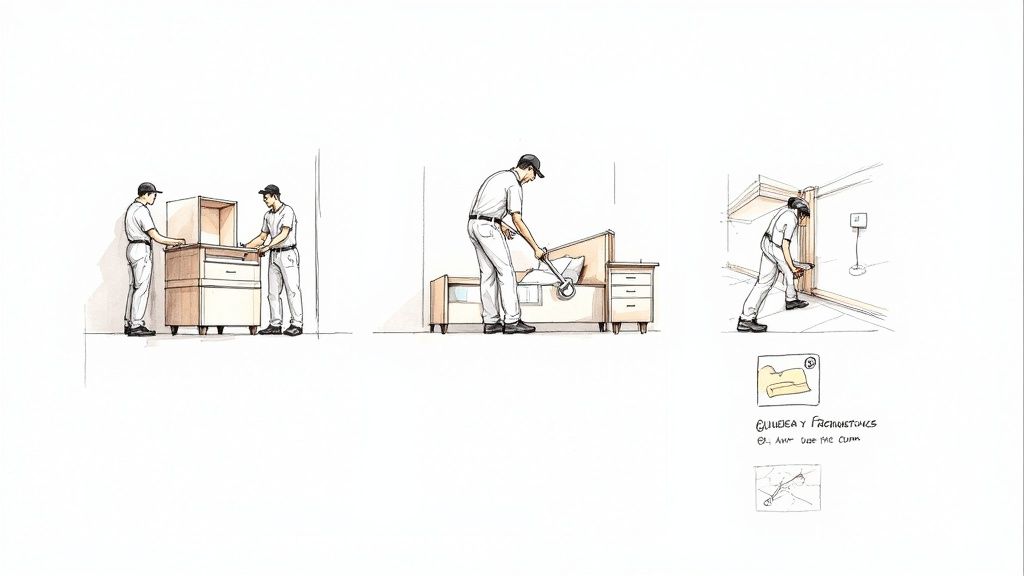
First things first: these are substantial pieces of furniture. You’re not just tossing a Murphy cabinet bed in the back of your car. Professional delivery is almost always the way to go, and services like white-glove delivery can be a real lifesaver. They’ll carry the unit right into the room you want it in and haul away all the packaging.
Once it’s in the room, the installation process really depends on the style of bed you chose.
- Freestanding Cabinet Beds: These are the easier of the two. Since they don’t anchor to the wall, assembly usually just means attaching a few parts and placing the folded mattress inside. It’s a totally manageable DIY project for two people.
- Wall Beds: This is a more involved process and safety is paramount. Wall beds must be securely anchored into wall studs to prevent any risk of tipping over when you open or close them. If you’re not comfortable finding studs and drilling into your wall, professional installation is the best and safest call.
A high-quality folding bed, whether it’s a freestanding cabinet or a wall-mounted system, is built to last for decades. Its lifespan is largely determined by the quality of its construction and, most importantly, the durability of its lifting mechanism.
Keeping Your Investment in Top Shape
With your bed installed, a little routine care will keep it looking and functioning like new. It’s no different from any other piece of quality furniture—it just needs some basic attention. A bit of regular cleaning and a few periodic checks will make a huge difference in the long run.
Think of it like routine maintenance for your car. A few simple checks now can prevent bigger headaches down the road, ensuring smooth and safe operation every time you use it.
Here’s a simple checklist for long-term care:
- Clean Wood Finishes Gently: Grab a soft, lint-free cloth and lightly dampen it with water or a wood-safe cleaner. Stay away from harsh chemicals or abrasive sponges that could ruin the finish.
- Care for the Mattress: Let the mattress air out every so often by leaving the bed open for a few hours. If the design allows, rotate or flip it every few months. A good mattress protector is also a must to guard against spills and allergens.
- Check the Mechanism: Once or twice a year, give the pistons or springs a quick inspection. Make sure all the screws and bolts are tight, as they can loosen a bit with regular use. Listen for any creaks or groans during operation—those are often early warning signs.
Troubleshooting Common Issues
Even the best furniture can run into minor hiccups. The good news is that most common issues with folding beds in cabinets are easy to spot and fix yourself. If the bed starts feeling heavy or difficult to lift and lower, it’s often just a sign that the lifting mechanism needs a simple adjustment or a bolt has worked its way loose.
If you notice the cabinet doors aren’t closing perfectly flush, check that the mattress is fully tucked in and no bedding is caught in the frame. A quick look-over can usually solve the problem in minutes. For anything more complicated, don’t hesitate to contact the manufacturer or your retailer. They can give you specific advice for your model and ensure a safe, effective fix.
How to Choose the Right Folding Bed Solution
Alright, you’ve done the homework. Now it’s time to put all those pieces together and make a final call. This is where we move from general ideas to picking the one cabinet bed that’s going to feel like it was made just for your home. It’s all about connecting your needs for space, style, and a good night’s sleep to the perfect model.
Let’s start by recapping the big questions. Think back to what we’ve covered:
- Are you leaning towards a freestanding Murphy cabinet bed that you can move around, or a fully integrated wall bed system that becomes part of the room’s architecture?
- Did you measure your space? And not just for the cabinet itself, but for the full footprint when the bed is open and ready for guests.
- What about the mattress? Do you know what you need for comfort, and have you checked that it works with your chosen bed?
- Finally, are you prepared for the installation?
Connecting Your Needs to the Right Model
Answering those questions honestly will point you straight to the right solution. If you’re renting and can’t drill into walls, or if you’re dealing with low ceilings, a freestanding chest bed is a no-brainer. But if you’re designing a permanent home office that needs to double as a guest room, a wall bed with built-in piers for storage is probably the winner.
These systems show just how seamlessly a bed can become part of a larger furniture solution, giving you extra storage and display space.
The right choice isn’t just a purchase; it’s a supported investment in making your home more functional and beautiful. It’s about finding the perfect balance between day-to-day utility and night-time comfort.
It’s no surprise these beds are getting more popular. The wall beds market was valued at an estimated USD 2.5 billion and is expected to grow by over USD 1.3 billion by 2029. That kind of growth, especially in North America, shows a real shift toward smart, multifunctional furniture in modern homes.
Partnering with Experts for a Perfect Fit
You don’t have to figure all this out on your own. Working with experts who have curated a collection of high-quality cabinet and wall beds takes the guesswork out of the equation. You can be confident every option is built to last.
Plus, a team that truly understands the mechanics can help you pair your bed with the perfect mattress for both comfort and performance. For a deeper dive, check out our guide on choosing the right mattresses.
Ultimately, you can’t overstate the peace of mind that comes with professional setup. When you invest in a solution like this, having it delivered and installed correctly is the final step to ensuring it works safely and smoothly for years to come.
Still Have Questions About Cabinet Beds?
It’s completely normal to have a few questions bouncing around in your head, even after digging into all the options. A folding bed in a cabinet is a significant investment in your home, so let’s clear up some of the most common concerns to help you make your decision with total confidence.
Are Folding Beds in Cabinets Actually Comfortable?
This is the big one, and the answer is a definite yes. Unlike the lumpy sofa beds or flimsy cots of the past, modern Murphy cabinet beds and wall beds are built to accommodate a real, standard mattress. You’re not giving up sleep quality for the sake of saving space.
Many wall bed systems are designed to hold a high-quality memory foam or hybrid mattress up to 11 inches thick. These beds have sturdy platform foundations that give you the even, stable support you need for a great night’s sleep, making them perfect for guests or even for nightly use.
This is what truly separates them from other space-saving beds. The whole point is to offer a sleep experience that feels just like a traditional bed, so you (or your guests) wake up feeling refreshed.
Is It Hard to Open and Close a Murphy Bed?
Not at all. Any well-made folding bed in a cabinet is engineered to be surprisingly easy to operate. They use advanced counterbalancing systems—like sophisticated gas pistons or spring mechanisms—that do nearly all the heavy lifting for you.
These systems are calibrated to handle the entire weight of the mattress, so you can lift and lower the bed with very little effort. Most are so well-balanced you can manage them with just one hand, transforming your room from a living space to a bedroom in under a minute.
Do I Have to Bolt a Cabinet Bed to the Wall?
This is a critical point, and it all comes down to the style of bed you choose. It’s one of the first things you should confirm before you buy.
- Freestanding Murphy Cabinet Beds: Sometimes called chest beds, these are completely self-contained units. They are designed to be stable on their own and do not need to be mounted to the wall. This makes them a fantastic choice for renters or for placing in front of a window.
- Traditional Wall Beds: These vertical systems must be securely bolted into the wall studs. Anchoring them is essential for safe and proper operation, ensuring there’s no risk of the unit tipping over when you open or close it.
Always double-check the product specifications for the model you’re interested in. This will ensure it’s the right fit for your home and your comfort level with installation.
Ready to find the perfect space-saving solution for your home? The expert team at Futonland can guide you through our curated collection of high-quality cabinet beds, wall beds, and mattresses to find the ideal fit for your space and needs. Explore our full range of versatile furniture at Futonland.com.