

What Is a Futon Mattress? Your Ultimate Explainer Guide
A futon mattress is a unique beast—it’s a flexible, multi-purpose mattress specifically engineered to serve as both a sofa cushion and a bed. Unlike a rigid, traditional mattress that’s built to lie flat on a static frame, a futon mattress is designed to bend and fold repeatedly without breaking down. This dual-purpose design is what makes any convertible futon frame work.
Your Quick Guide to the Futon Mattress
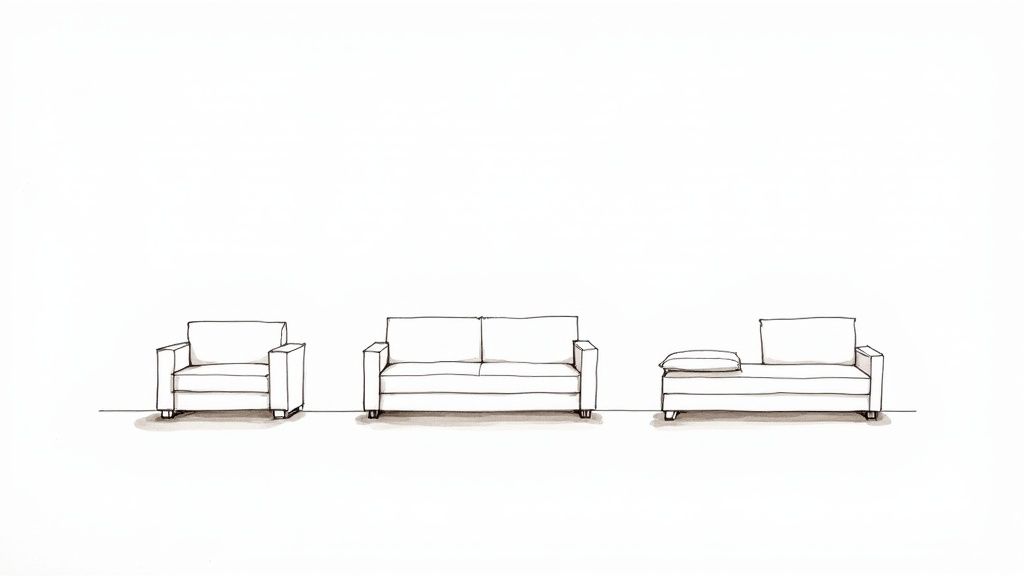
So, what exactly is a futon mattress? Think of it as a chameleon for your living space. Its main job is to offer comfortable seating by day and then seamlessly transform into a supportive sleeping surface by night. This unmatched functionality makes it an essential piece for anyone looking to maximize every square foot in a small apartment, guest room, or home office.
The modern futon mattress has come a long way from its humble origins as a simple Japanese floor mat. Today’s versions are sophisticated, thoughtfully engineered pieces available in a huge variety of materials and thicknesses to suit different needs and comfort preferences.
The defining feature of a futon mattress isn’t just what’s inside—it’s the incredible ability to adapt. It must be pliable enough to fold into a sofa position without bunching or damaging its internal structure, yet supportive enough for a restful night’s sleep.
This unique combination of flexibility and comfort is what truly sets it apart from a standard bed mattress. To help you get a clearer picture, here’s a quick rundown of what makes a futon mattress tick.
Futon Mattress at a Glance
| Characteristic | Description |
|---|---|
| Primary Function | Serves as both seating and a sleeping surface. |
| Key Feature | Engineered Flexibility—designed to bend and fold daily. |
| Core Benefit | Dual-Purpose Comfort for sitting and sleeping. |
| Ideal For | Small apartments, guest rooms, and multi-functional spaces. |
| Main Advantage | Space-Saving Design, turning one piece of furniture into two. |
Understanding these core concepts is the first step toward choosing the perfect model for your home. It’s all about finding that sweet spot between a great couch and a great bed.
From Japanese Floor Mat to Modern Sofa Bed
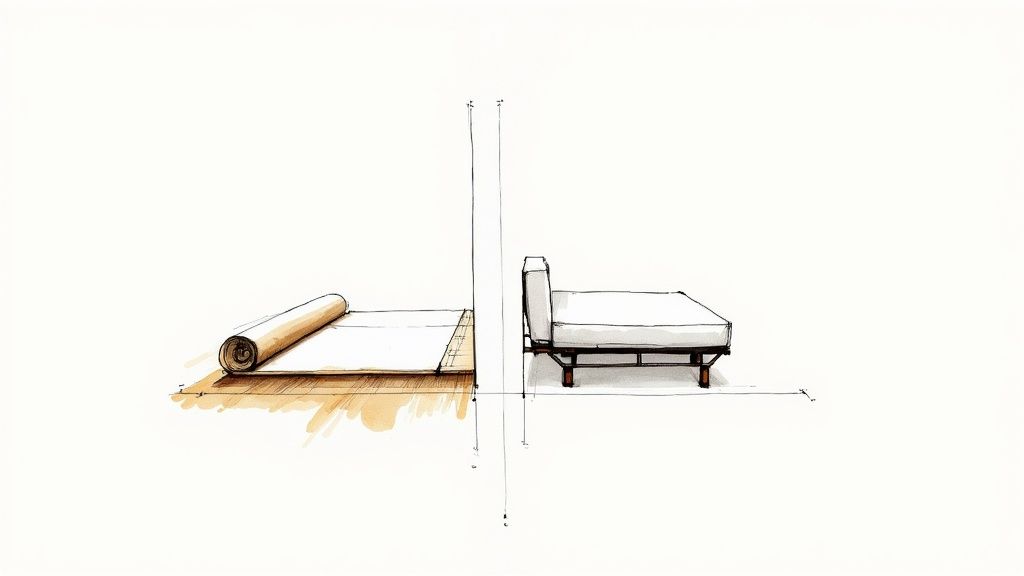
The futon mattress has a fascinating history that starts in Japan. Its original form, the shikibuton, was a thin, cotton-stuffed sleeping pad designed for life on the floor. This minimalist approach was brilliant for maximizing living space—by day, the shikibuton could be rolled up and stored away, freeing the entire room for other activities.
This core principle of versatility is the futon’s true legacy. The traditional Japanese design prioritized function and simplicity, a concept that really resonated when it was introduced to Western cultures. But, as you might expect, the Western lifestyle called for a few key changes to fit different living habits and furniture expectations.
As the idea traveled, it evolved. The thin floor mat was reimagined as a thicker, more substantial mattress designed to be paired with a convertible wooden or metal frame. This innovation created the versatile sofa-bed hybrid we all recognize today.
The Evolution from Pad to Platform
The biggest change was getting the mattress off the floor. This transformation blended the Japanese concept of a flexible sleeping surface with the Western preference for raised furniture, giving birth to a whole new category of functional decor.
- From Floor to Frame: The shikibuton was used directly on tatami mats, while the modern futon rests on a bi-fold or tri-fold frame.
- From Thin to Thick: Western models became much thicker, often incorporating foam and coils to feel more like a conventional mattress.
- From Rolling to Folding: The primary action shifted from rolling the pad for closet storage to folding the mattress to create a sofa.
This evolution perfectly illustrates how a simple, practical idea can be adapted across cultures. The futon’s core mission—to save space without sacrificing comfort—has remained constant, even as its form has changed dramatically.
While some people still prefer the minimalist firmness of traditional Japanese designs (which you can explore in our line of shiki futon mattresses), the modern version has become a global staple.
This enduring popularity is easy to see in the numbers. The global futon mattress market was valued at USD 7.2 billion in 2024 and is projected to keep growing, proving its lasting appeal in modern homes. You can find more details about these market trends in this comprehensive futon mattress market report.
Inside the Modern Futon Mattress: Materials and Construction
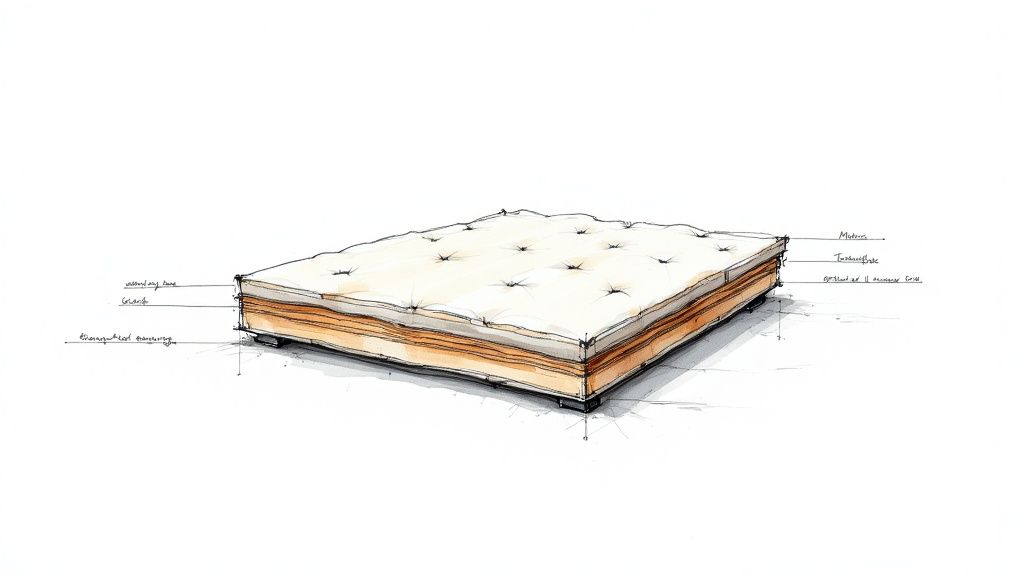
To really get what a futon mattress is all about, you have to look inside. The materials and the way they’re put together are the engine that powers its dual personality as both a comfy couch and a supportive bed. A conventional mattress is built for one job: lying flat on a static frame. A futon, on the other hand, needs to be flexible, resilient, and comfortable whether you’re sitting up or lying down.
Everything from how it feels and how much it weighs to how well it breathes and how long it lasts comes down to what’s inside. From traditional, firm cotton to modern, body-hugging memory foam, each option creates a totally different experience. Let’s break down the most common constructions you’ll find today.
The Traditional All-Cotton Futon
The original futon mattress construction is beautifully simple: layers of compressed cotton batting. This creates a distinctly firm and supportive surface, which is a big plus for anyone who doesn’t like that “sinking in” feeling. All-cotton futons are also incredibly breathable, helping you stay cool through the night.
This classic design does need a bit more hands-on care, though. The cotton fibers naturally compress over time, especially under the heaviest parts of your body. You’ll need to flip and rotate it regularly to keep the surface even and prevent permanent dips from forming.
Foam and Cotton Blends
A popular and practical upgrade is the cotton and foam combo. These mattresses usually have one or more layers of high-density foam sandwiched between layers of cotton, giving you the best of both worlds.
- Enhanced Support: That foam core provides a stable, resilient base that fights off compression way better than cotton alone.
- Improved Comfort: It adds a welcome layer of cushioning that softens the super-firm feel of an all-cotton model.
- Longevity: The foam helps the mattress keep its shape and support for much longer, making it a fantastic choice for frequent use.
This blend is often the sweet spot for a daily-use futon. The foam delivers the durability you need for nightly sleep, while the cotton wrapping maintains that classic futon feel and breathability.
Modern Foam and Memory Foam Mattresses
As materials have gotten more advanced, so has the futon mattress. Today, many of the most popular models are made entirely of high-density foam or feature a top layer of memory foam. These are often seen as the most comfortable and durable options for everyday sleeping.
High-density foam futons give you consistent, reliable support from edge to edge and are excellent at resisting body impressions. Adding a layer of memory foam introduces pressure-relieving comfort, allowing the mattress to contour to your body’s unique shape for truly personalized support.
You can see this shift in what people are buying. Foam and hybrid models now lead the pack, with foam versions holding a huge piece of the market. One analysis reports that foam futon mattresses command about 38% of the market—a clear sign of their popularity for both comfort and durability.
Innerspring and Hybrid Models
If you love the traditional bounce and sturdy support of a conventional bed, an innerspring futon mattress is a great choice. These contain a core of flexible steel coils nestled between layers of foam and fiber padding. This design offers robust support and promotes great airflow, which means a cooler sleep.
A hybrid model takes this concept a step further by combining pocketed coils with layers of memory foam or latex. Think of it like a hybrid car—it merges two proven technologies to create something even better. This construction provides targeted support, cuts down on motion transfer (so you won’t feel your partner move), and delivers exceptional pressure relief, making it a top-tier option for a primary bed.
Comparing Futon Mattress Types
Choosing the right material is the biggest decision you’ll make. To help you sort through the options, we’ve put together a quick comparison of the most common types.
| Mattress Type | Best For | Feel | Pros | Cons |
|---|---|---|---|---|
| All-Cotton | Traditionalists, firm mattress lovers, occasional use | Very Firm | Breathable, affordable, eco-friendly | Compresses over time, needs frequent flipping |
| Cotton & Foam | Daily use, all-around performance, guest beds | Medium-Firm | Good balance of comfort & support, durable | Heavier than all-cotton |
| Foam | Nightly sleeping, side sleepers, modern comfort | Medium to Soft | Excellent pressure relief, holds shape well, durable | Can retain heat, may have an initial odor |
| Innerspring | Those who prefer a traditional mattress feel | Medium-Firm to Firm | Bouncy, strong support, good airflow | Can be heavy, may not fold as easily |
| Hybrid | Primary beds, ultimate comfort & support | Medium | Superior support, minimizes motion transfer | Most expensive, can be very heavy |
Ultimately, the best futon mattress is one that fits your comfort needs, your space, and how you plan to use it.
Choosing the right construction is the most important step in finding a futon mattress that truly works for you. Exploring the diverse range of futon mattresses available can help you compare these materials firsthand and find that perfect balance of comfort, support, and flexibility for your home.
Choosing the Right Futon Mattress for Your Home
Alright, let’s get down to the practical side of things: finding a futon mattress that actually fits your space, your frame, and your life. This is where you balance comfort, function, and your day-to-day needs. It’s not complicated once you know what to look for.
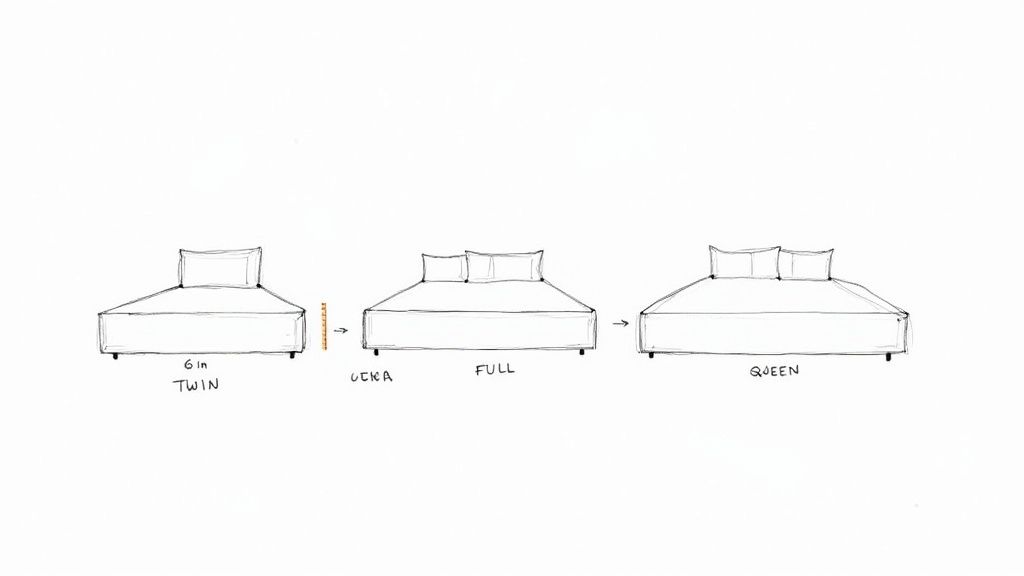
The journey starts with the basics, and the most basic of all is size. A futon mattress has to match its frame perfectly—not just to look right, but to work right. The most common sizes are Twin, Full, and Queen, and your frame is built for one of them specifically. Mismatching them is a recipe for disaster, creating dangerous gaps or preventing the frame from folding up correctly.
To avoid any headaches, always measure your frame before you start shopping. If you’re still not sure, our detailed futon sizing charts can give you the exact numbers you need for a perfect match. Find them here: https://futonland.com/sizing-charts.
Finding the Right Thickness
Once you’ve nailed down the size, the next big decision is thickness. Futon mattresses usually run from six to ten inches thick, and this single dimension makes a huge difference in how it feels and functions. Think of it as a trade-off: plush sleeping comfort versus easy sofa conversion.
- 6-8 Inch Mattresses: These thinner options are generally firmer and way more flexible. They’re much easier to fold, making them perfect for futons that get switched from sofa to bed all the time. They offer solid support but might feel less luxurious for nightly sleeping.
- 9-10 Inch Mattresses: Thicker mattresses deliver a more plush, bed-like feel, often because they’re packed with more layers of foam or coils. All that extra comfort makes them a fantastic choice for a primary bed, but it also makes them heavier and a bit more work to fold.
The right thickness really comes down to how you’ll use it. For a guest room futon that’s only used for sleeping now and then, a nimble 8-inch mattress is perfect. For a studio apartment where the futon is your main bed, investing in a 10-inch model will pay off every single night.
Aligning Your Choice with Its Main Use
Finally, think about what this mattress will be doing most of the time. Is it your living room couch or your primary bed? That answer should guide your choice, helping you prioritize either durability for sitting or plushness for sleeping.
If it’s your main sofa, you’ll need a tough, resilient mattress that can handle daily sitting without getting saggy. Something with high-density foam or a robust cotton and foam blend is ideal.
But if it’s your main bed, your focus should shift to comfort and support. A memory foam or hybrid mattress will give you the pressure relief you need for a truly restful sleep. A huge part of this is choosing the right mattress firmness for your sleep style. By matching the mattress to its main job, you make sure your futon excels at what it does best.
How to Care for Your Futon Mattress
Proper care is the secret to getting the most out of your futon mattress, ensuring it stays comfortable and supportive for years. A little routine maintenance goes a long way in protecting your investment and keeping it feeling fresh. The single most important habit to get into is regular flipping and rotating.
Think of it like rotating the tires on a car; this simple action ensures the mattress wears evenly. Flipping it over and turning it from head-to-toe every one to two months prevents permanent body impressions and sagging. This simple step distributes the wear across the entire surface, extending its life significantly.
Cleaning and Protection
Accidents happen, but a quick response can prevent a lasting stain. For spills, spot-treat the area immediately with a mild detergent and water solution, but be careful not to soak the mattress. The key is to blot the area gently with a clean cloth, not rub it in.
The easiest way to protect your investment is with a high-quality cover. A good cover acts as a shield against dust, spills, and allergens, keeping the mattress itself clean and extending its life significantly.
Using a protective layer is a non-negotiable for keeping your futon in prime condition. It makes cleaning incredibly simple—you can just zip it off and toss it in the wash. You can find a wide variety of durable and stylish futon covers that fit any decor.
Finally, don’t underestimate the power of airing it out. If you can, let your futon sit in a dry, well-ventilated area for a few hours every couple of months. This helps release any absorbed moisture and odors, keeping it hygienic and preserving that comfortable, inviting feel you love. These simple steps are all it takes to keep your futon mattress in great shape.
Your Top Futon Mattress Questions Answered
Let’s clear up some of the most common questions people have when they’re trying to figure out if a futon mattress is right for them. Getting straight, honest answers helps you skip the guesswork and choose something you’ll love for years to come.
Think of this as the final check-in before you find the perfect fit for your home.
Can I Use a Regular Mattress on a Futon Frame?
This is a big one, and the short answer is almost always no. A regular mattress is built to lie flat, period. Its internal structure, whether it’s springs or layered foam, is rigid and not designed to bend.
Forcing a conventional mattress onto a convertible frame is a recipe for disaster. You’ll likely damage the mattress coils and foam beyond repair, and you could even break the frame’s folding mechanism from the strain. Always stick with a mattress made specifically for the flexing and folding a futon frame requires.
How Long Does a Futon Mattress Last?
A good quality futon mattress should give you 5 to 10 years of solid use. Of course, this all depends on the materials inside it, how well it was made, and what you’re using it for.
- High-Quality Models: If you’ve got a hybrid, memory foam, or dense foam-core futon for daily use, you can expect it to last closer to that 10-year mark.
- All-Cotton Models: A traditional, all-cotton futon might have a shorter lifespan, especially if it gets a lot of use. The cotton fibers will naturally compress over time, which is normal for that material.
Pro Tip: You can get a lot more life out of any futon mattress with two simple habits. Use a protective cover and make sure to flip and rotate it every month or two. This prevents uneven wear and keeps it feeling supportive and new.
Are Futons Actually Comfortable for Everyday Sleeping?
Absolutely. The old stereotype of a lumpy, uncomfortable futon comes from cheap, thin models from decades ago. That’s not the world we live in anymore. Today’s premium futon mattresses are engineered for nightly sleeping and are every bit as comfortable as a high-end traditional bed.
Look for models with memory foam, innerspring coils, or hybrid constructions. The trick is to invest in a quality mattress that’s at least 8 inches thick and made from materials that give you the kind of support you personally love.
What Is a Bi-Fold Vs a Tri-Fold Futon Mattress?
This is all about how the mattress folds to match its frame. A bi-fold mattress folds once, right down the middle, like a hot dog bun. This is the most common style you’ll see, designed for standard sofa futon frames that convert from a couch into a bed.
A tri-fold mattress, as the name suggests, folds into three sections. You’ll usually find these on smaller, chair-style futon frames or ottomans that unfold into a single sleeper. It’s critical to match the mattress type to your frame, otherwise, it simply won’t work as intended.
Still have questions? The experts at Futonland are here to help you find the perfect space-saving solution for your home, from comfortable mattresses to stylish convertible frames. Explore our full collection and find your perfect fit today at https://futonland.com.