Space Saving Beds For Small Rooms: Ultimate Guide To A More Open Space
That familiar feeling of staring at a small, cramped room and wondering how you’ll ever fit a bed is a challenge most of us have faced, whether in a city apartment or a cozy home. The solution is actually simpler than you think. Space-saving beds for small rooms aren’t just a place to sleep—they’re strategic tools that can reclaim your most valuable asset: your floor space.
Reclaim Your Space the Smart Way

Trying to furnish a small apartment or a compact guest room can feel like playing Tetris with one piece too many. The bed is usually that giant, awkward piece that dominates the entire layout, leaving you with little room for anything else. This is where a simple shift in how you think about furniture can change everything.
Instead of seeing your bed as a static object that just sits there, imagine it as a dynamic part of your home. What if that bed could disappear into the wall during the day, revealing a full-sized home office? Or what if it could discreetly hide away all your extra linens, winter jackets, and luggage, making that bulky dresser totally unnecessary?
Rethinking Your Bedroom Layout
This guide will walk you through the world of multifunctional beds, each one designed for the realities of modern living. We’ll dive into the most effective types of space-saving beds, each offering a clever solution to a common problem.
- Murphy & Wall Beds: These are the masters of disguise. They fold away vertically, instantly transforming a bedroom into a living area, home gym, or workspace when you need it.
- Storage Beds: Think of these as a hidden closet. Using drawers or a slick hydraulic lift mechanism, they unlock a massive amount of storage potential right under your mattress.
- Sofa Beds & Futons: The classic two-in-one solution for studio apartments and living rooms, seamlessly converting from a comfortable sofa into a cozy futon bed.
The core idea is simple but incredibly powerful: make your largest piece of furniture work harder. When you choose the right bed, you’re not just buying a place to sleep—you’re investing in a smarter, more flexible home.
This isn’t just a trend; it’s a necessity in today’s world, especially in urban areas. With average apartment sizes shrinking, beds that do more than one job have become a total game-changer. The global storage beds market has already surged past USD 674.43 billion, and for good reason—some designs can save up to 40% more floor space than traditional frames.
Exploring the Best Types of Space Saving Beds
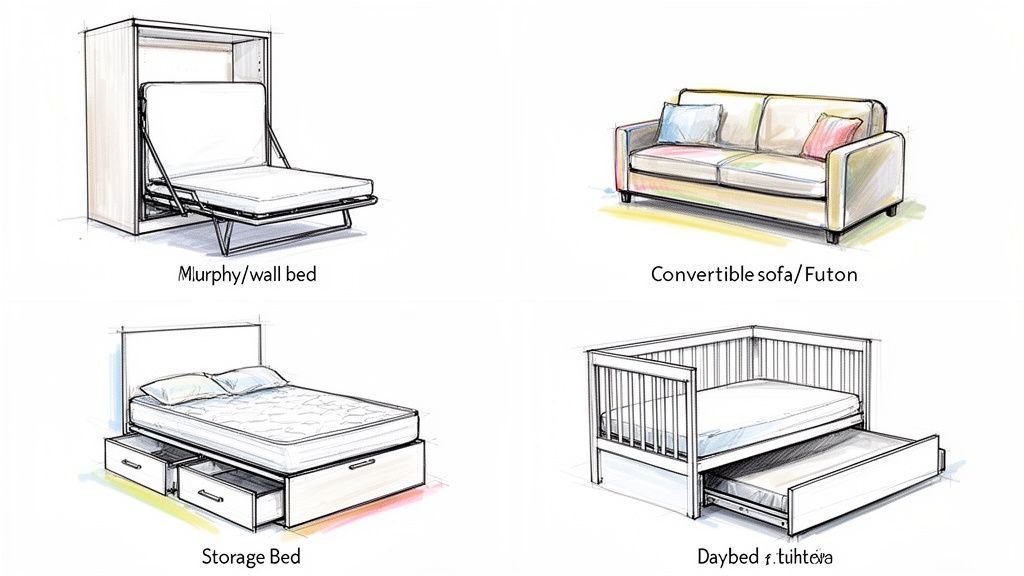
Choosing the right space-saving bed is a lot like picking the perfect tool for a specific job. Each type offers a unique solution to the puzzle of a small room, transforming your space based on your daily needs and lifestyle.
Let’s break down the most popular options to see which one is the ideal fit for you.
Murphy Beds and Wall Beds: The Vanishing Act
Imagine your bed simply disappearing into the wall when you’re done sleeping, instantly freeing up the entire room. That’s the magic of a Murphy bed. They’re the ultimate space-savers, perfect for studio apartments or multipurpose rooms that need to switch from a bedroom to a home office or gym.
Modern Murphy beds are engineered with sophisticated piston or spring lift mechanisms, making them surprisingly easy to open and close. They are a true investment in flexibility, offering the comfort of a conventional mattress without permanently occupying valuable floor space. Many models even come integrated with desks, shelves, or sofas that are usable when the bed is folded away.
You might be interested in exploring some of the most innovative wall beds and Murphy cabinet beds available today to see how they integrate with modern design.
Futons and Convertible Sofa Beds: The Dual-Duty Champions
For anyone living in a studio or needing a living room that can double as a guest room, the convertible sofa bed is a classic for a reason. These hardworking pieces transition from a stylish sofa for daytime lounging to a comfortable bed for a good night’s sleep.
The main difference between the two is their mechanism. A futon typically uses a single mattress that folds on a frame, serving as both the seat and backrest. A sofa bed, on the other hand, hides a separate, often thinner, mattress inside its frame that you pull out.
- Best for: Studio apartments, living rooms, and guest rooms where seating is as important as sleeping space.
- Key Advantage: They offer a seamless transition between living and sleeping areas without requiring complex installation.
- Consideration: Pay close attention to the mattress type to ensure comfort for either sitting or sleeping.
Storage Beds: The Hidden Organizer
What if your bed frame could replace an entire dresser? That’s the promise of a storage bed. These are one of the most practical space-saving solutions, offering a huge amount of hidden storage right where you least expect it.
There are two main styles to consider:
- Drawer Beds: These feature large, built-in drawers on the sides or foot of the bed frame, perfect for storing clothes, shoes, or extra linens.
- Lift-Up Beds (Ottomans): These use a hydraulic mechanism to lift the entire mattress platform, revealing a massive, open storage compartment underneath. This space is ideal for bulky items like luggage, seasonal bedding, and sports equipment.
This type of furniture is part of a larger, booming market. The demand for multi-functional furniture is growing rapidly, with the global market expanding from USD 11.14 billion to USD 11.86 billion. Beds that integrate storage or fold away—like Murphy beds that can free up to 60 square feet—are a huge part of this trend.
Daybeds and Trundle Beds: The Versatile Guest Solution
A daybed is a clever hybrid—part sofa, part bed. With its three-sided frame, it functions perfectly as a cozy couch for reading or lounging during the day. This makes it an excellent addition to a home office, a child’s room, or a small living area.
Many daybeds come with an extra secret weapon: a trundle. The trundle is a low, wheeled bed stored neatly underneath the main frame that can be pulled out to create a second sleeping spot.
A trundle bed essentially gives you two beds in the footprint of one. It’s an incredibly efficient way to prepare for overnight guests without sacrificing an entire room to a bed that’s rarely used.
This makes them a fantastic, space-efficient solution for kids’ sleepovers or accommodating multiple guests in a tight space. They offer comfort and convenience without the daily effort of converting a sofa or folding away a wall bed.
With so many clever designs out there, it helps to see them side-by-side. This quick table breaks down which bed works best for different needs.
Which Space Saving Bed Is Right for You?
| Bed Type | Best For | Space Saved | Primary Benefit |
|---|---|---|---|
| Murphy Bed | Studio apartments, multi-use rooms (office/gym) | Maximum floor space | Disappears completely when not in use |
| Sofa Bed/Futon | Living rooms, guest rooms, primary seating areas | Moderate floor space | Dual-function seating and sleeping |
| Storage Bed | Bedrooms with limited closet or dresser space | Under-bed area | Adds significant hidden storage |
| Daybed/Trundle | Kids’ rooms, home offices, guest rooms | One bed’s footprint | Offers a second sleeping spot on demand |
Each of these beds tackles the small-space challenge in a different way. Your choice will ultimately come down to how you use your room day-to-day and what you need most: more floor space, extra storage, or versatile seating.
Your Practical Guide to Measuring a Small Room
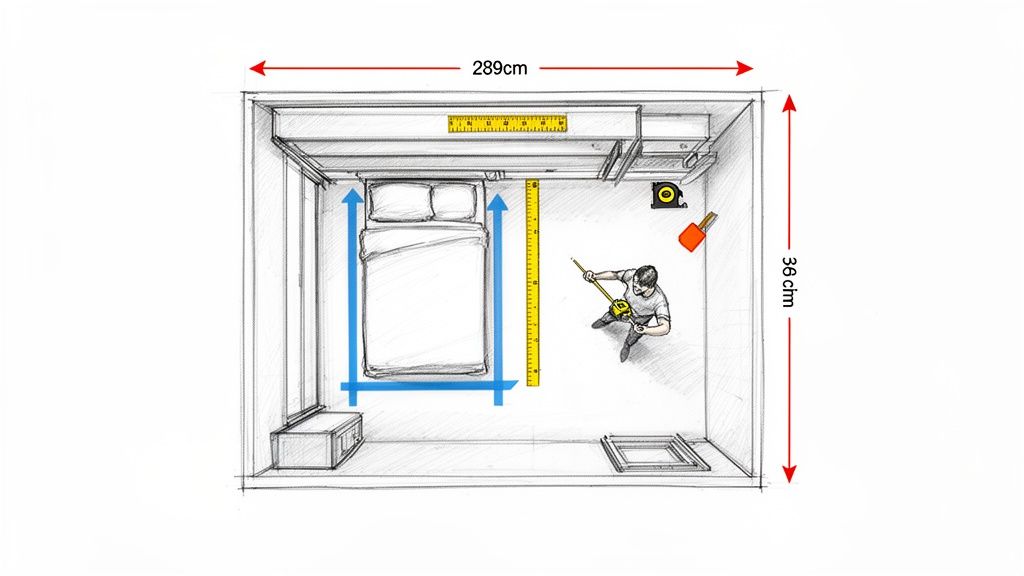
Buying furniture without measuring your room first is the number one mistake people make when decorating a small space. It’s an easy trap to fall into. You see the perfect bed online, you get excited, you click “buy”—and then it arrives. That’s when you get the sinking feeling that it won’t fit through the door, or worse, it leaves you with no room to actually walk.
This guide will make sure that never happens to you.
We’ll teach you how to measure with confidence, thinking beyond just the simple length and width of the floor. To really nail it, you have to think of your room like a dance floor, not a parking spot. It’s not enough for the bed to just fit; you need space to move, live, and breathe comfortably.
Thinking in Three Dimensions
A great layout considers the entire volume of your room, not just a flat floor plan. So, before you even start dreaming about bed sizes, grab a tape measure and jot down these crucial dimensions.
Start with the basics: measure the length and width of the room to get your total square footage. But don’t stop there. Measure the ceiling height—this is absolutely essential if you’re even remotely considering a vertical solution like a Murphy bed or a loft bed.
Next, you need to account for all the permanent fixtures that eat into your usable space.
- Doorways and Hallways: Measure the width and height of every single door frame your new bed will have to pass through. And don’t forget to account for the door swing—the arc it makes when opening—because that can easily block drawers or the bed itself.
- Windows and Sills: Note the location, width, and height of all your windows. A bed crammed under a low sill can look awkward, while a tall headboard might block all your precious natural light.
- Outlets and Switches: Map out exactly where your electrical outlets, light switches, and vents are. You really don’t want your new bed to block the only usable outlet on that wall.
Measuring is about understanding your room’s unique choreography. You need to know where every door swings, where every drawer pulls out, and how much clearance you have to walk, ensuring your new bed fits into the flow of your daily life.
Visualizing the Footprint
Once you have your numbers, it’s time to bring them to life. Abstract measurements on a piece of paper can be tough to visualize, so here’s a simple trick designers use: get some painter’s tape and mark the exact dimensions of your potential bed right on the floor.
This physical outline shows you precisely how much floor space the bed will command. You can see immediately if it’s going to block a closet, feel way too close to your desk, or make the main walkway uncomfortably narrow.
With the tape on the floor, walk around it. Try opening nearby drawers or closet doors. Does everything still function smoothly? This simple, practical test is the single best way to prevent a purchase you’ll regret. You can also explore detailed sizing charts to compare standard mattress dimensions and find the perfect fit.
Choosing the Right Bed Size
The size of the bed you choose has a massive impact on your room’s overall feel and function. While it’s tempting to go for the biggest, most luxurious bed possible, sometimes a slightly smaller size can make the entire room feel more open and usable.
For instance, Queen sizes are incredibly popular, claiming a 30.35% share of the US market. They offer a great balance for couples without completely overwhelming a typical bedroom.
However, the fastest-growing segment right now is the Twin-XL. It’s the go-to for compact dorms and first apartments common among students and young professionals. By prioritizing usable space over a few extra inches of mattress, you create a much more balanced and comfortable living environment.
How to Choose Materials and Mattresses for Comfort
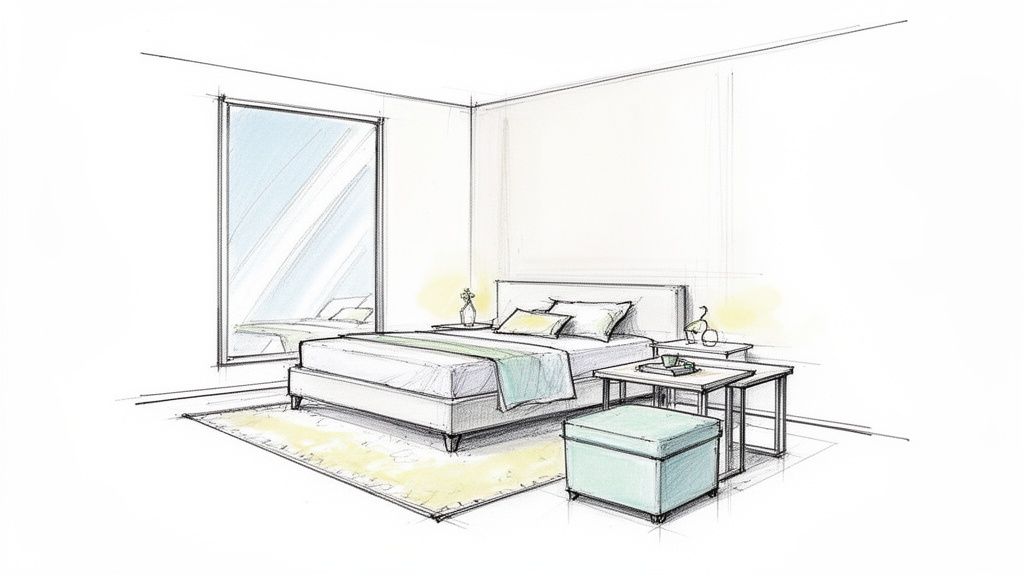
A bed that frees up your floor space is a smart move, but let’s be honest—its real job is to deliver a great night’s sleep. The comfort and durability of space-saving beds for small rooms hinge entirely on the quality of their materials, from the frame that holds you up to the mattress you sink into.
Nailing this combination is everything. Think of it like building a house: you need a solid foundation (the frame) and a comfortable interior (the mattress) to make it a place you actually want to spend time. Let’s break down how to pick the right materials for a bed that feels as good as it looks.
Finding the Right Bed Frame Material
The bed frame is the unsung hero of your sleep setup, providing all the structural support. Your choice here affects not just the bed’s sturdiness and lifespan but also the entire vibe of your room.
- Solid Wood: Known for its timeless good looks and serious durability, solid wood brings a warm, natural feel to a room. Woods like oak, maple, and cherry are incredibly sturdy but can be heavy, making them a fantastic choice for stationary storage beds that aren’t going anywhere.
- Metal: Both lightweight and strong, metal frames are a go-to for modern and industrial designs. You’ll often find them used in daybeds, futons, and some Murphy bed mechanisms because of their excellent strength-to-weight ratio.
- Engineered Wood (MDF/Particleboard): This is a budget-friendly option you’ll see in tons of contemporary furniture. While it’s not as tough as solid wood, high-quality engineered wood with a good laminate or veneer finish offers a clean, stylish look perfect for many space-saving designs.
If you’re trying to visualize how different textures and finishes will play together in your small room, exploring fabric sample swatches is a game-changer. It helps you see the whole picture before you commit.
Selecting the Perfect Mattress
The mattress is where the magic happens. For space-saving beds—especially ones that fold or convert—the mattress has to be both supportive and flexible. One that’s too stiff won’t work with a futon or wall bed, but one that’s too flimsy will leave you sore in the morning.
Memory foam and hybrid mattresses are usually the top contenders here.
- Memory Foam: These mattresses are amazing at contouring to your body, relieving pressure points, and stopping motion transfer. Their natural flexibility makes them a perfect match for adjustable bases, futons, and Murphy beds that need to bend or fold without getting damaged.
- Hybrid Mattresses: A hybrid gives you the best of both worlds, combining the responsive support of innersprings with the cushy comfort of foam layers. They offer a great balance of bounce and pressure relief, making them a durable and comfortable choice for daily use on storage beds or wall beds.
The key is to find a mattress that can handle the mechanical demands of your bed frame without compromising on ergonomic support. Always check the bed manufacturer’s recommendations for mattress thickness and type.
You can learn more about what makes a great sleep surface by exploring different types of futon mattresses, which are specifically designed for convertible frames.
Embracing Healthier Materials for a Better Sleep
Beyond pure comfort, the materials in your bedroom can have a big impact on your indoor air quality and well-being. This is a huge deal in a small room where air might not circulate as well. Choosing natural and low-VOC materials helps create a healthier space to rest.
What to look for:
- Low-VOC Finishes: Volatile Organic Compounds (VOCs) are chemicals that can be released from paints, finishes, and engineered woods. Look for frames with water-based finishes or those certified as low- or no-VOC to minimize that “new furniture smell” and keep your air clean.
- Natural Mattress Materials: Materials like natural latex, organic cotton, and wool are breathable, hypoallergenic, and free from the harsh chemicals you’ll find in many synthetic options.
- Certifications: Keep an eye out for labels like GOTS (Global Organic Textile Standard) for fabrics or CertiPUR-US® for foams. These certifications are your assurance that the materials are made without nasty stuff like formaldehyde, heavy metals, or certain flame retardants.
Choosing a bed made with healthier materials isn’t just a trend; it’s an investment in better sleep and a cleaner home.
Design Strategies for a Cohesive Small Room
So you’ve picked out the perfect space-saving bed. That’s a huge win, but now comes the fun part: making the rest of the room feel just as smart and intentional. The right design choices can take a small space from just functional to genuinely inviting. It’s all about creating an illusion of space, making sure every piece plays well together, and letting your style shine through.
Think of your room as a complete picture. Your new bed is the star, of course, but the lighting, colors, and supporting furniture are just as critical. With a few clever tricks, you can make even the most compact room feel open, airy, and beautifully put together.
Use Light and Color to Your Advantage
Color is one of the most powerful tools you have for transforming a small space. Lighter color palettes are your absolute best friend here—they reflect light, making any room feel instantly bigger and brighter.
Stick with soft neutrals like off-whites, gentle grays, or warm beiges for your walls. This creates a clean, expansive backdrop that prevents the room from feeling boxed in. If you’re a fan of bold colors, don’t worry! Use them as accents. Think vibrant throw pillows, a colorful rug, or a statement piece of art to inject personality without overwhelming the space.
Another classic trick is to use mirrors. Placing a large mirror opposite a window can literally double the amount of natural light flooding in, making the room feel way more open. It also creates a sense of depth, tricking your eye into thinking the room is larger than it is.
The goal is simple: bounce as much light around the room as possible. A light color palette and a few well-placed mirrors work together to eliminate shadows and create that wide-open, spacious feeling.
Select Smart, Multitasking Furniture
In a small room, every single piece of furniture needs to earn its spot. Beyond your bed, look for items that can pull double or even triple duty. This is key to cutting down on clutter and squeezing every last bit of function out of your square footage.
Here are a few versatile ideas to consider:
- Storage Ottomans: These are the true MVPs of small-space furniture. Ottomans can be a footrest, extra seating for guests, or a makeshift coffee table (just add a tray), all while hiding away blankets, books, or electronics.
- Nesting Tables: Why have one bulky side table when you can have a set of nesting tables? You get multiple surfaces when you need them, and they tuck away neatly when you don’t.
- Floating Shelves: Mounting shelves directly to the wall frees up the floor space that a traditional bookshelf would eat up. The result is a much lighter, more open feel.
Beyond just the furniture, weaving in some creative home decor and accents can really elevate the look and feel of your compact living area.
Create Distinct Zones for Better Flow
Even in one small room, you can create the feeling of different “zones” for different activities. This little psychological trick makes the space feel more organized and purposeful, rather than just one cramped area where everything happens.
Area rugs are fantastic for defining these zones. A rug under your desk can mark out a workspace, while another next to your bed can create a cozy sleeping nook. You can also use furniture placement to your advantage. For instance, a slim console table placed behind a sofa bed can create a subtle divider between your “living” and “sleeping” areas.
For a more defined separation, lightweight partitions work wonders. If you’re looking for ways to divide a space without putting up walls, you can learn more about stylish room dividers that add both function and a touch of style. By creating these little mini-environments, your small room starts to feel like a multi-functional—and beautifully organized—home.
A Smart Buyer’s Checklist Before You Purchase
You’ve explored the options, measured your space, and probably have a pretty good idea of what you need. But before you hit that “buy” button, let’s run through one final checklist. Think of it as your last walkthrough to make sure you’re getting the perfect space-saving bed—one you’ll be happy with for years to come.
This isn’t just about ticking boxes. It’s about making a confident, regret-free investment in your home.
Confirm Your Foundation
First things first, let’s lock down the non-negotiables. Getting these right from the start is the difference between a seamless fit and a major headache.
-
Finalize Measurements: Yes, again! Grab that tape measure one last time. Confirm the room dimensions, ceiling height, and the clearance you’ll need for doors, windows, and any nearby drawers. Most importantly, did you account for the bed’s full footprint when it’s both open and closed?
-
Define Primary Use: Get real about how this bed will be used day-to-day. Is it your main bed that needs to be incredibly comfortable and durable? Or is it for the occasional guest, where flexibility is more important than nightly comfort? This decision changes everything, from the frame you pick to the mattress you’ll need.
-
Verify Mattress Compatibility: This is a big one. Check the manufacturer’s recommendations for mattress thickness, weight, and type. A mattress that’s too heavy can burn out a Murphy bed mechanism, and one that’s too thick can prevent a sofa bed from closing at all.
Review the Finer Details
With the fundamentals sorted, it’s time to zoom in on the long-term stuff. These details are what ensure your new bed serves you well for years, not just months.
- Warranty and Return Policy: What does the warranty actually cover? Look for specifics on the frame and any moving parts, like hydraulic lifts or folding mechanisms. And make sure you understand the return policy, just in case the bed doesn’t work in your space the way you’d hoped.
- Total Cost Breakdown: The sticker price is just the beginning. Your total budget needs to include potential costs for shipping, white-glove delivery, professional assembly, and maybe even mattress disposal. A $1,500 bed can easily turn into a $2,000 total investment once all is said and done.
Going through this checklist turns you from a hopeful shopper into a smart, prepared buyer. You’re not just buying another piece of furniture; you’re making a strategic choice for a more functional, comfortable home.
Still Have Questions? Let’s Clear Things Up
Got a few last-minute questions before you commit? No problem. Here are some quick, straightforward answers to the most common things people ask about space-saving beds.
Are Murphy Beds Actually Comfortable Enough for Everyday Use?
Absolutely. Long gone are the days of flimsy, uncomfortable wall beds. Today’s Murphy beds are engineered for daily sleeping and are built to hold high-quality, standard mattresses up to 11 inches thick.
You can use your favorite memory foam, hybrid, or latex mattress, which means the comfort is all about the mattress you pick, not the frame itself. Think of it as a regular bed that just happens to fold away—you’re not sacrificing a good night’s sleep for space.
What’s the Real Difference Between a Futon and a Sofa Bed?
It all comes down to the mechanism and the mattress. A futon is a single, flexible mattress that sits on a frame, serving as both the seat and backrest when it’s folded up. It’s a simple, one-piece system.
A sofa bed, on the other hand, looks just like a traditional sofa but hides a separate, thinner mattress inside its frame. You have to remove the seat cushions and unfold a metal mechanism to reveal the bed. Futons are usually faster to convert, while sofa beds keep that classic living room look.
How Much Space Can a Storage Bed Really Save Me?
Quite a bit, actually. A queen-size storage bed with a hydraulic lift or deep drawers can give you anywhere from 20 to 30 cubic feet of hidden storage.
To put that in perspective, that’s about the same amount of space as a large dresser. It’s perfect for stashing bulky items like spare bedding, winter coats, or luggage, freeing up precious closet space and letting you get rid of other clunky furniture.
A key takeaway is that modern wall beds are engineered with advanced piston or spring lift mechanisms that counterbalance the mattress weight. This makes them surprisingly lightweight and easy for most adults to operate with minimal effort.
Ready to reclaim your room? Find the perfect functional, stylish, and comfortable space-saving bed at Futonland. Head over to https://futonland.com to see how you can make your space work for you.