
The Ultimate Guide to a Foldable Futon Bed in 2026

At its heart, a foldable futon bed is a brilliant piece of space-saving furniture, acting as both a comfortable spot to sit and a ready-to-go sleeping surface. Its magic lies in its ability to transform from a sofa into a bed or fold away neatly for storage.

What a Foldable Futon Bed Can Do for You

Think of a foldable futon as the Swiss Army knife of your living space. Especially in cities like NYC where every square foot counts, this kind of flexibility isn't just a nice-to-have feature; it’s a game-changer. "Foldable" isn't a single design—it's a whole family of smart, convertible solutions that solve real-world space crunches. That’s why we’ve built our collections around a huge range of folding and convertible futons that work for modern life.

This idea isn’t new, though. The concept goes way back, born from the need to make the most of tight living quarters in urban Japan during the Edo period (1603-1868). Early futons were revolutionary because they could be folded and put away, letting a bedroom instantly become a living area. That core principle of practical, multi-use design is still what makes the modern foldable futon bed so essential.

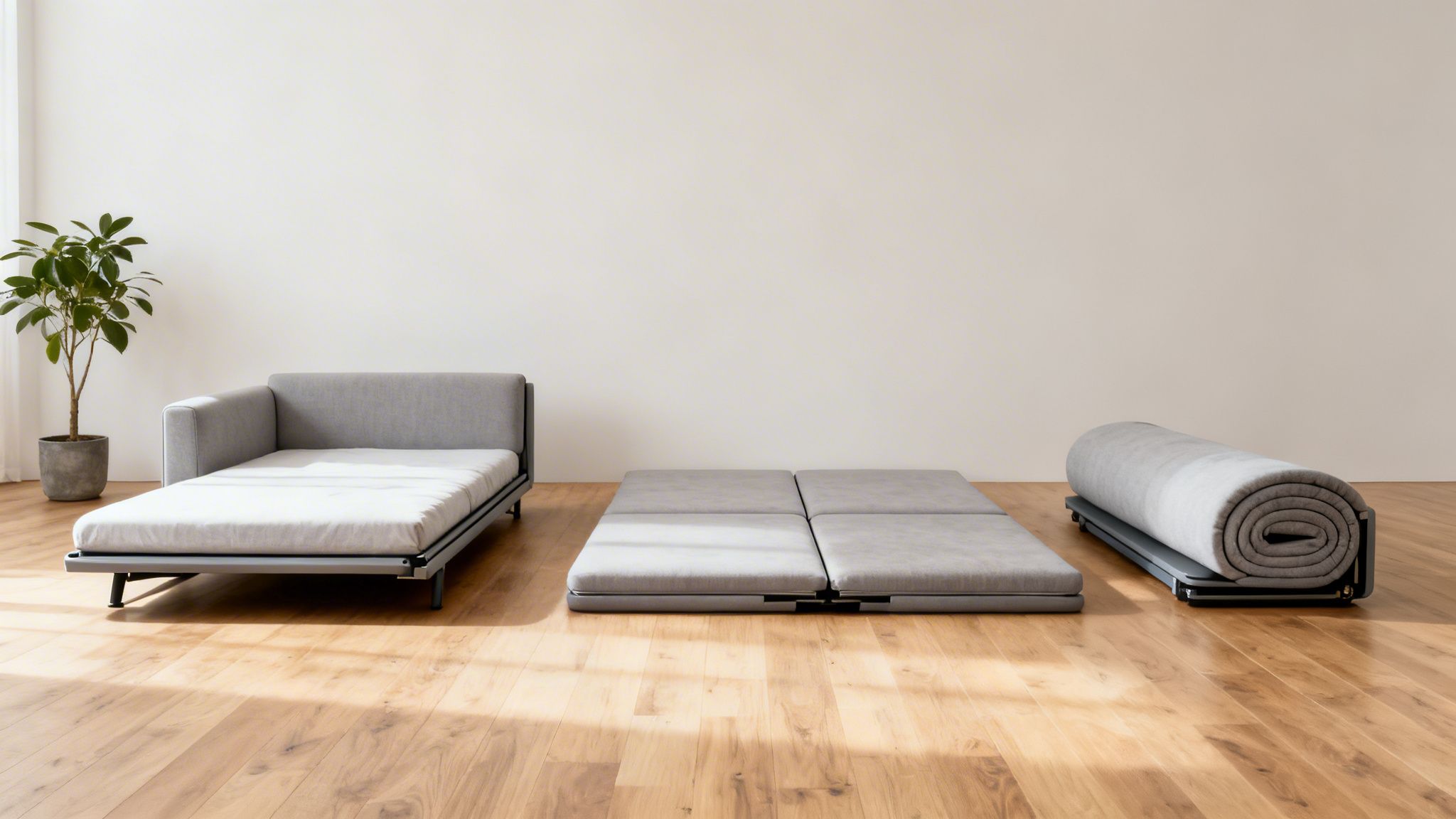
Gray foldable futon bed in lounge, flat, and rolled-up storage forms on a wooden floor.

Unpacking the Meaning of Foldable

When we talk about a "foldable" futon bed, we're really talking about a few different product types, each with its own way of folding and its own best-use scenario. Futonland carries a wide range of these options, and understanding the differences is the first step to finding the perfect match for your home.

To make it easier, here's a quick rundown of the main types you'll encounter. Each one is built for a different primary purpose, so you can zero in on the style that best fits your lifestyle.

Foldable Futon Bed Types at a Glance

Futon Type Primary Use Folding Mechanism Best For
Standard Futon Frame Daily sofa & occasional bed Folds once (bi-fold) or twice (tri-fold) between sofa and bed positions Living rooms, guest rooms, studio apartments
Tri-Fold Floor Futon Lounging & guest bed Folds into thirds for seating or flat storage Multi-purpose rooms, kids' rooms, apartments where storage is key
Fold-and-Roll Floor Futon Portable, temporary bed Folds or rolls for compact storage Sleepovers, minimalist spaces, when a bed needs to disappear

Let's break down what these differences mean in the real world.

  • Standard Convertible Futon Frames: This is the classic sofa-bed you probably picture first. A sturdy frame plus a separate mattress, it folds to go from a couch to a bed. It's the dependable workhorse, ideal for daily use in a studio apartment or a living room that needs to pull double duty as a guest room.

  • Tri-Fold Floor Futons: These frameless mattresses are exceptionally versatile. The clever design folds in two spots, allowing them to become a low, casual seat, a lounger, or be folded flat and tucked under a bed. This is a great solution for guest rooms or small spaces where a permanent bed isn't practical.

  • The Fold-and-Roll Floor Futon: This is the undisputed champion of portability. It's essentially a thick, comfortable mattress with no frame at all, meant to be laid right on the floor. When you're done, you can fold it into thirds or roll it up and stash it in a closet. It's the perfect solution for kids' sleepovers or for a guest bed that you need to completely vanish when company leaves.

A foldable futon bed solves a fundamental urban dilemma: how to have a comfortable bed for yourself or guests without sacrificing valuable living space. In a city like NYC, it’s a practical, multi-functional answer to the constraints of modern homes.

So, whether you need a full-time sofa that converts to your primary bed or just a sleeper you can pull out for guests, there's a foldable futon built for the job. By exploring Futonland's diverse range of futons, you can find the perfect mechanism, mattress, and style to reclaim your space without ever compromising on comfort.

How Different Folding Mechanisms Work

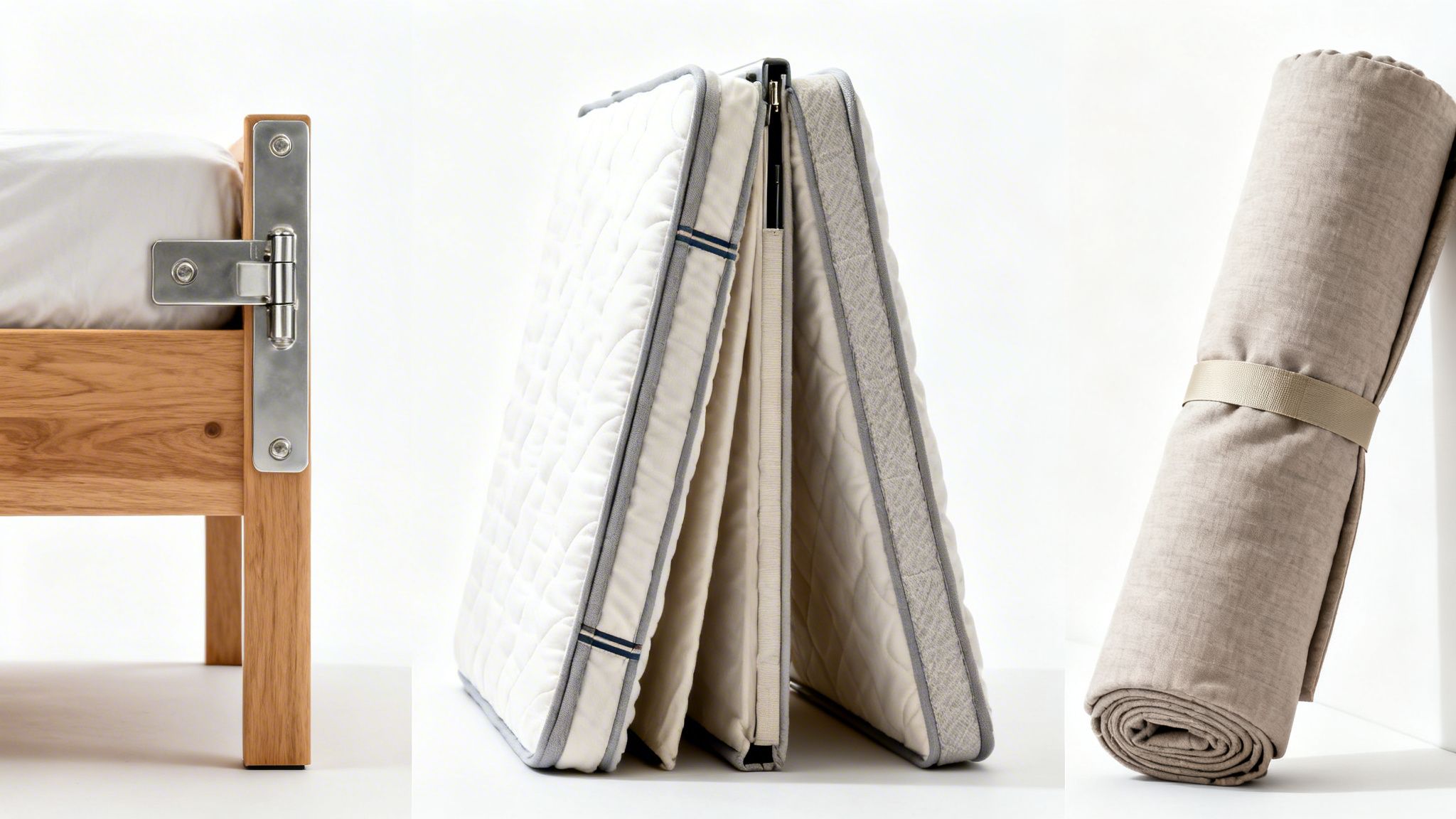
Details of a foldable futon bed: wooden frame hinge, folded mattress, and rolled bedding.

Understanding how a futon frame opens and closes is more than just a technical detail—it dictates how you'll live with your furniture. The mechanism determines whether it’s a living room centerpiece that transforms nightly or a guest bed you pull from the closet a few times a year.

The clever engineering behind these frames is what makes them such lifesavers in tight spaces, especially in cities like NYC where every square foot counts. Let's get into the three main folding styles to figure out which one is the right fit for your home.

The Classic Bi-Fold Frame

The bi-fold is the workhorse of the futon world. It’s the most common design you'll see, and for good reason—its operation is simple, intuitive, and incredibly durable.

  • How it Works: Think of closing a book. The frame has one central hinge. When it’s a sofa, the mattress is folded over the seat and back decks. To convert it to a bed, you just lift the front of the seat deck and pull it towards you. The backrest smoothly lowers, creating a flat, unified sleeping surface.

  • Best Use Case: This is your go-to for a primary sofa in a studio apartment or a living room that needs to be guest-ready at a moment’s notice. The robust build of a quality bi-fold can handle the daily conversion from sitting to sleeping for years without breaking a sweat.

Another huge plus is that its simple, strong design can handle thicker, more luxurious mattresses. You can pair it with a premium 8-inch mattress for serious, bed-like comfort without worrying about straining the mechanism.

The Versatile Tri-Fold Frame

The tri-fold frame adds an extra fold, unlocking a new level of versatility. While the original Japanese futon was a simple floor mat, it was an American furniture designer, William Brouwer, who created the first tri-fold frame in 1982. This innovation is what turned the futon into the convertible furniture we know today.

The tri-fold's signature move is its ability to create a "lounger" position, which is perfect for kicking back and relaxing.

  • How it Works: This frame is hinged in two places, dividing it into three sections. From the sofa position, it can flatten into a bed, but it can also prop up the end section to form a chaise lounge. The front part of the frame typically slides out from underneath to support the foot of the mattress when it's laid flat.

  • Best Use Case: Tri-folds are perfect for multi-purpose rooms, dens, or home offices. That lounger position is a game-changer for reading or watching movies. They often sit lower to the ground, which gives them a more casual, contemporary vibe.

Key Consideration: Because the mattress has to bend in two places, tri-fold frames work best with more flexible mattresses. We typically recommend a mattress around 6 inches thick to ensure it folds cleanly without putting excess stress on the frame.

The Simple Fold-and-Roll Floor Futon

For the ultimate minimalist solution, look no further than the fold-and-roll futon. It gets rid of the frame altogether, focusing purely on providing a comfortable sleep surface that can be packed away in seconds.

This is simply a mattress designed to be used directly on the floor. It either folds into three sections (like a tri-fold mattress without the frame) or rolls up tightly for storage. This makes it the perfect choice for kids’ sleepovers, impromptu guests, or anyone who needs a bed that can completely vanish into a closet.

Weight is a key factor here. A lightweight foam or cotton-blend mattress is a breeze to move and stash away, making it a truly practical choice for apartment living where storage space is at a premium. To see how these different mechanisms are built into a wide variety of stylish and durable designs, check out our full range of futon frames.

Choosing a Mattress That Bends with You

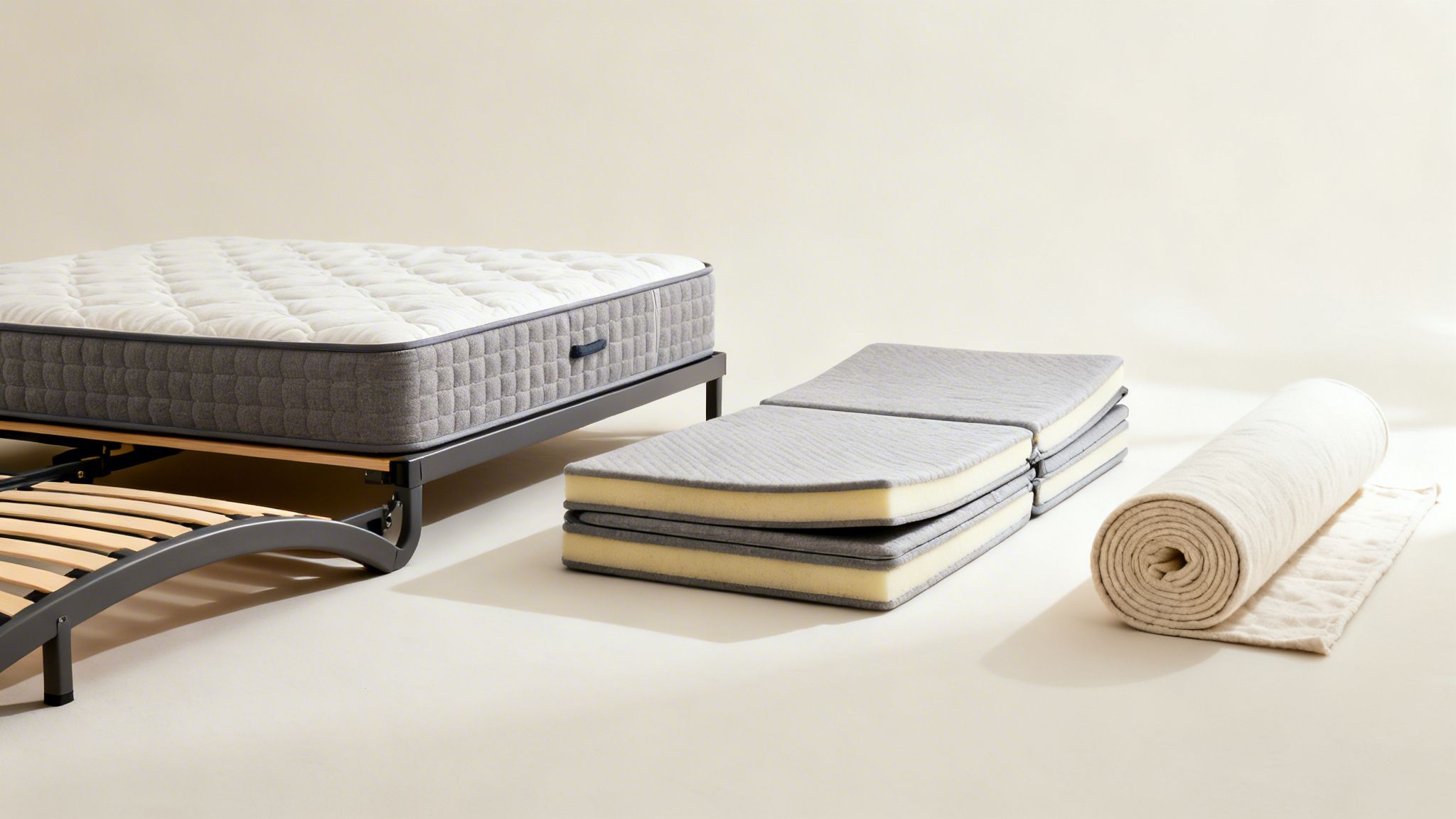
A large mattress on a bed frame, foldable futon segments, and a rolled-up topper.

Let's be honest, the heart of any great foldable futon bed isn’t really the frame—it's the mattress. Getting the right one is a tricky balance between sink-in comfort and practical flexibility. If a mattress is too stiff, it'll constantly fight the frame’s folding mechanism. That means extra wear and tear, and a daily struggle just to convert it.

The secret is finding a mattress that works with its frame, not against it. It has to bend cleanly and repeatedly without the filling inside shifting, clumping up, or breaking down. This is exactly why you can't just throw any old mattress on a futon frame; they are engineered for this specific dual-purpose life.

The Critical Role of Thickness and Flexibility

The single biggest factor dictating compatibility between a mattress and frame is its thickness. A super-thick mattress might feel amazing to sleep on, but if it stops the frame from closing or puts a ton of strain on the hinges, it's the wrong choice. On the flip side, a mattress that’s too thin won't give you enough support for a good night's sleep or even comfortable sitting.

This is where your frame's folding mechanism calls the shots.

  • For Bi-Fold Frames: These only fold once, right down the middle. This means they can easily handle thicker, more substantial mattresses. An 8-inch mattress is usually the sweet spot, giving you real-bed comfort perfect for daily sleeping without fighting the folding action.
  • For Tri-Fold Frames: These frames have two bends, which means they need a much more limber mattress. A mattress around 6 inches thick is typically the way to go. It's pliable enough to hit that "lounger" position and fold up neatly without a fight.
  • For Floor Futons: When there's no frame, your main concern shifts from folding mechanics to storage portability. Thinner mattresses (think 4 to 6 inches) are way easier to roll or fold up and stash in a closet—a total game-changer in a cramped NYC apartment.

Think of it like this: A bi-fold frame needs a mattress that can bend like a book, while a tri-fold needs one that can bend like an accordion. The structure dictates the flexibility required.

Exploring Mattress Materials for Your Futon

What’s inside your futon mattress determines how it feels, how long it lasts, and—most importantly—how well it folds. When you're picking a mattress that has to bend with you, understanding the differences between materials like Latex Vs Memory Foam Vs Hybrid options is key to getting it right. Here at Futonland, we have a huge range to match any need.

Cotton and Foam Blends:
A classic for a reason. These mattresses give you a firm, supportive feel. The cotton keeps things breathable while layers of foam add cushioning and help the mattress bounce back into shape after being folded. They’re a fantastic, affordable choice for a guest room or occasional use.

Innerspring and Pocket Coils:
If your futon is your main bed, an innerspring mattress is a brilliant choice. Flexible coils give you responsive support, just like a traditional bed, while foam and cotton layers provide that surface comfort. These are best suited for sturdy bi-fold frames that can handle their weight and thickness.

Memory Foam:
Famous for its pressure-relieving magic, memory foam molds to your body for incredible comfort. For a foldable futon, the key is a multi-layer foam design that combines a dense support base with a softer top layer. This construction gives you all the comfort while staying flexible enough for daily folding.

Organic and Chemical-Free Options:
For our health-conscious customers, we proudly offer mattresses made with natural and organic materials. These options use organic cotton, wool, and natural latex to give you peace of mind, eliminating synthetic chemicals and flame retardants without skimping on comfort or foldability.

To hit that perfect balance of comfort and function for your frame, you can dive into our complete collection of futon mattresses and find your ideal match.

Bringing a Foldable Futon into Your Home

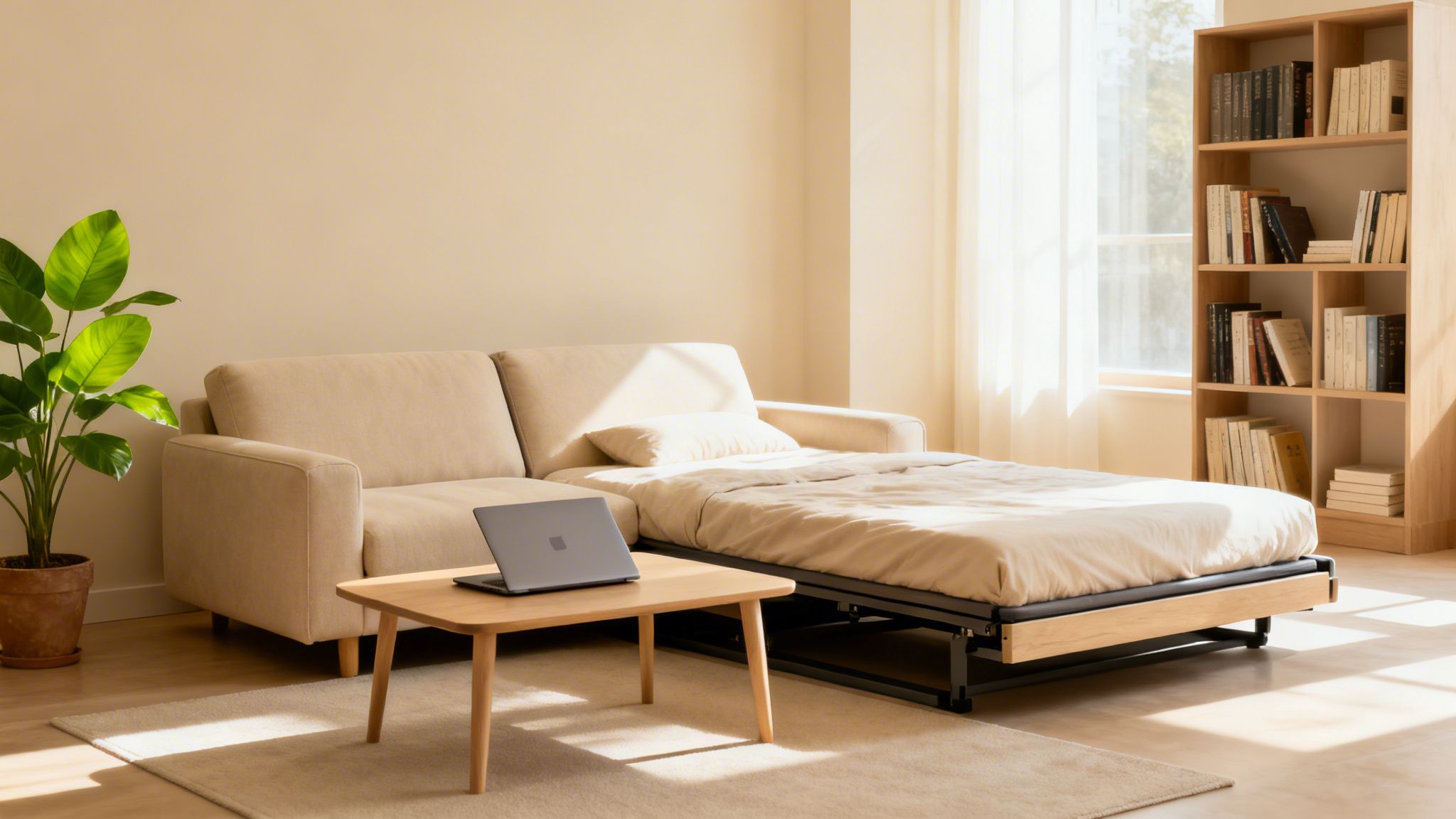
A beige foldable futon bed, a laptop on a wooden coffee table, a plant, and a bookshelf.

A foldable futon bed is more than just a piece of furniture—it's your secret weapon for reclaiming space. In cities like NYC where every square foot is precious, having a room that can instantly change its purpose isn't just a luxury; it's a necessity.

Let's look at how these smart, versatile pieces solve real-world problems for different homes and lifestyles.

Perfect for the Studio Apartment

Living in a 500-square-foot studio apartment means every piece of furniture has to pull its weight. By day, you need an open, functional living and work area. By night, it has to transform into a peaceful bedroom. This is where a high-quality bi-fold futon truly shines.

A sleek bi-fold frame acts as a stylish and genuinely comfortable sofa. When it's time to sleep, it converts into a full-size bed in seconds, freeing up the floor space a traditional bed would permanently occupy. That dual-functionality is the key to making a small apartment feel spacious and livable.

For more clever ways to make your home feel bigger, check out these great space-saving furniture ideas.

The Hardworking Guest Room

Think about that spare room doing triple duty as a home office, a gym, and a place for overnight guests. A permanent bed would make it useless for anything else. A foldable futon, on the other hand, keeps the room completely flexible.

A tri-fold frame or a tri-fold floor futon is the perfect fit here. It serves as a cozy lounger for taking a break from work or reading a book. When guests arrive, it quickly becomes a comfortable bed without you having to shuffle office equipment around. It makes hosting feel effortless, giving your visitors a welcoming spot without sacrificing your daily routine.

The Ever-Changing Kids' Room

A child's room is a dynamic space, constantly shifting from a quiet bedroom to a bustling playground for sleepovers. A bulky, traditional bed frame can be a real obstacle during playtime.

This is the ideal environment for a fold-and-roll floor futon. These simple, frame-free mattresses are comfortable, durable, and incredibly easy to handle. Lay one out for a sleepover, and the next morning, simply fold or roll it up and tuck it in a closet. The floor is instantly clear for games and imaginative play. Plus, their low-to-the-ground profile and soft design make them a safer choice for younger kids.

No matter the scenario, the foldable futon acts as a problem-solver. It adapts to your life, delivering comfort and style without demanding a permanent footprint.

Matching Your Space to the Right Futon Solution

Choosing the right futon isn't just about style; it's about matching the futon's function to your specific needs. This table breaks down common situations and connects them to the best futon solution.

Use Case Recommended Futon Type Key Benefit Futonland Example
Studio Apartment Standard Bi-Fold Frame Dual sofa/bed function with a single fold. Best comfort for daily use. A sturdy wooden or metal bi-fold frame.
Guest Room/Small Space Tri-Fold Frame or Floor Futon Space-efficiency and ease of conversion without moving furniture. Folds flat for storage. A compact lounger or a frameless tri-fold mattress.
Kids' Room/Sleepovers Fold-and-Roll Floor Futon Maximum flexibility and easy storage. Instantly clears floor space. A lightweight, rollable cotton or foam floor mattress.

By pinpointing how you'll use your futon most, you can zero in on a model that won't just fit your space—it will enhance it.

What to Look for in Your Foldable Futon

When you're ready to pick out a futon, a few key details will tell you if you're looking at a piece that's built to last.

  • Frame Mechanism Quality: Pay attention to the hinges and hardware on convertible frames. The conversion from sofa to bed should feel smooth and secure, not like you're in a wrestling match. This is crucial if you plan to convert it often.
  • Mattress Thickness Compatibility: The mattress has to be flexible enough for its purpose. A thick, 8-inch mattress is great on a bi-fold but will fight you on a tri-fold frame, which is designed for a more pliable 6-inch mattress.
  • Weight When Folded for Storage: If you're eyeing a floor futon for its easy storage, check its weight. A lighter foam or cotton-blend mattress is much easier to fold, roll, and carry to a closet than a dense, heavy one, which is vital in an NYC apartment where storage is precious.

With these practical tips in mind, you can confidently explore Futonland's folding bed and futon frame collections and find the perfect piece to upgrade your living space.

Your Pre-Purchase Quality Checklist

So you're ready to find the perfect foldable futon bed. It’s easy to get caught up in the style, but making a smart choice means looking closer at the details that promise real comfort and a long life.

Before you decide, run through this quick checklist. A few minutes of hands-on inspection now can save you years of frustration and ensure you bring home a futon that’s built to last, especially with the quality you'll find in Futonland's collections.

Frame Durability and Mechanism Quality

The frame is the backbone of your futon, and the folding mechanism is its hardest-working part. If you plan on converting it from a sofa to a bed regularly, the quality of its construction is everything.

  • Materials Matter: Always look for frames made from solid hardwood. Woods like oak, maple, and cherry are in a different league than particle board or softwoods. They have the strength to handle years of sitting, sleeping, and everything in between.
  • Inspect the Hinges: The hinges and moving parts are the first things to fail on a cheap frame. A well-made mechanism, like those you’ll find on trusted brands like Strata, should feel smooth and solid. There shouldn’t be any squeaking, grinding, or a need to wrestle it into position.

When you're browsing, don't be shy. Ask to operate the frame yourself. A quality foldable futon bed should move from sofa to bed with a confident, fluid motion.

In a bustling NYC apartment where a futon might get converted daily, a robust frame isn't a luxury—it's a necessity. The constant folding and unfolding puts a ton of stress on the joints, and only solid construction will hold up over time.

Mattress Compatibility and Durability

The right mattress has to pull double duty: it needs to be comfortable enough for a good night's sleep and flexible enough to fold without a fight. Pairing the wrong mattress with your frame is a common mistake that can lead to a lumpy, worn-out mattress and a bad user experience.

First, remember the rule of thumb: bi-fold frames can handle thicker, 8-inch mattresses, while tri-fold frames need a more nimble 6-inch mattress to fold correctly. Beyond just the thickness, you need to check for quality craftsmanship that keeps the mattress filling exactly where it's supposed to be.

Key Quality Indicators:

  • Tufting: Look for deep, evenly spaced tufts. These are the stitches running all the way through the mattress that lock the internal layers of cotton, foam, or coils in place. Without good tufting, the filling can shift and clump, creating uncomfortable lumps and making the mattress a pain to fold.
  • Material Density: If you’re looking at a foam mattress, higher density foam is a must. It gives you better support and is more resilient, meaning it will bounce back to its original shape even after being folded away.

Weight and Portability

For many people, especially those in smaller apartments, a huge plus of a foldable futon is the ability to move it or store it away. This is especially true for floor futons, which are designed to be rolled up and stashed in a closet. Before buying, think about the reality of moving it around.

  • Folded Size: Check the dimensions when it’s fully folded. Will it actually fit in that closet or slide under the bed like you planned?
  • Total Weight: If you can, try lifting it. A lightweight foam or cotton-blend floor futon is a breeze to manage. A dense, heavy one is not. This is a crucial detail if you’ll be the one moving it for guests or clearing floor space in a kids' room.

Keeping these three things in mind—frame, mattress, and portability—will guide you to a foldable futon bed that perfectly fits your needs for comfort, convenience, and long-term use.

Have Questions About Futon Beds? We Have Answers.

When you’re looking for a futon, you’re bound to have questions. It's a smart, practical piece of furniture, but its flexibility can bring up concerns about everything from comfort to daily use.

To help you feel confident in your choice, we’ve put together answers to the most common questions our customers ask us every day. We’ll get into everything from sleeping comfort to the real-world space you’ll save, using our experience here at Futonland to guide you.

Are Futon Beds Actually Comfortable Enough for Everyday Sleeping?

They absolutely can be, but the secret is all in the mattress. If you're planning to use your futon bed as your main sleeper, you have to invest in a quality mattress.

We always recommend choosing a mattress that is at least 8 inches thick. This depth gives you the support and cushion you need to avoid feeling the frame underneath, which is the key to a good night's sleep. A hybrid design that combines innersprings for support with foam for contouring comfort is a fantastic choice for daily use.

For the occasional guest, a 6-inch all-foam or cotton-blend mattress is usually just fine for a few nights. The important thing is matching the mattress to how you’ll use it. Trying to sleep every night on a thin, all-cotton floor futon mattress that's been put on a bi-fold frame is a recipe for a sore back. Those are made for portability, not nightly support on a slatted frame. Our team is always here to help you find the perfect match.

How Hard Is It to Convert a Futon from a Sofa to a Bed?

This is a huge concern for a lot of people, but the good news is that modern futon frames are designed to be incredibly easy to use. The days of wrestling with a clunky, heavy futon are long gone.

Most of our bi-fold frames work with a simple lift-and-pull motion that one person can easily handle. You just lift the front of the seat deck until it clicks, then gently guide it forward as the back lowers itself into a flat bed.

Expert Tip: If you're tight on space, look for a wall-hugger futon frame. These have a clever mechanism that glides the seat forward, so you can convert it from a sofa to a bed without ever having to pull the frame away from the wall. It’s a game-changer for smaller apartments.

There might be a slight learning curve the very first time you try it, but our quality mechanisms are built to be smooth and reliable. And when you choose Futonland's white-glove assembly service in NYC, our team won't just build it for you—they’ll give you a full demonstration so you’re a pro from day one.

How Much Space Does a Futon Really Save?

The space you get back isn't just a little—it can be dramatic enough to completely change how you use a room. Let's look at the actual numbers for a small apartment.

A standard full-size bed takes up about 28 square feet of your floor, all day, every day. That space is dedicated to nothing but sleeping.

A full-size futon bed in its upright sofa position, however, might only occupy 18-20 square feet.

That means you instantly get back nearly 10 square feet of living space during the day. In a studio or home office, that’s enough room for a coffee table, a small desk, or just open space to make the room feel bigger and less cramped. It makes a huge difference.

For floor futons, the savings are even more impressive. When you fold or roll up a tri-fold floor futon and stick it in a closet, you get back 100% of its footprint. This ability to make a bed completely vanish is why folding furniture is such a vital solution for modern city living. You can check out all kinds of these options in Futonland's folding bed and futon frame collections.

Can I Get a Custom Cover for My Futon Bed?

Yes! This is honestly one of the best parts of owning a futon. At Futonland, we know your style changes, and we believe your furniture should be able to keep up.

We offer a huge variety of ready-made and custom futon covers in countless fabrics, colors, and patterns. Our in-house custom cut-and-sew service means we can create a perfectly fitted cover for any size futon mattress you have. You can completely refresh the look of your room in minutes, without buying new furniture.

A removable cover is also incredibly practical. Spills and stains are no longer a five-alarm fire; you just unzip the cover and get it cleaned. This is a massive advantage over a traditional sofa, especially if you have kids or pets. Whether you need a tough, easy-to-clean microfiber or a chic linen, a custom cover lets you make your futon fit your life perfectly.

Similar Posts