A Guide to Twin Futon Mattress Sizes and Finding the Perfect Fit
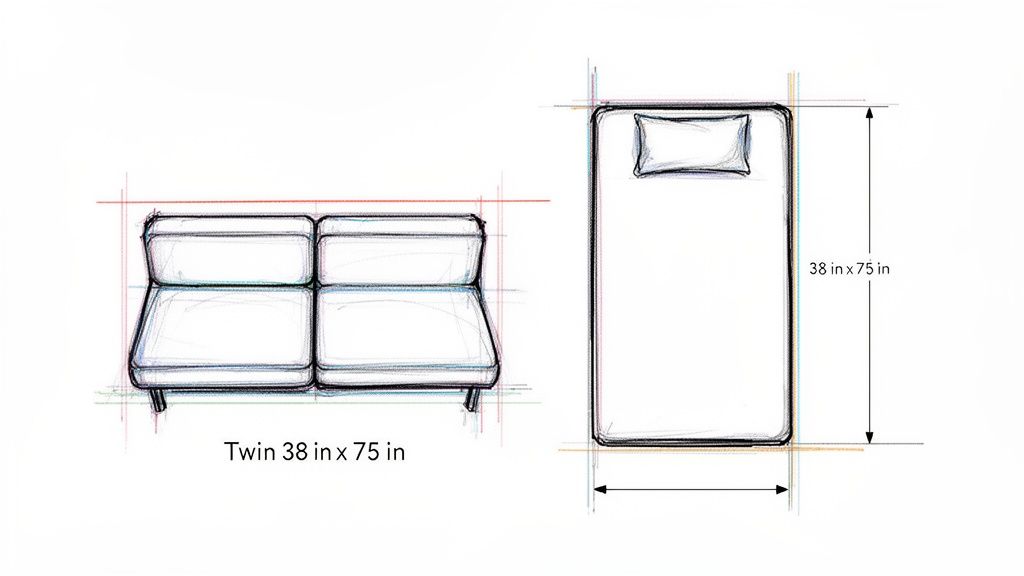
A twin futon mattress is designed for maximum flexibility in minimal space. Most models measure about 38–39 inches wide by 75 inches long, which is why they’re such a popular choice for single sleepers, kids’ rooms, dorms, and compact guest setups.
Your Guide to Twin Futon Mattress Sizes
Getting the size right is the first step toward making any small space work better. A twin futon is one of the easiest ways to add function without clutter—comfortable seating during the day, then a proper sleep surface at night.
Because many twin futon mattresses share the same footprint as a standard twin bed, they’re familiar and easy to plan for. The key is confirming the exact measurements for your frame so everything folds smoothly and sits cleanly.
Why This Size Is So Popular
The twin futon mattress is the most compact “true bed” option in the futon world. It fits where larger sizes don’t, while still providing a real sleep surface for one person.
- Great for tight layouts: home offices, small bedrooms, studio apartments
- Ideal for single sleepers: kids, teens, guests, and many adults
- Easy to convert: smaller mattresses are typically simpler to fold and reposition
To help you visualize how twin compares to other common sizes, here’s a quick reference.
Standard Futon Mattress Sizes at a Glance
| Size | Dimensions (Width x Length) | Best For |
|---|---|---|
| Twin | About 38–39" x 75" | Single sleepers, kids, dorms, small rooms |
| Full | 54" x 75" | Single adults, teens, couples in a pinch |
| Queen | 60" x 80" | Couples, guest rooms, primary use |
Each size has its place, but twin is the go-to when you want maximum utility in the smallest footprint.
Understanding the Details That Matter
Width and length are only part of the story. Thickness (loft) plays a major role in comfort and compatibility with your frame.
Most twin futon mattresses range from 4 to 10 inches thick:
- 4–6 inches: lighter, more flexible, often best for tri-fold frames or occasional use
- 6–8 inches: a balanced “everyday” range for sitting and sleeping
- 8–10 inches: best for people prioritizing sleep comfort (usually on bi-fold frames)
Before you buy, it helps to confirm whether you’re shopping for a bi-fold or tri-fold setup, since that determines how much flexibility your mattress needs.
Want to see how twin mattresses pair with different styles? Start with our futons collection.
Choosing Between a Twin and Twin XL Futon
When you shop twin futons, you may also see Twin XL. The difference is simple: both share the same width, but Twin XL is longer.
- Twin: about 38–39" x 75"
- Twin XL: about 38–39" x 80"
Who Should Consider Twin XL?
If the primary sleeper is taller (especially around six feet and up), those extra inches can make a noticeable difference—no feet hanging off the edge, and a more relaxed lounging position.
- Standard Twin: great for kids, teens, guests, and many adults
- Twin XL: a smart option for taller teens/adults, and common in dorm-style setups
Key takeaway: If comfort for a taller sleeper matters, Twin XL can be the better long-term choice—but only if your frame is built for it.
Frame Compatibility Is Crucial
A Twin XL mattress needs a Twin XL frame. If you try to use an 80-inch mattress on a 75-inch frame, it will overhang, wear unevenly, and may not fold correctly.
If you’re replacing a mattress, measure your frame first. If you’re starting from scratch, buying a matched set is the easiest way to guarantee a clean fit.
For quick reference, use our futon sizing charts to confirm dimensions before ordering.
How Thickness and Material Define Your Comfort
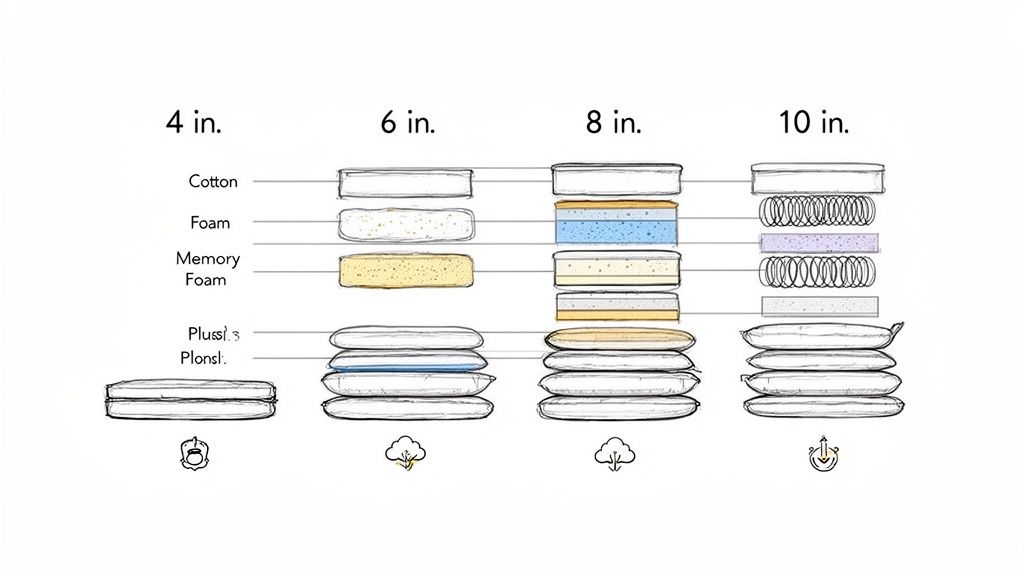
Dimensions tell you whether a mattress fits. Thickness and materials determine how it feels—both as a sofa and as a bed.
Choosing the Right Thickness
Use-case matters most:
- 4–6 inches: best for occasional sleeping, kids, and tri-fold frames
- 6–8 inches: best all-around choice for regular sitting + frequent sleeping
- 8–10 inches: best for daily sleeping comfort (usually best on bi-fold frames)
How Materials Change the Feel
Most futon mattresses blend materials to balance comfort, durability, and fold-ability. Common options include:
- Cotton: firm, breathable, classic futon feel; benefits from rotating/flipping
- Foam: adds consistent support and helps resist compression over time
- Memory foam: pressure relief and contouring, often preferred for sleep comfort
- Innerspring: responsive “traditional mattress” feel with added airflow
To compare options by build and feel, browse our full collection of futon mattresses.
Matching Your Mattress to the Right Futon Frame
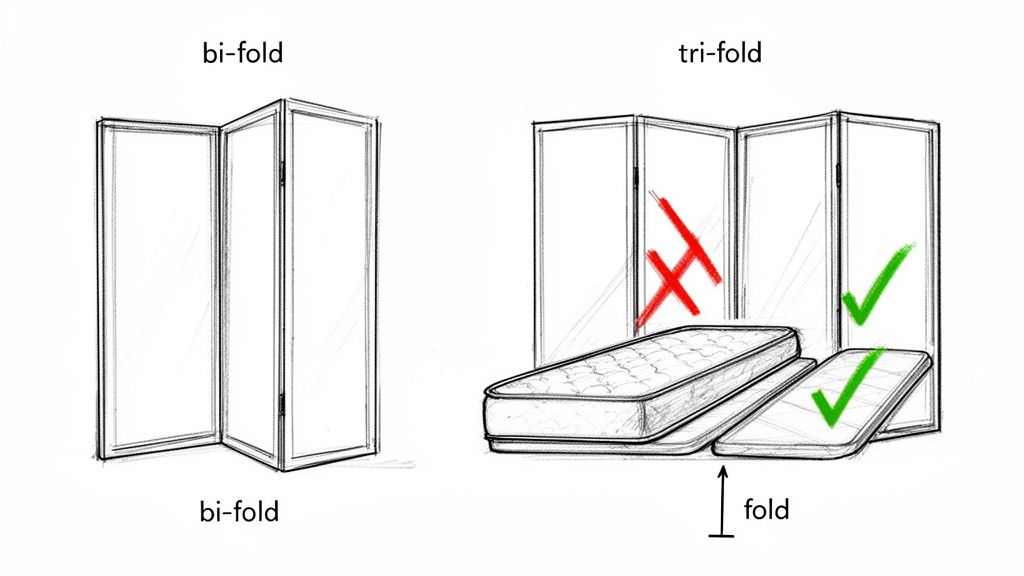
A great twin futon mattress only performs well when it’s paired with the right frame. The frame determines how the mattress bends, how it supports weight, and how comfortable it feels in sofa mode.
Bi-Fold Frames
Bi-fold frames fold once down the middle and create a classic sofa profile. Because the bend is gentler, they can handle thicker mattresses more comfortably.
- Best for: everyday seating, frequent sleeping
- Recommended thickness: often 6–10 inches (depending on the mattress build)
Tri-Fold Frames
Tri-fold frames fold in three sections and need a more flexible mattress to avoid fighting the folds.
- Best for: small rooms, dorms, lounger-style setups
- Recommended thickness: typically 4–6 inches
Rule of thumb: The more folds the frame has, the more flexible (and usually thinner) the mattress should be.
How to Measure Your Frame for a Perfect Fit
- Open the frame flat in bed position.
- Measure length (75" for Twin, 80" for Twin XL).
- Measure width (typically about 38–39" for Twin/Twin XL).
- Match the mattress to those exact measurements.
If you’re also shopping for a new frame, explore our futon frames to find the right style for your room and routine.
Common Questions About Twin Futon Sizes
Can I Use Regular Twin Sheets on a Twin Futon Mattress?
Usually, yes—because the footprint is similar to a standard twin. The one thing to watch is thickness. If your futon mattress is thicker (often 8" or more), deep-pocket sheets may fit better. If it’s thinner (4–6"), standard sheets typically work fine, though some people prefer a tighter “short pocket” fit.
Will a Twin Futon Mattress Fit on a Bunk Bed?
If the bunk is built for a standard twin, the footprint usually fits. For top bunks, always follow the bunk bed’s safety guidelines on maximum mattress thickness so guardrails remain effective.
How Do I Know If I Need a Bi-Fold or Tri-Fold Frame?
If you want a more sofa-like setup and better compatibility with thicker mattresses, go bi-fold. If you need a smaller, lounger-style footprint and a more compact feel, tri-fold can be a better match—just plan for a thinner, more flexible mattress.
What Is the Typical Weight Capacity for a Twin Futon?
Weight capacity is determined by the frame, not the mattress. Always check the specific frame’s published specs for the most accurate limit.
At Futonland, we make it easy to match the right mattress size, thickness, and frame style for your space. Browse futon mattresses, compare futon frames, and double-check measurements with our sizing charts to confidently find your perfect fit.