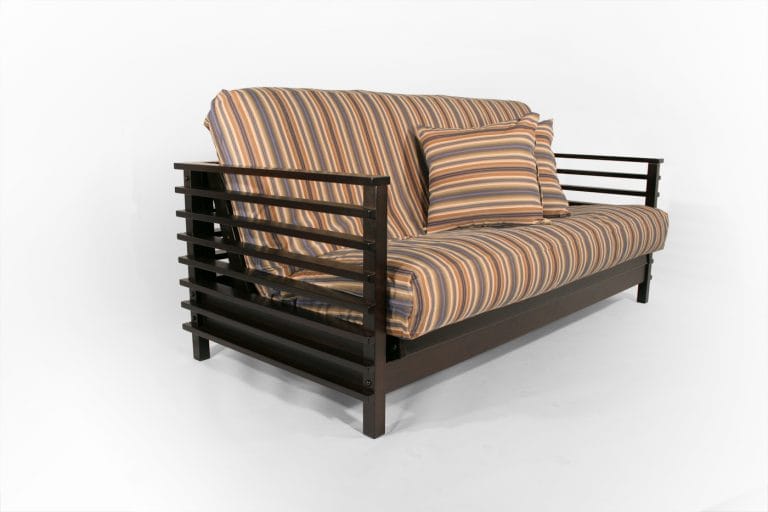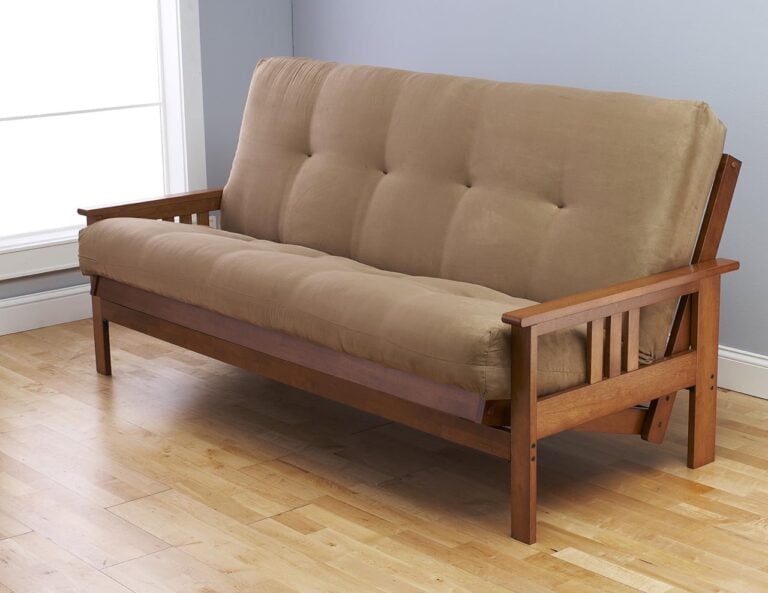

Small Futon Sofa Beds: NYC Apartment Sizing Guide
You’re standing in the middle of a small apartment with a tape measure in one hand and a floor plan in your head that already isn’t working.
If you put in a real sofa, guests have nowhere to sleep. If you put in a bed, the room stops functioning as a living room. If you try a bulky sleeper sofa, it may fit on paper and still fail the first time you open it because the coffee table, radiator, or wall gets in the way.
That’s why small futon sofa beds remain such a practical category for city living. They solve a very specific problem. One piece has to do two jobs, and it has to do them without eating the whole room.
The most common mistake isn’t choosing a piece that’s too wide. It’s choosing one that’s too deep, too hard to convert, or too awkward once it’s open. A narrow room punishes bad geometry fast — you notice it every time you sidestep a corner, can’t open a drawer, or have to drag furniture around just to make the bed.
Privacy matters too. In studios and shared spaces, adding one visual divider can make a futon area feel intentional instead of temporary — a simple screen or partition from Futonland’s room dividers can separate sleep space from work space without introducing another heavy piece of furniture.
The right futon isn’t a compromise piece when it’s chosen well. It’s a planning tool. Chair-size models help in the smallest rooms. Full-size futons are often the sweet spot. Wall-hugger frames can save a layout that a standard sleeper would ruin.
The Small Space Challenge
A lot of apartment shopping starts with the wrong question. People ask, “What sofa will fit this wall?” The better question is, “What can I live with every day in this room?”
That difference matters because rooms are rarely simple rectangles with empty walls. There’s usually a radiator, a window line, a door swing, a narrow walk path, or a corner that has to do too much work.
The sofa-versus-bed problem is really a layout problem
In a studio, your sofa is often your main seating area, your guest bed, and sometimes your own bed. In a one-bedroom, the office or living room may need to turn into overnight space without looking like a backup sleeping zone the rest of the week.
A small futon works when it respects movement through the room.
Practical rule: In a tight apartment, preserve the walking path first. A piece that looks slightly smaller but converts cleanly will usually serve you better than a larger model that blocks circulation.
A larger sleeper that technically fits often ends up disliked in practice — the piece dominates the apartment, making the room feel smaller in sofa mode, then becomes a hassle in bed mode.
What city buyers usually need
- Primary seating in a studio: the piece has to feel like a real sofa during the day.
- Guest sleep in a flex room: it should convert quickly without moving half the room.
- A compact solution for a second room: it needs to work in an office, den, or alcove.
- A practical piece for renters: it should move more easily than a bulky sleeper sofa.
That’s where small futon sofa beds earn their keep — simpler, more spatially efficient, and easier to match to the room you have.
What Exactly Is a Small Futon Sofa Bed
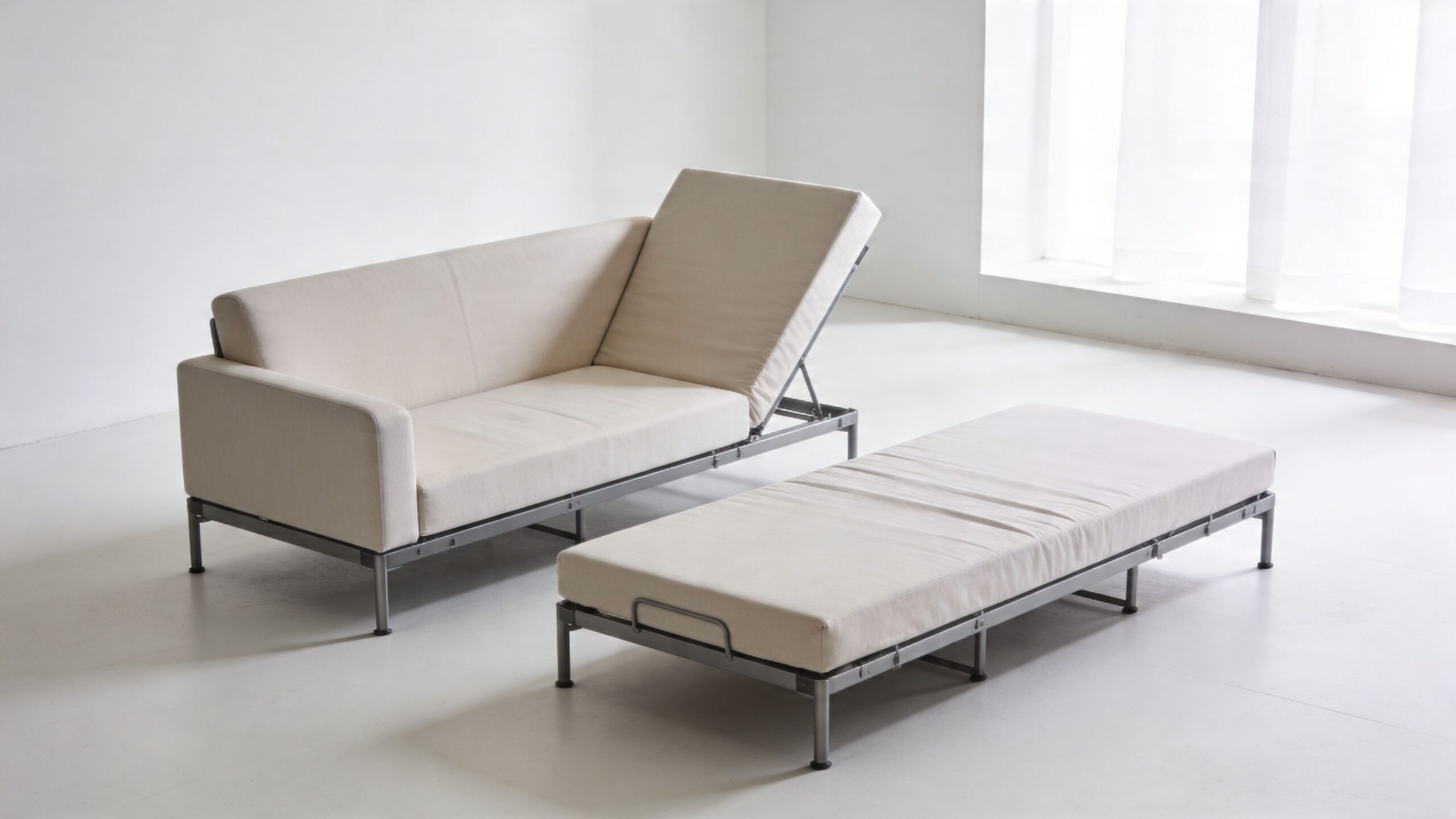
A small futon sofa bed is a convertible piece built around two parts: a visible mattress and a frame that shifts from seating to sleeping. That’s a different structure from hiding a pull-out mechanism inside a bulky sofa body — you’re choosing a lighter piece whose dimensions, depth, and opening path are easier to control.
Shoppers often use “futon” to describe three very different products. A traditional Japanese futon is floor bedding that stores away. A Western futon uses a mattress on a wood or metal frame and converts between sofa and bed. A standard sleeper sofa hides a folded mattress inside an upholstered sofa. For small apartment rooms, the second category is usually the one that solves the problem.
The reason is geometry. Width gets the attention, but width alone doesn’t tell you whether the piece will work against a wall, beside a radiator, or across from a coffee table. A small futon is “small” because its profile stays more manageable in daily use, especially in sofa depth and in the clearance it needs to open.
That’s why wall-hugger and compact-frame designs matter so much in this category. Some futons need open space behind or in front of the frame to convert. Others are built to open while staying close to the wall. In a narrow living room or a studio where every walking lane counts, that detail matters more than many generic buying guides admit.
A futon also differs from a pull-out sleeper in how it feels to live with over time. The mattress is both the seat and the bed surface, so the piece is usually simpler to convert and easier to service. If the cover wears out or the mattress comfort is wrong, you can often address that specific part instead of replacing the whole unit.
There are trade-offs. A futon doesn’t give you the thick, overstuffed look of a deep traditional sofa, and some low-cost models feel flat or too firm if the mattress quality is poor. But in a small apartment, a well-made futon often earns its place because it avoids the extra bulk and weight of a conventional sleeper.
In practical terms, “small futon sofa bed” usually includes a few formats: compact full-size futons, chair-size or twin-style sleepers, click-clack convertibles with a slimmer profile, and wall-hugger frames that stay close to the wall while opening.
The useful definition is simple. A small futon sofa bed is a convertible sleep-and-seat piece designed for a tighter operating footprint, with frame depth and wall clearance often deciding whether it works in the room at all.
Choosing Your Size
When shoppers say they need a “small futon,” they usually focus on width first. Width matters, but in tight apartments, depth in sofa mode and clearance in conversion often matter more.
A piece can fit your wall and still fail your room.
Measure the operating footprint, not just the catalog width
A futon has two footprints. The first is the sofa footprint — the space it occupies every day. The second is the conversion footprint — the space it needs when you open it.
For a lot of narrow layouts, the second one is where trouble starts. The coffee table blocks the open position. The bed hits the opposite wall. The room works in theory but not in practice. Check the manufacturer’s listed conversion clearance for any specific model before ordering — this varies enough between models that a general rule of thumb won’t tell you whether it fits your specific room.
That’s why depth can be the deciding measurement in a railroad room, a narrow office, or a studio where the bed opens toward the center.
Small Futon Size Guide
| Futon Size | Sleeps | Typical Sofa Width | Best For |
|---|---|---|---|
| Chair-size / Twin sleeper | One | Compact footprint | Home office, nursery corner, very small guest zone |
| Full-size futon | One to two | Usually the practical middle ground | Studio apartment, small living room, primary guest setup |
| Queen-size futon | Two | Larger presence | Bigger living room or wider studio with better clearance |
Chair-size and twin sleepers for the smallest rooms
For a home office that still has to function as an office, start with the smallest real sleeper that still makes sense for an adult guest — often a chair-size futon or compact twin sleeper.
These pieces work well when the room already has a desk and needs seating that doesn’t dominate the wall, when guests are occasional and the piece can prioritize daytime use, or when the doorway or staircase is tight and a smaller unit is easier to place.
They’re also good for those in-between spaces that aren’t quite bedrooms and aren’t quite alcoves.
Full-size is the real sweet spot for most buyers
For everyday apartment use, full-size is usually where function and footprint balance out. A full gives you a more credible sleep surface than a chair-size unit, but doesn’t take over the room the way a larger sleeper can — often the first size worth looking at for a studio or a small one-bedroom living room.
Compare standard mattress and frame dimensions before shopping using Futonland’s sizing charts.
In city apartments, a full-size futon often solves the problem that buyers hoped a loveseat sleeper would solve, without feeling too cramped once someone actually sleeps on it.
When a queen works and when it doesn’t
A queen can make sense, but only if the room has enough width and enough open floor in front of the frame. Choosing queen because you’re thinking about sleep comfort first and room function second is a common and understandable mistake — but it’s backwards. Choose queen only if the room can still breathe in sofa mode and still convert cleanly in bed mode. If not, a better full-size futon will be more livable day to day.
Frames and Mechanisms That Maximize Space
In a small apartment, the mistake is usually not choosing a futon that’s too wide. It’s choosing one that’s too deep, or one that needs more clearance behind it than the room can give.
Width shows up on spec sheets first, but frame depth in sofa mode, plus the space a mechanism needs to open, usually decides whether the piece works against a real apartment wall.
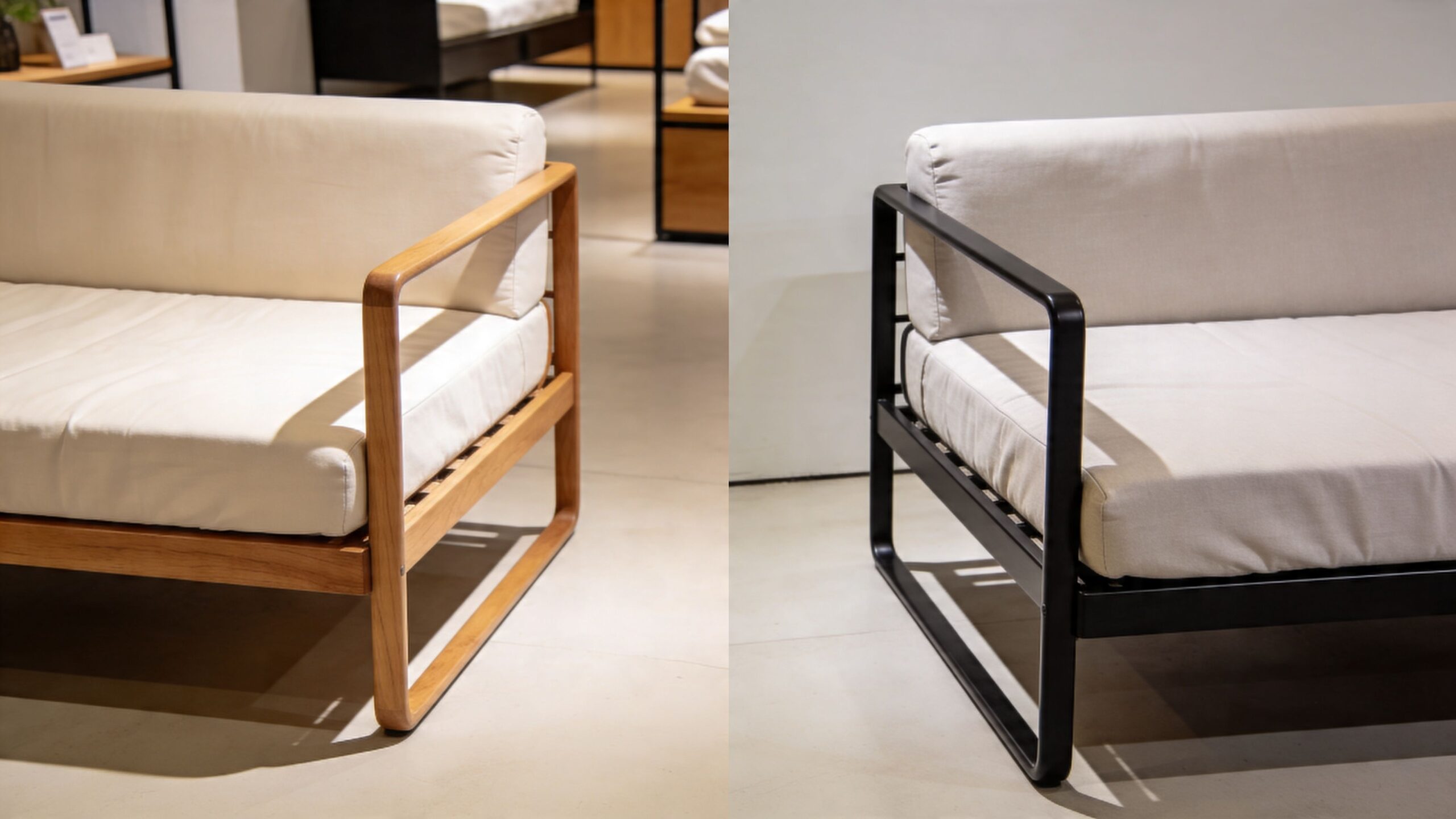
Wood versus metal frames
Material changes both the look and the way the futon lives in the room.
Wood frames usually read more like permanent furniture — in a living room or studio where the futon is visible all day, that matters. A good wood frame also tends to feel steadier under a thicker mattress, helpful if the piece will be used often for sitting and occasional sleeping.
Metal frames have their place. They can look lighter, and in tighter rooms that visual lightness helps the apartment feel less crowded. They also make sense for a guest room, a basic rental setup, or a secondary space where the futon is more about function than finish.
The trade-off is simple. Wood often wins on furniture feel and long-term appearance. Metal often wins on a simpler, more utilitarian profile. Neither solves a bad mechanism.
Click-clack and standard convertible designs
A click-clack convertible is usually fast to open, appealing to buyers who don’t want a complicated routine before bed. Many of these models have an integrated seat and back rather than a separate futon mattress on a frame — which affects comfort, maintenance, and replacement.
If the sleeping surface wears out on an integrated convertible, you’re usually replacing the whole piece. With a traditional futon frame, you have more flexibility to swap the mattress later without replacing the frame itself — worth prioritizing if you want better control over comfort or expect to keep the piece for years.
Click-clack models still work well in some apartments, especially where the futon is used occasionally and the priority is quick conversion. Traditional frames usually make more sense when the futon has to do real daily duty.
Why wall-huggers matter in a narrow apartment
Wall clearance is often the deal-breaker.
In a narrow railroad apartment or a small office-guest room, a standard frame may force you to pull the futon away from the wall before opening it. That sounds minor until you’re doing it at night, in socks, around a coffee table, with only a slim path between the frame and the opposite wall.
A wall-hugger frame fixes that specific problem — as it opens, the mechanism moves in a way that keeps the frame usable close to the wall, so you’re not creating a second furniture-moving task every time someone sleeps over. Browse wall-hugger futon frames designed for tight wall clearance.
This matters more than many buyers expect because room depth is usually tighter than room width in city apartments. A futon that’s a couple inches shallower in sofa mode, or one that opens without needing much rear clearance, can preserve the walking lane that keeps the room functional.
Wall-huggers are a strong fit when the futon sits directly against a wall and you don’t want to pull it out to convert it, when the room is long and narrow and front clearance matters more than overall width, or when the bed function will be used often — easier opening means the mechanism actually gets used instead of avoided.
Test the mechanism, not just the silhouette
Online photos flatten the problem. In person, you feel the difference immediately.
Check how much force it takes to open. Check whether the frame shifts predictably or catches halfway. Sit on it upright and notice whether the back angle feels natural for an actual evening of use, not just a quick showroom sit. Then picture the bed position in your apartment with your own wall, rug, and coffee table distances in mind.
A futon frame is a geometry decision as much as a style decision. Get the depth and clearance right, and a small futon can earn its floor space every day.
Finding Lasting Comfort: Mattress and Upholstery Guide
A small futon earns its keep by feeling good in the position you use most. Plenty of compact setups have the frame fitting the room and the wall clearance right, and the purchase still falls apart because the mattress was too thin for daily sitting or the fabric couldn’t handle apartment life.
Focus on intended use. A futon for a spare sleep surface can get by with a simpler mattress. A futon that serves as the main sofa, or gets slept on every week, needs better internal support and better recovery after compression.
For regular use, innerspring, latex, or well-built hybrid futon mattresses hold up better than the lightest entry-level pads. In a small apartment, the same two or three spots get loaded over and over — seat-front compression shows up fast, especially when the futon is the only real lounging spot in the room. Compare builds side by side in futon mattresses.
A practical filter helps:
- Occasional guest use: a firmer basic mattress usually works if it spends most of its life in sofa mode.
- Primary sofa with occasional overnight use: look for a mattress that keeps its shape where people sit every night.
- Frequent sleeping: put most of the budget into the mattress first, then match the frame to it.
Thin mattresses have a place. In a home office, small guest room, or walk-up where weight matters, a thinner profile makes the futon easier to handle and visually lighter. The trade-off is long-session comfort — once a futon starts doing nightly sleep or long movie-night duty, extra substance is usually worth the added bulk.
Upholstery deserves the same kind of realism. In a small apartment, people eat on the futon, work from it, drop bags on it, and brush past it in tight walkways. Fabric takes a beating faster in 500 square feet than it does in a large suburban den.
Performance fabrics are often the safest call for active homes. Microfiber-style covers are practical if easy cleanup matters more than a polished appearance. Textured woven upholstery can look better in a living room that has to carry the whole apartment visually, but shows wear more clearly.
One detail buyers miss is how the mattress behaves in sofa mode over time. A mattress can feel acceptable lying flat for one night and still fail as a seat because the front edge softens too quickly. In a small apartment, that matters more than people expect — you sit there every day, your guest sleeps there once in a while.
Comfort lasts when the mattress and upholstery match the actual pattern of use, not the fantasy version of the room.
Putting Your Futon to Work: Real Scenarios

The easiest way to choose among small futon sofa beds is to stop thinking in categories and start thinking in rooms. The room tells you what the futon needs to do.
The studio that needs one piece to do almost everything
A full-size wall-hugger futon usually makes the most sense when the sofa is also the primary bed. The reason isn’t just sleeping size — it’s workflow. You want the futon against the wall, easy to convert, and not so deep in sofa mode that it eats the center of the room.
Buyers often overreach on queen and then regret the daily footprint.
The home office that hosts guests a few times a year
A chair-size futon or twin sleeper works well when the room’s primary identity is still “office.” That setup keeps the room useful Monday through Friday and sleep-ready when needed, while still fitting a desk, storage, and a normal walking path. The sleeper doesn’t turn the office into a permanent guest room — the most rational choice for occasional guests.
The family living room that needs durability first
A family room asks a different question: not “will someone sleep here?” but “how will this hold up?” Prioritize a sturdier frame, easier-clean upholstery, and a mattress that can tolerate repeated sitting. If spills, homework, movie nights, and overnight guests all happen in the same spot, choose function first and styling second.
Guest comfort needs realism
Expecting a compact futon to feel identical to a full standalone bed sets up disappointment. There’s a real trade-off — a thinner futon mattress won’t match a dedicated guest bed for support, but it typically breathes better than a deep, all-foam mattress, which matters in a warm apartment. Adding a topper can push comfort much closer to what guests expect on a mattress that’s otherwise too thin for regular sleeping.
A practical rule follows:
- Occasional guest room: a topper can solve a lot.
- Primary nightly bed: start with a better mattress, not a cover-up fix.
- Warm apartment or stuffy room: breathability matters more than many buyers think.
A guest futon doesn’t need to be perfect. It needs to be honest about its job, then upgraded where it counts most.
From Delivery to Daily Care
Delivery matters more in a city apartment than many buyers expect. The product can be right and the move-in can still go wrong if the hallway, stairs, or elevator aren’t considered.
White-glove assembly is useful for tight entries, older buildings, or a room where there isn’t much space to unpack and build. It also helps avoid the common problem of getting the frame inside but struggling to assemble it cleanly in a cramped room.
Testing frame movement in person before buying helps too, especially with wall-hugger styles and compact frames, where conversion feel matters almost as much as dimensions. Visit a showroom in the Upper West Side, Greenpoint, or Newark to try one before ordering.
For long-term care, keep it simple:
- Rotate the mattress: helps distribute wear more evenly.
- Clean spills quickly: spot-cleaning early is much easier than dealing with set stains later.
- Check the hardware: if the frame converts regularly, periodic tightening helps keep it feeling solid.
- Use a removable cover when possible: easier to maintain a small-space piece when the highest-contact layer is replaceable.
- Don’t let bedding bunch inside the frame: extra friction during conversion adds wear.
A futon lasts better when it’s used as intended. Open it smoothly, close it carefully, and don’t treat the mechanism like rough utility furniture just because it converts.
Frequently Asked Questions
Can I test how a futon converts before buying?
Yes, and for apartment buyers that’s worth doing. In a small room, conversion feel matters — a frame that looks fine online may feel clumsy in person, especially if you’ll use it often.
Is a chair-size futon actually useful for adults?
It can be, if the use case is right — an office, occasional guest room, or very tight apartment zone. It’s not the strongest choice for couples or nightly shared sleep.
Should I choose a futon or a sleeper sofa for a studio?
Usually a futon if the room is tight and the piece needs to convert without a large pull-out zone. Sleeper sofas can work, but they often demand more clearance and visual bulk.
Are wall-hugger frames really worth it?
In many small apartments, yes. They help when the futon needs to stay close to the wall and still open without constant rearranging.
What matters more, width or depth?
In most city apartments, depth and conversion clearance decide whether the piece functions. Width is easier to notice on a product page. Depth is what you feel every day.
Can I improve guest comfort without replacing the futon?
Often, yes. A topper can help a lot for occasional guest use. If the futon will be slept on regularly, though, it’s better to start with a stronger mattress construction rather than relying on add-ons alone.
Are custom covers worth considering?
They are if the futon is in a visible room or a high-use space. A removable, better-matched cover can help the piece look intentional and stay easier to maintain over time.
If you’re furnishing a small apartment, the smartest move is to measure the room in sofa mode and bed mode before you shop. That one habit eliminates most expensive mistakes.