

Ultimate Murphy Bed Installation Cost Guide
Murphy bed installation costs shift quite a bit depending on project complexity and local labor rates. A standard pro install usually lands between $250 and $600, while adding custom cabinetry can push the total past $1,000.
This guide breaks down DIY, basic professional, and full-cabinet installs so you can see where your budget fits.
Murphy Bed Installation Cost At A Glance
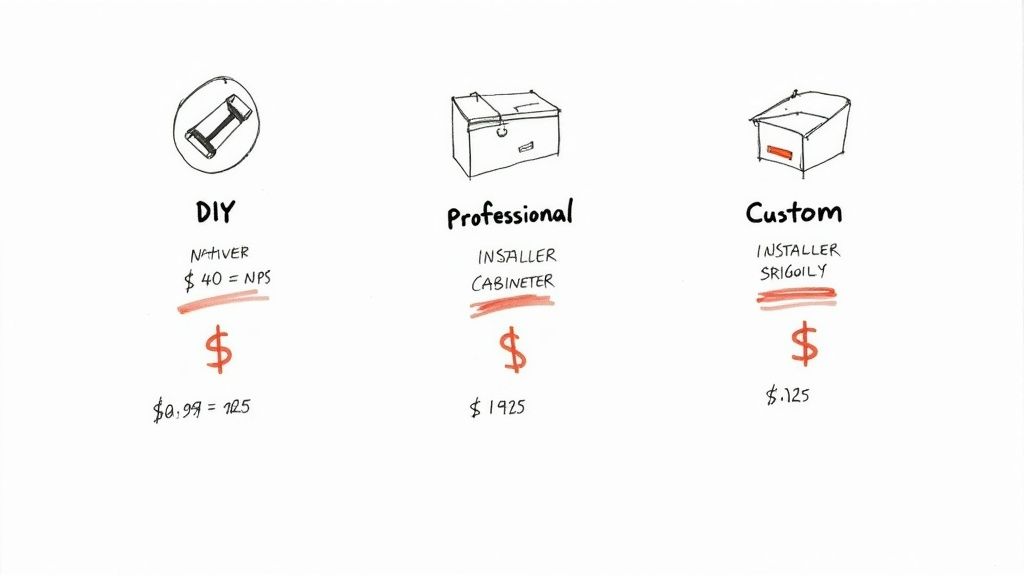
Below is a quick snapshot of typical install options, price ranges, and what each package includes.
Typical Installation Cost Summary
| Installation Option | Cost Range | Details |
|---|---|---|
| DIY Self-Install | $0–$150 | No labor fee, basic kit |
| Professional Installation | $250–$600 | Standard wall mount and testing |
| Custom Installation | $500–$1,000+ | Custom cabinetry, white-glove service |
This table spans entry-level DIY to top-tier custom solutions.
- Labor Intensity: Varies with wall material and cabinet weight.
- Hardware Quality: Affects spring durability and warranty coverage.
- Add-Ons: Lighting, trim, or built-in shelving drive up costs.
If you’d like to explore different wall-bed designs, check out our guide to wall beds.
DIY installers save on labor but should budget extra time and tools. Kits themselves range from $900 to $2,000, offering basic frames with minimal hardware.
Use this at-a-glance data to plan your budget before you request quotes.
Next, we’ll unpack the factors that make custom installs cost more—premium materials, built-in features, and local permit fees. Understanding these variables helps you avoid surprise charges.
Key Cost Drivers
Professional labor and wall reinforcement can add 20–30% to your total install cost.
- Wall Type: Brick or plaster walls demand extra anchors.
- Cabinet Finish: Solid wood or veneer upgrades increase material costs.
- Hardware Quality: Premium springs and brackets boost both lifespan and price.
Keep these drivers in mind as you refine your plan.
Understanding Murphy Bed Installation Components

Before we start talking dollars and cents, let’s peel back the layers of a Murphy bed installation. Its cost isn’t pulled from thin air—it’s rooted in five core pieces that stack up like support beams on a deck.
- Framing: Transfers the bed’s weight into your wall studs.
- Hardware Mechanisms: Springs or pistons that balance each raise and lower.
- Wall Anchors: Keep everything nailed down, sometimes calling for extra reinforcement.
- Cabinet Shells: From simple box kits to built-in shelving systems.
- Finish Work: Paint, trim and the fine details that make everything look seamless.
Key Insight: Installers price out each component to ensure there are no surprises when the final invoice arrives.
Springs And Hardware Mechanisms
Think of hardware mechanisms as the muscles that move your bed. Vertical beds often lean on piston lifts, while horizontal models use torsion springs.
- Piston Lifts run between $50 and $150, depending on strength and finish.
- Torsion Springs suit heavier beds but may need the occasional adjustment.
- Premium Brackets can tack on about 10–15% more to your hardware budget.
Wall Anchors And Cabinet Shells
Securing a Murphy bed to drywall is one thing. Attaching it to brick or plaster demands heavy-duty anchors and perhaps a few extra hours of labor.
- Wall Studs Only: Basic anchors for $20–$50.
- Brick or Concrete: Specialized anchors at $50–$120.
- Reinforcement Brackets: Adding $30–$80 apiece.
Cabinet shells do more than house your bed—they can double as storage. A basic kit sits around $200–$400, while a built-in bookcase system can climb to $1,000–$2,500.
Looking to match your mattress to your new wall bed? Check out our detailed sizing guide.
Finish Work And Final Touches
If framing is the frame and hardware the guts, think of finish work as the icing on the cake. Trim, paint, edge banding and all the small touches add 5–10% to a cabinetry budget.
- Custom crown molding to mirror your existing trim
- Paint or stain matched to your room’s palette
- Decorative knobs, handles and covers
- Sealants for moisture resistance in humid spaces
These details might feel optional, but they pull the whole installation together—and they’re often the first thing friends notice.
By breaking down framing, mechanisms, anchors, shells and finish, you can see exactly what drives your Murphy bed cost. In the next section, we’ll dig into price ranges so you can align features with your budget.
- Measure wall strength and stud spacing
- Select the right hardware mechanism
- Choose cabinet type and finish level
- Factor in anchor reinforcement where needed
- Include finish details and an inspection
Following these steps helps ensure your installer’s quote covers everything.
Case Study Overview
Here’s a quick look at how a basic vertical twin kit adds up:
| Component | Cost |
|---|---|
| Framing | $150 |
| Mechanism | $75 |
| Anchors | $25 |
| Shell | $200 |
| Finish Work | $50 |
| Total | $500 |
This breakdown makes it clear: every piece you choose directly affects your bottom line.
Breaking Down Murphy Bed Installation Cost Ranges
Murphy bed installation can span from budget-friendly DIY projects to full-scale custom cabinetry. Where you land depends on the level of finish you want and who’s doing the work.
We’ve organized the options into three clear tiers—DIY self-install, standard professional fit, and premium custom cabinet solutions—to help you match your budget with your goals.
Whether you’re weighing a simple twin kit or dreaming of a floor-to-ceiling unit, these cost ranges will guide your decision.
DIY Self-Install Overview
DIY kits generally run between $900 and $2,000, not including any paid labor. A skilled homeowner might power through an install in a single weekend; beginners should budget two days.
- Pros
- Save on labor costs
- Complete on your own schedule
- Cons
- Longer install time
- Risk of setup errors
Installing a wall bed is like tackling a giant IKEA puzzle—you need patience, a stud finder, and sometimes an extra pair of hands.
Ideal for homeowners who enjoy projects and have a decent workshop of tools.
Standard Professional Fit Overview
Hiring a pro usually adds $250 to $600 to your total. This tier covers site prep, wall reinforcement, hardware calibration, and safety testing.
- Pros
- Faster turnaround
- Expert tools and techniques
- Warranty coverage
- Cons
- Higher labor fees
- Scheduling around contractor availability
Let the experts handle it—professional installers ensure the mechanism works smoothly and safely from day one.
Premium Custom Cabinet Install
Custom installations start around $1,500 and can climb past $10,000 for fully integrated, all-in-one units. You’ll get built-in shelving, crown molding, designer finishes, and white-glove assembly.
- Pros
- Seamless design integration
- Top-tier materials and hardware
- White-glove delivery and setup
- Cons
- Significant investment
- Longer lead times
A custom Murphy bed becomes the room’s centerpiece, blending storage and sleep solutions into one elegant unit.
Size Cost Examples
- Twin: $900–$1,500 DIY, $350–$700 pro, $2,000–$8,000 custom
- Queen: $1,000–$1,800 DIY, $400–$800 pro, $3,000–$10,000 custom
- King: $1,200–$2,000 DIY, $500–$900 pro, $5,000–$15,000 custom
Installation Type Cost Comparison
Below is a side-by-side look at each installation tier:
Installation Type Cost Comparison
| Installation Type | Cost Range | Typical Features |
|---|---|---|
| DIY Self-Install | $900–$2,000 | Basic kit, homeowner handles framing and hardware |
| Standard Professional Fit | $250–$600 | Wall reinforcement, hardware setup, basic warranty |
| Custom Cabinet Solutions | $1,500–$10,000+ | Built-in shelving, premium finishes, white-glove assembly |
This comparison highlights how kit-only options stack up against full custom solutions.
Choosing The Right Installation Tier
Your choice comes down to budget, skills, and aesthetic goals. If you have the tools and time, a DIY install keeps costs low. If you want speed and peace of mind, professionals are worth the fee. And if you’re after a show-stopping centerpiece, custom cabinetry is the way to go.
For more on built-in options, see our guide to Murphy Cabinet and Chest Beds.
Installation Timeline And Scheduling
- DIY: 4–8 hours over a weekend
- Pro: 3–5 hours by a two-person crew
- Custom: 2–4 weeks including design, build, and finishing
Booking ahead is key—contractors get busy during peak home-improvement seasons.
Regional Price Variations
Labor rates can swing dramatically by location. In big cities, expect up to $800 per install; in rural areas, you might see rates as low as $200.
- Schedule off-peak to save 10–20%
- Research local permit requirements early to avoid surprises
Key Takeaways
- DIY installs start at $900 plus kit cost
- Professional services range from $250–$600 and include warranties
- Custom cabinets can top $10,000 for high-end finishes
For national averages—installation included—owners spend about $3,000, with totals from $1,500 on the low end to $15,000 for custom kings. Discover more insights at HomeAdvisor Cost Report.
Factors Affecting Murphy Bed Installation Cost
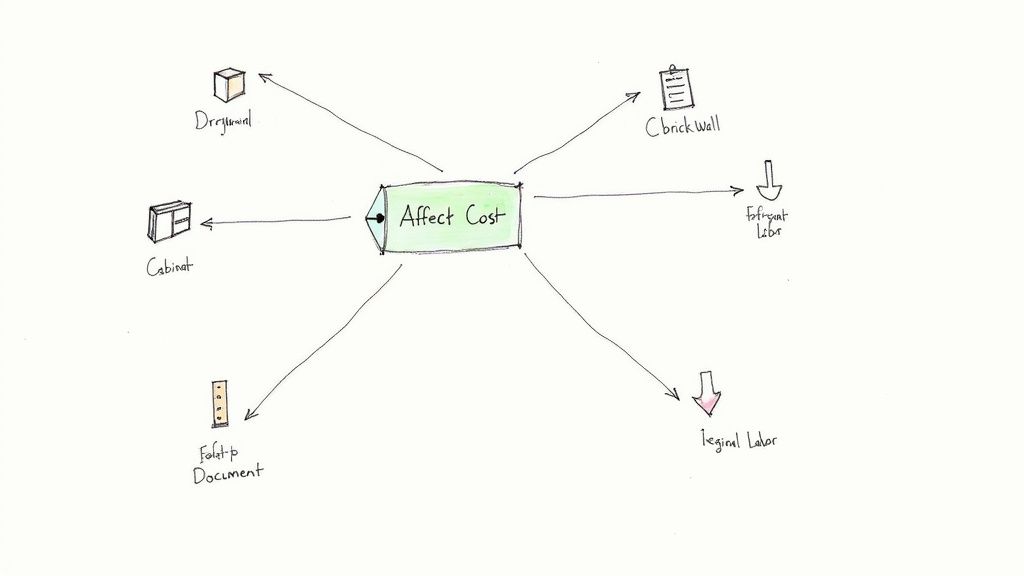
Securing a Murphy bed starts with the wall you’re working on. Drywall installations are almost plug-and-play, while brick or concrete takes more drilling time and muscle.
- Drywall anchors cost $20–$50 and install in minutes
- Brick or concrete anchors run $50–$120 and demand heavy-duty drilling
- Reinforcement brackets tack on $30–$80 per unit
Cabinet Size And Finish Impact
Cabinet dimensions and finishes drive both material and labor charges. A simple twin cabinet kit often begins around $200, whereas a floor-to-ceiling queen shell can top $1,500.
- Standard laminate finish saves about 10–15% on materials
- Solid wood or veneer can double your material expenses
- Custom paint or stain adds another 5–10%
Adding built-in bookcases or matching crown moldings bumps up skilled carpentry time—and cost.
Key Insight: Cabinet style and finish choices can swing total costs by up to 30%.
Hardware And Mechanism Choices
The bed’s lift mechanism ranges from basic springs to high-end pistons. Torsion springs start at $50 each, while premium piston lifts run $75–$150 per side—often with extended warranties.
- Basic mounting brackets: $20–$30 each
- Stainless steel (premium) brackets: $50–$70 each
For a twin, you’ll typically install two pistons, so plan on about $200 just for lift hardware.
Regional Labor And Permit Fees
Labor rates fluctuate significantly by location. In urban areas, a two-person crew charges $60–$100 per hour. Suburban installs drop to $50–$80, and rural work can be $40–$60.
| Region | Hourly Rate Range | Permit Fees Range |
|---|---|---|
| Urban | $60–$100 | $50–$200 |
| Suburban | $50–$80 | $30–$100 |
| Rural | $40–$60 | $0–$50 |
Don’t forget permits: electrical or plumbing add $100–$300, and skipping them can mean fines or rework.
Electrical And Lighting Add-Ons
A well-lit Murphy bed blends style with function. A simple LED strip costs $20–$40 plus about $100 labor. Integrated USB outlets or wireless charging pads run $50–$100 each.
- Wiring upgrades: $150–$300 (depending on access)
- Outlet relocation: $75–$150 per outlet
- Dimmer switches or control modules: $40–$80
“Lighting and electrical work often account for 10–15% of final installation costs,” notes an industry expert.
Streamlining Costs With Smart Decisions
Small choices now can lead to big savings later. Seasoned installers suggest:
- Measure and confirm wall type before ordering hardware
- Opt for a modular cabinet kit instead of a custom build
- Select standard lift hardware and secure an extended warranty
- Book installation during off-peak seasons to save 10–20% on labor
How Futonland Services Influence Pricing
Futonland’s white-glove delivery is a true concierge experience. Their in-house teams manage:
- Debris removal and wall preparation
- Hardware calibration and safety checks
- Final setup plus design consultations
Custom covers, bespoke finishes, or cut-and-sew options carry additional fees, but bundling delivery, assembly, and removal often nets 5–10% overall savings. You also gain warranty coverage and flexible scheduling.
Mapping out how wall materials, cabinet sizes, hardware, labor regions, and electrical add-ons interact gives you a transparent view of your investment. With that clarity, you can refine your choices, avoid surprises, and keep your Murphy bed project on budget.
Sample Itemized Murphy Bed Installation Estimates
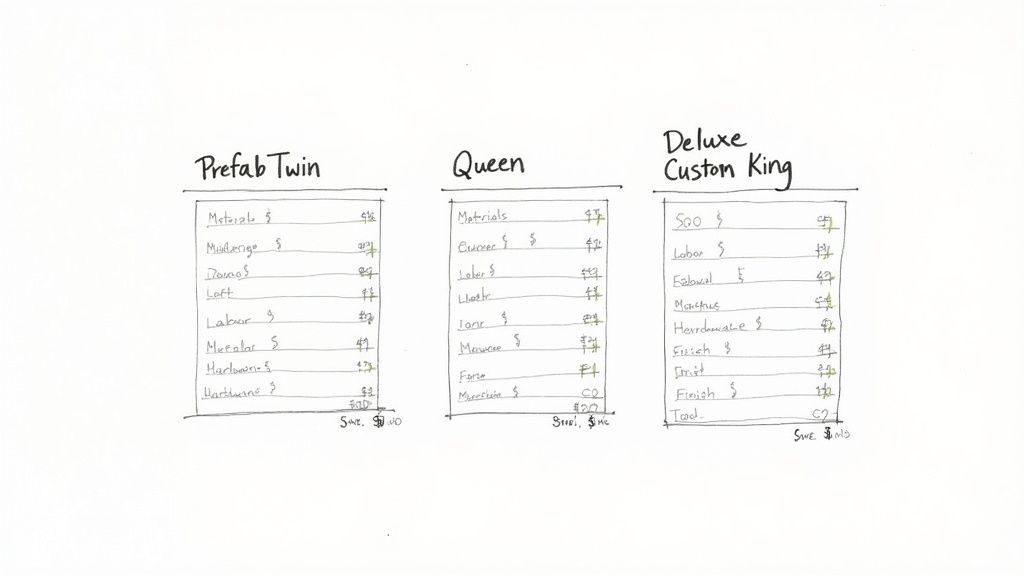
Every project is unique. Your choices, wall conditions, and even timing can shift the final cost.
To help you budget smartly, here are three real-world examples. We’ve broken down every line item so you’ll see exactly where your dollars go.
Think of it like choosing a car—basic, mid-range, or all-out luxury. Let’s dive in.
Twin Prefab Kit Example
A vertical twin kit is the hatchback of Murphy beds—practical and affordable. If you’re handy, you can tackle this over a weekend; otherwise, a pro can finish up in just a couple of hours.
- Materials and Kit $250
- Hardware Mechanism (Piston Lifts) $75
- Wall Anchors and Studs $30
- Labor (2 Hours at $60/hr) $120
- Finish Touches (Paint and Trim) $40
- Disposal or Permit Fees $15
That brings the total to $530. You save on custom cabinetry but give up a bit of storage.
Budget Insight: A prefab kit can cut labor costs by half compared to a fully custom unit.
Queen Built In Shelf Example
Step up to a queen-size unit with built-in shelving and you get storage plus style. Picture a cozy nook by day and a comfy bed by night.
- Cabinet Shell and Shelving $600
- Premium Springs and Brackets $150
- Reinforcement and Anchors $80
- Labor (4 Hours at $75/hr) $300
- Finish Work (Stain and Trim) $120
- Permit and Disposal $25
All told, you’re at $1,275. The shelves add convenience but tack on a few more hours of labor.
| Line Item | Cost |
|---|---|
| Cabinet and Shelving | $600 |
| Hardware and Springs | $150 |
| Anchors and Brackets | $80 |
| Labor | $300 |
| Finish Work | $120 |
| Fees | $25 |
| Total | $1,275 |
King Custom Cabinet Example
At the top tier, the horizontal king with custom cabinets is the limousine of Murphy beds. It’s all about craftsmanship—and yes, it shows in the price.
- Custom Cabinet Build $2,000
- Heavy-Duty Torsion Springs $200
- Extra Anchors and Reinforcements $150
- Labor (8 Hours at $85/hr) $680
- High-End Finish and Crown Molding $300
- Electrical Lighting Add-On $140
- Permit and Debris Removal $75
Grand total: $3,545. Custom work easily triples the cost of a basic kit but delivers that seamless, built-in look.
Design Note: Premium finishes and integrated lighting often add 10–15% to your overall bill.
Total Cost Comparison
| Project Type | Total Cost |
|---|---|
| Twin Prefab Kit | $530 |
| Queen Built In Shelf | $1,275 |
| King Custom Cabinet | $3,545 |
This chart lays it all out—pick the model that fits your wish list and budget.
Key Takeaways
- Twin Kit (~$530): Basic function with minimal storage.
- Queen Shelf (~$1,275): Balanced storage and style.
- King Custom (~$3,545): Full cabinetry, statement piece, premium hardware.
- Itemized costs help you spot surprises before they happen.
- Compare DIY vs. professional rates to find what fits your wallet and timeline.
Estimate Adjustment Strategies
Even small tweaks can shave dollars off your final invoice.
- Choose standard hardware over premium pistons when lift capacity isn’t critical.
- Opt for prefinished cabinetry kits to skip extra painting or staining.
- Book off-peak installation slots for lower labor rates.
- Verify wall studs and clearance to avoid unexpected site fees.
- Hunt for bundle deals that include delivery, assembly, and debris removal.
By applying these tips, you’ll keep major expenses in check and stay on budget.
Refer to these sample estimates when planning and seeking quotes.
Choosing Installation Approach And Saving On Cost
Deciding between a DIY install and a professional setup feels a bit like choosing between cooking a gourmet meal at home and picking up takeout. Tackling a wall bed yourself can trim costs, but it demands both patience and precision. Bringing in a pro means more peace of mind—but you’ll pay for that convenience.
Tools, Skills And Time Commitments
Before you break ground, make sure your toolbox is stocked and you’ve carved out a solid time block. A beginner might budget an afternoon; experienced DIYers often wrap up in 4–6 hours. Get your stud alignment spot on—otherwise you risk extra trips to the hardware store or worse, a fallen cabinet.
- Stud Finder locates framing behind drywall to secure brackets
- Level and Tape Measure ensure the cabinet sits straight
- Power Drill and Bits drive hardware into studs and anchors
If you’re uneasy about lifting heavy panels or juggling tools, it might be worth calling in help from a professional crew.
DIY Versus Professional Installation
When you peel back the layers, DIY and pro installs fall into distinct cost and skill buckets. A solo project can slash labor costs by 50%, but remember, you’ll need at least two people to maneuver the bed cabinet safely. Meanwhile, professional installers usually charge between $250–$600 for labor.
- DIY Pros
- Low labor cost
- Flexible scheduling
- DIY Cons
- Longer install time
- Risk of alignment errors
- Pro Pros
- Speed and reliability
- Insurance and warranties
- Pro Cons
- Higher upfront fee
- Limited scheduling flexibility
Hiring a pro often guarantees a warranty and saves you from installation headaches.
Depending on your comfort level and budget, weigh the value of a DIY sense of accomplishment against the certainty of a certified installer.
- DIY timeframe: 4–8 hours with two people
- Pro timeframe: 3–5 hours by a two-person crew
- Regional labor rate swings up to 25% between urban and rural areas
Negotiation Tactics And Off-Peak Scheduling
Smart timing can shave real dollars off your final bill. Booking an install in late winter or early fall often nets 10–20% discounts on labor. Tack on a second Murphy bed or order hardware in bulk, and you might unlock even deeper savings.
- Ask for off-peak discounts when demand is low
- Bundle cabinet hardware and delivery in one package
- Request price breaks for multiple installations or referrals
“Installing outside the busy spring and summer seasons can be a simple way to secure a lower rate,” suggests industry recruiters.
Always clarify upfront any charges for wall prep or debris removal. A transparent scope of work is your shield against surprise fees. And don’t hesitate to shop around—encourage contractors to beat each other’s bids by 5–10%.
Questions You Must Ask Installers
A few targeted questions will keep your budget on track and your expectations clear. Start by confirming licensing and insurance. Then dig into warranty specifics for both hardware and labor.
- What licenses and certifications do you hold for carpentry or electrical work?
- Can you provide proof of insurance and bonding?
- What is your warranty period for hardware mechanisms?
- Do you guarantee labor and correct any issues at no extra charge?
- How do you handle scope changes or add-on requests?
Ask for an itemized quote listing materials, labor hours, and permit fees. This breakdown works like a recipe—every ingredient and step is visible.
Cost Saving Strategy Checklist
Little decisions add up fast. Picking standard finishes and prefab cabinets can dial down custom fees. Combining services keeps contractors invested in your project and often delivers a package discount.
- Off-Peak Booking: Schedule installs in January or September for 10–20% lower labor rates
- Standard Hardware: Choose basic springs and brackets to avoid premium markups
- Modular Cabinets: Prefab kits skip custom cut costs and extra carpentry time
- Bundle Services: Combine delivery, debris removal, and assembly for package discounts
- In-House Packages: Discover in-home assembly at our store locations
Early planning with these tactics transforms sticker shock into predictability. Compare quotes from at least three installers to spark a small bidding war. Document all agreements in writing—this ensures your negotiated rates stick.
Choosing wisely between DIY and professionals, armed with the right tools, questions, and scheduling tricks, puts you in the driver’s seat of your Murphy bed project. By mixing off-peak timing, strategic bundling, and clear communication, you can trim as much as 20% off your final invoice without sacrificing quality.
Frequently Asked Questions
Any homeowner will tell you that once you choose a Murphy bed style, questions about cost, timing, and permits start piling up. To help you plan without headaches, here are clear, concise answers to the most common queries.
How Long Does A Typical Install Take?
Putting in a standard Murphy bed with a professional crew usually wraps up in about 3–5 hours.
If you tackle it yourself, expect a 1–2 day project—depending on your comfort level and whether you have an extra pair of hands.
Common time frames include:
- DIY Weekend: 8–12 hours for two people.
- Pro Half Day: 3–5 hours with a two-person team.
- Custom Builds: 1–2 weeks, counting design tweaks and finishing touches.
Permit Essentials
Planning ahead on permits can save you from surprise delays. In most cases, drywall-only installations sail through without paperwork.
However, any electrical wiring or structural reinforcement usually triggers a permit. Always check local codes to avoid hefty fines.
- Electrical Upgrades: $50–$200 permit fee.
- Wall Reinforcement: $0–$100, depending on inspection requirements.
Hardware Upgrades
Yes, you can swap out springs, pistons, or lift mechanisms after the initial install. This flexibility is handy if you decide to support a heavier mattress or improve that effortless smoothness.
Upgrading parts typically adds about $50–$150 per mechanism.
Swapping to premium piston lifts can boost smoothness and tack on roughly 15% more to your hardware expenses.
Warranty And Maintenance
Murphy bed manufacturers often back their hardware with a 1-year warranty, while cabinetry coverage can run longer. When a mechanism goes on the fritz, here’s how to speed up your repair:
- Gather photos and proof of purchase before you call.
- Confirm whether labor is included or billed separately.
- Clarify expected turnaround on your warranty claim.
By nailing down install time, permit costs, hardware options, and warranty details up front, you’ll keep your budget steady and timeline on target.
Our guides walk you through every phase, from the first quote to final inspection and budget fine-tuning.
Ready to elevate your space with expert delivery, white-glove assembly, and debris removal?
Head to Futonland for top-quality Murphy bed solutions and end-to-end service.