
Mattress For Futon: A Complete Guide
Picking the right mattress for your futon comes down to one thing: finding the sweet spot between sleep comfort and day-to-day durability. A regular bed mattress just lies flat, but a futon mattress has to flex, fold, and bounce back—often every single day.
The perfect mattress is the one that matches your frame, your routine (daily sleeper vs. occasional guest bed), and the feel you actually like.
Finding The Right Mattress For Your Futon
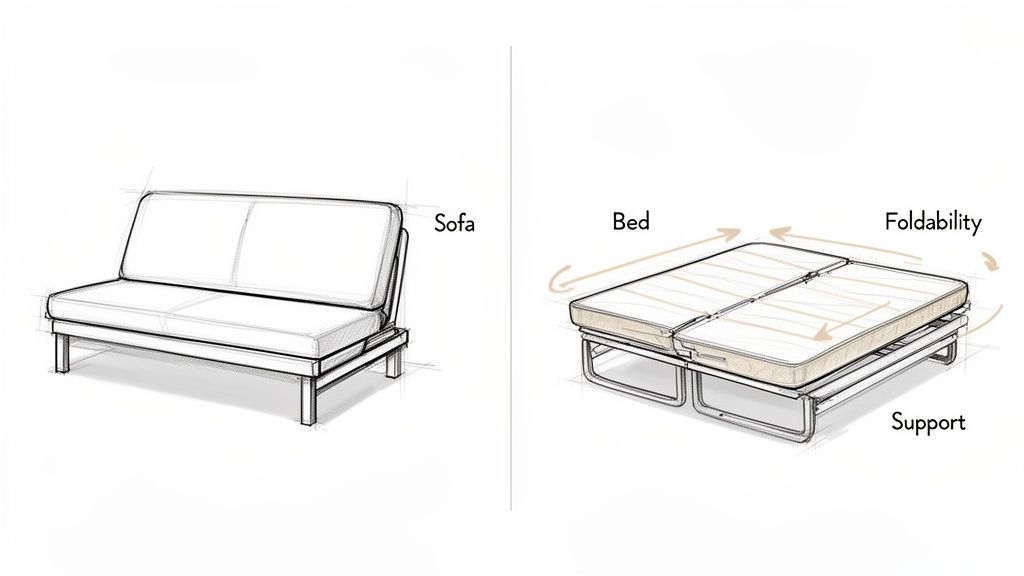
A great futon is one of the smartest space-saving pieces you can own—sofa by day, bed by night. But the real “make or break” factor is the mattress. It’s what determines whether your futon feels like a reliable everyday setup or a stiff, last-resort backup.
This guide cuts through the noise and focuses on what actually matters: materials, thickness, foldability, and support—so you can choose confidently for a studio apartment, guest room, home office, or main living space.
Start With Your Use Case
Before you compare materials, decide how the futon will be used most:
- Everyday sleeping: prioritize support, durability, and enough thickness to avoid “bottoming out.”
- Occasional guest bed: prioritize easy folding, simple comfort, and a mattress that stores and maintains easily.
- Mostly a sofa (rarely a bed): prioritize a firm seat feel and a mattress that holds its shape in sofa mode.
Futon Mattress Types at a Glance
This table offers a quick comparison to help you narrow down what might work best for your space and routine.
| Mattress Type | Primary Material | Feel and Firmness | Foldability | Ideal Use Case |
|---|---|---|---|---|
| Shikibuton | Cotton (often with wool) | Very firm | Excellent | Minimalist feel, occasional use, floor sleeping |
| Foam | Polyurethane / memory foam | Soft to medium-firm | Good (varies by thickness) | Guest rooms, pressure relief, easier lift |
| Innerspring | Steel coils | Medium-firm to firm | Fair | Bed-like feel, less frequent folding |
| Latex | Natural rubber | Medium-firm, buoyant | Very good | Durability, cooler sleep, natural materials |
| Hybrid | Coils + foam/latex | Medium to firm | Good | Everyday sitting + sleeping (balanced feel) |
Getting the size right is just as important as picking the feel. Use our futon sizing charts to match your mattress to your frame correctly.
Exploring Futon Mattress Materials and Types
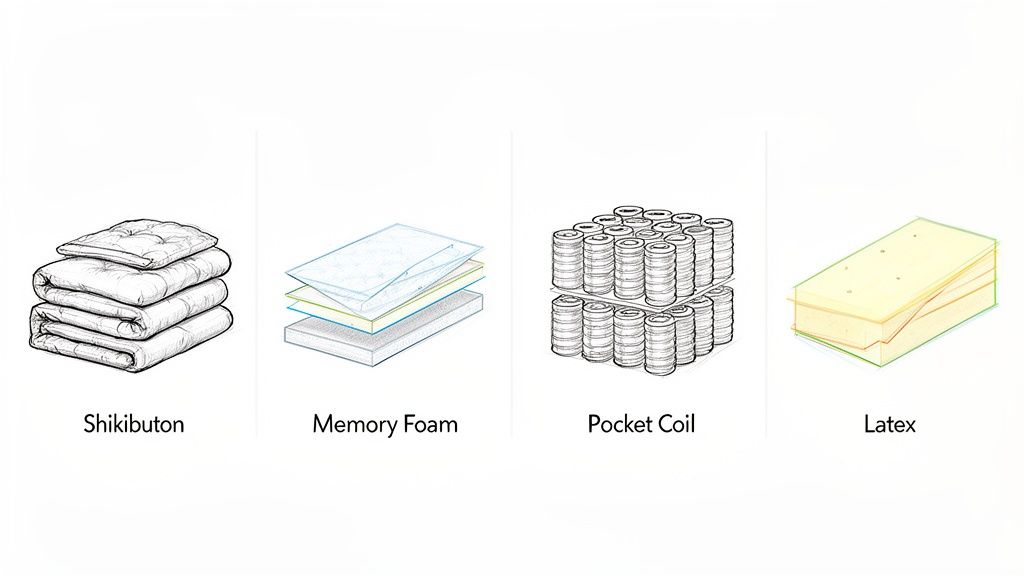
Choosing a mattress for a futon is all about compatibility. The materials inside determine how it feels for sitting, how it performs for sleep, and how well it holds up after months (or years) of folding.
The Traditional Shikibuton
The shikibuton is the classic Japanese-style futon mattress—thin, firm, and designed to be rolled or folded away. It’s typically built from layered cotton, sometimes blended with wool for added resilience.
It’s extremely flexible and easy to store, but it also needs regular care. A shikibuton should be aired out often to keep moisture from building up and to help it retain loft. It’s best for occasional use or for sleepers who genuinely prefer a very firm surface.
Foam and Memory Foam Futon Mattresses
Foam futon mattresses are popular because they’re comfortable, consistent, and often lighter than coil-based options. They range from supportive high-density foam to plusher memory foam that contours to your body.
Memory foam shines for pressure relief—especially for side sleepers—but thicker, softer foams can feel less supportive when used as a sofa (you may sink more than you want). Also, the thicker the foam, the more your mattress may resist folding—so thickness and frame type matter.
Key Takeaway: Foam is a strong all-around choice for many homes. Just balance thickness and firmness so it stays supportive for sitting and still folds comfortably on your frame.
Innerspring and Pocket Coil Futon Mattresses
If you want the most “traditional bed” feel, coil mattresses deliver that familiar bounce and support. Standard innerspring coils tend to feel more uniform and firm. Pocket coils (individually wrapped springs) usually feel more refined, with better motion control and more even support.
The tradeoff is flexibility. Coil mattresses are heavier and less fold-friendly than foam or cotton. They’re often best for futons that are used more as a bed than a frequently converted sofa.
Latex Futon Mattresses
Latex is a premium option known for its resilience and lively support. Unlike memory foam’s slow sink, latex has a buoyant feel that makes it easy to move and change positions. It also tends to sleep cooler than many dense foams.
- Supportive and responsive: contours gently without feeling “stuck.”
- Breathable feel: helps with temperature comfort.
- Long-term shape retention: resists sagging and body impressions.
Latex is a strong match for futons that see regular sitting and sleeping—especially if you want a more natural material profile.
Hybrid Futon Mattresses
Hybrids combine a coil core with comfort layers of foam or latex. The goal is a balanced feel: sturdy support and airflow from coils, plus pressure relief from the top layers.
Hybrids can be an excellent “do-it-all” choice for a futon that functions as both sofa and bed, but you’ll still want to confirm the mattress is designed to fold on a futon frame (not every hybrid is).
Matching Your Mattress to Your Futon Frame
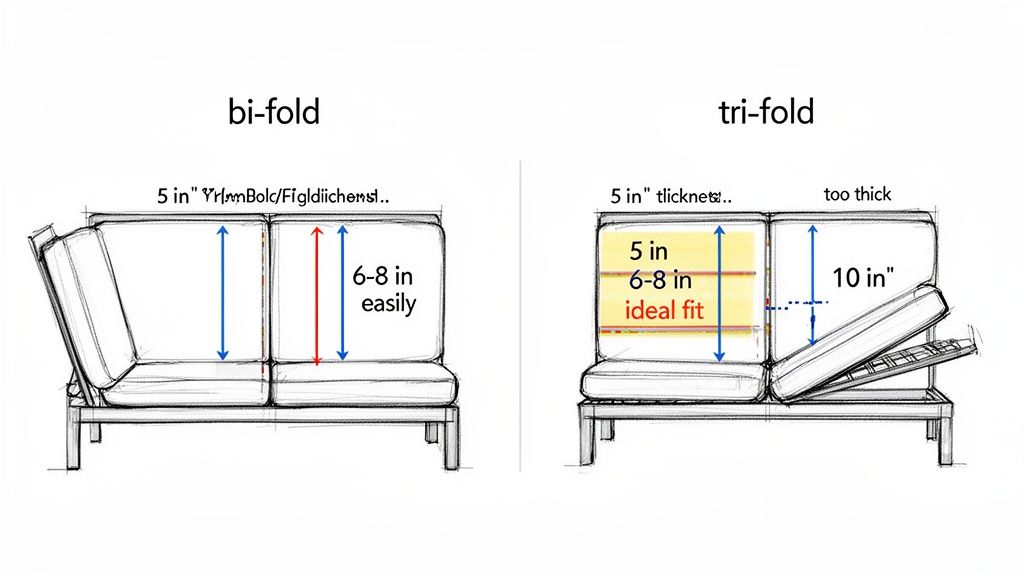
A great mattress only performs well if it matches the mechanics of your frame. If the mattress is too thick or too stiff, your futon may not fold correctly—or it may fold, but put extra stress on the frame over time.
Bi-Fold vs. Tri-Fold Frames
- Bi-Fold frames: fold once in the middle. They usually handle thicker mattresses better because the bend is simpler.
- Tri-Fold frames: fold into three sections (often forming a “Z” shape). They require a thinner, more flexible mattress that can handle sharper folds.
Choosing the Right Thickness
Thickness is the most common cause of “this doesn’t work with my frame.” Use these practical guidelines:
- Everyday sleeping (bi-fold frames): typically 6–8 inches is a strong comfort + foldability range.
- Guest use / easier folding: 5–6 inches often folds more effortlessly.
- Thicker than 8 inches: can be very comfortable for sleeping, but may be bulky in sofa mode and harder to fold depending on frame and material.
Rule of thumb: The more often you convert your futon, the more important fold-friendly construction becomes.
If you’re comparing setups, browsing futon frames alongside mattresses makes it easier to picture how your final combo will operate day-to-day.
Measure Twice, Buy Once
Before buying, measure your frame’s interior dimensions in the flat position:
- Inside width and inside length where the mattress sits
- Deck depth (how much mattress needs to cover the seat and back when upright)
Then confirm those measurements match the product sizing details using our futon sizing charts.
Balancing Firmness for Sitting and Sleeping
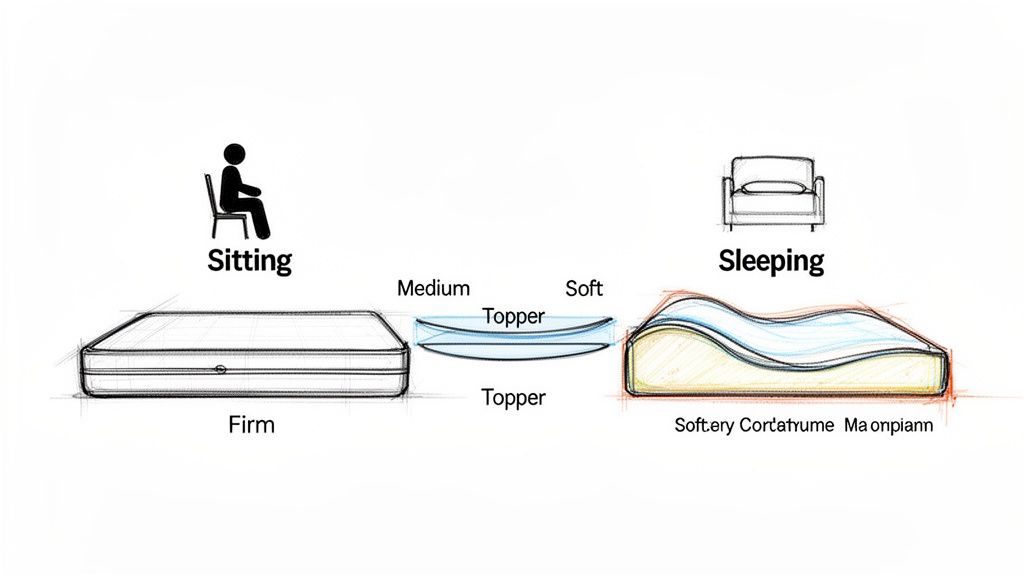
A futon mattress has two jobs. As a sofa, it needs structure so you don’t sink too deeply. As a bed, it needs the right mix of support and comfort so you wake up feeling good.
Match Firmness to Sleep Position
- Side sleepers: usually prefer more pressure relief for shoulders and hips (foam, latex, or a hybrid comfort layer helps).
- Back sleepers: often do best with medium-firm support that keeps the spine aligned.
- Stomach sleepers: typically need firmer support to prevent the hips from sinking.
The Simple Upgrade That Changes Everything: A Topper
If you want a futon that feels supportive for sitting but softer for sleeping, a topper is one of the most practical solutions. You keep a durable base mattress, then add removable comfort when it’s time to sleep.
Explore options here: mattress toppers and pads.
Maintaining Your Futon Mattress for Longevity
A little routine care goes a long way. Most futon mattresses wear out early because they’re used hard and maintained rarely. These habits help your mattress stay comfortable and consistent.
Rotate and Flip Regularly
Rotate your mattress end-to-end and flip it (if it’s designed to be flipped) every couple of months. This helps prevent uneven compression and keeps the surface feeling more consistent.
Use a Protective Cover
A removable cover protects against spills, dust, and everyday wear. It also makes your futon easier to keep fresh—especially in high-use living spaces.
Browse washable options here: futon covers.
Handle Spills Immediately
Blot (don’t rub) spills right away, and allow the mattress to fully dry before covering it again. Moisture is the enemy of both cotton-based and foam-based constructions.
Frequently Asked Questions About Futon Mattresses
Can I Use a Regular Mattress on a Futon Frame?
In most cases, no. Traditional mattresses aren’t designed to fold repeatedly. A futon mattress is built specifically for flexing on a conversion frame without damaging the internal structure.
How Do I Stop My Futon Mattress from Slipping?
Use a non-slip gripper pad between the slats and the mattress, and make sure the mattress size matches the frame correctly. If your mattress has ties, use them—especially in sofa mode.
What Thickness Is Best for Everyday Sleeping?
For most people using a futon as a regular bed, 6–8 inches is the practical range that balances support and foldability. If you want a plusher feel, consider adding a topper rather than going overly thick on the base mattress.
What’s the Difference Between a Futon Mattress and a Shikibuton?
A shikibuton is typically thinner, firmer, and designed for floor sleeping and storage. A Western-style futon mattress is usually thicker and built for a convertible frame, with a wider range of materials and comfort levels.
At Futonland, we specialize in helping you match the right mattress to the right frame—so you get a setup that feels good, folds smoothly, and holds up to real daily life.