

How Do I Clean a Futon Mattress The Ultimate Guide
Keeping a futon mattress clean isn’t complicated. The basics boil down to vacuuming thoroughly, spot-treating any stains with a gentle detergent mix, and then deodorizing with baking soda before letting it air out. This simple routine handles most of the everyday grime and keeps things fresh.
Your Quick Guide to a Cleaner Futon Mattress
Before we dive deep into specific cleaning methods for different mattress types or tough stains, let’s nail down a simple, effective game plan. Think of this as your go-to strategy for routine upkeep and tackling those minor, “oops” moments. You don’t need any fancy equipment; chances are, you already have everything you need right at home.
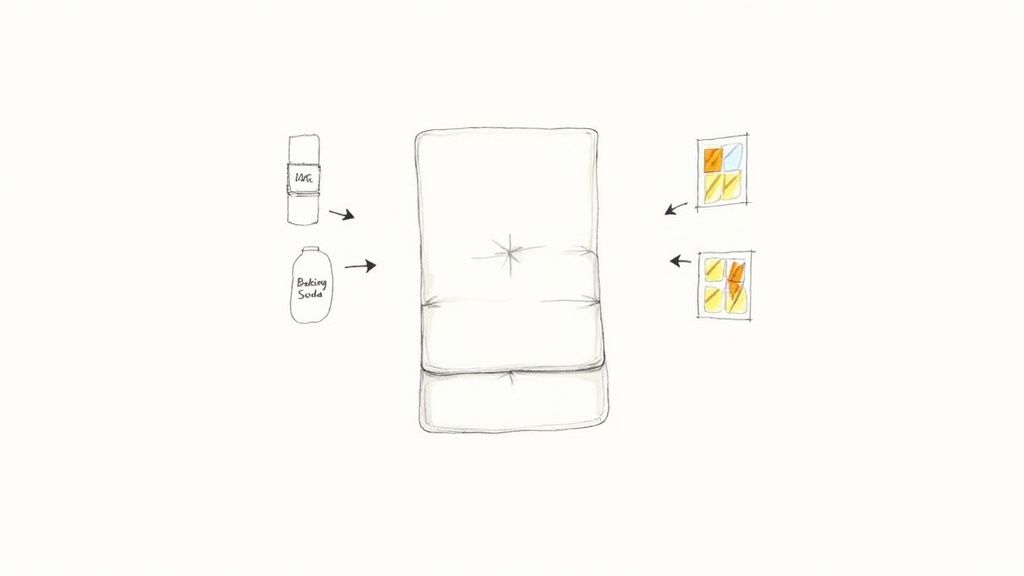
This initial overview covers the core actions that are the bedrock of good futon care. From the first pass with a vacuum to get rid of surface debris to the final airing out that prevents any hint of dampness, these steps are your best defense against dirt, dust, and odors.
Essential Tools and First Steps
Getting your supplies together first makes the entire process a breeze. You’ll be surprised how much of a difference you can make with just a few household staples.
Before you start, it’s a good idea to have a few key items on hand. This table breaks down what you’ll need and why.
Futon Cleaning Essentials At a Glance
| Cleaning Tool | Primary Use | Best For |
|---|---|---|
| Vacuum with Upholstery Tool | Removing surface debris | Dust, pet hair, crumbs, allergens |
| Baking Soda | Deodorizing & moisture absorption | Neutralizing odors, freshening fabric |
| Mild Detergent & Water | Spot-treating stains | Common spills, light discoloration |
| Clean Cloths or Sponges | Applying solutions & blotting | Gently lifting stains without scrubbing |
Having these items ready to go will make the job much faster and more effective.
The single most important preventative measure is consistency. A quick vacuum and deodorizing session every few weeks prevents the deep buildup of dirt and allergens that makes cleaning a much bigger chore.
This foundational knowledge sets you up for success. While this guide is all about cleaning, the best strategy is always prevention. Using high-quality mattress protectors can drastically reduce the need for frequent deep cleans by guarding against spills, dust mites, and daily wear. It’s a small investment that protects your futon for years to come.
Keeping Your Futon Fresh with Routine Care
The secret to a long-lasting, comfortable futon isn’t some marathon cleaning session you do twice a year. It’s all about the small, consistent things you do every few weeks. This kind of routine care is what stops dust, allergens, and funky smells from settling deep into the mattress, making your space healthier and your futon way more inviting. Trust us, being proactive saves you a ton of effort down the road.

The cornerstone of all this is just regular vacuuming. Dust, skin cells, and pet dander don’t just hang out on the surface; they wiggle their way deep into the mattress fibers. Using an upholstery attachment is key here—it has the suction power to pull out all that embedded grime.
Harnessing Natural Cleaning Power
Beyond your vacuum, some of the best cleaning tools are probably already in your pantry. Two of the most effective are baking soda and good old-fashioned sunlight. They’re safe, cheap, and incredibly good at tackling common issues like dampness and odors.
Baking soda is a natural deodorizer that actually neutralizes acidic smells instead of just covering them up. For a quick refresh, just sprinkle a thin, even layer over the entire mattress. Let it sit for at least an hour—or even longer if you’re dealing with stubborn odors—before vacuuming it all up. This simple step pulls out lingering moisture and absorbs any smells trapped in the fabric.
The Importance of Air and Sunlight
Airing out your futon is another non-negotiable step in routine care. If you can, haul the mattress outside on a dry, sunny day and prop it up so air can circulate all around it. The UV rays from the sun are a natural disinfectant, helping to kill off bacteria and dust mites. This also helps evaporate any moisture that’s built up, which is what causes mildew in the first place.
This combo of vacuuming, sunning, and baking soda is a powerful maintenance routine. The vacuuming handles the dust and allergens—and it’s shocking how much builds up. Humans can shed up to 10 grams of skin flakes onto their bedding every week. Sunning it every few months kills bacteria, and baking soda neutralizes oils and acids.
Pro Tip: Never underestimate the power of a good airing out. Even just propping your futon near an open window with a fan running for a few hours can make a huge difference in its freshness and longevity.
Sticking to these simple tasks creates a powerful defense against grime and odors. To make things even easier, consider grabbing one of our removable and washable futon covers. They add a protective barrier that you can just toss in the wash, making upkeep almost effortless.
Removing Stains and Spills Like a Pro
Spills happen. Life happens. One clumsy moment doesn’t have to leave a permanent mark on your futon mattress, whether it’s coffee, juice, or a pet accident. The key is to act fast.
If there’s one thing you take away from this guide, let it be this: Blot, never scrub. This is the absolute golden rule of stain removal.
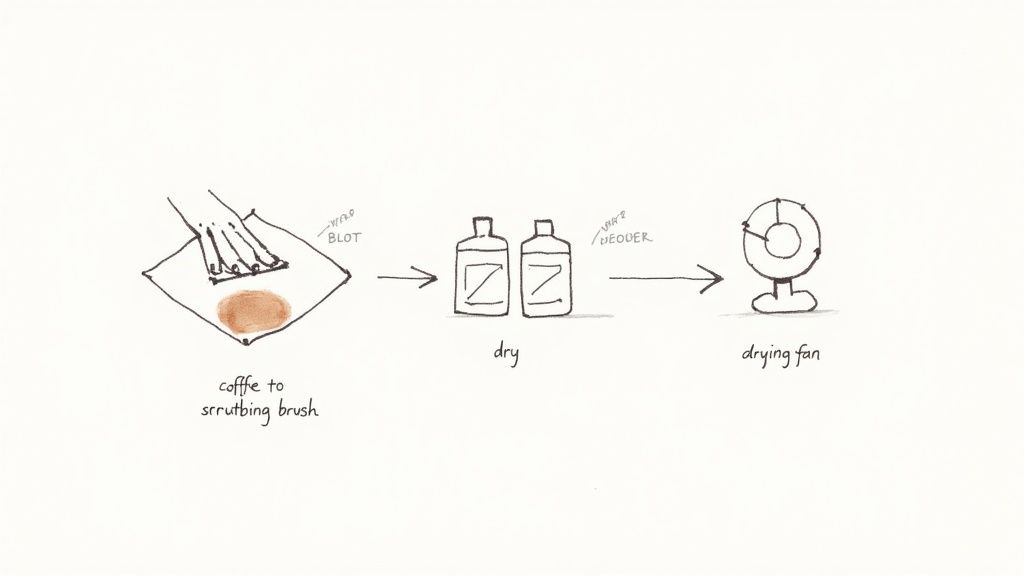
Scrubbing just grinds the liquid deeper into the futon’s fibers, potentially damaging the fabric and making the stain worse. Instead, grab a clean, dry cloth and press down gently on the spill to soak up as much as you can. Always work from the outside of the stain inward to stop it from spreading.
Creating Your DIY Stain-Fighting Solutions
You don’t need a cabinet full of harsh chemicals to get the job done. Most stains can be tackled with simple cleaners you can mix up using things you probably already have in your kitchen.
- For General Spills (Coffee, Tea, Juice): A simple mix of two parts cool water to one part mild laundry detergent usually does the trick. You only need a few drops of detergent in a cup of water.
- For Protein-Based Stains (Blood, Pet Urine): Try a mixture of one part white vinegar and two parts cool water. The vinegar’s acidity is great at breaking down the organic compounds in these tougher stains.
Before you go all-in, always test your cleaning solution on a small, hidden spot of the futon. This quick check ensures it won’t cause any discoloration. When you’re ready, apply the solution sparingly with a clean cloth, dabbing gently at the stain.
The secret to effective spot cleaning is moisture control. You want to use just enough cleaning solution to lift the stain without completely soaking the mattress. Too much liquid can lead to mildew growth deep inside the filling, creating a bigger problem.
For spills like wine or urine, wet cleaning is your best bet to avoid permanent damage. Experts always recommend gently blotting with a diluted detergent solution and a soft cloth. Scrubbing is a no-go—it pushes the stain deeper and can degrade the mattress filling.
The Final Rinse and Dry
Once you’ve treated the stain, don’t skip these final steps—they’re just as important.
Take a fresh cloth dampened with only clean water and blot the area again. This acts as a “rinse,” removing any leftover soap or vinegar residue that could attract more dirt down the line.
Finally, press a dry towel firmly onto the damp spot to pull out as much moisture as possible. To speed things up, you can prop the futon up or aim a fan directly at the wet area. Make sure it’s completely dry before you put any bedding back on or fold it up. Think of this last step as your insurance policy against mold and mildew.
Giving Your Futon a Deep Clean for a Longer Life
Beyond the quick weekly vacuum and spot treatments, a full-blown seasonal deep clean is your futon’s best friend. This isn’t just about appearances; it’s a critical maintenance routine that gets rid of deep-seated dust, allergens, and trapped moisture. Think of it as a reset button you press every few months to keep your futon healthy, comfortable, and around for the long haul.
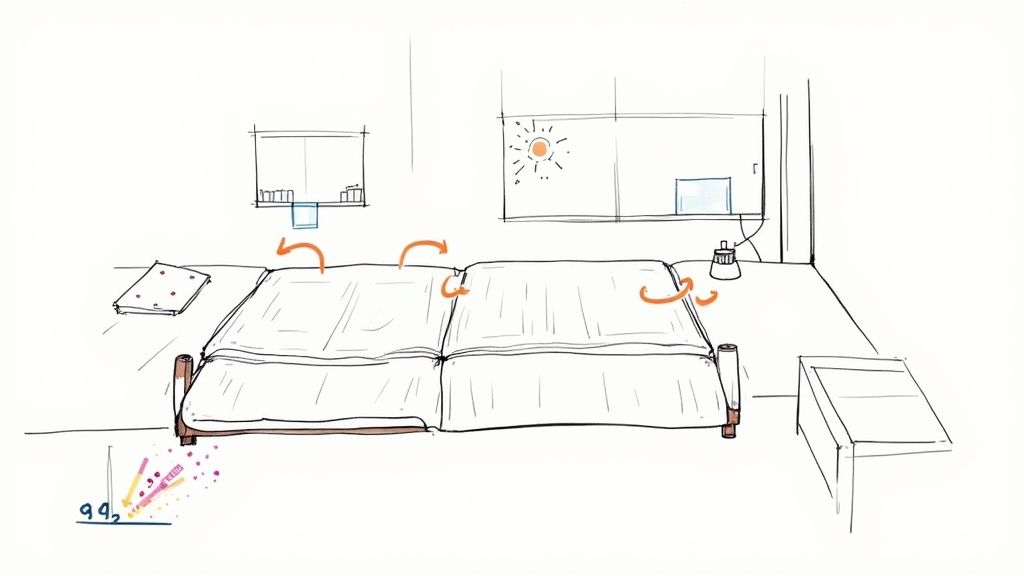
We’re talking about more than a simple once-over here. A real deep clean involves a meticulous, double-sided vacuuming session, a thorough deodorizing treatment, and a good, long airing-out period. It’s what separates a futon that lasts a few years from one that serves you well for many.
How Often Should You Deep Clean?
Consistency is key, but there’s no need to go overboard. A deep clean every three to six months is the sweet spot for most futons, depending on how much action it sees and the environment it’s in.
If your futon is the main couch in a busy living room or sits in a humid basement, aim for every three months. For a guest room futon that’s rarely used, you can easily stretch that to six months. In fact, surveys show that around 60% of futon owners who follow this 3-6 month schedule report a significant reduction in dust and allergens.
Here’s a simple routine to get into:
- Weekly: A quick vacuum of the surface to pick up dust, pet hair, and crumbs.
- Monthly: A more thorough vacuum. Flip the mattress and maybe give it a light sprinkle of baking soda to keep it fresh.
- Seasonally (Every 3-4 months): Time for the full deep clean we’re about to walk through.
The Art of the Flip and Rotate
This might be the most overlooked step in futon care, but it’s absolutely essential. Regularly flipping and rotating your mattress is the only way to prevent lumps, sags, and those dreaded body indentations. Your weight naturally compresses the filling, and if you don’t switch things up, you’ll end up with uncomfortable dips.
Pro Tip: Make flipping and rotating part of your monthly deodorizing routine. When you sprinkle the baking soda, use it as your trigger to flip the mattress. Linking these two habits makes it nearly impossible to forget.
By flipping it over and rotating it end-to-end, you ensure the wear and tear is distributed evenly across the whole surface. This keeps the loft consistent and can seriously extend the comfortable, usable life of your futon.
The Deep Cleaning Cycle
Ready to get started? Here’s how to give your futon the refresh it deserves.
- Strip it Down and Vacuum Thoroughly: Take the cover off and give one side a meticulous vacuum. Use an upholstery attachment to really get into the seams, tufts, and crevices where dust loves to hide.
- Deodorize with Baking Soda: Sprinkle a generous layer of baking soda over the entire surface. Don’t be shy with it! Let it sit for at least an hour—longer if you can—to soak up odors and moisture. Then, vacuum it all up completely.
- Flip and Do It Again: Now, carefully flip the mattress over and repeat the entire vacuuming and deodorizing process on the other side.
- Let the Sun Work Its Magic: If you can, take the futon outside into a sunny, breezy spot for a few hours. The sun’s UV rays are a natural disinfectant that helps kill bacteria and evaporate any lingering moisture. If you can’t take it outside, prop it up near an open window with a fan blowing on it.
How to Clean Different Types of Futon Mattresses
Knowing how to clean a futon mattress isn’t a one-size-fits-all skill. The material tucked inside—whether it’s traditional cotton, plush memory foam, or a supportive innerspring—dictates the entire cleaning process. If you use the wrong method, you could end up with compacted filling, damaged foam, or even rusted coils.
Think of it like laundry: you wouldn’t wash a wool sweater the same way you wash a pair of jeans. The same logic applies here. Each mattress type has its own vulnerabilities and needs a specific approach to avoid causing permanent damage. Getting it right ensures your futon stays clean, comfortable, and lasts for years.
The All-Cotton Futon Approach
Traditional cotton futons are wonderfully firm and breathable, but those natural fibers are also highly absorbent. This makes moisture their biggest enemy. Getting a cotton futon too wet can cause the fibers to compress and clump together, creating uncomfortable lumps and inviting mildew to move in.
For these classic mattresses, dry cleaning methods are your best friend.
- Vacuuming and Beating: Give it a thorough vacuuming on a regular basis. To really dislodge deep-set dust, take it outside and beat it with a broom handle or tennis racket, just like an old-fashioned rug. It’s surprisingly effective.
- Sunlight as a Sanitizer: Letting a cotton futon bake in direct sunlight for a few hours is a fantastic, natural way to kill bacteria, fight off dust mites, and evaporate any lingering moisture.
- Minimal Moisture Spot Cleaning: If you absolutely have to tackle a stain, use the smallest amount of cleaning solution possible. Blot it with a barely damp cloth, then dry the spot immediately and completely with a hairdryer on a low setting or a well-aimed fan.
Cleaning Foam and Hybrid Futons
Futons with foam, memory foam, or foam-core hybrids are sensitive to two things: harsh chemicals and too much water. Strong cleaners like bleach or ammonia can actually break down the foam’s structure, causing it to crumble and lose its support. And since foam acts like a sponge, it can trap water deep inside, making it nearly impossible to dry completely.
Gentleness is the key here. For most spot treatments, a simple solution of mild dish soap and water is all you need. Always apply the cleaner to your cloth first, never directly onto the mattress. This gives you much better control over how much moisture you’re introducing.
When you’re dealing with an innerspring futon, the biggest risk is rust. If water manages to seep through the top layers and reach the metal coils, they can corrode over time. That leads to squeaking and a total breakdown of the mattress’s core support system.
Drying is the most critical step for these types of futons. After spot cleaning, press down firmly on the area with a dry towel to soak up as much liquid as you can. Then, prop the mattress up in a well-ventilated room and use a fan to circulate air around it until it is bone dry to the touch.
Before you start cleaning, it helps to know exactly what you’re working with. Understanding the internal components and materials of different futon mattresses will help you nail the right care routine every time.
To make it even clearer, here’s a quick cheat sheet for keeping your specific futon in top shape.
Cleaning Methods by Futon Mattress Type
| Mattress Type | Best Cleaning Method | What to Avoid |
|---|---|---|
| All-Cotton | Vacuuming, sun-airing, beating, minimal-moisture spot cleaning. | Soaking with water or liquid cleaners, steam cleaning. |
| Foam / Memory Foam | Gentle spot cleaning with mild soap and water applied to a cloth. | Harsh chemicals (bleach, ammonia), saturating the foam. |
| Innerspring / Hybrid | Careful spot cleaning on the surface layers. Dry thoroughly. | Allowing water to seep deep into the mattress near the coils. |
Ultimately, picking the right cleaning method comes down to knowing what’s inside your futon. By treating it with the care its materials require, you’ll protect your investment and ensure it stays comfortable and supportive for the long haul.
Common Futon Cleaning Questions Answered
Even with a perfect cleaning routine, you’re bound to run into some unique challenges. This is your troubleshooting guide for the most common hurdles people face when cleaning a futon mattress. From stubborn smells to deciding when it’s just time for an upgrade, let’s clear things up.
One of the biggest questions we hear is about dealing with persistent odors, especially those musty, mildewy smells. If your baking soda trick isn’t quite cutting it, it’s time to dig a little deeper. A lingering musty smell almost always points to moisture trapped deep inside the mattress fibers—a common problem in humid climates or if a spill wasn’t dried out completely.
Tackling Stubborn Odors and Mustiness
Your absolute best weapon against mustiness is a long, thorough airing-out session in direct sunlight. The combination of UV rays and dry air is a powerhouse for killing the mold and mildew spores that cause those smells. Prop your futon up for several hours, making sure air can circulate around every single side.
No sun? No problem. You can get a similar effect indoors. Stand the mattress on its side in a room with good airflow and point a fan or two directly at it for a full day. For an extra punch, you can lightly mist the surface with a 50/50 mix of white vinegar and water before you start. The vinegar smell disappears as it dries, and it takes the musty odor right along with it.
A classic mistake is putting the futon cover back on too quickly. A futon that’s even a little damp can turn into a mildew magnet. Always, always make sure your futon is 100% bone dry to the touch before making it up again.
Can I Machine Wash My Futon Mattress?
That’s going to be a hard no. Never, ever put a futon mattress in a washing machine. The process would completely drench the filling—whether it’s cotton, foam, or innersprings. You’d end up with a clumpy, damaged mess and a guaranteed mold problem.
The only part of your futon that might be machine washable is its cover. Always check the care tag first! Many are designed to be easily removed and tossed in the wash, which is a massive help for regular upkeep. If you’re thinking about an upgrade, browsing different futon covers and fabric swatches can show you just how many easy-to-clean, machine-washable options are out there.
Knowing When to Replace Your Futon
Let’s be honest: no mattress lasts forever. There are clear signs when cleaning just isn’t cutting it anymore. If you’ve deep-cleaned your futon several times but that strong mildew smell keeps coming back, the mold has likely set up camp deep in the core, and you won’t be able to get it out.
Here are a few other signs that it’s time to say goodbye:
- Permanent Lumps or Sagging: If you see deep body indentations that won’t go away or the mattress feels lumpy no matter how often you flip it, the internal structure has broken down.
- Visible Mold or Mildew Stains: Large, dark stains you can’t get rid of are usually a red flag for a much bigger issue lurking underneath.
- It Just Isn’t Comfortable Anymore: At the end of the day, if you’re waking up with aches and pains, your futon is no longer doing its job. It’s time for a replacement.
At Futonland, we know a great futon is an investment in your comfort. If your old mattress has seen better days, explore our collection of high-quality, durable futons designed for modern living at https://futonland.com.