

Compact Convertible Furniture for Studios: A Buyer’s Guide
A studio usually asks one room to do three jobs at once. You need a place to sit, a place to sleep, and often a place to work, all without making the apartment feel blocked and cramped. That’s why compact convertible furniture for studios matters so much. It isn’t just about squeezing in a bed. It’s about making the room function smoothly every day.
The mistake first-time buyers make is shopping by photo first. A sleek silhouette can still be a terrible studio piece if it jams the walkway, needs too much room to open, or feels miserable after a week of nightly sleep. Good studio furniture earns its space twice. It has to look right when closed and work right when open.
Your Studio Apartment Deserves More Than Just a Bed
A studio can start feeling like a compromise fast. Your sofa becomes a closet shelf. Your dining spot becomes your desk. Your bed takes over the entire room, even when you’re not using it. Studio dwellers often don’t need more furniture. They need furniture that gives the room back during the day.
That’s where convertible pieces change the experience. A well-designed sleeper, futon, or cabinet bed lets you keep a living room without giving up real sleep. In a tight apartment, that shift matters more than any decorative trick. The room feels calmer because every piece has a job.
A studio works better when your furniture supports a routine, not just a floor plan.
The right approach is simple. Measure for movement first, choose the conversion type second, and only then compare upholstery, color, and details. That order saves a lot of regret.
Measure Twice: Your Essential Studio Layout Guide
Most bad studio purchases happen before the order is placed. The piece fits the wall on paper, but nobody checks what happens when it opens. In real apartments, conversion clearance matters as much as closed dimensions.
For studios under 400 sq ft, understanding the clearance space needed to open and convert furniture is critical, since multiple convertible pieces can compete for the same floor area if the layout isn’t planned carefully.

Start with the room in motion
Don’t just measure wall to wall. Measure the room the way you live in it.
- Mark the closed footprint. Tape out the sofa, futon, or cabinet bed on the floor.
- Mark the open footprint. Extend that taped shape to the full sleeping position.
- Walk the route. Check whether you can still get from the entry door to the bathroom, closet, and kitchen without climbing over furniture.
- Check swings and collisions. Doors, radiators, window ledges, and low sills can interfere with opening.
- Include adjacent pieces. Coffee tables, side chairs, rolling carts, and desks are often what make a sleeper impossible to use comfortably.
A laser measurer helps, but painter’s tape tells the truth faster. If the taped bed shape makes the room feel trapped, the actual furniture will too.
Measure the delivery path too
A surprising number of studio buyers measure the room and forget the building. Your furniture has to clear the front door, apartment entry, hallway corners, stairs, and elevator. This matters even more with one-piece sleepers and sectionals.
For frame, mattress, and bed-size references, a quick look at Futonland sizing charts can help you compare dimensions before narrowing your shortlist.
Practical rule: If opening the bed means moving three other things every night, that piece doesn’t fit your studio, even if the product dimensions say it does.
Use a simple studio zoning test
A layout usually works when each zone keeps its own purpose after the sleeper opens.
- Entry zone. You should still be able to step in, remove shoes, and close the door.
- Sleep zone. Bedding should open without scraping another piece.
- Daily zone. There should still be at least one usable surface for a phone, water glass, or lamp.
- Work zone. If you work from home, decide whether the desk can remain in place during conversion.
The best studio layouts aren’t always the most minimal. They’re the ones that don’t force a nightly furniture shuffle.
Decoding the Types of Compact Convertible Furniture
The broader market is moving in this direction for a reason. Interest in multi-functional furniture has grown steadily, driven by demand for space-saving designs such as convertible sofa beds, Murphy beds, and storage beds in dense urban regions.
That growth makes sense from the showroom floor. More studio shoppers now want one piece to handle seating, sleep, and storage without looking temporary. The trick is choosing the right category, because the mechanisms and daily experience are very different.
Compact Convertible Furniture at a Glance
| Type | Best For | Conversion Style | Footprint When Open | Typical Price Range |
|---|---|---|---|---|
| Futon Sofas | Daily flexibility, customizable comfort | Back folds flat | Usually efficient front clearance | Budget to mid-range |
| Convertible Sofa Beds Click-Clacks | Fast day-to-night change | Seat and back shift into bed mode | Compact to moderate | Budget to mid-range |
| Sectional Sleepers | People who want seating plus storage | Pull-out or lift-and-slide sleeping section | Larger open footprint | Mid-range to higher |
| Murphy Cabinet Beds | Studios that need the bed fully hidden by day | Cabinet opens into bed | Front clearance required, minimal permanent bed presence | Mid-range to higher |
Futon sofas
A futon is still one of the most honest choices for a studio. The frame is straightforward, the mechanism is usually simple, and the mattress is a separate decision instead of being locked into the sofa. That matters if you expect to sleep on it often.
For many first-time buyers, browsing actual futon sofas and frames helps clarify the category because you can compare arm styles, frame depth, and mattress options separately. A futon makes sense when you want fewer hidden parts and more control over the feel.
What doesn’t work well is buying a very thin mattress just because the frame looks compact. In a studio, a futon often becomes your real bed. Treat it that way.
Convertible sofa beds and click-clacks
These are the fast-change pieces. You pull, tip, slide, or fold the back and seat into a sleep surface. They’re attractive for studios because the closed footprint can stay trim and the conversion feels quick.
Their trade-off is that some prioritize clean looks over long-session comfort. They’re often excellent for daytime seating and occasional sleeping. For nightly use, you have to pay close attention to how flat the sleep surface becomes and whether the seat joins create pressure points.
Sectional sleepers
A sectional sleeper earns its place when you want one corner of the apartment to handle nearly everything. You get lounge seating, often hidden storage in the chaise, and a larger sleep setup than a compact click-clack usually offers.
The downside is obvious the moment you tape out the footprint. Sectionals consume corners and can dominate a narrow studio. They work best in square rooms, alcoves, or layouts where the sofa zone is clearly separated from the entry and kitchen path.
Murphy cabinet beds
A Murphy cabinet bed solves a different problem. It gives the room back visually. By day, you see a cabinet or wall unit instead of a bed taking over the apartment.
This category is often right for people who care more about preserving a daytime living room than about lounging on a sofa. The main watchout is workflow. You need clear front space every night, and nearby furniture can’t block deployment.
If you hate seeing your bed all day, a cabinet bed can feel transformative. If you want to stretch out on a sofa every evening, another category may suit you better.
The Secret to Daily Use: Smooth and Smart Engineering
When a convertible gets used every day, the most important feature isn’t the fabric or the arm shape. It’s the mechanism. A bad mechanism turns a smart purchase into a chore. A good one disappears into the routine.
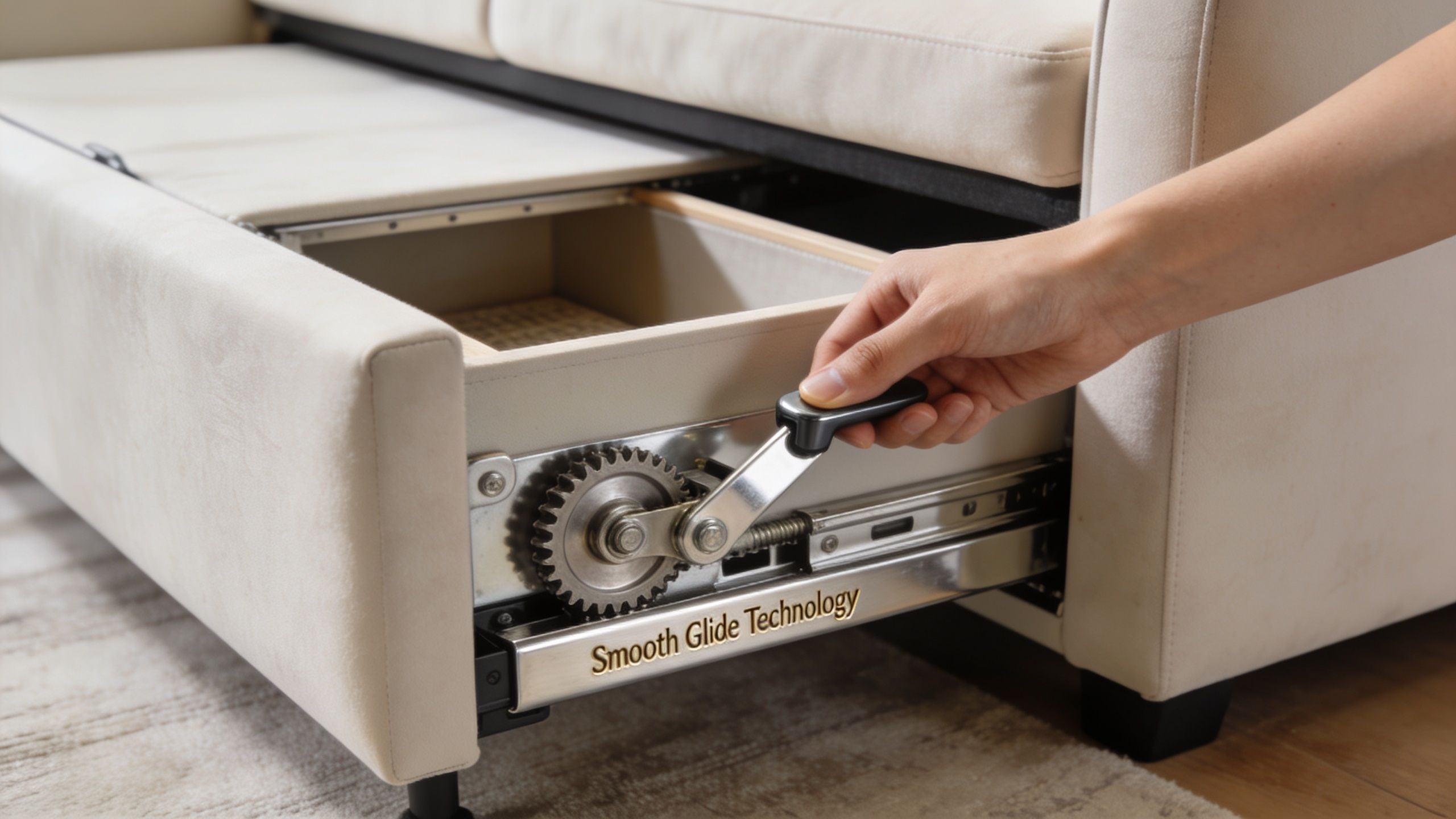
What smooth engineering feels like
You notice quality immediately in a small apartment because you repeat the same movement constantly. Open. Close. Store bedding. Reset the room.
Well-engineered Ukrainian sleepers stand out here. Their appeal in tight spaces comes from precise mechanisms, cleaner motion, and thoughtful use of internal volume. The better ones open in a controlled arc instead of jerking forward, and the storage niches are designed so you can access bedding without tearing apart the whole setup.
Look for these signs:
- Balanced movement. The bed should open with steady resistance, not a dead lift.
- Predictable alignment. Cushions and panels should return to place cleanly.
- Accessible storage. Bedding storage should be easy to reach and easy to close.
- No awkward body mechanics. You shouldn’t have to twist, yank, or brace the frame with your knee.
Why this matters more in a studio
In a one-room home, the sleeper isn’t a backup. It’s part of your daily traffic pattern. If the mechanism sticks or the storage is annoying to reach, clutter starts piling up in visible corners because you stop using the furniture the way it was designed.
A studio piece should convert in one calm sequence. If it takes wrestling, the problem isn’t you. It’s the engineering.
Built-in storage niches are especially valuable in this category. They hold sheets, a duvet, or extra pillows close to the sleep zone, which means you don’t need another trunk or basket on the floor. In a small apartment, that kind of hidden utility is often what separates a tidy room from a crowded one.
Balancing Comfort and Durability With Mattresses and Fabrics
A lot of compact convertible furniture for studios gets sold on transformation alone. That leaves out the question people live with. Can you sleep on it regularly and still like it a few months later?
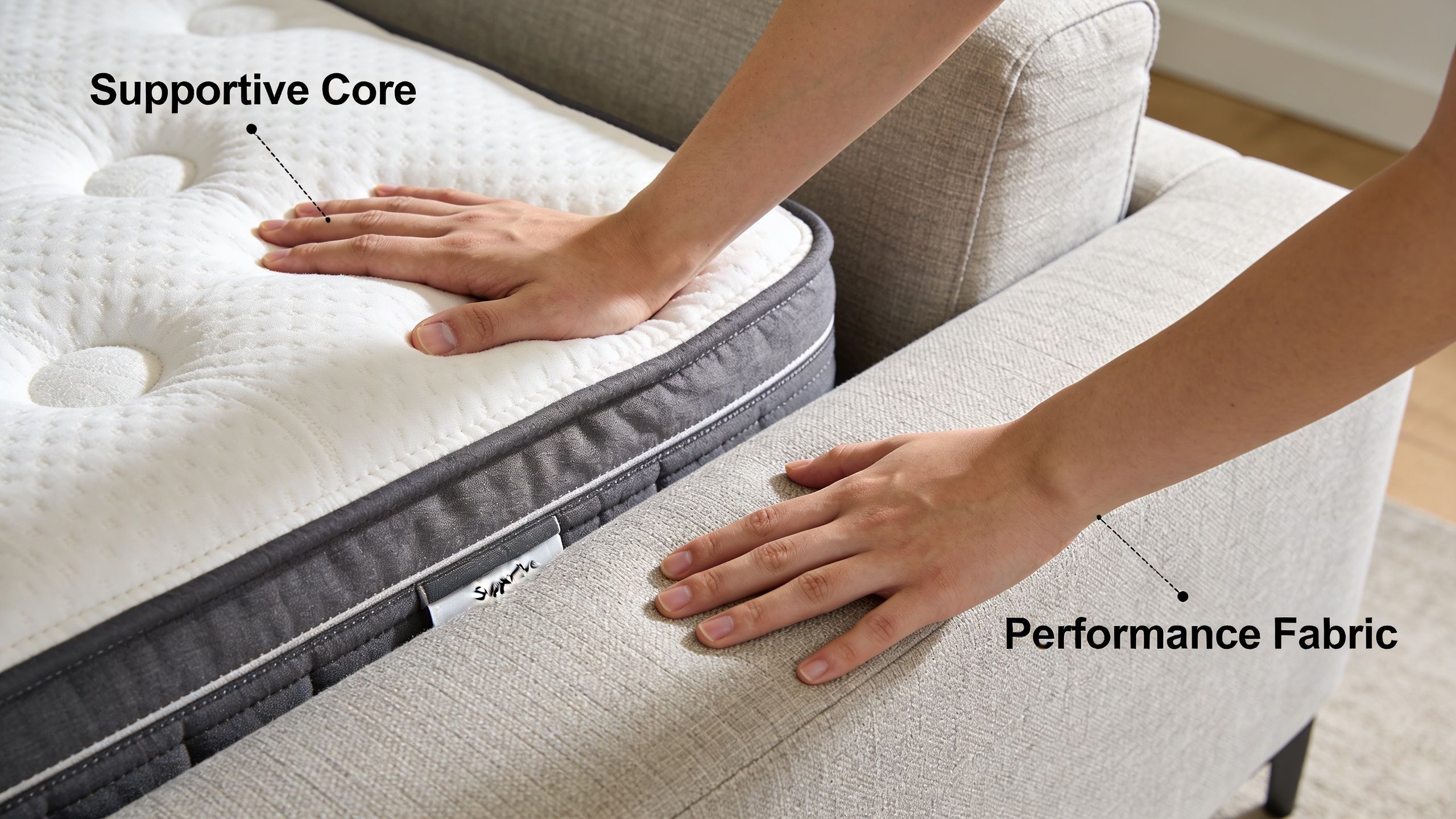
Mattress trade-offs that actually matter
The first decision is usage. Are you sleeping on this every night, or only when someone visits?
For daily sleeping, pay attention to support consistency and replaceability. With futons, that often means comparing different futon mattress options rather than accepting the default. A replaceable mattress is practical because your sleep surface wears differently from the frame.
Here’s the simple breakdown:
- Foam. Usually cleaner-looking and quieter in motion. It can feel supportive, but some sleepers find it warmer and less forgiving if the core is too thin.
- Innerspring. More bounce and a more traditional bed feel. It can work well for people who dislike the denser feel of all-foam sleep surfaces.
- Hybrid constructions. Often a better compromise when you need both support and surface comfort.
Daily sleepers should be skeptical of ultra-thin mattresses, even when the sofa profile looks sharp. Thin sleep surfaces often feel acceptable in a showroom sit test and much less acceptable after a full night.
Don’t ignore the frame under the mattress
The frame changes how the mattress performs. Slatted futon frames, platform-style supports, and metal sleeper decks all create a different feel under the same body weight. A mattress that feels fine on one frame may feel harsher on another.
That’s why the right question isn’t just “foam or spring?” It’s “how does this mattress behave on this specific mechanism?” In a studio, the combination matters more than the label.
Some buyers need a better mattress more than they need a more expensive sofa.
Fabric should match your real life
After comfort, fabric becomes the next source of regret. A beautiful upholstery choice that shows every mark or traps lint can make a small apartment feel messy all the time.
Use lifestyle as the filter:
- Performance fabrics suit homes with pets, frequent spills, or heavy daily use.
- Microfiber is practical when you want easy cleaning and a forgiving surface.
- Linen-look upholstery gives a lighter, softer visual effect but usually asks for more care.
- Leather or leather-look finishes can be easy to wipe down, though the feel and temperature response aren’t for everyone.
In studios, texture matters visually too. Bulky weaves can make a compact sofa look heavier, while a tighter fabric can keep the room feeling neater.
Beyond Sleeping: Unlocking Bonus Storage and Features
The smartest studio furniture does more than switch from sofa to bed. It eliminates the need for other pieces. That’s where hidden storage, shelves, drawers, and built-in surfaces become more than nice extras.
A sectional with chaise storage can hold bedding and free up closet space. A cabinet bed with shelves can reduce the need for side tables. A convertible with integrated compartments can replace the blanket basket that would otherwise live in the corner.
Features that earn their floor space
- Under-seat storage keeps sheets, pillows, or off-season throws near the bed area.
- Lift-up chaise compartments work well when closet space is limited.
- Cabinet shelving helps anchor the sleep zone with books, chargers, or folded linens.
- Integrated side surfaces can reduce the need for a separate nightstand.
If you’re comparing storage-ready options, futon bed storage drawers show how much function can be added below the sleep surface without widening the room plan.
What usually isn’t worth it
Not every extra feature helps. Some built-in cupholders, oversized arm consoles, or thick padded sides add bulk without improving daily use. In a studio, every added inch has to justify itself.
A useful feature saves a separate purchase. A gimmick just makes the furniture larger.
In small apartments, hidden storage is only useful if you can reach it easily and close it quickly.
The best bonus features are quiet ones. They reduce clutter, shorten the nightly setup, and keep the room looking intentional during the day.
Your Complete Purchase Plan: From Budget to Build
A solid purchase decision usually comes down to four questions. What’s the daily use? How much movement space do you have? What compromises are acceptable? Who’s handling delivery and setup?
Set the budget by use, not by category
If the piece will be your primary bed, spend for mechanism quality and sleep comfort first. If it’s mainly seating with occasional overnight use, you can accept a firmer or simpler conversion. Many buyers overspend on looks and underspend on the parts they touch every day in these situations.
A studio buyer usually does better with a shorter shortlist and a stricter standard. If two pieces look similar, choose the one with the easier opening sequence, better storage access, and more realistic sleep setup.
Ask the unglamorous questions before checkout
- Who will assemble it? Some sleepers are manageable. Others are awkward and heavy.
- What happens to the packaging? In a small apartment, debris becomes a problem quickly.
- How will the old piece leave? Disposal matters if you’re replacing a bed or sofa.
- Can you get matching accessories later? Covers, toppers, and replacement mattresses matter over time.
Futonland offers space-saving sleepers, futons, sectional sleepers, cabinet beds, delivery, and services such as assembly and furniture removal in NYC. That kind of service matters when your building access is tight and you don’t want a half-assembled sleeper blocking the apartment.
Think through delivery like part of the product
In a studio, delivery is not separate from the buying decision. A sleeper that arrives in parts may be easier to maneuver upstairs. A larger one-piece frame may require tighter coordination. White-glove service can be worth considering if the building has narrow stairs, limited elevator access, or strict move-in rules.
Assembly quality matters too. A properly aligned mechanism opens better, sits better, and tends to wear more evenly than one rushed together in a small room.
The final filter
Before you place the order, ask yourself three plain questions:
- Can I open this every day without moving half the room?
- Would I be willing to sleep on this regularly?
- Does it remove clutter or add to it?
If the answer to any one of those is no, keep looking. The right studio piece doesn’t just fit the apartment. It fits the routine.
Compact convertible furniture for studios works when it respects real life. Smooth conversion, honest comfort, usable storage, and clear traffic paths matter more than trend language. Choose the piece that makes the room easier to live in, morning and night.