

Your Ultimate Guide To Mattresses For Futon Frames
Finding a futon mattress that’s a genuinely comfortable sofa and a truly supportive bed can feel like you’re being asked to compromise. But the secret isn’t compromise; it’s about seeing the modern futon for what it is: a clever, versatile solution for real-life living, especially when space is tight.
This guide will walk you through the essentials—materials, thickness, and frame compatibility—that take a futon from just functional to fantastically comfortable.
The Modern Futon: A Smart Solution for Any Space
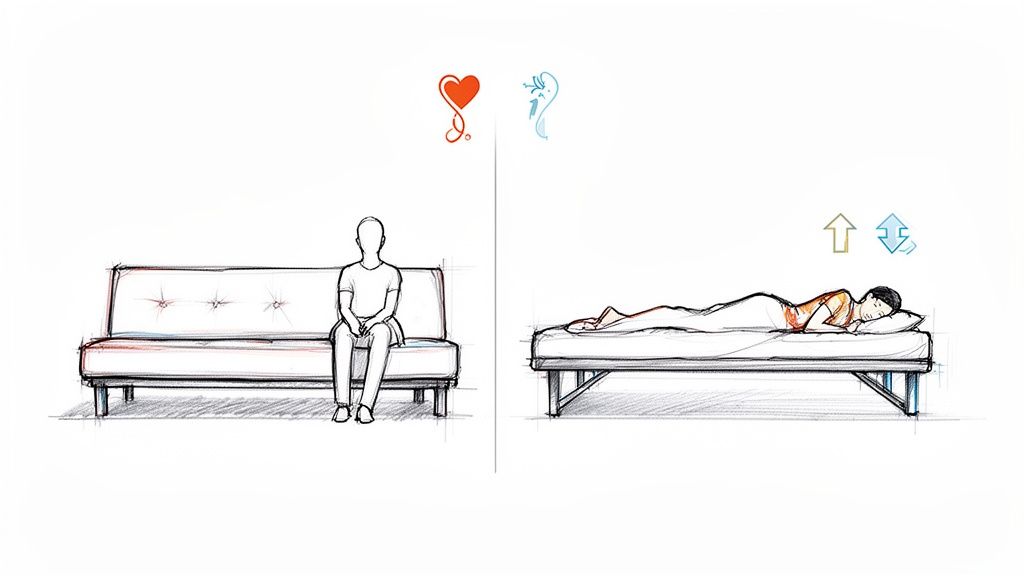
Think of choosing the right mattress not as a challenge, but as a chance to create a multi-functional space without giving up an ounce of comfort or style. The days of those lumpy, uninspired futons you remember from dorm rooms are long gone. Today’s options are sophisticated, durable, and designed for how we actually live.
The modern futon is the ultimate space-saving chameleon. It’s a comfy couch by day and a welcoming bed by night, making it perfect for studio apartments, guest rooms, home offices, or any spot where you need furniture to pull double duty. The mattress is the heart of it all—it’s what determines whether you merely tolerate your futon or absolutely love it.
Why Your Choice Matters More Than You Think
Picking the right mattress is about so much more than color or size. It directly impacts your day-to-day comfort and how long your investment will last. A great futon mattress has to do three things well:
- Support Your Body: It needs to provide proper support whether you’re sitting or sleeping to keep aches and pains at bay.
- Withstand Folding: It must be flexible enough to bend into a sofa position daily without getting lumpy or damaged.
- Match Your Lifestyle: The right mattress is different for an occasional guest than it is for your primary, everyday bed.
This guide is your roadmap. We’ll break everything down, starting with the basics like materials and thickness, then get into how to match a mattress with your specific frame and needs. You’ll walk away with a practical understanding of what makes a futon mattress work.
A futon is no longer just a temporary fix; it’s a permanent solution for intelligent, adaptable living. The right mattress unlocks its full potential, turning any room into a dynamic, comfortable, and inviting space.
This isn’t just a niche trend; it’s a global movement.
Here’s a quick-glance table to help you start thinking about what might be the best fit for you.
Futon Mattress At-a-Glance Decision Guide
| Your Primary Need | Best Mattress Material | Ideal Thickness | Best For |
|---|---|---|---|
| Everyday Sleeping | Memory Foam, Innerspring | 8-10 inches | Maximum comfort and durability for daily use as a primary bed. |
| Frequent Sitting | High-Density Foam, Cotton/Foam Blends | 8-9 inches | Resists compression and maintains shape for sofa-like comfort. |
| Guest Room/Occasional Use | Cotton, Low-Density Foam | 6-8 inches | A budget-friendly and comfortable option for guests. |
| Eco-Conscious Choice | Organic Cotton, Wool, Natural Latex | 8-9 inches | Healthy, sustainable materials free from harsh chemicals. |
This table is just a starting point. As we dive deeper, you’ll see how these elements come together to create the perfect setup for your home. We’re here to help you make an informed decision and find the perfect fit.
Decoding Futon Mattress Materials for Ultimate Comfort
Choosing the right material for your futon mattress is a bit like picking the right tires for your car. The rubber compound and tread pattern will completely change the ride, whether you need rugged durability for off-roading or a smooth, quiet drive on the highway. The same is true for futons—what’s inside directly impacts how it feels, how long it lasts, and how well it works for sitting versus sleeping.
Let’s unpack the core components to see how each one contributes to the final experience.
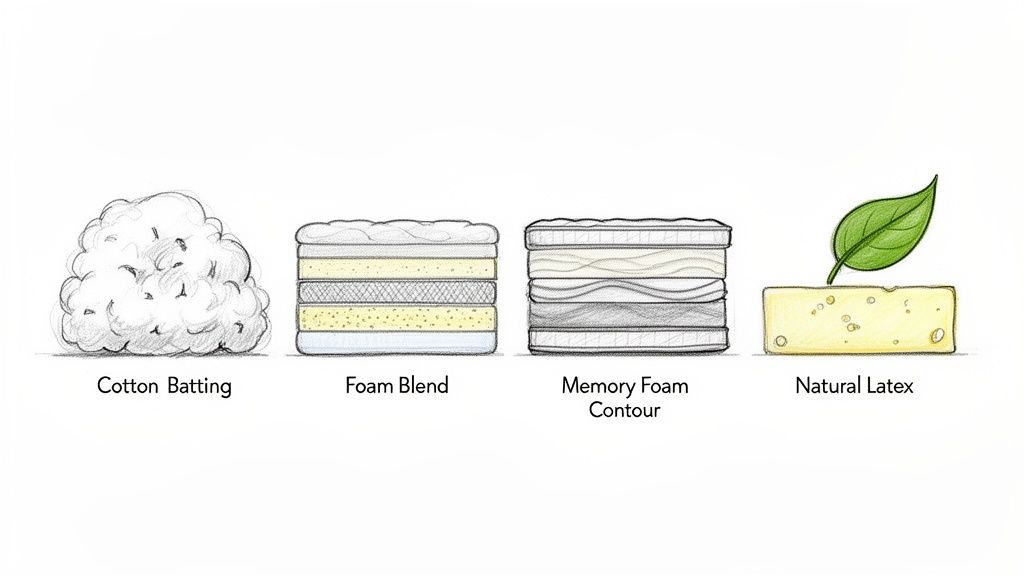
Understanding what’s inside a futon helps you match its performance to your needs. From traditional, firm cotton to modern, pressure-relieving memory foam, each option has a distinct personality.
The Classics: Cotton and Foam Blends
For decades, cotton has been the soul of futon mattresses, especially in traditional Japanese designs. An all-cotton mattress gives you a firm, dense feel that provides a very supportive surface. Over time, it compresses, creating an even more solid feel. This is perfect for anyone who loves a truly firm sleeping surface and a classic, minimalist vibe. If you’re after that authentic experience, check out traditional Shiki futon mattresses, which nail this simple, effective design.
To introduce a little softness and bounce, manufacturers often create cotton and foam blends. These are hybrid mattresses that layer high-density foam with fluffy cotton batting.
This combination offers a fantastic middle ground:
- The foam core adds resilience, stopping the mattress from getting too packed down or hard.
- The cotton layers provide breathability and that natural, firm cushioning we expect from a futon.
- The result is a durable, comfortable mattress that works just as well for sitting as it does for occasional sleeping.
These blends are the workhorses of the futon world, striking a great balance between cost and performance. If you want to dive deeper into how different fabrics affect feel and durability, browsing our futon covers or fabric by the yard is a great way to customize your setup to your exact preferences.
Innerspring and Coils: For a Familiar Feel
Want your futon to feel more like a traditional sofa or bed? An innerspring mattress is the way to go. These mattresses have a core of steel coils—just like a standard bed mattress—but they’re engineered with extra flexibility to handle being folded day in and day out.
The coils provide that responsive, bouncy support system that holds its shape incredibly well, even under the stress of daily sofa duty. This makes them exceptionally durable for everyday sitting.
An innerspring futon mattress perfectly bridges the gap between a classic futon and a modern convertible sofa. It gives you the familiar support and ‘give’ of a regular mattress, making it an ideal choice for a primary living room piece.
These models are usually thicker and heavier, so they’re better suited for sturdy bifold frames rather than the lighter trifold ones. They offer consistent support and are a fantastic solution if your futon is pulling double duty as your main couch.
Advanced Comfort: Memory Foam and Latex
For those who refuse to compromise on sleep quality, memory foam and natural latex elevate the futon mattress to a whole new level of comfort. These premium materials are designed to contour to your body, offering unbeatable pressure relief.
Memory foam is famous for its ability to absorb motion and cradle pressure points like your shoulders and hips. This makes it an amazing option for side sleepers or anyone dealing with joint pain. A memory foam futon mattress can turn your guest room into a genuinely restorative sleep space.
Natural latex is another top-tier material that’s become a favorite, especially among eco-conscious shoppers. Sourced from rubber trees, latex is:
- Naturally resilient and bouncy, giving you responsive support without that “sinking” feeling some memory foams have.
- Hypoallergenic and resistant to dust mites and mold, making it a super healthy choice for allergy sufferers.
- Extremely durable, often outlasting other materials while keeping its shape for years on end.
The mattress world is definitely shifting toward these high-performance materials.
The Traditional Shikibuton
The shikibuton is the classic Japanese-style futon mattress—thin, firm, and designed to be rolled or folded away. It’s typically built from layered cotton, sometimes blended with wool for added resilience.
It’s extremely flexible and easy to store, but it also needs regular care. A shikibuton should be aired out often to keep moisture from building up and to help it retain loft. It’s best for occasional use or for sleepers who genuinely prefer a very firm surface.
Getting the Right Fit: Thickness and Dimensions Explained
Picking the right thickness and dimensions for your futon mattress is a bit like choosing the perfect tires for a car. The right set makes for a smooth, safe ride, while the wrong one can make even the best car feel clunky and awkward. This is the practical side of buying a futon, and getting these details right makes all the difference.
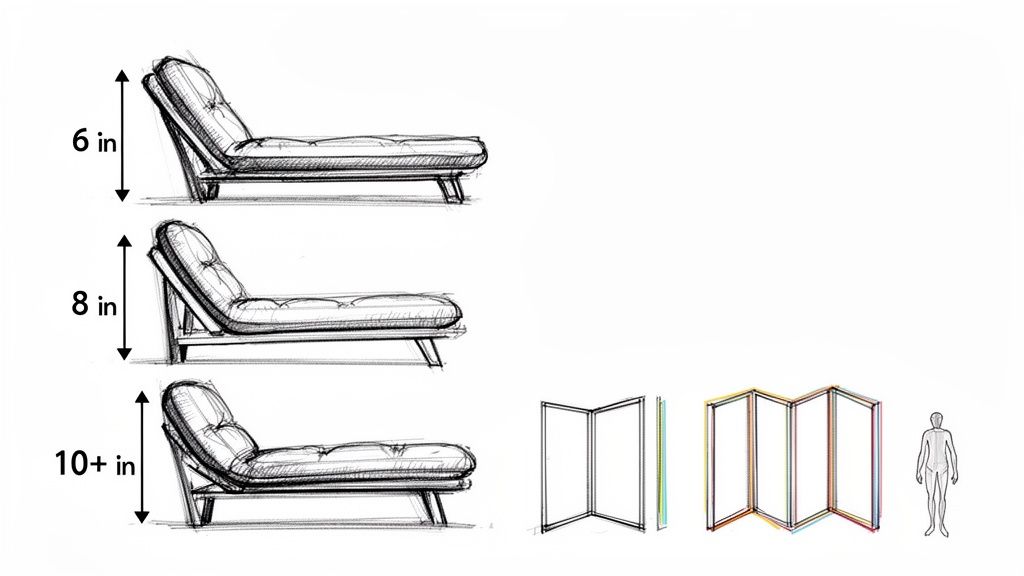
Let’s clear up the confusion around these crucial measurements so you can find a mattress that fits your frame and lifestyle perfectly. A mismatch here can lead to an uncomfortable sofa, a terrible night’s sleep, or even damage to your futon frame.
How Thick Should a Futon Mattress Be?
Futon mattresses typically range from six to over ten inches thick, and each level serves a specific purpose. It’s not simply a case of “thicker is better”—it’s about matching the mattress depth to how you’ll use it and what kind of frame you have.
- 6-Inch Mattresses: These are the slimmest options, perfect for occasional use. Because they’re lightweight and flexible, they’re the go-to choice for trifold frames that need to bend in two places. Think of them as a great fit for a child’s room or a guest space you only use once in a while.
- 8 to 9-Inch Mattresses: This is the sweet spot. It’s the most popular and versatile choice for mattresses for futon frames. An 8-inch mattress is a major comfort upgrade for both sitting and sleeping, offering excellent support without being too stiff to fold on a standard bifold frame.
- 10-Inch and Thicker Mattresses: When your futon is pulling double duty as your primary bed, a 10-inch or thicker mattress is the way to go. These heavy-duty models often have innersprings or premium latex, delivering bed-like comfort that holds up to daily use. Just remember, their bulk and weight mean they’re only suitable for sturdy bifold frames.
A helpful way to think about it is that thinner mattresses are built for flexibility, while thicker ones are built for comfort. Your main use—whether it’s mostly for sitting, occasional sleeping, or every single night—will point you to the right thickness.
To make it even clearer, here’s a quick breakdown:
Futon Mattress Thickness Buyer’s Guide
| Thickness | Primary Use | Best Frame Type | Key Benefit |
|---|---|---|---|
| 6 inches | Occasional guests, kids’ rooms, mostly sitting | Trifold | Maximum flexibility, lowest cost |
| 8-9 inches | Daily sitting, frequent sleeping | Bifold | The perfect all-around balance |
| 10+ inches | Primary bed, everyday sleeping | Sturdy Bifold | Supreme, bed-like comfort |
Ultimately, the best thickness depends entirely on your needs. For a versatile guest room setup, an 8-inch mattress is a fantastic, reliable choice. If you’re furnishing a dorm or need a primary bed, stepping up to a 10-inch model is a worthy investment in your comfort.
Bifold vs. Trifold: The Flexibility Factor
The type of frame you own is a huge piece of the puzzle. A bifold frame folds just once down the middle (like a hot dog bun) and can easily handle thicker, more substantial mattresses.
On the other hand, a trifold frame folds twice (like a letter you’d put in an envelope). This design requires a much more pliable mattress, almost always one that’s no more than six inches thick. Trying to force a thick mattress onto a trifold frame is a recipe for disaster—you’ll strain the mechanism and ruin the mattress.
Standard Futon Dimensions and Why Measuring Matters
Just like traditional beds, futon mattresses come in standard sizes, with Twin, Full, and Queen being the most common. But here’s a pro tip: while the mattress sizes are standardized, the exact dimensions of futon frames can vary slightly from one manufacturer to another.
This is where your tape measure becomes your best friend. Before you start shopping, take five minutes to measure the length and width of your futon frame in both the sofa and bed positions. This simple step can save you the headache and expense of ordering a mattress that doesn’t fit. For more detailed guidance, check out our comprehensive futon sizing charts.
Full-size futons are a crowd favorite, especially for homes. Their easy-to-convert frames are perfect for guest rooms and living spaces. For smart shoppers, the value is clear: you get one piece of furniture that saves you the cost and space of buying a separate sofa and bed.
Matching Your Mattress to Your Frame and Lifestyle
Now that we’ve covered the core components of materials and measurements, it’s time to connect the dots. Picking the best mattress for your futon isn’t just about specs on a page; it’s a lifestyle decision. The perfect choice is where the demands of your frame meet the reality of your day-to-day life.

Think of it like choosing shoes. You wouldn’t wear hiking boots to a wedding or flimsy flip-flops on a long trail. In the same way, the mattress you need depends entirely on the “terrain” of your life. Let’s walk through a few common scenarios to help you find that perfect fit.
The Urban Studio Dweller
Living in a studio or small apartment means every piece of furniture has to pull double duty. For you, the futon is probably your primary sofa and your nightly bed. This high-demand role requires a mattress that is a true workhorse, prioritizing durability and serious comfort.
Your ideal mattress should be:
- Thick and Supportive: Aim for a mattress that is at least 8-10 inches thick. This depth is what makes it feel like a real bed, ensuring you won’t bottom out after months of constant use.
- Made from Premium Materials: Innerspring, memory foam, or natural latex are your best friends here. These materials are built to handle the dual pressures of daily sitting and sleeping without caving in or getting lumpy.
- Paired with a Sturdy Frame: A mattress this substantial needs a robust bifold frame that can handle its weight and thickness. You can explore a wide variety of durable and stylish futon frames designed for exactly this purpose.
For this lifestyle, investing in a higher-quality mattress isn’t a luxury—it’s essential for getting good sleep and ensuring your investment lasts. A cheap, thin mattress just won’t survive being your main bed and sofa.
The Guest Room Host
When you’re setting up a guest room or a home office that doubles as one, your priorities shift a bit. You need a mattress that gives visitors fantastic comfort for a few nights without needing the heavy-duty resilience of a daily sleeper. Versatility is the name of the game.
Here’s what to look for:
- The All-Arounder Thickness: An 8-inch mattress is the gold standard for guest rooms. It’s plenty comfortable for a great night’s sleep but still flexible enough to fold easily and look sharp as a sofa.
- Balanced Materials: A high-quality cotton and foam blend or a mid-range innerspring mattress offers the perfect mix of comfort and value for this role.
- Ease of Use: Your futon should convert from sofa to bed smoothly. An 8-inch mattress on a bifold frame is a classic, hassle-free combination your guests will appreciate.
Your goal is to create a welcoming space that makes your guests feel at home. A well-chosen mattress shows their comfort was a priority, not an afterthought.
The College Student or First-Time Renter
If you’re outfitting a dorm room or your first apartment, budget and practicality are usually the biggest concerns. You need something functional, affordable, and easy to move. The futon is a classic for this life stage because it cleverly rolls seating and sleeping into one.
Your best mattress choice will be:
- Value-Focused: A 6 to 8-inch mattress made from a cotton and foam blend delivers solid comfort without breaking the bank. It’s a huge step up from those old-school, lumpy futons you might remember. Or, explore complete futon sets and packages for an all-in-one affordable solution.
- Frame-Compatible: If you have a space-saving trifold frame, a 6-inch mattress is your only option. For a standard bifold, a 6 or 8-inch model will work perfectly.
- Lightweight and Manageable: Thinner mattresses are lighter, making them much easier to haul between apartments or up flights of stairs—a massive plus for anyone who moves often.
By matching your mattress not just to the frame but to your specific life, you ensure your futon becomes a beloved, useful piece of furniture. It’s all about making a smart, personal choice that will serve you well for years.
The Simple Upgrade That Changes Everything: A Topper
If you want a futon that feels supportive for sitting but softer for sleeping, a topper is one of the most practical solutions. You keep a durable base mattress, then add removable comfort when it’s time to sleep.
Explore options here: mattress toppers and pads.
Care and Maintenance to Maximize Your Mattress Lifespan
A good futon mattress is a real investment in your home’s comfort and flexibility. But just like anything you rely on daily, it needs a little care to perform its best for the long haul. A few simple habits will protect your mattress from premature wear and tear, ensuring it feels just as good years from now as it did on day one.
Think of it this way: you wouldn’t drive a car for years without rotating the tires. The same idea applies here. Regular upkeep prevents lumps, bumps, and sagging, keeping your mattress feeling supportive and comfortable.
The Foundation of Longevity
The easiest and most effective thing you can do is to rotate and flip your mattress regularly. This simple move prevents your body’s impression from becoming a permanent dent.
- Rotate It: Every one to two months, spin the mattress 180 degrees. The part that was at your head is now at your feet.
- Flip It: Every three to four months, flip the entire mattress over. This is especially critical for mattresses made with cotton or foam blends.
This routine is the key to distributing wear evenly across the whole surface. It stops one spot from compressing more than the rest, which is the number one cause of those dreaded dips and lumps.
Pro Tip: Set a recurring reminder on your phone for the first of the month. A few minutes of effort every so often can add years to the life of your mattress and protect your investment in comfort.
The Power of Protection and Cleanliness
Life happens—spilled coffee, muddy paws, you name it. A little preparation goes a long way in keeping your mattress fresh and hygienic. The single most important accessory for any futon mattress is a high-quality, removable cover.
A protective layer is like a shield, guarding your mattress against dust, allergens, moisture, and stains. Using a bed and mattress protector is so much easier to zip off and toss in the wash than trying to spot-clean the mattress itself. Plus, exploring different futon covers lets you instantly change up your room’s style with new colors and textures.
When spills do happen, act fast. Blot the spot with a clean, dry cloth—never rub, which just pushes the liquid deeper. Use a gentle soap and water solution, applying it sparingly with a damp cloth. Always let the area air dry completely before putting the cover back on.
Finally, think about adding a mattress topper or pad. A topper not only adds an extra layer of plush comfort but also acts as another barrier against wear and spills. It takes the brunt of daily use, helping preserve the mattress underneath. By combining these simple strategies, you’ll ensure your mattress remains a clean, comfortable, and supportive centerpiece in your home for years to come.
Got Questions? We’ve Got Answers
Even after you’ve narrowed down your choices, a few questions always pop up. It’s those last few details that can make the difference between a futon you like and a futon you love. Here are the answers to some of the most common things we get asked.
Can I Just Toss a Regular Mattress on My Futon Frame?
We hear this one all the time, and the short answer is almost always a firm “no.” A regular bed mattress just isn’t built to bend. Trying to force it to fold can wreck the springs and internal structure, and you might even crack your futon frame in the process.
Futon mattresses are specifically engineered with flexible materials that can handle being folded into a sofa day after day without breaking down.
Sticking a regular mattress on a futon frame is a shortcut that usually backfires. You’ll likely void the mattress warranty, and it won’t sit right in the sofa position, leading to more frustration and expense down the road.
How Can I Tell if a Futon Mattress Is Good Enough for Everyday Sleeping?
If this is going to be your primary bed, you can’t compromise on comfort and support. The number one rule is to look for a mattress that’s at least 8-10 inches thick. This thickness is key to making sure you have enough cushion so you don’t feel the frame slats digging into your back.
For materials, you’ll want to prioritize ones built for the long haul:
- Latex or Memory Foam: These are fantastic for everyday use because they contour to your body and relieve pressure points, just like a high-end traditional mattress.
- High-Density Foam with Innersprings: This combo gives you the sturdy, responsive support you’re used to from a standard bed but with the flexibility a futon requires.
What’s the Real Lifespan of a Futon Mattress?
How long your futon mattress lasts really comes down to what it’s made of and how you use it. A basic cotton and foam blend that only sees occasional guests might give you 5-7 years.
But if you invest in a premium innerspring, memory foam, or latex mattress and take good care of it, you can easily get 10 years or more out of it, even with daily use. Your best friends for extending its life are simple: flip it regularly and always use a protective cover.
How Do I Stop My Futon Mattress from Slipping?
Use a non-slip gripper pad between the slats and the mattress, and make sure the mattress size matches the frame correctly. If your mattress has ties, use them—especially in sofa mode.
What’s the Difference Between a Futon Mattress and a Shikibuton?
A shikibuton is typically thinner, firmer, and designed for floor sleeping and storage. A Western-style futon mattress is usually thicker and built for a convertible frame, with a wider range of materials and comfort levels.
At Futonland, we specialize in helping you match the right mattress to the right frame—so you get a setup that feels good, folds smoothly, and holds up to real daily life.
Shop Our Full Collection of Futon Mattresses
Do Futon Mattresses Come with a Warranty?
Most reputable mattresses include a warranty, but coverage varies by build and brand. Warranties typically address manufacturing defects (seams, unusual sagging beyond a stated depth, or coil issues). Always check the requirements—many warranties assume the mattress is used on a proper futon frame and maintained reasonably (like rotating).
At Futonland, we’re here to help you find a futon mattress that fits your space and your routine—whether you’re upgrading a living room setup or building a guest room that actually feels inviting.
Explore our collection of futon mattresses
Ready to find the perfect blend of comfort, style, and function for your space? Explore our curated collection of high-quality futon mattresses at Futonland and discover a smarter way to live. Visit us at https://futonland.com to transform your room today.