Your Guide to Choosing a Folding Floor Bed

A folding floor bed is so much more than just a mattress. Think of it as a smart, space-saving sleep solution that’s grounded in minimalism and wellness. Often taking cues from traditional Japanese sleeping arrangements, these beds are designed to be folded up and tucked away, transforming your bedroom into a multi-functional living area during the day.

Embracing Simplicity and Wellness

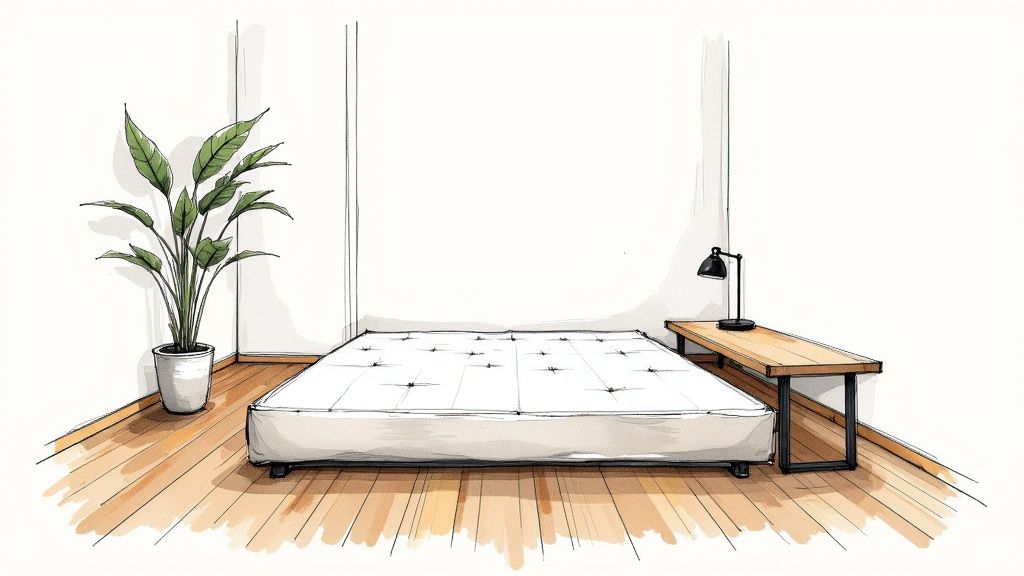
Minimalist low profile platform bed with tufted white mattress on wooden floor in modern bedroom

In a world that often feels cluttered and complicated, the folding floor bed offers a practical escape. It’s a move toward a more grounded, intentional lifestyle, taking direct inspiration from Japanese traditions built around portability and living with less.

This philosophy is really catching on, especially for city dwellers and anyone trying to live a more eco-conscious life. The simple act of folding and storing your bed frees up an incredible amount of floor space, making it a perfect fit for studio apartments, guest rooms, or any area that needs to pull double duty.

A Nod to Japanese Tradition

The heart of the modern folding floor bed is the shikibuton—a slim, foldable cotton mattress. Traditionally, a shikibuton is laid out on a tatami mat, which is a firm yet breathable base made from rice straw.

This combination creates an incredibly supportive sleeping surface that promotes proper spinal alignment. In fact, many people find this firm support can help with nagging back problems by encouraging a more natural sleeping posture. You can explore more about how tatami beds create a foundation for healthy sleep.

This Japanese-style approach isn’t just about saving space; it’s about connecting with a healthier, more sustainable way of living. The materials are often natural and eco-friendly, which is a huge plus for anyone looking to reduce their environmental footprint.

The core idea is to reclaim your space and simplify your life. By removing the bulky centerpiece of a traditional bed, you create a room that breathes and adapts to your daily needs, from a morning yoga session to a peaceful night’s rest.

The growing interest in this kind of adaptable furniture is a clear trend. The global folding furniture market, which includes these floor beds, is expected to grow from around USD 5 billion in 2025 to over USD 7 billion by 2030. This surge is largely driven by urbanization and the increasing demand for clever, space-saving designs. Read the full research about the growth of the folding furniture market.

The Japanese Art of Grounded Sleep

Top view of white bed with pillows on wooden parquet floor interior design illustration

To really get what a modern folding floor bed is all about, you have to look back at its Japanese roots. This isn’t just about a piece of furniture; it’s a whole philosophy built around minimalism, well-being, and staying connected to the natural world. It’s a refreshing alternative to the big, heavy beds most of us are used to.

The traditional system is beautifully simple and incredibly effective, based on two key pieces working together. You have the tatami mat as the foundation and the shikibuton as the comfort layer.

A tatami mat is a firm but breathable floor covering woven from rice straw. It creates a flat, sturdy base that lets air circulate underneath, which is crucial for preventing moisture. On top of that, you place the shikibuton—a thin, portable mattress usually filled with pure, natural cotton. The result is a sleep surface firm enough to keep your spine properly aligned but comfortable enough to give you a great night’s rest.

An Eco-Conscious and Minimalist Choice

The materials in a traditional Japanese sleep setup are naturally sustainable. Cotton, wool, and rice straw are all renewable resources, making this an ideal choice for anyone trying to live a more eco-conscious life. This focus on natural elements also means a healthier room, free from the synthetic materials and chemicals often packed into conventional mattresses.

This approach is minimalism in action. Because a shikibuton is so lightweight, it’s easy to fold up and tuck away in a closet each morning. That one simple act instantly turns a bedroom into a multi-purpose living area—a huge plus for anyone living in a small apartment where every inch of floor space counts.

Sleeping closer to the ground is a practice rooted in the idea of being more connected to the earth. This groundedness promotes a sense of stability and calm, contributing to both physical and mental well-being.

Many people who make the switch say it does wonders for chronic back pain. The firm surface stops your spine from sinking into that unnatural “C” shape, encouraging a straighter, healthier posture all night long. If you’re curious about giving this authentic sleeping style a try, you can explore different kinds of traditional Shiki futon mattresses to learn more.

Decoding the Japanese Floor Bed System

Looking at each component helps clarify why this system has worked so well for centuries. Every piece has a specific job in creating a balanced and healthy sleep environment.

Component Primary Material Function and Benefit
Tatami Mat Woven Rice Straw Provides a firm, flat, and breathable foundation. It insulates, absorbs humidity, and offers a natural, earthy aroma.
Shikibuton Cotton or Wool The primary comfort layer. It’s a thin, foldable mattress that offers direct support and cushioning without excessive softness.
Kakebuton Silk or Cotton A lightweight duvet or comforter used as the top blanket, designed to be breathable and easily stored.
Makura Buckwheat Hulls or Beans A small, firm pillow that supports the neck and encourages proper cervical alignment during sleep.

The whole system is a practical, health-focused approach to getting good rest. When you embrace these ideas, a folding floor bed becomes more than just a place to sleep—it’s a commitment to simplicity, smart use of space, and better well-being.

Benefits for Your Body and Your Home

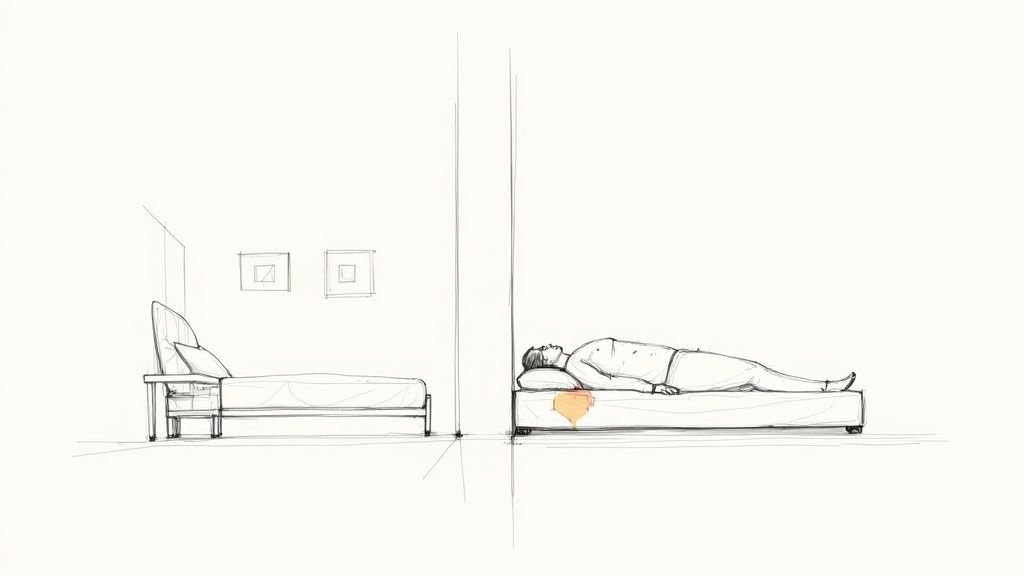
Person lying on folding floor bed in minimalist room with furniture perspective view

Making the switch to a folding floor bed is about more than just saving space; it’s a practical solution that can improve your physical well-being and how you use your home. This minimalist approach, inspired by traditional Japanese sleeping arrangements, is catching on for good reason. It directly tackles modern problems like chronic back pain and cramped living quarters.

The main health advantage comes down to firmness. Think about it: a plush, sinking mattress might feel nice at first, but it can let your spine curve into unnatural positions. A shikibuton on a firm surface, like the floor or a traditional tatami mat, encourages a neutral, properly aligned posture all night long.

This grounded sleeping style can be a total game-changer if you struggle with back issues. It stops your hips and shoulders from sinking too far in, which is key to maintaining the natural curve of your spine. Many people who make the switch report waking up with way less stiffness and discomfort.

Reclaiming Your Space and Your Peace of Mind

Beyond the physical perks, a folding floor bed is a masterclass in making the most of your square footage. It’s the ultimate portable sleep setup, letting you completely change a room’s purpose in just a few minutes.

Imagine folding your bed away in the morning and instantly having an open floor for a yoga session, a temporary workspace, or a play area for the kids. This flexibility is priceless, especially in studio apartments or any home where every inch counts. It’s a simple change that makes a huge difference in cutting down clutter and opening up your living area.

This minimalist lifestyle can also lighten your environmental impact. Many folding floor beds are made with an eco-conscious approach.

Choosing a folding floor bed is an intentional step toward a simpler, more sustainable life. It aligns with a philosophy of owning fewer, more purposeful items and reducing your environmental footprint one mindful choice at a time.

This commitment to both health and nature shows up in the materials used.

  • Natural Fibers: A traditional shikibuton is filled with materials like cotton or wool. They’re breathable, renewable, and biodegradable.
  • Chemical-Free Construction: Many eco-friendly models skip the glues, foams, and chemical fire retardants found in conventional mattresses, which is great for your indoor air quality.
  • Longevity and Simplicity: The straightforward design and durable materials mean these beds can last for years, cutting down on waste and the need for constant replacements.

By embracing a Japanese-style sleeping setup, you’re not just getting a bed that’s easy to store. You’re adopting a system that supports your back, declutters your home, and connects you to a more sustainable way of living. It’s this blend of health benefits and minimalist practicality that makes the folding floor bed such a smart choice for modern life.

How to Choose the Perfect Folding Floor Bed

Finding the right folding floor bed isn’t just about picking something to sleep on; it’s a personal choice that comes down to a balance of comfort, daily practicality, and what you value most. You’re not just buying a mattress—you’re choosing a foundation for better sleep and a more intentional way of living. And at the heart of this decision are the materials inside the bed.

Your options generally boil down to two camps: traditional natural fibers and modern foams. A classic Japanese-style shikibuton, for example, is usually filled with layers of pure cotton. This creates a firm, breathable surface that offers incredible support for your spine. Other natural choices include wool, which is a master at regulating temperature and wicking away moisture.

Then you have the modern alternatives, like memory foam or latex. These materials are all about contouring and pressure relief, which might be more appealing if you’re a side sleeper or just used to a softer bed. The real key is to think about what your body is asking for—do you need firm, unwavering support for spinal alignment, or plush comfort that hugs your joints?

Finding the Right Thickness and Firmness

Once you have a material in mind, the next thing to nail down is its thickness and density. A traditional shikibuton is pretty thin, typically around three to four inches. This minimalist design is completely intentional. It provides just enough cushioning while keeping you grounded and supported, which many people find helps prevent back pain.

However, if you’re making the switch from a thick, Western-style mattress, jumping straight to a three-inch bed can be a shock to the system. Starting with something a little thicker—maybe five or six inches—can make the adjustment a whole lot smoother. The goal is to find that sweet spot where you feel supported without feeling like you’re sleeping directly on the floor. Over time, many people discover this kind of firmness actually improves their posture.

A key takeaway is that “firm” doesn’t mean “hard.” A quality folding floor bed provides unyielding support for your spine while still having enough give to be comfortable. It’s about alignment, not austerity.

Historically, folding beds were popularized as practical solutions for temporary sleeping arrangements, especially in military and hospital settings. Over decades, innovations in materials and compact designs have transformed the folding bed from a purely utilitarian item into a stylish and essential piece of modern furniture. You can dive deeper into the evolution of folding bed designs to see how far they’ve come.

Eco-Conscious Materials for Healthier Sleep

For a lot of people, choosing a folding floor bed is also an eco-conscious decision. This is where Japanese-style sleeping really shines. Beds made from natural, sustainable materials like cotton, wool, or latex aren’t just better for the planet—they’re better for your health, too.

These materials are naturally breathable, which helps regulate your body temperature and stops moisture and allergens from building up. Even better, they’re often free from the synthetic chemicals and flame retardants you’ll find in many conventional mattresses, which means cleaner indoor air quality. When you opt for an eco-friendly model, you’re investing in a good night’s sleep and a healthier home. If you’re prioritizing natural materials, you can explore a wide variety of futon mattresses that align with this philosophy.

Let’s break down some of the most common materials you’ll come across.

Folding Floor Bed Material Comparison

Material Firmness Breathability Eco-Friendly Factor Best For
Cotton Firm to Extra-Firm High High (biodegradable, renewable) Traditionalists and back sleepers seeking solid support.
Wool Medium-Firm Excellent High (natural, temperature-regulating) Hot or cold sleepers and those with allergies.
Latex Medium to Firm Good High (durable, made from rubber trees) Side sleepers needing pressure relief without sinking.
Memory Foam Soft to Medium Varies Low to Medium People transitioning from soft beds; great for joint pain.

Ultimately, the right material comes down to what you’re looking for. Cotton offers that authentic, firm Japanese feel, while wool and latex provide a slightly more forgiving, breathable sleep.

Finally, don’t forget about portability. A true folding floor bed should be lightweight and a breeze to store. Before you hit “buy,” check the product’s weight and its dimensions when folded up. Make sure it will fit comfortably in your closet or wherever you plan to stash it. This simple check ensures your “portable” bed actually lives up to its name, helping you create that minimalist, multi-functional room you’re aiming for.

Caring for Your Natural Floor Mattress

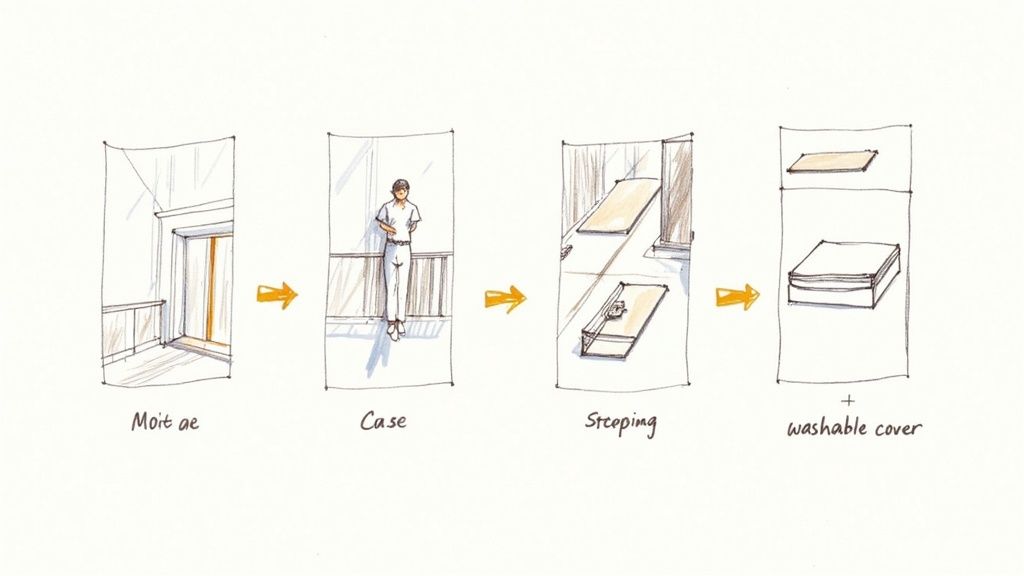
Illustrated design concept showing four stages of a folding floor bed system with storage

Owning a folding floor bed, especially a Japanese-style shikibuton, isn’t like having a big, bulky Western mattress you set up and forget. It’s an interactive piece of furniture, and looking after it is a simple ritual that keeps it fresh, supportive, and healthy for years to come. This little bit of daily attention is part of the minimalist philosophy behind it all.

The single most important habit is airing out your mattress regularly. Because a folding floor bed sits right on the floor or a tatami mat, it needs consistent airflow to let any moisture escape. This is crucial for models made with natural fibers like cotton, which can compress and absorb humidity from the air and your body overnight.

The Art of Sunning Your Shikibuton

There’s a time-honored Japanese technique for keeping a natural mattress in top shape: “sunning.” By letting your shikibuton bake in the direct sunlight for a few hours, you’re using a powerful, chemical-free method to disinfect it, dry it out completely, and fluff up the compressed cotton fibers inside.

The sun’s UV rays are a natural sterilizer, taking care of bacteria and dust mites. The heat evaporates any moisture absorbed overnight, which stops mildew in its tracks and keeps your bed smelling fresh. No balcony? No problem. Hanging it near a sunny window does the trick, too.

A weekly sunning session is more than just cleaning. It’s a way to connect with the natural, eco-conscious materials of your bed. This simple act restores the loft and bounce of the fibers, extending the life of your mattress in a big way.

Day-to-day, the routine is even simpler. Just fold your mattress up each morning and tuck it away in a well-ventilated closet or corner. This daily airing is your best defense against moisture, ensuring your bed is perfectly fresh and ready for you at night.

Everyday Maintenance and Protection

Protecting your investment is easy. The best thing you can do is wrap it in a removable, washable cover. Think of it as a shield against sweat, body oils, and the occasional spill, making cleanup a breeze.

  • Spot Cleaning: If a spill happens, act fast. Blot the area with a dry cloth immediately—never rub it in. A mild solution of gentle soap and water, applied sparingly, should lift the stain. Let it air dry completely before using.
  • Beating the Dust: The traditional approach involves gently beating the shikibuton with a tool like a rug beater. This knocks out dust and allergens trapped in the filling, fluffs up the cotton, and helps air circulate through the fibers.
  • Rotation: Just like any other mattress, you’ll want to rotate your folding floor bed head-to-foot every few weeks. This guarantees it wears evenly over time and prevents any one spot from getting permanent indentations.

This thoughtful approach to care ensures your floor bed remains a healthy, supportive part of your daily life. If you’re ready to explore options made with sustainable materials, discover our full range of natural mattresses.

Folding Floor Beds vs. Other Sleep Solutions

Picking a sleep solution for a small space often feels like a game of trade-offs. You’re usually juggling comfort, how easy it is to move, and how much floor space it eats up. The folding floor bed, especially one modeled after the traditional Japanese shikibuton, carves out its own niche in this debate. It’s all about minimalism and a grounded, healthier way of sleeping that you just don’t get with other options.

A Murphy bed, for instance, is the master of disguise, tucking away neatly into a wall. But it’s a permanent fixture. You have to install it, and the upfront cost is significant. It’s a piece of architecture, not a piece of furniture you can move around. A folding floor bed, on the other hand, is flexibility itself—drag it into the living room for a movie night, or pack it up for a weekend trip.

The Portability and Simplicity Factor

Sofa beds try to do it all, acting as a couch by day and a bed by night. But let’s be honest, they’re often incredibly heavy, a pain to convert, and a lot of them come with notoriously uncomfortable mattresses hiding a metal bar that digs into your back. A folding floor bed sidesteps all that. It has one job—to be a great sleep surface—and because of that, it’s simple, light, and a breeze to store.

Even a Western-style futon on a frame, while a decent convertible option, is still a permanent, bulky piece of furniture. A true shikibuton or folding floor bed can be rolled or folded up and tucked into a closet, giving you your entire room back. This is what truly sets it apart.

A folding floor bed is for people who prioritize a healthy, firm sleeping surface and total portability over complicated, built-in mechanics. It’s a conscious choice to declutter your space and embrace a more eco-conscious, grounded lifestyle.

This minimalist approach is catching on. The folding bed market hit a value of about USD 1.59 billion in 2024 and is expected to climb to around USD 1.79 billion by 2033. This growth is fueled by people moving into smaller urban spaces and the rising appeal of a simple, uncluttered home. You can dig deeper into these folding bed market trends to see the bigger picture.

Comparing Unique Benefits

Each of these options serves a different purpose, and knowing the core differences is everything.

  • Murphy Beds: The best choice for a permanent, hidden bed in a dedicated room. You get the feel of a conventional bed, but zero portability.
  • Sofa Beds: Great for living rooms that need both seating and a guest bed, but you’re often sacrificing sleep quality for convenience.
  • Futons: A versatile middle ground between a couch and a bed, but they remain a large piece of furniture that’s always out.
  • Folding Floor Beds: The clear winner for anyone committed to minimalism, portability, and healthy spinal alignment. They’re perfect for multi-use rooms, travel, and an eco-conscious lifestyle.

When looking at other portable sleep gear, it’s interesting to compare a folding floor bed to something like the Hiccapop Inflatable Toddler Travel Bed, which is fantastic for its specific use case—traveling with kids. But for adults seeking daily simplicity and health benefits, the folding floor bed stands alone. Its power lies in its beautifully simple, health-first design and its unique ability to completely vanish, giving you back your space, every single day.

Frequently Asked Questions

Thinking about swapping your bulky bed for a folding floor bed? It’s a big move, and it’s totally normal to have some questions before you commit. We’ve gathered the most common ones right here to give you the confidence to decide if this minimalist, Japanese-style sleeping setup is the right fit for you.

Is Sleeping on the Floor Actually Good for Your Back?

For a lot of people, the answer is a surprising yes. A firm, flat surface helps your spine hold its natural alignment, which prevents that sinking, curving feeling you get from overly soft mattresses. This can be a game-changer for easing lower back problems, as it encourages a healthier, more neutral posture all night long.

How Do I Keep a Floor Bed Clean?

Keeping a folding floor bed clean is easier than you might think. The big secret is airflow. Since they’re light enough to fold up and put away daily, you stop moisture from getting trapped underneath. A removable, washable cover is a must-have, and airing out your mattress in the sun every so often—a traditional Japanese practice—is a great way to naturally disinfect and freshen it up.

The real genius of a shikibuton is its portability. Folding it up each morning isn’t just about saving space; it’s a core part of its care routine that keeps it fresh, dry, and supportive for years.

Can I Use a Folding Floor Bed as My Main Bed?

Absolutely. There might be an adjustment period, especially if you’re coming from a super-plush mattress, but plenty of people use a folding floor bed as their primary bed every single night. It’s a commitment to a minimalist and eco-conscious lifestyle that pays off with better posture and a much more flexible living space.

What’s the Real Difference Between a Floor Bed and a Futon?

The main thing that sets them apart is portability and design. A Western-style futon is usually a thick mattress sitting on a heavy frame that converts from a sofa to a bed—it’s not really meant to move. A folding floor bed, like a shikibuton, is much simpler: a frameless mattress designed to go right on the floor or a tatami mat. It’s far more portable and captures a truer minimalist vibe.


Ready to embrace a simpler, healthier way to sleep? At Futonland, we specialize in high-quality, space-saving solutions that fit your lifestyle. Explore our collection of futons and natural mattresses to find your perfect match at https://futonland.com.

Similar Posts