
A Guide to Convertible Furniture for Small Spaces
When you’re living in a small apartment, every square foot feels like prime real estate. It’s a constant puzzle, trying to make everything fit without feeling boxed in. Convertible furniture is the game-changer, turning one room into a space that can do it all—a home office, a guest room, or just an open area to breathe.
Reclaiming Your Space With Smart Furniture
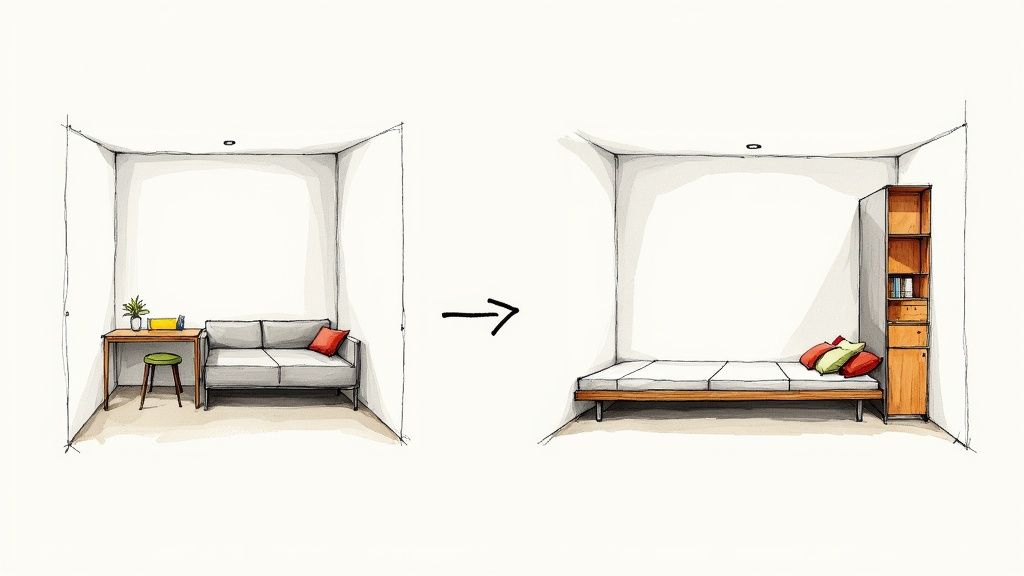
The biggest challenge with a small space isn’t just about cramming your stuff in; it’s about creating a home that’s actually comfortable and functional. Traditional furniture, with its one-job-only attitude and bulky footprint, is often the enemy, making a small room feel tight and claustrophobic. This is where clever design becomes your best friend.
Think of convertible furniture as the secret weapon for city dwellers and anyone trying to make the most of their layout. It’s not just about saving a bit of floor space. It’s about unlocking the true potential of your home. These pieces let a room wear multiple hats without ever sacrificing style or comfort.
The Power of Transformation
A single piece of smart furniture can completely change how you live in a room. We’re moving beyond just “space-saving” and into a full-on lifestyle upgrade, giving you the power to adapt your environment whenever you need to. By choosing pieces that work harder, you can:
- Host Guests Confidently: No more air mattresses. Turn your living room into a genuinely comfortable guest suite in minutes.
- Create a Productive Workspace: A sleek cabinet can fold out into a full desk, letting you clock out and put your work completely away.
- Declutter and Organize: So many of these designs come with hidden storage, keeping your essentials close but out of sight.
The core idea is simple: instead of dedicating an entire room to a single purpose—like a guest room that sits empty 95% of the year—you use furniture that lets a space perform that function only when needed.
This guide is your roadmap to the world of convertible furniture for small spaces. We’ll get into everything from sleek sofa beds that actually feel like real beds to coffee tables that magically rise into dining tables. For an even wider look at maximizing your home’s layout, check out this ultimate guide to furniture for small spaces.
Exploring Different Types of Convertible Furniture
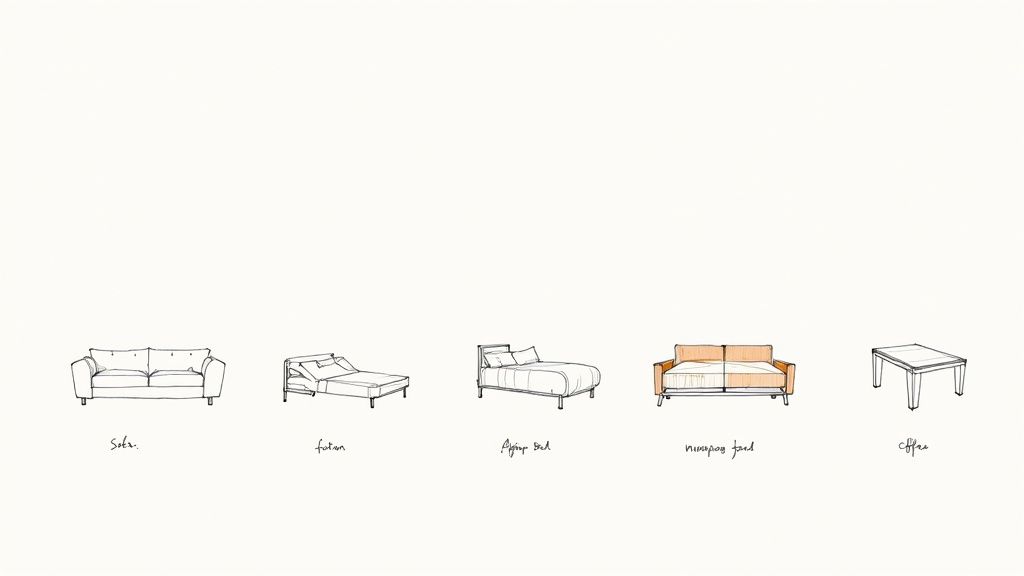
Picking the right piece of convertible furniture is a lot like choosing the perfect tool for a job. Each type has its own unique strength and a distinct way of solving the small-space puzzle. Getting to know the differences is the first step toward reclaiming your square footage with confidence.
Let’s break down the most popular types of convertible furniture for small spaces, looking at how they work, where they shine, and what you should think about before bringing one home.
It’s no surprise that these smart designs are becoming more common. As cities grow, more people are looking for furniture that can do more. In fact, the global convertible furniture market is projected to reach around $5.679 billion in 2025 and is expected to keep growing as people adapt to apartment living and remote work. You can explore detailed insights on the convertible furniture industry to see just how much this trend is taking off.
To help you navigate the options, here’s a quick side-by-side look at the most common contenders.
Convertible Furniture Quick Comparison Guide
| Furniture Type | Primary Function | Best For | Key Advantage | Main Consideration |
|---|---|---|---|---|
| Sofa Bed | Daily seating, occasional sleeping | Living rooms, guest rooms | Traditional sofa look with a hidden bed | Mechanism quality and mattress comfort vary |
| Sleeper Sectional | Ample seating, guest bed, storage | Larger living areas, family rooms | Maximum seating and often includes storage | Requires more floor space, can be heavy |
| Futon | Daily seating and sleeping | Studios, multi-use rooms, budget spaces | Simple, reliable mechanism; easy to convert | Mattress comfort depends heavily on quality |
| Murphy/Wall Bed | Primary or guest sleeping | Studio apartments, home offices | Frees up entire floor space when stored | Requires wall installation (usually) |
| Cabinet Bed | Guest sleeping | Any room without dedicated bed space | Freestanding, no wall mounting needed | Higher price point, less seating function |
| Storage Ottoman | Footrest, extra seating, storage | Living rooms, bedrooms | Adds storage and function in a small footprint | Limited sleeping capability (unless it’s a cot) |
Each of these pieces offers a unique solution. Now, let’s get into the details of what makes each one tick.
The Classic Sofa Bed and Sleeper Sectional
Forget the lumpy, back-breaking pull-out couches of the past. Today’s sofa beds are dual-purpose powerhouses. By day, it’s the comfortable centerpiece of your living room. By night, it unfolds into a welcoming bed.
Modern designs have come a long way, often featuring high-quality mattresses—including memory foam—tucked inside a stylish frame. You no longer have to sacrifice seating comfort for a good night’s sleep.
If you have a bit more room, a sleeper sectional takes things to the next level. These larger pieces often come with bonuses beyond just the bed:
- Hidden Storage: Many have a lift-up chaise lounge, revealing a huge compartment perfect for stashing bedding and pillows.
- Tons of Seating: They offer plenty of room for guests, making them perfect for people who love to host.
- Room Definition: In an open-concept space, a sectional can create a natural visual boundary for your living area.
The secret to a great sofa bed is its mechanism. Look for a system that’s smooth and easy to operate. You can learn more about the variety of high-quality convertible sofa beds available today that blend style with function.
The Versatile and Affordable Futon
Often dismissed as a dorm room basic, the modern futon is actually a sophisticated and incredibly practical choice. Its greatest strength is its simplicity. A futon is just two parts: an adjustable frame and a flexible mattress that folds right along with it.
This straightforward design makes futons unbelievably versatile. The frames are available in countless styles, from minimalist metal to elegant solid wood, so they can fit into almost any decor. The mattresses have evolved, too, now coming in various thicknesses and materials, including supportive foam and plush cotton.
A futon is the ultimate minimalist transformer. Its beauty is in its directness—it converts from sofa to bed in a single, fluid motion without any hidden parts, making it exceptionally reliable for daily use.
The Disappearing Murphy Bed and Cabinet Bed
When your main goal is to free up as much floor space as possible, nothing beats a Murphy bed. It’s the master of disguise. A Murphy bed (or wall bed) is hinged to store vertically against a wall or inside a cabinet.
During the day, it’s completely out of sight, letting your room serve as a home office, gym, or spacious living area. At night, it pulls down to reveal a real, full-sized mattress. This makes it a top choice for studio apartments or any room that needs to pull double duty.
A newer twist on this idea is the cabinet bed. This is a freestanding unit that looks like a handsome credenza or sideboard. The front panels open, and a folded mattress pulls out, creating a comfortable bed in seconds. Cabinet beds have a few key advantages:
- No Wall Mounting: Unlike traditional Murphy beds, they don’t need to be professionally installed into your walls.
- Portability: You can easily move a cabinet bed to another room or take it with you when you move.
- Extra Surface: The top of the cabinet can hold a TV, books, or decor.
Clever Ottomans, Tables, and Chairs
Sometimes the smallest pieces make the biggest difference. Transforming ottomans, coffee tables, and chairs are the unsung heroes of small spaces, adding layers of function without eating up precious real estate.
- Storage Ottomans: These are a must. They give you a place to prop your feet up, extra seating for guests, and a hidden spot to stash everything from remote controls to blankets.
- Lift-Top Coffee Tables: A coffee table with a lift-top can rise and pull forward to become a comfortable dining table or a work desk—perfect for anyone who works from their sofa.
- Convertible Chair Beds: For the tightest of spaces, a chair that folds out into a single bed is an ingenious solution. It offers a cozy seat by day and a spot for an overnight guest without the footprint of a full sofa.
By understanding the unique role each of these pieces plays, you can pick the convertible furniture that will solve your specific challenges and make your daily life that much easier.
How to Plan Your Space Before You Buy
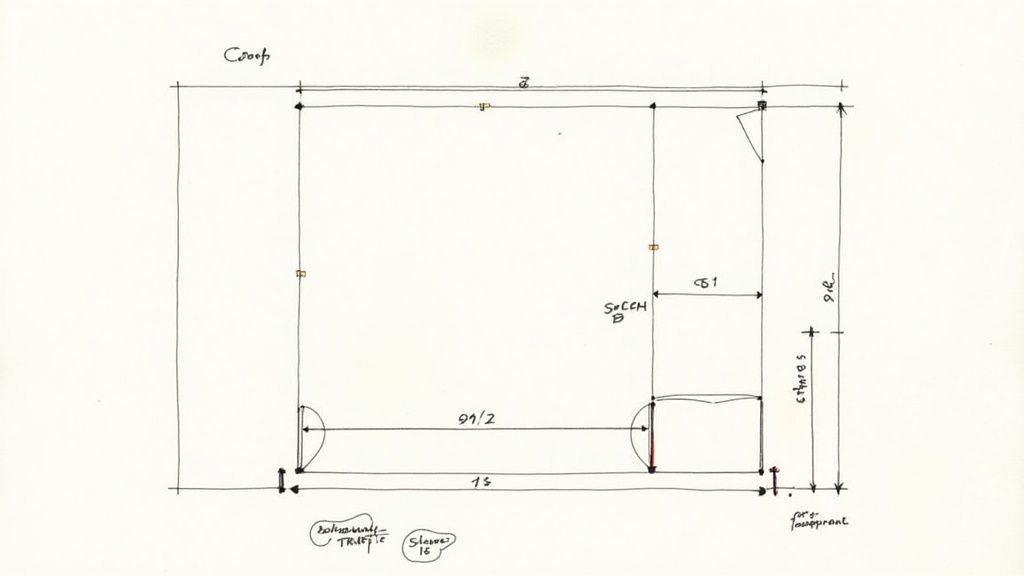
The single biggest mistake when buying convertible furniture for small spaces isn’t picking the wrong style—it’s getting the measurements wrong. That sinking feeling of buyer’s remorse is all too common when a beautiful new sofa bed arrives, only to block a doorway or completely swallow the room once it’s opened up. Adopting a “measure twice, buy once” mindset is your best defense.
This isn’t just about the furniture’s dimensions when it’s all folded up. You have to consider its “ghost footprint”—the total space it occupies when it’s fully transformed for sleeping. A compact-looking cabinet bed might seem like the perfect solution, but if unfolding it blocks the only path to the bathroom, it’s a total failure in practice.
Mastering the Art of Measurement
Before you even think about falling in love with a piece online, grab a tape measure. Getting intimately familiar with your room’s actual dimensions is the most critical part of this process. You don’t need fancy software, just a little bit of foresight.
Start with the total length and width of the room. Then, zero in on the wall where you imagine your new furniture will live. Don’t forget to measure the heights of windowsills and pinpoint the locations of outlets, light switches, or thermostats that the furniture might block.
Think of your furniture in two states: “day mode” (closed) and “night mode” (open). Your floor plan has to work flawlessly for both. This means leaving enough room not just for the piece itself, but for you to move around it comfortably.
Accounting for Clearance and Flow
Once you have your room’s basic numbers, it’s time to think about movement. This is where planning for convertible furniture gets a little tricky. You need to map out the clearance for three key things:
- Transformation Space: How much room does the piece actually need to open? A simple futon might just fold down, but a pull-out sofa bed needs a good amount of forward clearance for the mechanism to fully extend.
- Walkways: After the bed is open, is there still a clear path—ideally at least 30 inches wide—to get around? A classic mistake is getting a sleeper sofa that, once unfolded, leaves you with no room to walk past the foot of the bed.
- Adjacent Furniture: Will the open piece stop a closet door from opening? Will it block access to your bookshelf or smash into your coffee table?
Here’s a simple trick we recommend to everyone: use painter’s tape or old newspapers to outline the furniture’s dimensions right on your floor. First, tape out its closed footprint. Then, using the manufacturer’s specs, tape out its fully open footprint. Live with those outlines for a day or two and see how they affect your daily routine. Many manufacturers provide detailed sizing charts online, which are invaluable for this step.
Creating a Simple Floor Plan
You don’t need to be an architect to sketch out a useful floor plan. A simple piece of graph paper is all you need to visualize the layout and dodge a costly mistake.
- Draw the Room’s Outline: Use the squares on the paper to represent feet (e.g., one square equals one foot). Mark where the doors, windows, and any odd features like radiators are.
- Add Existing Furniture: Sketch in your current furniture to scale. This helps you see immediately how a new, larger piece will interact with everything you already own.
- Sketch in Your New Piece: Finally, draw the convertible furniture in both its closed and open positions. This visual map makes it crystal clear if you’re going to run into problems with clearance or room flow.
By taking these few extra steps upfront, you guarantee that your new convertible furniture for small spaces is a perfect, practical fit from the moment it arrives.
Understanding Mechanisms, Materials, and Mattresses
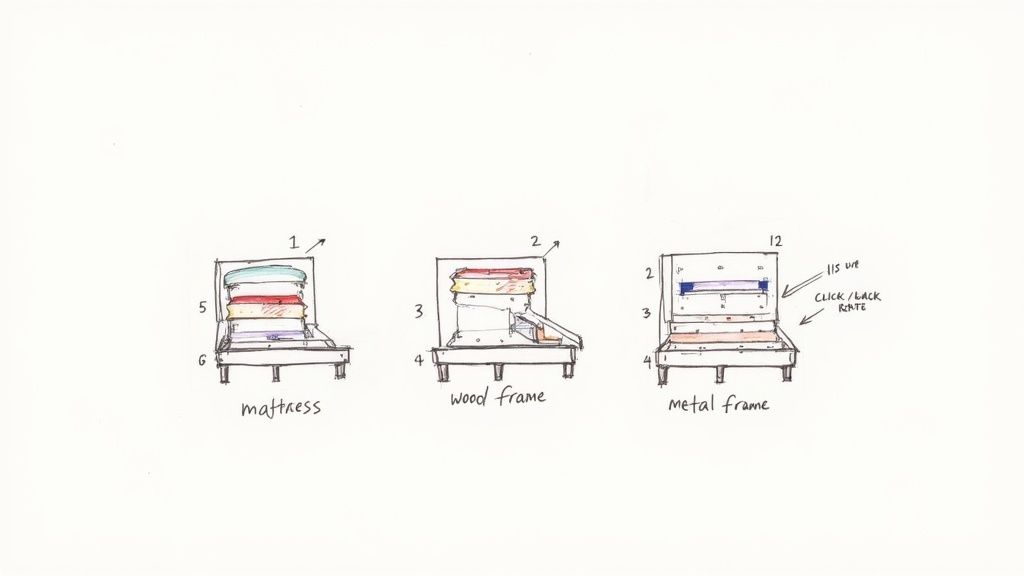
The real magic of convertible furniture for small spaces isn’t just that it can transform—it’s how well it does both of its jobs, day in and day out. A piece that looks sharp but feels rickety or gives you a terrible night’s sleep is a waste of money. To make a smart choice, you have to look beyond the upholstery and get to know the core components that dictate quality and comfort.
Think of it like buying a car. The paint job is nice, but you really want to know what’s under the hood. For convertible furniture, the mechanism, frame, and mattress are the engine and chassis. They determine how smoothly it operates and how long it’ll last.
Decoding the Conversion Mechanisms
The mechanism is the heart of the operation, handling the switch from sofa to bed. A clunky, stubborn system will quickly turn your clever solution into a daily headache. Knowing the common types helps you find one that fits your space and strength.
- Click-Clack Systems: Usually found in futons and more affordable sofa beds, this mechanism is beautifully simple. The backrest clicks into different positions—upright, reclined, or flat. With so few moving parts, it’s incredibly reliable.
- Pull-Out Systems: This is the classic sofa bed design. You pop off the seat cushions and pull a handle, unfolding a metal frame and mattress from inside the base. Modern versions have come a long way, offering smoother glides and much better support than their predecessors.
- Gas Piston Lifts: This is the gold standard for Murphy beds. These advanced systems use pressurized cylinders to counterbalance the bed’s weight, making a heavy mattress feel almost weightless and easy to control.
The best mechanism is the one you can operate by yourself without breaking a sweat. If you can, test it out in a showroom. A quality system should feel solid and move smoothly, without squeaking, sticking, or needing a huge effort.
The Foundation: Frame and Fabric Choices
The frame is the skeleton of your furniture. It has to provide solid structural support for both sitting and sleeping. A flimsy frame will start to wobble, creak, and eventually fail, especially with the stress of daily conversions.
You’ll generally find two main options for frames. Solid hardwood frames are the top choice for durability, especially kiln-dried wood that resists warping over time. On the other hand, metal frames offer fantastic strength with a slim profile, which is a huge plus when designing convertible furniture for small spaces. You can find a great selection of high-quality futon frames in both wood and metal to see which style works for you.
The upholstery matters just as much, since it has to stand up to constant use. Performance fabrics are an excellent pick because they’re engineered to resist stains, fading, and wear. Even materials like velvet can be surprisingly resilient and are easy to clean.
The Deciding Factor: The Mattress
Nothing will impact your satisfaction more than the mattress. An uncomfortable mattress defeats the whole point of a sleeper sofa, turning it into a piece you and your guests will dread. Thankfully, the thin, lumpy mattresses of the past are long gone, replaced by options that prioritize genuine sleep comfort.
- Innerspring: A traditional choice, but they can be less comfortable in convertible models due to their thinner profile. You can sometimes feel the coils, creating pressure points.
- Memory Foam: An excellent choice for sleepers. It conforms to your body, relieves pressure points, and isolates motion so you don’t feel every toss and turn. For good support, look for a thickness of at least 5-6 inches.
- Latex: Offers a responsive, almost bouncy feel and is naturally hypoallergenic and breathable. It’s a durable and supportive premium option.
- Hybrid: This style combines the support of coils with the contouring comfort of foam or latex, often giving you the best of both worlds.
The demand for smarter, more functional furniture in compact city apartments is a massive global trend. In North America and Europe, over 60% of renters now prefer modular furniture to deal with tight spaces, and that number is only growing. This shows a clear shift toward quality and versatility. Choosing the right mattress is key to making sure your furniture meets these modern demands for both comfort and function.
How to Style and Maintain Your Furniture
Multifunctional furniture should feel like a brilliant design choice, not just a practical solution. The real magic happens when you style your convertible furniture for small spaces to look completely intentional and chic, rather than like you’re making a compromise. Good styling makes the whole room feel cohesive and inviting, no matter which “mode” your furniture is in.
The goal is to weave the piece into your existing decor. Textiles are your best friend here. A plush throw blanket casually draped over the arm of a sofa bed or a cluster of decorative pillows can instantly soften its look, making it feel less like a utility item and more like a high-end sofa.
This is also a great way to create different “zones” within a single room. For instance, placing an area rug under your futon and coffee table clearly defines the living area. When you convert it into a bed for the night, that same rug helps the sleeping space feel anchored and cozy.
Styling for a Cohesive Look
Styling is all about making your convertible piece look like it belongs. You don’t want it to stick out; you want it to be the anchor that ties everything else together.
Here are a few simple ways to do that:
- Coordinate Your Textiles: Match the colors or patterns of your pillows and throws to your curtains, artwork, or that area rug. It creates a visual thread that pulls the entire room together.
- Use Strategic Lighting: A stylish floor lamp parked next to a convertible chair creates a perfect reading nook. When a guest stays over, it doubles as a soft bedside lamp.
- Add Personal Touches: Don’t be afraid to accessorize. A small tray on a storage ottoman for remotes or a stack of your favorite books on a cabinet bed’s surface adds personality and makes it feel lived-in.
Think of your convertible furniture as a canvas. The right accessories and textiles don’t just add style; they tell a story about how you use and love your space, making it feel layered and personal.
Creating a Simple Maintenance Plan
A little regular care goes a long way in protecting your investment and keeping your furniture working smoothly for years. A simple, consistent maintenance routine can head off common problems and keep your piece looking brand new. Just remember to check the manufacturer’s guidelines first, as different materials need different kinds of care.
For upholstery, a light vacuuming with a brush attachment is your best bet for keeping dust and dirt from settling into the fibers. To keep things fresh, it helps to know how to clean fabric sofa at home for tackling spills and stains. This is where pieces like futons really shine—removable covers are a game-changer. You can find a huge variety of durable and stylish futon covers that make cleaning as easy as doing a load of laundry.
And don’t forget the mechanical parts. A piece that operates smoothly is a joy to use. One that sticks and groans is a constant headache.
Your Monthly Maintenance Checklist:
- Inspect the Mechanism: Once a month, open and close the furniture all the way. Listen for squeaks and look for any signs of strain on the joints or hinges.
- Lubricate Moving Parts: If you notice any friction, a quick spray of silicone-based lubricant on the moving parts will keep the action smooth and quiet.
- Tighten Hardware: Give any visible bolts or screws a gentle tightening. They can loosen up over time with regular use.
- Rotate Cushions: If your piece has removable cushions, flip and rotate them. This helps them wear evenly and keep their shape much longer.
By blending smart styling with a straightforward maintenance plan, your convertible furniture won’t just solve your space problems—it will become a beautiful, reliable part of your home.
Your Convertible Furniture Questions Answered
Choosing the right convertible furniture for small spaces is a big commitment, and it’s smart to have questions before you invest. You’re not just buying a piece of furniture; you’re buying a solution for your home. You need to know it will be practical, durable, and genuinely comfortable day in and day out.
We’ve heard all the common questions and concerns from shoppers over the years. Here are the straightforward answers you need to feel totally confident in your decision.
Is Convertible Furniture Durable Enough for Everyday Use?
Absolutely, but it all comes down to the quality of construction. There’s a huge difference between furniture designed for the occasional overnight guest and pieces built to handle the rigors of daily life.
If this is going to be your primary sofa or a bed you’ll sleep on every night, quality is non-negotiable. Look for frames made from solid or kiln-dried hardwood. These are the champs that resist warping and creaking over time. The mechanism itself should be heavy-duty steel that operates smoothly without sticking or feeling flimsy.
Think of a well-built piece of convertible furniture as a dual-purpose workhorse, not a compromise. Its frame and mechanism are like the foundation of a house—if they’re solid, the whole thing will stand strong for years.
Cheaper options with particleboard frames might be fine for a guest room that sees visitors twice a year, but they simply won’t hold up to daily folding and unfolding. Always check reviews from people who have owned the piece for a while to get the real story on its longevity.
Are Sofa Beds and Futons Actually Comfortable to Sleep On?
The days of feeling a metal bar digging into your back are pretty much over. Modern convertible furniture has made huge leaps in comfort, mostly thanks to massive improvements in mattress technology.
The secret to a great night’s sleep on a sofa bed is the mattress tucked inside. Many high-quality models now come with memory foam or hybrid mattresses that are 5 inches thick or more. These materials contour to your body and relieve pressure just like a traditional bed.
The same rule applies to futons: the mattress is everything. A thin, flimsy futon mattress will feel exactly like you’d expect. For real comfort, look for one that’s at least 8 inches thick and made with a supportive mix of high-density foam, coils, or natural fibers. A good mattress topper can also be a game-changer, instantly upgrading the feel of any sleeper.
How Difficult Is It to Assemble and Operate This Furniture?
The difficulty can range from “a five-minute job” to “call in a professional,” so it’s something you definitely want to check before you buy.
- Simple Pieces: Things like storage ottomans or some futons might arrive fully assembled or just need you to screw on the legs. Easy.
- Complex Pieces: A big sleeper sectional or a wall-mounted Murphy bed is a whole other story. These often require serious assembly, and a Murphy bed always needs professional installation to be anchored safely to the wall.
Always read the product description for assembly details. Many retailers offer “white glove” delivery and assembly, which can be worth every penny for the larger, more complicated items.
As for operating them, most modern designs are built with ease of use in mind. Look for features like gas piston lifts in Murphy beds, which make lifting a queen-size mattress feel almost weightless. For sofa beds, a good pull-out system should glide smoothly without a fight. If you can, testing the mechanism in a showroom is the best way to get a true feel for it.
Can Convertible Furniture Fit a Modern Design Aesthetic?
Yes, one hundred percent. The old idea that convertible furniture is automatically bulky or unattractive is completely outdated. Today, the market is full of stylish, design-forward options that can elevate any room.
Many brands now create multifunctional furniture that’s indistinguishable from its single-purpose cousins. You can find pieces that slide right into any aesthetic:
- Minimalist Scandinavian designs with clean lines and light wood.
- Sleek mid-century modern pieces with those classic tapered legs and tailored upholstery.
- Plush, contemporary sectionals in rich velvets or textured weaves.
The trick is to look for the same things you would in any high-end furniture: quality fabrics, a refined shape, and thoughtful details. A well-designed piece of convertible furniture for small spaces should enhance your home’s style, not make you sacrifice it.
Ready to find the perfect multifunctional piece for your home? The experts at Futonland offer a personal, consultative approach to help you find high-quality, space-saving furniture that fits your life and style. Explore our collection of futons, sofa beds, and more at Futonland.com