
First Apartment Essentials Checklist: Your Ultimate Starter Guide
Hold on. Before you even think about adding that dream sofa to your cart, stop and grab a tape measure. Seriously. This one simple tool is the absolute most important thing on your first apartment essentials checklist. Skipping this step is the fast track to the classic, costly mistake of buying furniture that can’t even make it through your front door.
Think of it less as a chore and more as your first strategic move in setting up a home that actually works.
Before You Buy Anything, Measure Your Space
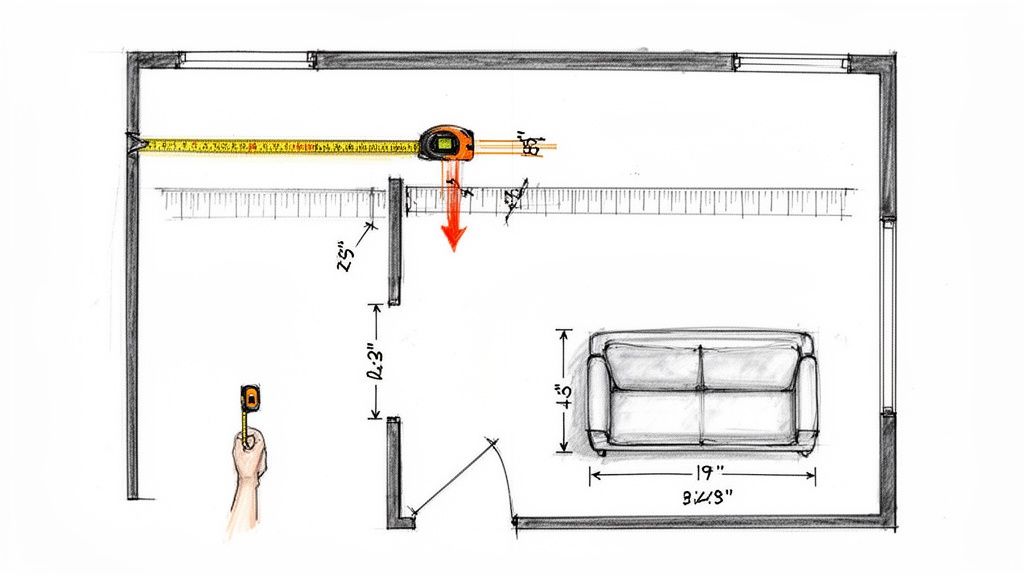
[Image demonstrating how to properly measure doorways, hallways, and turning radius for furniture delivery]
The sheer excitement of furnishing a new place can crash and burn pretty quickly. Imagine this: the perfect sofa bed you’ve been eyeing online finally arrives, only to get hopelessly stuck in a narrow hallway or fail to pivot around a tight corner on the stairs. It’s an incredibly common—and completely avoidable—headache for first-time renters.
To dodge this bullet, you need to measure more than just the room. You have to map out the entire delivery path—every single pinch point your new furniture will have to navigate on its way into your apartment.
Mapping the Delivery Path
Start from the outside and work your way in. With your tape measure in hand, jot down the width and height of every potential bottleneck.
- Building Entrances & Hallways: Get the dimensions of the main lobby doors and any common area hallways.
- Stairwells: Measure the width of the stairs themselves. Pay special attention to the clearance at any turns, checking the ceiling height. A tall piece of furniture can get wedged in a turn faster than you can say “return policy.”
- Elevators: If your building has one, measure the interior height, width, and depth. Don’t forget the door opening, which is often smaller than the inside.
- Your Apartment Door: This is the final boss. Measure the entrance to your actual unit carefully.
Pro Tip: A sneaky obstacle is the swing of interior doors. A bedroom or closet door that opens into a hallway can instantly shrink your maneuvering space, making it tough to get larger items like a storage sleeper or futon into the room.
Sketching a Simple Floor Plan
Once you’ve got the delivery path figured out, it’s time to focus on the rooms. You don’t need any fancy software for this; a quick sketch on a piece of paper is perfect.
Measure the length and width of each room. Make sure to mark the locations of all the permanent fixtures: windows, doors, closets, and especially electrical outlets. This visual map is priceless when you start planning your layout. It’ll show you exactly how much floor space a convertible sofa needs when it’s folded out or help you place a desk without blocking the only usable outlet in the room.
For extra help, you can check out detailed futon and sofa bed sizing charts to match specific products to your room’s dimensions. A little planning now ensures every single item on your list not only fits but makes your new apartment feel like home.
Setting Up Your Multipurpose Living Room
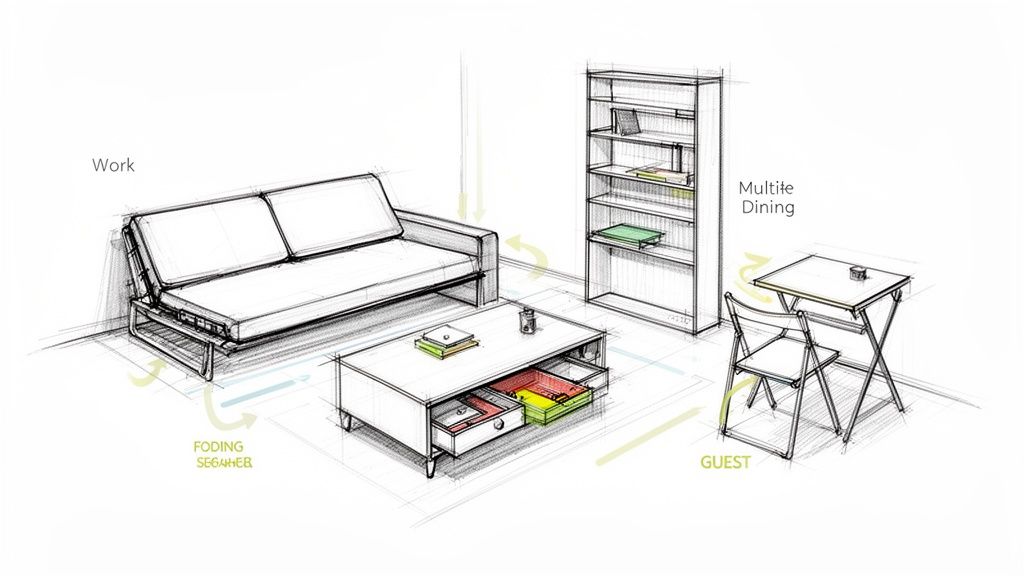
In that first apartment, your living room has to be the ultimate chameleon. It’s your movie theater, your hangout spot, and maybe even your home office. This means every piece of furniture needs to pull its weight—and then some. Making smart, adaptable choices is a non-negotiable part of your first apartment essentials checklist.
The centerpiece of this room is almost always your seating, and this one decision can make or break your entire layout. Forget a traditional sofa that only does one thing. You need to think about furniture that transforms. This is where hardworking heroes like futons and sofa beds become your best friends, saving you precious square footage and cash.
Choosing Your Hardest-Working Piece of Furniture
Modern futons and sleeper sofas are a world away from the lumpy, uncomfortable relics you might remember. Today’s designs are all about style and function, giving you a great-looking place to sit that converts into a guest bed in seconds.
- Modern Futons: Think sleek, minimalist frames and high-quality mattresses. Designs that look like high-end sofas but provide surprisingly great sleep support.
- Convertible Sofa Beds: These look and feel just like a regular couch but have a pull-out mattress hidden inside. They are the perfect solution if you know you’ll have friends or family staying over often. You can check out the huge variety of convertible sofa beds available to find the perfect fit.
- Sectional Sleepers with Storage: Got a little more room to play with? A sectional sleeper with a hidden storage chaise is the ultimate trifecta: plenty of seating, a pull-out bed, and a spot to stash all your extra blankets and pillows.
When you’re deciding, think about how you’ll use it most. If it’s your primary seating, prioritize daytime comfort and fabric. If it’s going to be a regular guest bed, put your focus on the mattress quality and how easy it is to convert.
Beyond the Sofa: Essentials for Small Spaces
Once your main seating is locked in, a few other key items will bring your multipurpose living room to life. The goal here is to add function without creating clutter.
One of the most useful pieces you can get is a coffee table with hidden storage. Look for one with a lift-top that can double as a desk or a dining surface. An ottoman with a removable lid is another great option for stashing remotes, magazines, or extra throws out of sight.
Finally, think vertically. Floor space is a finite resource, but your walls are an open canvas. A tall, narrow bookcase or a set of floating shelves gives you a home for books, decor, and other small items without eating up your footprint. This strategy also draws the eye upward, which can make the whole room feel bigger and more organized. Add a well-placed floor lamp for some warm, ambient light without needing a side table, and your functional, inviting living area is complete.
Creating a Restful and Functional Bedroom
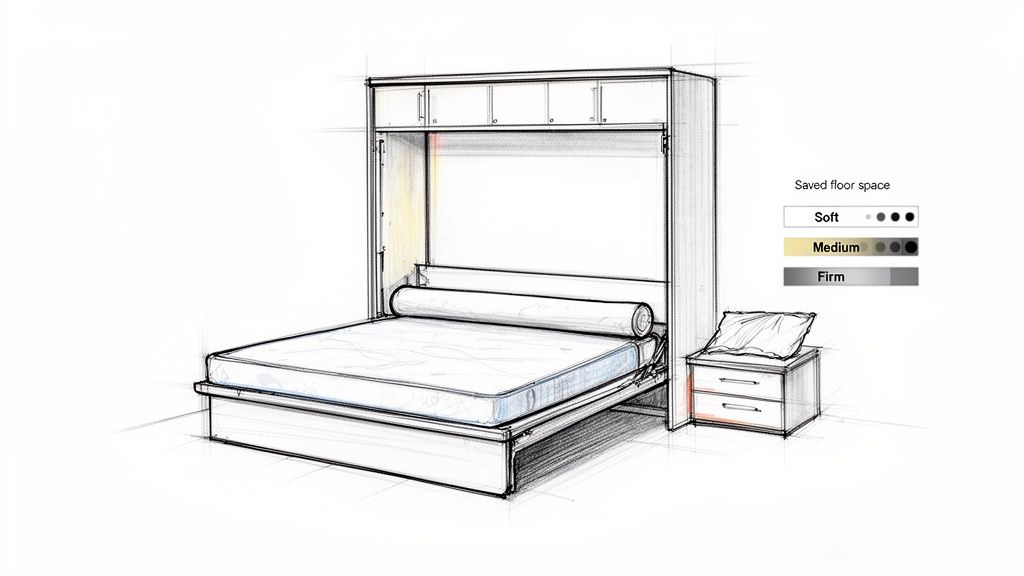
Your bedroom is way more than just a place to crash; it’s your personal retreat from the world. Getting this room right is a huge part of feeling at home, and it all boils down to the single most important item on your first apartment essentials checklist: your bed setup. A quality mattress isn’t a luxury—it’s the foundation of a good night’s sleep and a productive day.
Setting up a bedroom is often a serious financial step for first-time renters. You can generally expect to invest somewhere between $200 to $1,000 to get it all done. The non-negotiables in that budget? A solid bed frame and a great mattress. They’re the core of any functional bedroom.
Choosing the Right Mattress
Whether you’re going for a traditional bed or a high-quality futon mattress, the final decision really comes down to how you sleep. Mattresses are definitely not a one-size-fits-all product. Think about your go-to sleep position to figure out the right firmness and material for you.
- Side Sleepers: You’ll probably want something softer that relieves pressure, like memory foam or a plush hybrid. This will give your shoulders and hips the cushion they need.
- Back Sleepers: A medium-firm mattress is usually the sweet spot. It provides enough support to keep your spine aligned without feeling like a board.
- Stomach Sleepers: Firmness is your friend. A firmer mattress is key to keeping your hips from sinking too low, which is a common cause of back pain.
Don’t forget to explore the wide world of mattresses available for your first apartment. There are tons of options out there, including models designed for both standard beds and futon frames. Making a smart choice here will pay you back every single night.
Smart Solutions for Studio Apartments
When your living room and bedroom are one and the same, every last inch of floor space is gold. A traditional bed can completely take over a studio, but space-saving furniture can be an absolute game-changer, letting you reclaim your room during the day.
A Murphy cabinet bed is a perfect example. By day, it looks like a stylish credenza or sideboard. By night, it unfolds into a genuinely comfortable bed. This trick frees up so much room for a desk, a yoga mat, or just the simple luxury of an open, uncluttered living area.
A restful bedroom is an uncluttered bedroom. In a small space, this means prioritizing furniture that is either compact or serves more than one purpose, ensuring your sanctuary remains a place of calm.
Your Bedding Starter Pack
Once you’ve picked out your mattress and frame, it’s time to dress the bed for maximum comfort. Never underestimate the power of good bedding. Aim to have these basics ready to go from day one.
Non-Negotiable Bedding Checklist:
- Two Sets of Sheets: Trust me, having a backup set is a lifesaver on laundry day. Look for breathable materials like cotton or linen.
- A Quality Comforter or Duvet: Pick a weight that makes sense for your local climate and whether you tend to sleep hot or cold.
- Pillows (That Actually Suit You): Just like mattresses, pillows are incredibly personal. Choose them based on your main sleeping position to get the right neck support.
- A Mattress Protector: This is a non-negotiable. It’s a small investment that protects your big investment from spills, allergens, and everyday wear and tear.
With these essentials in hand, your bedroom will be a genuinely restful and functional retreat from the moment you move in.
Stocking Your First Kitchen for Success
Getting your first kitchen set up is your secret weapon for saving money and really making a new apartment feel like home. This room often needs the most stuff, which can feel pretty overwhelming at first. The trick is to focus on what you need to cook simple, healthy meals right away. This will help you sidestep the budget-killing trap of ordering takeout for the first few weeks.
By sticking to versatile basics, you can build a kitchen that actually works without cramming your limited cabinet space with single-use gadgets you’ll never touch. It’s all about being equipped from day one.
The Must-Haves for Cooking and Prep
Before you even think about that fancy spiralizer, let’s cover the tools that handle 90% of basic cooking tasks. A decent set of pots and pans is non-negotiable. Look for a small starter kit that includes a small saucepan, a larger stockpot, and a versatile skillet. That’s really all you need to get going.
Next up: your prep tools. A good, sharp chef’s knife will be your best friend in the kitchen. Seriously, one good knife is better than a whole block of dull, cheap ones. Pair it with a sturdy cutting board (wood or plastic is fine), a set of mixing bowls, and measuring cups and spoons.
- Pots and Pans: A small, versatile set is all you need to start.
- Knives and Cutting Board: Invest in one good chef’s knife; it’s safer and more effective.
- Mixing and Measuring: Essential for everything from scrambling eggs to tossing a salad.
Essentials for Eating and Drinking
Once you can cook a meal, you’ll need something to eat it on. Start with a simple dishware set for four—this usually includes dinner plates, smaller plates, and bowls. You don’t need a huge 12-piece set right away; four place settings are perfect for you and a few friends.
The same logic applies to silverware and glasses. A basic set of forks, knives, and spoons, along with a few durable drinking glasses and coffee mugs, will cover all your bases without hogging precious drawer space.
Don’t overbuy! It’s so easy to get carried away with specialty glassware or that cool serving platter. Stick to the daily essentials first and add unique pieces later as you figure out what you truly need.
To give you a clearer picture, here’s a quick-start checklist to guide your shopping.
Kitchen Essentials Starter Checklist
| Category | Essential Items | Why It’s a Priority |
|---|---|---|
| Cookware | Skillet, Saucepan, Stockpot | Handles frying, boiling, and simmering—the foundation of most simple meals. |
| Prep Tools | Chef’s Knife, Cutting Board, Mixing Bowls | A good knife makes prep faster and safer. Bowls are for mixing, storing, and serving. |
| Utensils | Spatula, Large Spoon, Whisk, Can Opener | These are your workhorses for stirring, flipping, and opening canned goods. |
| Dishware | Plates, Bowls, Mugs (4 of each) | Covers daily meals for yourself and a few guests without creating clutter. |
| Flatware | Forks, Spoons, Knives (4 sets) | A basic set is all you need to start eating the meals you cook. |
| Small Appliances | Microwave, Coffee Maker/Kettle | For quick reheating and your daily caffeine fix, these are often non-negotiable. |
This list will get you through your first few weeks without feeling like you’re “camping” in your own apartment.
And finally, don’t forget the small but mighty items: a can opener, a spatula, a large spoon for stirring, and a colander for draining pasta. With these basics in place, you’ll be ready to cook your first real meal in your new home. If you need to furnish a small dining nook, check out our selection of kitchen and dining room furniture that fits perfectly in tight spaces.
Your Move-In Day Survival Kit
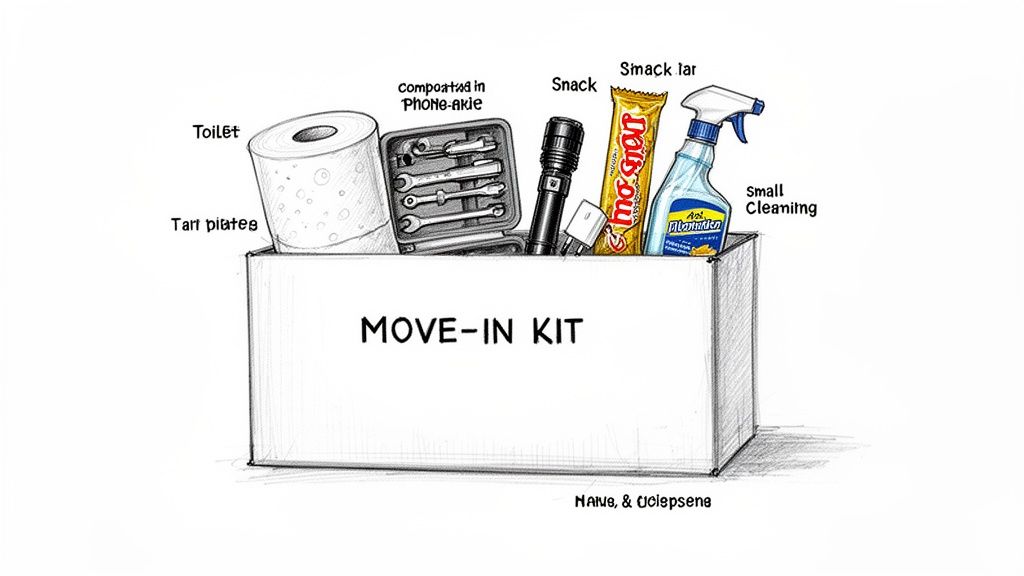
The first 24 hours in a new apartment are always a special kind of chaos. It’s exciting, sure, but it’s also exhausting. To keep things from getting overwhelming, the single smartest thing you can do is pack a dedicated survival kit.
This isn’t just another box. This is the one box you keep separate from everything else. It rides with you in the car, not in the back of the moving truck. Trust me, it’s a lifeline that prevents you from frantically digging through a mountain of cardboard just to find toilet paper or a phone charger. It’s a small step that makes a huge difference.
What Goes Inside Your Lifeline Box
Think about what you’ll need the minute you walk through the door. The goal here is to cover immediate needs: basic cleaning, simple assembly, hygiene, and your own comfort. There’s nothing worse than needing a box cutter and knowing it’s buried in one of twenty identical-looking boxes.
Here’s a practical list of what I always recommend packing:
- Cleaning Basics: At a minimum, you’ll want paper towels, an all-purpose cleaning spray, and a few trash bags for that first wipe-down.
- A Simple Toolkit: A box cutter is non-negotiable. Add a multi-bit screwdriver, a hammer, and maybe some pliers. You’ll need these for opening boxes and starting any simple furniture assembly.
- Bathroom Must-Haves: Don’t get caught without a roll of toilet paper, a bar of soap, a hand towel, and your toothbrush/toothpaste.
- Tech and Power: Your phone is your connection to everything. Pack your phone charger, a portable power bank, and a small power strip.
- Personal Items: A fresh change of clothes, any essential medications, bottled water, and some easy snacks will keep you going when you’re too tired to think about food.
Your move-in day survival kit is the ultimate act of self-care during a hectic time. It acknowledges that you’ll be tired and overwhelmed, and it provides immediate solutions for your most basic needs without any added stress.
The First Week Essentials
While the survival kit gets you through day one, there are a few other items you should keep easily accessible for the first week. Before you get lost in the sea of unpacking, make sure you know exactly where to find a shower curtain and liner, a bath towel, and a set of bed sheets.
Having these basics handy bridges the gap between just moving in and actually feeling settled. Putting together a complete moving day survival kit ahead of time lets you focus on the bigger tasks, knowing your immediate comfort is already handled.
Got Questions? We’ve Got Answers for First-Time Renters
Moving into your first apartment is a huge step, and it’s totally normal to have a million questions running through your head. The whole process can feel a bit overwhelming, but you’ve got this. We’ve heard just about every question in the book from new renters, so we’ve put together some straight-to-the-point answers to help you build your first apartment essentials checklist without the stress.
What Should I Buy First for My New Apartment?
Before you even think about wall art or that cool floor lamp, nail down the absolute basics: sleeping, eating, and hygiene. Your first shopping list should be short and sweet. Focus on a comfortable mattress and some bedding, a single versatile pot or pan, a few utensils, and bathroom essentials like a shower curtain and towels.
Honestly, all you really need on day one is a good place to sleep and a way to make a simple meal. Everything else, from the coffee table to the bookshelf, can wait a week or two. Getting these core items first is smarter for your budget and saves you from the misery of camping out in an empty, non-functional space.
How Can I Save Money on Apartment Essentials?
The single best trick is to think multifunctional. Choose furniture that pulls double or even triple duty. A quality sofa bed, for example, is your couch and your guest bed, instantly saving you the cost of buying two separate, bulky pieces of furniture.
Also, don’t fall into the trap of thinking you need to buy everything at once. Get the must-haves squared away, then slowly add the less critical items as your budget allows. It’s a marathon, not a sprint. Many retailers also offer financing, which can be a huge help for spreading out the cost of bigger investments without having to settle for lower quality.
Smart spending is all about prioritizing function. One piece that serves two or three purposes is a much better investment for a small apartment than three separate items that each do only one thing. You’ll save money and precious floor space.
What’s the Best Way to Handle Furniture Delivery and Assembly?
City living has its quirks, and furniture delivery is definitely one of them. Before you click “buy,” find out your building’s rules. Many have specific delivery hours or require you to book the service elevator in advance. A little prep work here saves a massive headache later.
Choosing a retailer with dedicated delivery services is a total game-changer. If you live in our area, look into White Glove Assembly delivery services. This means your new furniture isn’t just dropped at your door—it’s brought to the right room, expertly assembled, and all that bulky packaging gets hauled away. In a tiny apartment with no space for giant cardboard boxes, this service is worth its weight in gold.
What Are the Most Commonly Forgotten Apartment Essentials?
It’s always the little things, isn’t it? While you’re focused on the big furniture, it’s easy to forget the small stuff that makes a place livable. A simple toolkit with a hammer, screwdriver, and measuring tape is non-negotiable for hanging pictures and assembling… well, everything. And trust us, a plunger is one of those things you don’t want to need and not have.
Extension cords and power strips are another classic “oops” item, especially in older buildings where outlets are mysteriously scarce. And finally, get a basic first-aid kit. It’s a must-have for any home, giving you peace of mind for those inevitable minor scrapes and bumps.
Ready to start checking off your list with furniture that works as hard as you do? Explore the collection of space-saving and multifunctional pieces at Futonland to find the perfect solutions for your first apartment. Visit us at https://futonland.com.