
Finding the Best Futon Mattress for Sleeping
A top-notch futon mattress for nightly sleeping should be at least 8 inches thick and built with quality materials like memory foam, latex, or individually encased coils. These modern components deliver the support and pressure relief needed for restorative sleep, making them serious contenders against many traditional beds without sacrificing your floor space.
From Crash Pad to Sleep Sanctuary

Let’s be honest. When you hear “futon,” you probably picture a lumpy, unforgiving mattress from a college dorm room. It’s time to throw that image out. Today’s futons have completely transformed into genuinely comfortable, practical sleeping solutions perfect for daily use, especially when space is tight.
It’s like going from a flip phone to the latest smartphone. The basic idea—a foldable mattress—is the same, but the materials, technology, and comfort are worlds apart. Modern options are legitimate rivals to conventional beds for anyone living in an apartment, setting up a guest room, or embracing a minimalist lifestyle.
The Modern Futon Revolution
Huge strides in materials science and construction have elevated the humble futon from a temporary fix to a permanent sleep setup. Manufacturers are now integrating sophisticated components that were once exclusive to high-end, traditional mattresses.
This evolution has created a piece of furniture that truly excels at both sitting and sleeping, meeting the demands of modern, flexible living. And the market is taking notice.
The global futon mattress market hit an estimated USD 7.2 billion in 2024. It’s projected to climb to roughly USD 12.2 billion by 2033, a surge driven by urbanization and the growing need for smart, space-saving furniture.
Why a Quality Futon Mattress Matters
Picking the right futon is about more than just having a place to crash for the night. A high-quality mattress is a direct investment in your well-being. It impacts your sleep quality, which in turn affects your energy levels, focus, and even your mood. The right model delivers:
- Proper Spinal Alignment: A supportive core keeps your spine in a healthy, neutral position by preventing your hips from sinking too far into the mattress.
- Pressure Point Relief: Responsive materials like memory foam or latex contour to your body’s curves, cushioning sensitive areas like shoulders and hips.
- Durability for Daily Use: Unlike their predecessors, today’s futons are engineered to handle the wear and tear of being both a sofa and a bed.
The goal here is to change your expectations. Finding a genuinely great night’s sleep on one of these versatile pieces isn’t just a possibility—it’s what you should demand. You can explore the different types of modern futons to see just how far they’ve come.
Understanding Your Futon Mattress Materials
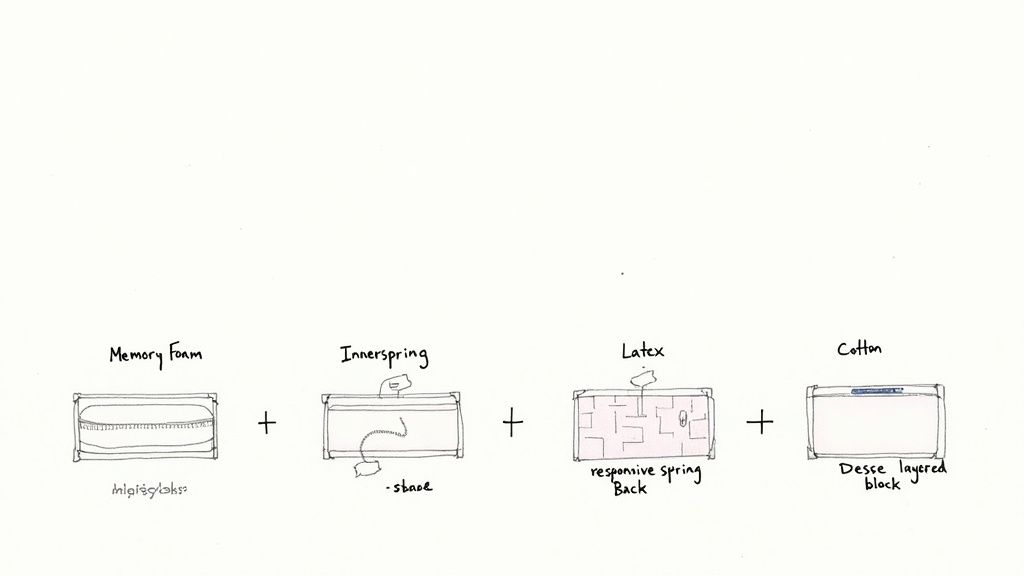
Choosing the best futon mattress for sleeping every night really comes down to what’s inside. The materials are the heart and soul of any mattress, dictating everything from comfort and durability to how hot you’ll sleep. Let’s break down what each material actually feels like and who it’s best for, so you can see past the marketing hype.
Think of the mattress core like a car engine—each type delivers a different kind of performance. Your job is to match that performance to your specific needs, whether you crave pressure relief, a bouncy response, or old-school firm support. Getting this right is the first step to a great night’s sleep.
Memory Foam: The Supportive Hug
Memory foam is famous for one thing: its incredible body-contouring. It uses your own body heat and weight to soften and mold perfectly to your shape, creating a feeling many people describe as a supportive hug. This makes it a champion for pressure relief.
- Best For: Side sleepers who need extra cushioning for their shoulders and hips. It’s also a fantastic choice for couples because it absorbs movement—if your partner tosses and turns, you won’t feel a thing.
- What It Feels Like: A slow-sinking, cradling sensation that distributes your weight evenly. It’s far more absorbent and less bouncy than other materials.
The surge in memory foam’s popularity isn’t just a fluke; it’s backed by real performance. In the wider mattress industry, memory foam products have consistently held a huge market share, making up roughly 30–41% of sales in recent years. This trend has naturally found its way to futons, as more people seek out its proven pressure-relieving benefits.
Innerspring: The Familiar Bounce
Just like a traditional bed, innerspring futon mattresses are built around a core of steel coils. This construction provides that familiar, bouncy feel and allows for excellent airflow, making it a solid, dependable choice for many sleepers.
An innerspring core gives you that classic, responsive feel. The space between the coils lets air move freely, which is a huge plus for anyone who tends to sleep hot.
Most modern innerspring futons use “pocketed” coils, where each spring is individually wrapped. This allows them to move independently, which dramatically improves how the mattress contours to your body and cuts down on motion transfer compared to older spring systems. The result is a mattress that feels both supportive and surprisingly adaptive.
Latex: The Responsive Float
Sourced from the sap of rubber trees, natural latex offers a unique blend of buoyancy and instant responsiveness. While memory foam has that slow sink, latex pushes back almost immediately. It creates a feeling of floating on the mattress rather than sinking into it.
- Why It Works for Sleep: Latex is naturally resilient and incredibly durable, fighting off body impressions and sagging for years. It’s also hypoallergenic and breathable, which helps create a cooler and cleaner sleep environment.
- Feel and Support: It provides gentle contouring without that deep “hug” of memory foam, making it super easy to switch positions. This is a game-changer for combination sleepers.
As you think about the mattress core, don’t forget the outer casing. The fabric can make a big difference in how cool you sleep.
Cotton and Wool: The Traditional Foundation
Old-school Japanese-style futons often rely on densely packed layers of cotton batting. This creates a distinctly firm and solid sleeping surface that softens just a bit over the years. Many of the best traditional futons blend cotton with wool to add natural temperature regulation and moisture-wicking properties.
- Best For: Back and stomach sleepers who need a seriously firm surface to keep their spine aligned. It’s also the go-to for anyone looking for all-natural, chemical-free materials.
- The Downside: All-cotton futons demand a little more upkeep. You’ll need to flip and rotate them regularly to keep them from getting permanently compressed and lumpy.
To help you sort through these options, here’s a quick comparison of how each material stacks up for nightly sleeping.
Futon Mattress Material Comparison for Nightly Sleep
| Material Type | Best For | Feel & Firmness | Pros | Cons |
|---|---|---|---|---|
| Memory Foam | Side sleepers, couples, pressure relief | Medium-Soft to Medium-Firm. Contouring, slow-sinking feel. | Excellent pressure relief, superior motion isolation. | Can trap heat, slow response time can make it hard to move. |
| Innerspring | Back sleepers, hot sleepers, budget-conscious buyers | Medium to Firm. Bouncy, responsive feel. | Great airflow for cooling, strong edge support, familiar feel. | Can transfer motion, may be less durable than foam or latex. |
| Latex | Combination sleepers, eco-conscious buyers, allergies | Medium to Firm. Buoyant, responsive “floating” feel. | Durable and long-lasting, naturally cooling, hypoallergenic. | Can be heavy and expensive. |
| Cotton & Wool | Stomach/back sleepers, natural material seekers | Firm to Extra-Firm. Dense and supportive feel. | All-natural materials, breathable, provides very firm support. | Prone to compression and lumpiness, requires regular flipping. |
Ultimately, the right material is all about your personal sleep style and what feels good to you. Our full collection of futon mattresses includes options with all these materials, so you can find the perfect match to get the rest you deserve.
Choosing the Right Thickness and Firmness
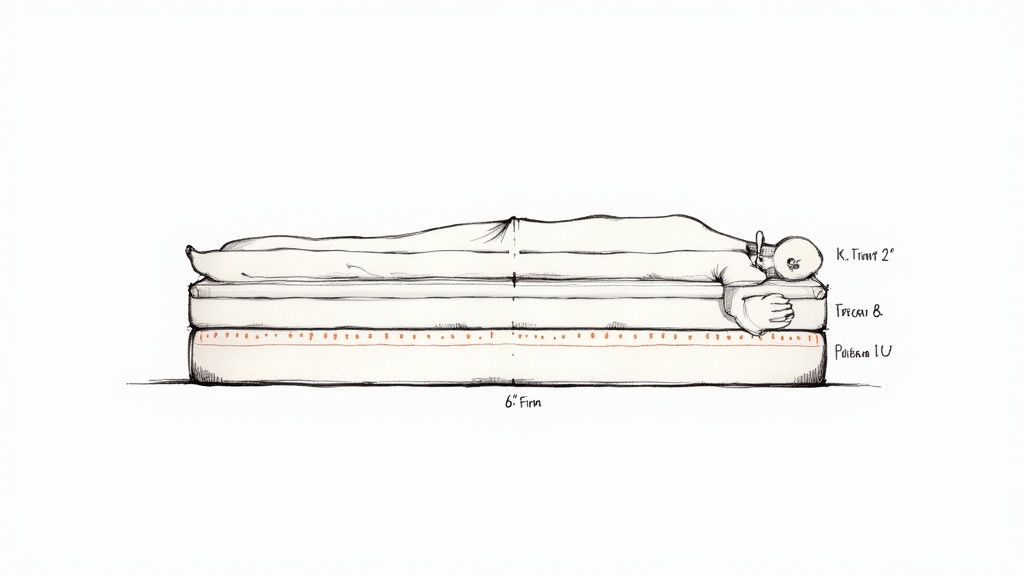
There’s no single “best” futon mattress for everyone. The right choice is the one that perfectly suits your body and sleep habits. Now that you know the core materials, the next step is connecting those specs to your personal comfort by looking at two critical factors: thickness and firmness.
Think of it like buying running shoes. A marathoner needs a completely different shoe than someone who jogs in the park twice a week. Similarly, your sleep position and body weight are the biggest clues to what kind of support you’ll need from your mattress.
This is where you find that “just right” Goldilocks zone. You want enough support to keep your spine aligned without feeling like you’re sleeping on a board, plus enough cushioning to keep you from sinking through and feeling the frame underneath.
How Your Sleep Position Guides Your Choice
Your go-to sleep position is the biggest factor in figuring out the ideal thickness and firmness. Each position creates different pressure points and requires a unique kind of support to keep your spine happy all night long.
Side Sleepers
If you sleep on your side, your hips and shoulders are digging deep into the mattress. A futon that’s too firm will create sharp pressure points, leading to soreness and a night of tossing and turning. To fix this, you need a mattress that’s both thick and has some give.
- Ideal Thickness: 8 to 10 inches is the sweet spot. This provides enough depth to cushion your joints without letting you sink through to the frame.
- Ideal Firmness: Look for a soft to medium-firm feel. A memory foam or latex hybrid often provides the best body-hugging support for side sleepers.
Back Sleepers
Back sleepers need a careful balance of support and contour. The mattress has to be firm enough to keep the spine in a neutral line but have just enough give to cradle the natural curve of your lower back. Too soft, and your hips will sink; too hard, and there’s no cushioning at all.
- Ideal Thickness: 6 to 8 inches is usually more than enough to provide solid support.
- Ideal Firmness: A medium-firm mattress is almost always the best bet, offering that perfect blend of support and comfort. Innerspring or latex models really shine here.
Stomach Sleepers
For stomach sleepers, the main goal is to stop your lower back from arching into an unnatural “U” shape. This happens when your hips sink too deep into a soft mattress, putting a ton of strain on your spine. To avoid this, you need a firmer surface that keeps you floating on top of the mattress.
- Ideal Thickness: A thinner mattress of 6 to 8 inches is often best, as it prevents you from sinking in too much.
- Ideal Firmness: Go for a firm to extra-firm futon. A dense all-cotton or a firm innerspring model will give you the rigid support needed to keep your spine straight.
Factoring in Your Body Weight
Your body weight completely changes how a mattress feels and performs. The exact same mattress can feel like a cloud to a lighter person and a rock to a heavier person. This is why you can’t ignore your weight when trying to find a futon you can actually sleep on.
Lighter folks (under 130 lbs) don’t compress a mattress very much, so what’s labeled “firm” might feel rock-hard to them. They often get better pressure relief from something a little softer.
Key Takeaway: Heavier individuals (over 230 lbs) exert more pressure, causing them to sink much deeper into a mattress. A thicker, firmer futon is essential to provide adequate support, prevent “bottoming out” on the frame, and ensure the mattress holds up over time.
Here’s a quick guide to help you find your match:
- Lighter Sleepers (Under 130 lbs): You’ll probably be happiest with a softer, slightly thinner mattress (6-8 inches). A standard medium-firm futon will feel plenty firm to you, so aim for something on the plusher side.
- Average Sleepers (130-230 lbs): You can generally stick to the recommendations for your sleep position. A medium-firm feel and an 8-inch thickness is a fantastic, versatile starting point.
- Heavier Sleepers (Over 230 lbs): You need to prioritize support and durability above all else. Look for a thicker mattress (8-12 inches) with a medium-firm to firm feel to prevent sagging and give your body proper support.
By combining your sleep style with your body weight, you can zero in on the exact specs that will deliver a great night’s sleep, turning your futon from a simple piece of furniture into a true sleep sanctuary.
Pairing Your Mattress with the Perfect Frame
Even the world’s greatest mattress will feel terrible on a flimsy or incompatible frame. The relationship between your futon mattress and its frame is a true partnership—one can’t do its job without the other. The frame dictates how the mattress folds, how well it’s supported, and ultimately, how comfortable you’ll be sleeping on it.
Choosing the right frame is every bit as important as picking the best futon mattress for sleeping. A mismatch can lead to lousy support, a damaged mattress, and a whole lot of frustration. Before you commit, you need to understand the two main styles you’ll encounter.
Bi-Fold vs. Tri-Fold Frames
Your first big decision is whether to go with a bi-fold or a tri-fold design. They both convert from a sofa to a bed, but they do it in completely different ways, which has a huge impact on the kind of mattress they can handle.
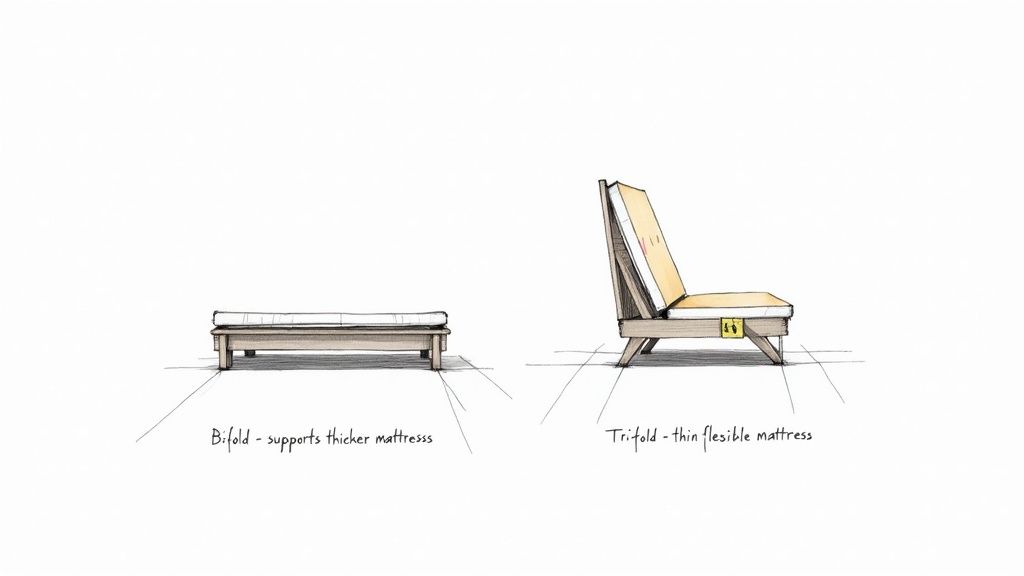
Bi-Fold Frames
This is the classic “sofa-style” frame that most people picture. The mattress folds just once, right down the middle, to create the seat and back of a couch.
- Best for Thicker Mattresses: Because they only have one gentle fold, bi-fold frames are perfect for the thicker, more substantial mattresses (8 inches or more) that you need for nightly sleeping.
- Ideal for Primary Sleep Use: When laid flat, they provide a stable, even surface that’s much closer to a traditional bed foundation.
Tri-Fold Frames
These frames fold the mattress into three sections, often creating a lounger-style chair, an ottoman, or a low-profile seat.
- Requires Thinner, Flexible Mattresses: Those multiple, sharp folds demand a thinner and more pliable mattress, usually 6 inches thick or less.
- Better for Seating and Occasional Use: While they are fantastic space-savers, the creases from the folds can be noticeable when sleeping, making them less ideal for your primary bed.
A thick, 10-inch memory foam hybrid mattress simply will not work on a tri-fold frame. Forcing a hefty mattress to make multiple sharp bends will damage its internal layers and create uncomfortable lumps. It’s like trying to put off-road tires on a sports car—the parts just aren’t meant to work together.
Sizing and Measuring Your Space
Once you’ve matched a mattress type to a frame style, the final check is making sure it actually fits in your room. There’s nothing worse than getting your new furniture home only to find it’s too big for the space. Grab a tape measure and avoid that headache with these quick steps:
- Measure in Both Positions: Get the frame’s dimensions when it’s folded up as a sofa and when it’s fully extended as a bed. Write them down.
- Check Your Clearances: Make sure you have enough room to walk around the futon comfortably in both configurations. You’ll want to leave at least 2-3 feet of clearance on the sides you need to access.
- Account for Assembly: Don’t forget you’ll need a bit of extra elbow room to put everything together. After choosing a frame, the next step is often futon assembly, which goes much smoother when you’re not crammed into a corner.
Taking a few minutes to measure now will save you a major headache later. If you need help finding the perfect foundation, you can explore a wide variety of quality futon frames designed to properly support every type of mattress.
Maintaining Your Futon for Lasting Comfort
Your relationship with your new futon doesn’t end once it’s delivered. Just like any quality mattress, it needs a little bit of care to stay comfortable and supportive for years to come. Think of it like a simple maintenance routine for a car—a few small actions now will prevent much bigger problems down the road.
The main enemies of a futon mattress are compression, moisture, and lumpiness. These issues happen naturally as the mattress materials settle under your body weight and absorb humidity from the air over time. The good news is that staying ahead of them is surprisingly easy with a consistent routine.
Create a Flipping and Rotating Schedule
The single most important thing you can do for your futon is to flip and rotate it regularly. This simple habit ensures that wear and tear are spread out evenly across the entire surface, preventing those permanent dips and compressed spots where you sleep most often.
If you skip this, the filling inside can get compacted, leading to an uncomfortable, lumpy surface that just doesn’t provide the support you need. An even mattress is a comfortable mattress.
Pro Tip: Set a recurring reminder on your phone for the first of every month to flip your futon. It’s a tiny step that can add years to its life and is your best defense against body impressions.
Here’s a simple, effective schedule to follow:
- Rotate It Weekly: For the first month, just rotate the mattress 180 degrees (head to foot) once a week. This helps the materials break in evenly right from the start.
- Flip It Monthly: After that initial break-in period, flip the mattress over completely once a month. This makes sure both sides get equal use.
- Combine and Continue: After a few months, you can settle into a routine of either flipping or rotating it every month. The key is to keep circulating the sleeping surface consistently.
Cleaning Your Futon Mattress
Accidents happen, but you should never treat your futon mattress like a set of sheets. Soaking the core materials with water or harsh chemicals can cause irreversible damage, leading to mold, mildew, and the breakdown of the foam or natural fibers.
Your first line of defense should always be a protective cover. Investing in high-quality, removable futon covers makes cleaning a breeze—you can simply unzip them and toss them in the washing machine. This is the best way to shield the mattress itself from spills, sweat, and allergens.
If you need to spot-clean the mattress directly, follow these simple steps:
- Vacuum Regularly: Use a handheld vacuum with an upholstery attachment every few weeks. This quickly removes dust, pet dander, and other allergens from the surface.
- Blot, Don’t Rub: For any fresh spills, immediately blot the area with a clean, dry cloth to soak up as much liquid as you can. Rubbing only pushes the stain deeper into the mattress.
- Use a Mild Solution: Mix a tiny amount of gentle laundry detergent with some warm water. Lightly dampen a cloth with the solution and gently dab at the stain.
- Air It Out Completely: After cleaning, let the spot air dry completely before putting any covers or bedding back on. Propping the mattress up near an open window or a fan can speed up the process and prevent any chance of mildew growth.
Your Futon Mattress Questions Answered
After digging into materials, thickness, and frames, you might still have a few questions floating around. That’s completely normal. Choosing the right futon for nightly sleeping is a big decision, and it’s smart to cover all your bases before you pull the trigger.
This section is all about tackling the most common questions and concerns we hear from shoppers just like you. Think of it as the final piece of the puzzle to help you choose with total confidence.
Can You Really Sleep on a Futon Every Night?
Absolutely, but there’s a catch: you have to choose the right mattress. The modern futon mattress designed for daily sleep is a world away from the thin, lumpy pads you might remember from college. Forget the temporary, dorm-room vibe; today’s best options are engineered for permanent use.
To make it work, you need to think of it less like a “futon” and more like a real mattress that happens to fold. The biggest key is to look for models that are at least 8 inches thick. This depth gives you the support and cushioning you need to avoid feeling the frame underneath, ensuring a comfortable night’s sleep, night after night.
What’s inside is what truly makes the difference. High-quality materials like supportive innerspring coils, pressure-relieving memory foam, or bouncy latex aren’t just for traditional beds anymore. When a futon mattress is built with these components, it has the durability and comfort to rival many conventional mattresses, making it the best futon mattress for sleeping regularly.
How Long Does a Good Futon Mattress Last?
The lifespan of a futon mattress really comes down to its materials, how often it’s used, and how well you take care of it. Just like a standard mattress, quality is directly tied to longevity. A well-made futon used every night can easily provide comfortable sleep for years.
Here’s a general breakdown of what you can expect:
- Innerspring and Latex Hybrids: These are the long-distance runners. A high-quality futon with a sturdy coil base or a resilient latex core can easily last 7 to 10 years with proper care.
- Memory Foam: A quality memory foam futon typically gives you 5 to 8 years of solid use. After this, it might start showing signs of sagging or lose some of its supportive mojo.
- Traditional Cotton: All-cotton futons, while incredibly firm and supportive at first, are more prone to compressing over time. They can last 5 to 7 years but require diligent flipping and rotating to keep their shape.
Remember, regular maintenance isn’t optional—it’s essential. Consistently flipping and rotating your mattress, along with using a protective cover, can seriously extend its functional life, no matter what it’s made of.
Are Futon Mattresses Good for Back Pain?
A supportive futon mattress can be a fantastic tool for managing and preventing back pain, but picking the right model is everything. The main goal for anyone with back pain is to keep the spine in healthy alignment all night long. If a mattress is too soft, your hips will sink, creating a hammock effect that puts a ton of strain on your lower back.
The best bet is usually a medium-firm to firm mattress that holds your spine in a neutral position. Here’s how different materials can help:
- Memory Foam and Latex: These materials are pros at contouring to your body’s natural curves. This gives you targeted support, filling in the gap at your lower back while cushioning pressure points like your shoulders and hips.
- Innerspring or Hybrids: A futon with a strong coil base offers the robust, underlying support needed to keep your spine straight and prevent that unhealthy sinkage.
For anyone dealing with back pain, thickness and frame support are non-negotiable. A mattress that’s at least 8 inches thick ensures there’s enough material to support you without bottoming out. A sturdy, slatted frame is just as important. The slats create a solid foundation and keep the mattress from sagging in the middle, which would completely undermine its support and could make back pain worse.
Do I Need a Mattress Topper for My Futon?
A mattress topper isn’t always a must-have, but it can be a brilliant way to customize the feel of your futon. Think of it as a comfort upgrade. While your mattress provides the essential support, a topper fine-tunes the surface feel to match your personal preference perfectly.
You might want to add a topper in a few specific situations:
- To Add Softness: If your futon mattress feels a little firmer than you’d like, a 2-3 inch memory foam or plush pillow-top topper can add a layer of cloud-like comfort.
- To Increase Firmness: On the flip side, if your futon feels too soft, a dense latex or high-density foam topper can add a layer of supportive firmness.
- To Extend Lifespan: A topper can act as a buffer, absorbing a lot of the nightly wear and tear and helping to prolong the life of the mattress underneath.
- To Revive an Older Futon: If your current futon is starting to feel a bit compressed but isn’t ready to be replaced, a good topper can bring it back to life for a fraction of the cost of a new mattress.
Ultimately, a topper is a tool for personalization. The best futon mattress for you is one that meets your unique comfort needs, and a topper is an easy way to dial in that perfect feel.
At Futonland, we’re committed to helping you find the perfect sleep solution for your space. With a huge selection of mattresses, frames, and accessories, our team can guide you to a setup that delivers comfort and versatility for years to come. Explore our collection online at https://futonland.com.