

Best Futon For Everyday Sleeping: Ultimate Guide To Comfort, Frames, And Space
If you’re looking for the best futon for everyday sleeping, focus on a simple formula: a sleep-worthy mattress (usually 8 inches or thicker) paired with a sturdy, well-built frame that supports it evenly. The right combination can absolutely function as your primary bed — without the “dorm futon” regret. The difference comes down to materials, construction, and choosing a setup that matches how you actually live: nightly sleep, daily lounging, and tight square footage.
Your Guide to a Comfortable Futon for Daily Sleep
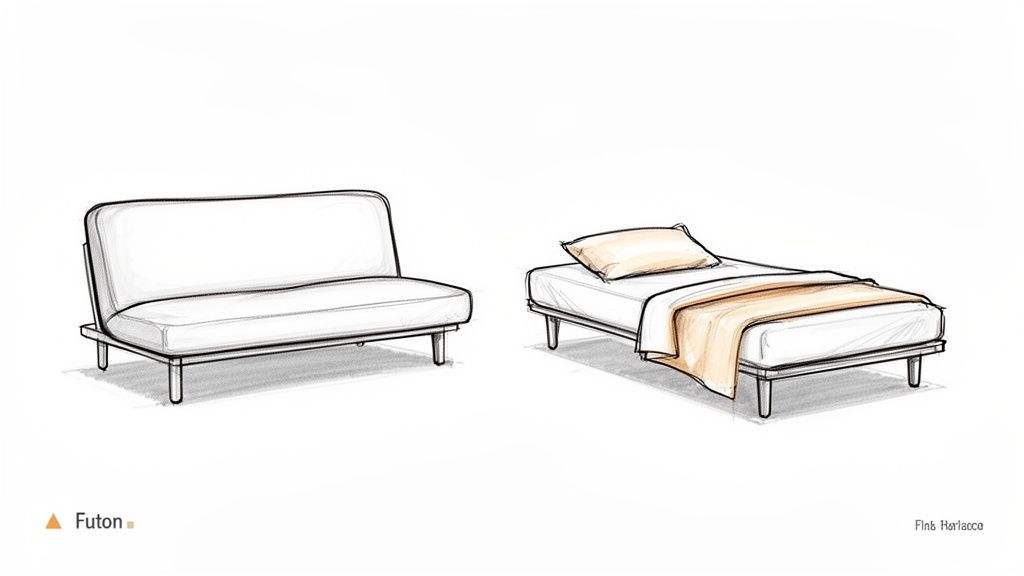
Let’s clear the air: a futon can be a legitimate everyday bed — if you buy the right kind. Most “futon horror stories” come from budget sets with thin cotton pads on weak frames. Those mattresses compress quickly, turn uneven, and start feeling like you’re sleeping on a folded towel over slats.
A modern, sleep-ready futon setup is different. It’s built around:
- A supportive mattress that resists body impressions and doesn’t bottom out.
- A stable frame with a reliable conversion mechanism and strong joints.
- Even support (slats and center supports matter more than most people realize).
A common mistake is prioritizing the frame’s appearance over the mattress’s quality. For everyday sleeping, the mattress is the biggest comfort and durability driver — and the frame’s job is to support that mattress correctly.
When you treat your futon like a primary sleep system — not just a convertible couch — it becomes one of the smartest solutions for studios, one-bedroom apartments, multipurpose rooms, and guest-ready living spaces.
Key Factors for an Everyday Sleeper Futon
| Component | What to Prioritize | Why It Matters for Nightly Use |
|---|---|---|
| Mattress | Thickness (often 8 inches+), high-density foam, latex, or a hybrid build. | Prevents bottoming out, improves spinal support, and holds shape longer. |
| Frame | Solid hardwood or heavy-duty construction with a smooth conversion mechanism. | Stability matters for sleep quality and long-term durability. |
| Support System | Strong slats, proper center support, and safe slat spacing. | Even support prevents sagging and keeps the mattress performing correctly. |
Now let’s break down the details that actually determine whether you’ll love your futon after the first week — or start shopping for a replacement.
Comparing Futon Mattresses for Nightly Comfort
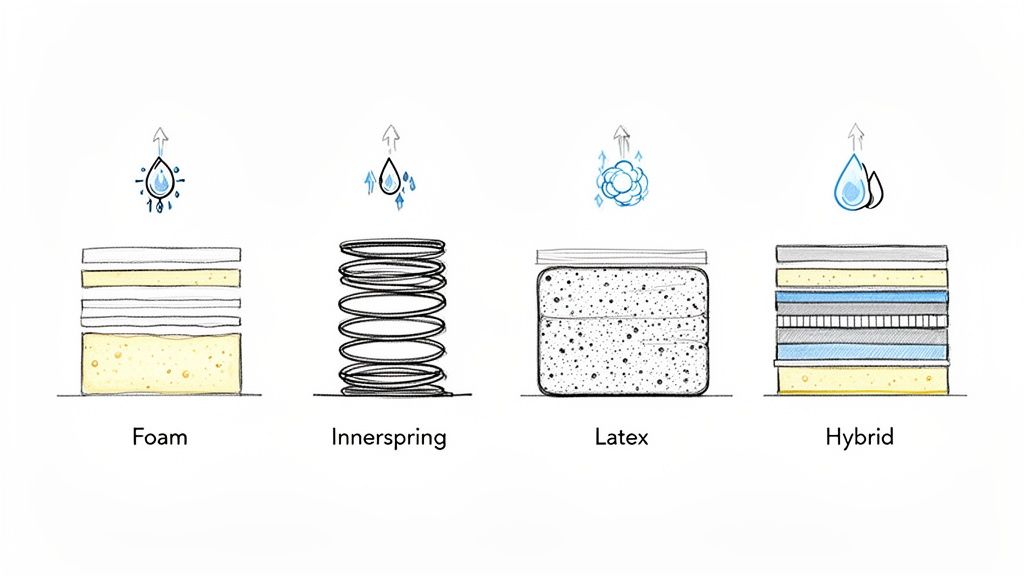
Your mattress is the make-or-break piece. A futon mattress has to do two jobs: sleep comfortably and fold repeatedly without falling apart. That’s why the “best futon mattress” for nightly use is typically built with modern foams, latex, or smarter hybrid layering — not just thick cotton batting.
If you’re browsing options, start here: futon mattresses. But before you click “add to cart,” learn what you’re actually choosing between.
1) Foam Futon Mattresses: The Everyday Workhorse
High-quality foam futon mattresses are often the safest pick for nightly sleep because they balance support, comfort, and foldability. The best builds use multiple layers, typically:
- High-density foam core for structure and support.
- Comfort layer (softer foam, memory foam, or quilting) for pressure relief.
- Durable cover that handles daily use and keeps the surface stable.
Why foam works for daily sleepers: it rebounds well, resists lumps compared to cotton, and folds smoothly on bi-fold frames.
If you want foam for nightly sleep, prioritize high-density builds. Low-density foam can feel okay at first, but it’s more likely to soften, dip, and lose support sooner.
Best for: solo sleepers, couples who want motion isolation, people who prefer a consistent surface, and apartments where the futon converts daily.
2) Innerspring Futon Mattresses: Cooler, Bouncier, Heavier
Innerspring futon mattresses use coils for support. They’re often a good fit if you prefer a traditional “mattress bounce” and tend to sleep warm, since coils can improve airflow.
The tradeoff is flexibility. Coils add weight and can make daily folding feel more cumbersome. If your futon changes form every day, you’ll notice the difference.
Best for: people who want a familiar spring feel and don’t convert the futon constantly.
3) Latex Futon Mattresses: Premium Support and Natural Resilience
Latex offers a distinct feel: responsive, buoyant support — more “floating on top” than “sinking in.” It’s also known for excellent durability and breathable comfort.
If you’re choosing latex for everyday sleeping, you’re typically prioritizing:
- Long-term resilience (less sag and softening over time).
- Temperature regulation compared to some foams.
- A cleaner, more natural material approach depending on the build.
Best for: combination sleepers, people who dislike slow-sinking memory foam, and shoppers who want long-lasting performance.
4) Hybrid Futon Mattresses: Balanced Feel for Nightly Sleep
Hybrids combine materials for a more “complete” sleep feel. Common futon hybrids include:
- Foam core + plush quilt layers for a balanced, supportive surface.
- Coils + foam comfort layers for airflow with pressure relief.
- Foam + natural fibers for structure plus a breathable top feel.
Best for: side sleepers who want cushioning, couples with different comfort preferences, and anyone trying to mimic a traditional bed feel while keeping futon functionality.
Thickness and Firmness: The Two Settings That Decide Everything
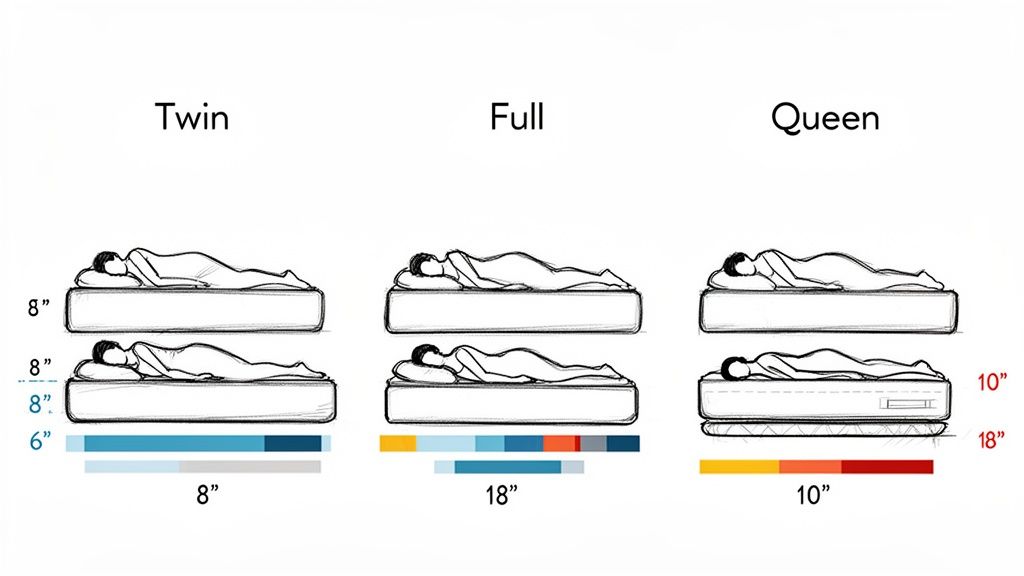
If you only remember one rule, make it this: nightly use demands more mattress. Thickness is what keeps you from feeling the frame, and firmness is what keeps your spine aligned.
How Thick Should a Futon Mattress Be for Everyday Sleeping?
- 6 inches: Usually best for occasional sleep or small tri-fold setups. For nightly use, many people find it too thin.
- 8 inches: The common sweet spot for daily sleeping. Enough depth for real support and comfort layering.
- 10 inches: Great if your futon is your primary bed and you want a more “real mattress” experience — but make sure your frame is built to handle the weight and folding.
For everyday sleeping, most people are happiest starting at 8 inches. It’s thick enough for comfort and support without becoming difficult to fold on a bi-fold frame.
Firmness: Match the Mattress to Your Sleep Position
Side sleepers usually do best with a medium to medium-soft feel so shoulders and hips can sink slightly. Look for comfort layers that relieve pressure.
Back sleepers often prefer medium-firm support that keeps the lower back supported without letting hips drop.
Stomach sleepers generally need a firmer surface to prevent the pelvis from sinking and stressing the lower back.
If you’re not sure, medium-firm is usually the safest “universal” feel for mixed use and mixed sleepers.
The Frame Matters More Than You Think
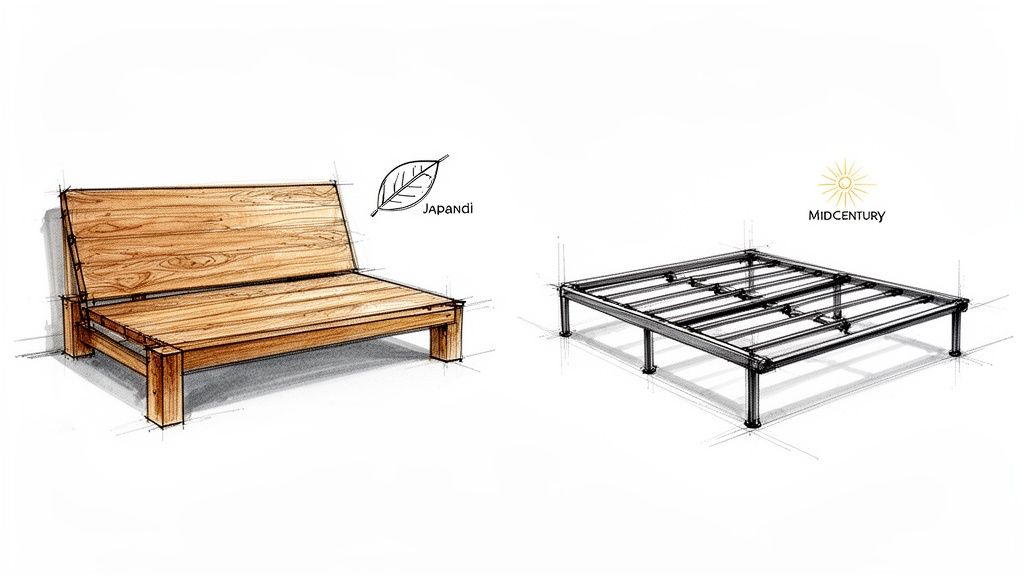
A high-quality mattress can’t do its job on a weak frame. Daily sleeping means daily weight load, plus regular conversion. A frame for everyday use should feel stable, smooth to operate, and strong enough to support a thick mattress without flexing.
Browse by style here: futon frames.
Hardwood Frames: The Best Choice for Everyday Sleep
Solid hardwood frames are often the most reliable long-term choice. They tend to offer:
- Less wobble (big difference for sleep quality).
- Better joint strength and sturdier hardware.
- More consistent support for heavier mattresses.
For nightly use, hardwood is usually the safest bet — especially if you’re going 8 inches+ on mattress thickness.
Metal Frames: Only If They’re Truly Heavy-Duty
Metal frames can work, but quality varies widely. If you’re considering metal for everyday sleeping, look for:
- Heavy-gauge steel (not thin tubing)
- Strong welds and reinforced joints
- A conversion mechanism that feels smooth and secure
The downside: cheaper metal frames can get noisy and flex over time, which you’ll notice quickly with nightly sleep.
Wall-Hugger Mechanisms: A Space-Saving Advantage
If you live in a tight room layout, a wall-hugger frame can be a big win. It opens into a bed without you having to pull the entire futon away from the wall — which saves time and keeps your setup cleaner day-to-day.
Bi-Fold vs Tri-Fold: Choose the Right Type for Daily Use
The fold style affects comfort, durability, and what mattress thickness you can realistically use.
Bi-Fold Frames (Most Common and Best for Nightly Sleep)
Bi-fold futons fold once, like a book. This design is generally the most compatible with thicker mattresses and daily conversion.
Best for: 8–10 inch mattresses, nightly sleeping, and stable sofa-to-bed use.
Tri-Fold Frames (More Compact, More Demanding)
Tri-fold designs fold into thirds and often require more flexible, thinner mattresses. Thick foam or heavy hybrids can crease, bunch, or wear faster in tri-fold setups.
Best for: compact spaces where a smaller footprint is more important than “main bed” comfort — or where the futon is used as a lounger/occasional sleeper.
Support Slats: The Hidden Detail That Prevents Sagging
Even the best mattress won’t feel right if the foundation is wrong. For everyday sleeping, check for:
- Sturdy slats that don’t flex easily.
- Closer slat spacing to support foam and hybrid builds evenly.
- Center support on larger sizes (especially Full and Queen).
If your mattress starts to feel like it’s dipping in the middle, the issue is often the frame support system, not the mattress alone.
Space Planning: How to Make a Futon Work Like a Real Bed
A futon is a space-saver only when it fits your room flow. Before buying, measure two footprints:
- Closed footprint: the sofa dimensions.
- Open footprint: the bed dimensions (and walking clearance around it).
A practical approach: mark the footprint on your floor with painter’s tape. It takes five minutes and prevents the most common regret: a futon that fits as a sofa but blocks the room as a bed.
Pick the Right Size: Twin, Full, or Queen?
- Twin: best for kids, small rooms, occasional adult sleep.
- Full: the most common “solo sleeper” everyday size; great for studios.
- Queen: best for couples or people who want maximum space — but it needs more room in sofa mode and bed mode.
To visualize real dimensions before buying, use sizing charts so you’re not guessing.
Daily Routine: Making Everyday Futon Sleep Easy
If your futon is your main bed, ease matters. A setup that feels like a chore will end up staying in “bed mode” all the time — and then your room stops working as a living space.
Make daily use easier with small choices:
- Use a wall-hugger frame if you’re tight on clearance.
- Keep bedding minimal (a duvet + two pillows is easier than layered blankets).
- Add a storage ottoman for fast pillow/blanket storage if your closet is tight.
- Choose a mattress that folds smoothly so conversion feels effortless.
Care and Maintenance: How to Keep a Daily Futon Comfortable
If you sleep on a futon every night, maintenance isn’t optional — it’s the difference between “comfortable for years” and “worn out too soon.” The good news: it’s simple.
Rotate and Flip (If Your Mattress Allows It)
Rotate your mattress regularly so one area doesn’t take all the wear. If the construction allows flipping, flip it on a schedule too.
- Rotation: every 1–3 months for daily use.
- Flipping: if the mattress is double-sided and designed for it.
Protect It With a Cover
A removable cover is one of the smartest upgrades for daily use. It protects against dust, spills, and everyday wear — and it refreshes your room instantly.
Explore options here: futon covers.
Keep the Support System Healthy
Every few months:
- Check bolts and hardware
- Make sure slats are seated correctly
- Listen for new squeaks or movement (often an easy fix)
Futon vs Sofa Bed for Everyday Sleeping
Both are space-saving, but they behave differently as primary beds.
Why many daily sleepers prefer futons:
- The mattress is a true, consistent surface (no hidden bar feel).
- Conversion can be faster and simpler on a quality frame.
- Mattress choices are broader and easier to replace.
Why some people prefer sofa beds:
- More “sofa-like” seat feel in some living room styles.
- Hidden mattress stays tucked away without showing bedding.
If you’re also comparing other convertible options, you can browse convertible sofa beds to see what fits your space and routine best.
Buyer Checklist: How to Choose the Best Futon for Everyday Sleeping
- Mattress thickness: start at 8 inches for nightly use.
- Mattress materials: high-density foam, latex, or a hybrid build.
- Frame stability: solid construction, minimal wobble, smooth mechanism.
- Slat quality: strong, evenly spaced, with proper center support.
- Room fit: measure closed and open footprints.
- Daily routine: choose a setup that’s easy to convert.
- Protection: plan for a durable cover from day one.
Frequently Asked Questions About Daily Futon Use
Can a futon really be as comfortable as a traditional bed?
Yes — when it uses a sleep-focused mattress (often 8 inches+) and a supportive frame. The “bad futon” reputation usually comes from thin cotton pads and low-grade frames, not modern everyday sleeper setups.
How long does a futon mattress last with everyday use?
It depends on materials and care. Higher-quality foam, latex, and hybrid builds typically last far longer than thin cotton. Rotating the mattress and keeping the support system solid makes a major difference.
What’s the best futon size for one person sleeping nightly?
Most solo sleepers do best on a Full for comfort and room fit, especially in studios. A Queen is great if you have the space or share the bed.
Do I need a topper?
Not always. A quality mattress often doesn’t need it, but a topper can fine-tune comfort (especially for side sleepers) or add a little extra cushion without changing the futon’s structure.
What’s the simplest way to keep a futon clean?
Use a removable cover and wash it regularly. If daily sleep is the goal, a cover is one of the best practical upgrades you can make.
Ready to build an everyday futon setup that actually sleeps well? Start by browsing futon mattresses and pairing them with a stable, daily-use frame from our futon frames collection — then finish it with a durable futon cover to keep your setup fresh for the long haul.