
Low King Size Bed Guide: Dimensions, Styles, and Space Tips
You’ve found the right mattress, cleared the bedroom, and still worry that a standard king will make the room feel crowded. A low king size bed can solve part of that problem by reducing visual bulk, but it won’t shrink the mattress or the space you need to walk around it. The practical question isn’t just whether a low bed looks modern. It’s whether the finished height, frame construction, room layout, and your own mobility work together.
What Is a Low King Size Bed
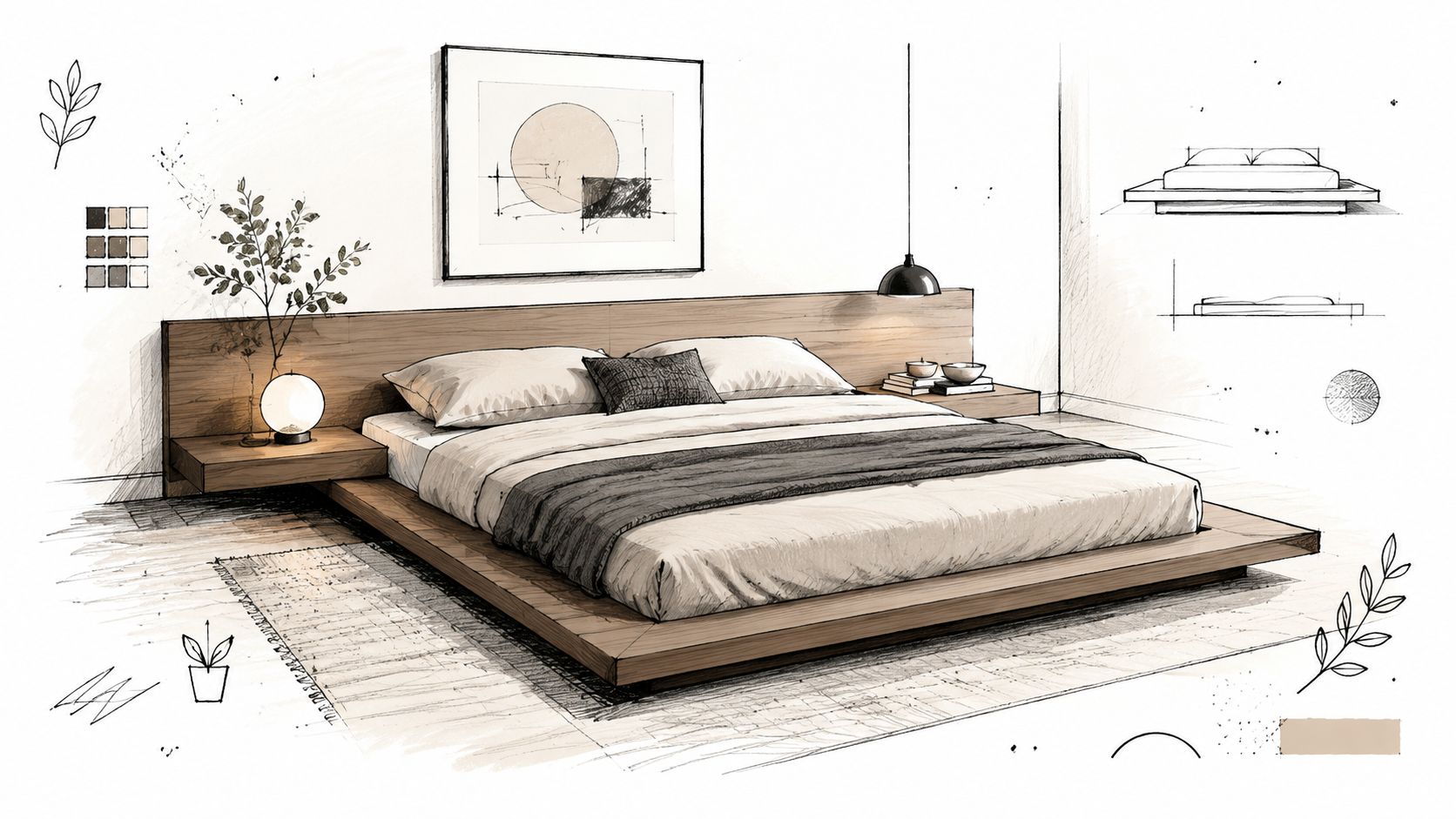
A low king size bed places a standard king mattress on a shortened platform, slatted base, or low-profile foundation. The sleeping surface stays the same size. What changes is the height of the supporting frame, so the bed sits closer to the floor and creates a lower horizontal line across the room.
Consider a homeowner moving from a queen into a modest primary bedroom. A king already occupies substantial floor area, and adding a tall headboard, box spring, and deep footboard can make the room feel compressed. A low wood platform will not create more floor space, but it reduces the furniture rising into the sightline. The room may feel calmer, although the lower height also affects how easily you sit down, stand up, and clean beneath the bed.
The mattress footprint stays the same
The standard U.S. king mattress measures 76 inches wide by 80 inches long. A low frame must support that sleeping surface and accommodate its own rails, corners, and any attached headboard. Lowering the frame does not reduce the size of the bed.
That distinction matters in real homes. The lower profile can make walls and sightlines feel more open, yet it provides no extra clearance at the foot or sides. Doors, wardrobes, windows, nightstands, and walking routes still need to work around the complete footprint.
Platform, futon, and low-profile designs
Most low king beds use a platform with integrated slats, allowing the mattress to rest directly on the frame instead of a tall box-spring arrangement. Some expose a recessed base, while others use a thin perimeter rail that makes the mattress appear to float. Check slat spacing, center support, and the manufacturer’s ventilation requirements before choosing a frame.
Low futon frames can produce a similar appearance, but they serve different purposes. A futon frame may convert for sitting or accept a more flexible mattress. A dedicated platform bed is usually fixed for bedroom use. Browse these low-profile bed designs for construction ideas, then confirm that the frame matches your mattress type.
A low sleeping surface also changes daily ergonomics. It can suit someone who wants a shorter fall distance, including families weighing a floor-adjacent setup for a child’s room. Adults with limited knee, hip, or back mobility may find standing from a very low mattress harder. Leave enough access to vacuum and inspect the floor, since reduced clearance can trap dust and moisture.
The low king combines an established mattress footprint with a closer-to-the-floor frame. Judge it by both room appearance and the physical work of using, cleaning, and maintaining the bed.
Space Planning and Room Proportions
A low frame changes visual weight, while the mattress still occupies the same floor area. Plan around the complete mattress footprint — 76 by 80 inches for a standard U.S. king — then add the frame’s outer edges, nightstands, and any clearance needed to use nearby furniture.
The difference appears above the floor. A tall bed, high headboard, and deep side rails form a strong vertical block. A low platform leaves more wall and sightline visible, which can make a compact room feel less crowded. That visual openness helps in studios, rooms with low ceilings, and bedrooms where the bed faces the entry. It does not create extra walking space.
Measure circulation, not just the mattress
Mark the mattress and frame outline on the floor with painter’s tape. Include nightstands, then walk from the entry to the closet, open drawers, swing the bedroom door, and test whether you can make the bed without twisting around furniture.
A low frame still needs the same usable route around it. The room may feel less obstructed because the bed has less vertical mass, but your feet, shoulders, and cleaning tools need clear access. Check the path from both sides of the bed, especially if one side sits close to a wall.
Practical rule: If the taped outline blocks a door, wardrobe, or primary walking route, lowering the frame will not correct the layout.
Also consider how the bed meets the rest of the room. A low mattress can make tall nightstands feel awkward and may leave standard bedside lighting at an uncomfortable height. Measure the top of the finished mattress against the nightstand, switches, windows, and nearby seating before ordering the frame.
Account for regional sizing
“King” does not mean the same footprint everywhere. A UK king is typically 150 cm by 200 cm, while some continental European sizing uses 160 cm by 200 cm as a comparable category. The U.S. standard is wider at about 193 cm and remains 80 inches long.
These differences affect frame proportions, rug placement, wall clearance, and delivery access. Confirm that the mattress and frame use the same regional standard before comparing photographs or importing furniture. A low frame with a clean, elongated silhouette can still be unsuitable for the mattress you own.
Use this bed sizing chart to check the mattress category, then measure the actual product dimensions rather than relying on the label alone. Clearance, access, and finished height should all be confirmed before purchase.
Frame Styles and Material Choices
The best low king frame depends less on fashion than on how you use the bedroom. A solid wood platform, metal base, and upholstered futon can all sit low, but they differ in noise, maintenance, visual warmth, and long-term behavior.
Solid wood platforms
Wood platforms suit buyers who want a permanent bedroom centerpiece. Oak, maple, walnut, and other hardwood constructions can age gracefully, especially when the rails join tightly and the slats are properly supported. Wood also gives a low bed enough visual substance to avoid looking temporary.
Inspect the joints, center support, slat spacing, and underside finish. A beautiful outer rail won’t compensate for flexing slats or a center structure that shifts when two people move. Look for hardware that can be tightened and rails that don’t rely solely on thin decorative panels.
Wood does have drawbacks. It can show scratches, may transmit floor vibration, and heavier designs can be difficult to move. A low wood frame also creates less room for storage, so don’t choose it expecting to hide large containers underneath.
Metal frames
Metal provides a lighter visual language and can be easier to reposition. A well-made steel frame may offer strong support with a narrow profile, making it useful where every inch of visual openness matters. The risk is resonance. Loose fasteners, unsupported slats, or metal-on-metal contact can produce squeaks.
Before buying, check whether the frame uses rubberized contact points, reinforced corners, and a center support system appropriate for a king mattress. A thin, inexpensive base may look minimal but feel unstable when you sit on the edge.
Upholstered and futon-style frames
Upholstered frames soften a room and can reduce the hard visual contrast of a low platform. They’re comfortable to lean against when paired with a suitable headboard, but fabric collects dust and can show oils, stains, and abrasion more readily than sealed wood or coated metal.
Low futon frames are a different proposition. They often emphasize flexibility, conversion, and compact living rather than a fixed bedroom profile. The trade-off is that the frame and mattress need to work together through movement, folding, or changing use. Browse platform bed options with the support system and intended mattress type in mind.
A useful comparison looks like this:
| Frame type | What works | What can disappoint |
|---|---|---|
| Wood platform | Warm appearance, stable bedroom use, repairable hardware | Heavier to move, limited under-bed access |
| Metal platform | Light visual weight, straightforward structure | Squeaks if joints loosen, can feel less substantial |
| Upholstered frame | Softer appearance, comfortable back support | Fabric needs careful cleaning and can wear at contact points |
| Low futon frame | Flexible use and space efficiency | May not provide the same fixed-bed feel as a dedicated platform |
Mattress Compatibility and Ergonomics
A low king size bed works only when the mattress, support system, and finished height suit the people using it. The mattress provides much of the cushioning and body support, while the frame must keep it level, stable, and ventilated. Sleep research consistently emphasizes support and posture over decorative base style, and a sagging support system is a well-documented contributor to poorer sleep quality for side and stomach sleepers in particular.
Calculate the finished height
The useful measurement is the distance from the floor to the top of the mattress, not the frame specification by itself. Add the frame or platform height to the mattress height, then include any topper that will stay on the bed. That total determines how easily you can sit down, stand up, and get back into bed each day.
For average adults, ergonomic guidance commonly places the mattress top around 16 to 24 inches from the floor, ideally near knee level. A low frame with a thick mattress may fall within that range. A thin mattress on a very low base may leave the sleeping surface uncomfortably close to the floor.
Use this check before ordering:
- Measure the frame. Confirm the distance from the floor to the mattress support surface.
- Measure the mattress. Use the manufacturer’s actual height, rather than a label such as “low profile.”
- Add planned bedding layers. Include a topper if it will remain on the bed.
- Test the sitting position. Your feet should reach the floor without excessive knee lift, and standing should not require a hard push from your hands.
- Consider both users. One partner may find the height comfortable while the other struggles with it.
A very low surface increases trunk flexion and can make rising harder. A taller bed can also create awkward entry and exit for some users, so the practical target is a height that fits the occupants, not the lowest possible frame.
Choose the support system first
Many platform beds support foam, latex, or hybrid mattresses without a box spring. Compatibility still depends on the platform’s slat spacing, center support, weight capacity, and ventilation requirements. Confirm those details before delivery, especially for a king size mattress, where inadequate center support can lead to movement or premature sagging.
A foam mattress tends to provide a close, conforming feel. An innerspring or hybrid can feel more buoyant, while latex usually offers a springier surface. Compare these options in the available mattress collection, then judge the specific model by support, firmness, edge stability, and sleeping position.
Older buyers and anyone with knee, hip, or mobility limitations should assess the bed in person when possible. As a general rule, someone with limited mobility does better with a bed on the higher end of the comfortable range rather than the lowest available frame, since a taller sitting height reduces the effort needed to stand. A low king can suit the room visually and still be the wrong daily choice if standing from it is difficult.
Maintenance and Long-Term Durability
Low beds need a maintenance plan because their close relationship with the floor exposes problems that taller frames can hide. Dust gathers beneath the platform, fabric sits near foot traffic, and a loose slat can become noticeable when the mattress rests directly on the base.
Match cleaning to the material
For sealed wood, use a soft cloth and a cleaner approved for the finish. Don’t saturate joints or let moisture pool along the rails. Unfinished or oiled wood usually needs gentler care and occasional reconditioning according to the manufacturer’s instructions.
Metal frames benefit from regular dusting and inspection for chipped coatings or rust. If a fastener loosens, tighten it before movement enlarges the joint. Avoid assuming that a squeak is harmless. It often points to friction, shifting hardware, or a contact point that needs adjustment.
Upholstery requires the most disciplined routine. Vacuum seams and corners with a suitable attachment, blot spills rather than scrubbing them deeper, and test any cleaning product on an inconspicuous area. Keep the care label, because some fabrics tolerate water-based cleaning while others require professional treatment.
Inspect the structure
Set a recurring reminder to check the frame, especially after moving house or changing the mattress. Press gently on each corner, listen for movement, and inspect the slats for bowing, cracks, or displacement. Check that the center support remains firmly connected and that the mattress doesn’t shift during normal use.
A low frame should be quiet, level, and boring. New movement, rubbing, or uneven support deserves attention before it becomes a comfort problem.
Ventilation also matters. Keep the area beneath the bed clear enough for air circulation and cleaning, and follow the mattress maker’s instructions for the required base. A frame that traps moisture or prevents inspection may look sleek while creating avoidable upkeep.
Buy for the way you live
Choose a fixed wood platform if you rarely rearrange furniture and want a stable visual anchor. Choose metal when moving and lighter appearance matter more. Choose upholstery only if you’re willing to protect and clean the fabric, especially in homes with pets or children.
Construction quality is more important than a fashionable silhouette. Reputable sellers should provide assembly instructions, warranty information, replacement hardware availability, and clear mattress compatibility details. A low king bed is a long-term purchase, so favor a frame you can tighten, clean, inspect, and repair over one that only looks impressive on delivery day.
Making the Final Decision
A low king size bed works when its proportions suit both your body and the room. The label alone says little about comfort or durability. Check the complete setup, including the mattress, base, finished height, and clearance around the frame.
Use this buying checklist:
- Confirm the footprint. In the United States, the mattress is 76 by 80 inches, while the frame needs additional space.
- Measure finished height. Add the frame, mattress, and topper, then compare the result with the practical 16 to 24 inch comfort range.
- Test movement. Sit on the edge, stand, and repeat the motion you will use at night. A low bed can look balanced yet make daily access awkward.
- Inspect support. Confirm the slats, center reinforcement, ventilation, and mattress requirements.
- Plan the room. Tape the footprint, open nearby doors and drawers, and check the walking route.
- Choose flooring thoughtfully. A low frame leaves more of the floor visible, so weigh how much of your current flooring you actually want on display before changing the room around it.
The right choice balances visual restraint, usable circulation, mattress support, and safe daily access. If standing feels difficult, the design is not working, regardless of its appearance.
Before ordering, tape the king footprint onto the floor, calculate the complete floor-to-mattress height, and verify slat requirements with the seller. Choose a fixed platform or flexible frame that suits your mattress and routine, then contact Futonland for guidance when comparing compatible low-profile options.