
White TV Cabinets: A Buyer’s & Styling Guide
You’re probably looking at a living room that has to do too much. It’s your TV room, work-from-home overflow area, maybe your guest space, and almost certainly not as bright as you’d like. In New York apartments, that’s normal. The right white TV cabinet helps because it doesn’t just hold a screen. It changes how the room reads.
That matters if you’ve already decided on white and now need to choose well. The questions get more specific fast. Will gloss drive you crazy with fingerprints? Will a painted finish chip at the corners? Will the cabinet look yellow in two years? Is it deep enough for a soundbar, router, or game console without turning into a tangle of wires?
Those are the practical questions worth answering before you buy.
Why White TV Cabinets Are Perfect for City Living
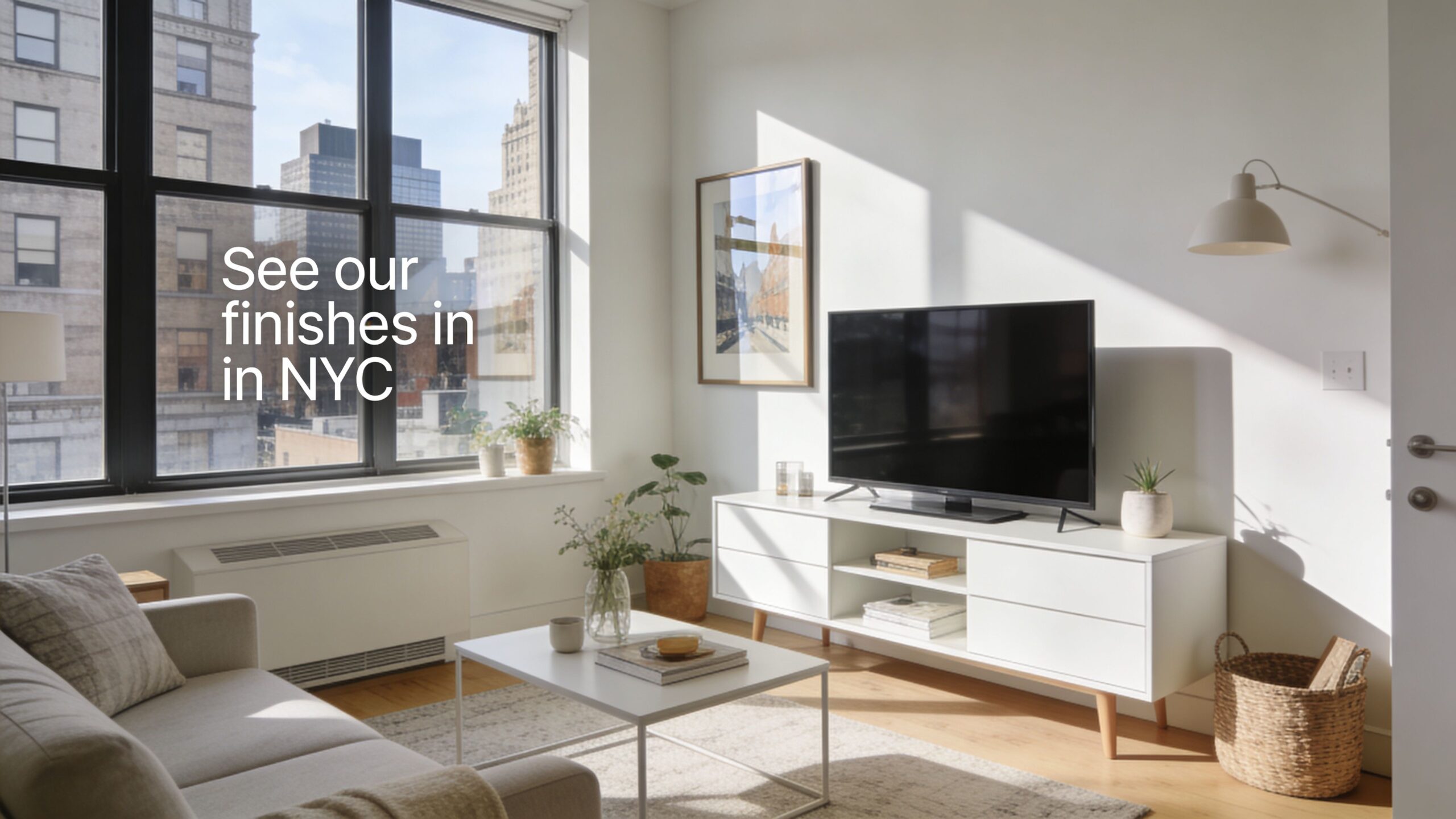
In a city apartment, visual weight matters almost as much as floor space. A dark media unit can make the whole wall feel heavier. A white cabinet tends to do the opposite. It blends into trim, pale walls, and daylight, so the room feels calmer and less crowded.
There’s a measurable reason for that. White cabinets achieve an average light reflectance value of about 80%, compared to 5% for black cabinets, and that reflective difference can make small living spaces feel up to 20 to 30% more spacious and airy in residential settings, according to FCI London’s white TV cabinet trends guide. In plain terms, white bounces light back into the room instead of absorbing it.
That’s especially useful in apartments with one main exposure, shaded streets, or living rooms that sit behind the bedroom. A white cabinet won’t create daylight that isn’t there, but it can help the daylight you do get travel farther.
Why it works better in compact rooms
A white TV cabinet earns its keep in three ways:
- It softens the TV wall: The cabinet doesn’t compete with the screen, so the setup feels less bulky.
- It supports mixed-use rooms: In studios and one-bedrooms, white furniture usually transitions more easily between living, working, and hosting.
- It keeps styling flexible: White works with Scandinavian, mid-century, and cleaner contemporary interiors without forcing a full redesign.
White furniture makes more sense in small rooms when it solves a visual problem, not just a color preference.
If you’re comparing layouts, materials, and storage options across living room furniture at Futonland, white is often the finish that gives the most flexibility later. You can warm it up, sharpen it, or keep it quiet. That’s harder to do with a bolder finish once the piece is in the room.
Decoding Finishes Painted Wood vs Lacquered MDF
After color, finish is the decision that affects daily life most. Two white cabinets can look similar online and behave very differently after a year of use. The common comparison is painted solid wood versus lacquered MDF, and each has strengths.
Painted solid wood usually has more texture and a more furniture-like feel. Lacquered MDF typically gives you the smoother, more uniform modern white most buyers picture when they search for white tv cabinets.
What changes over time
Painted wood tends to show its age in a familiar way. Edges can chip if they take repeated knocks, especially around door corners and lower rails. On the positive side, small nicks are often easier to touch up because the finish usually has a bit more visual texture and less mirror-like reflectivity.
Lacquered MDF usually starts out looking cleaner and more even. Flat door fronts, handle-less faces, and high-gloss finishes all benefit from that smooth substrate. But when lacquer chips, the damage can look sharper and more obvious because the finish is so crisp.
One practical trade-off matters right away. Gloss white finishes can show stains and fingerprints more easily than matte or wood-grain textures, while black finishes show scratches 80 to 90% more clearly than white, according to Belleze’s comparison of black vs. white TV stands. That doesn’t mean gloss is a bad choice. It means gloss works best for buyers who want a polished look and don’t mind wiping it down more often.
White Finish Comparison Painted Wood vs. Lacquered MDF
| Feature | Painted Solid Wood | Lacquered MDF |
|---|---|---|
| Surface look | Slightly softer, more natural | Smoother, more uniform |
| Edge wear | Can chip on impact, often easier to touch up | Can chip more sharply at corners |
| Cleaning feel | Usually forgiving in satin or matte finishes | Easy to wipe, especially on sealed surfaces |
| Style fit | Transitional, Scandinavian, classic-modern | Modern, minimalist, high-gloss contemporary |
| Aging | May develop character with use | Looks crisp longer if protected from impact |
| Best for | Buyers who want warmth and easier cosmetic repair | Buyers who want a sleek, seamless white finish |
What to inspect in person
Photos won’t tell you enough about white. You need to look at the door edges, the inside color match, and the sheen level under real lighting. In store, I’d pay attention to these details:
- Corner quality: Sharp, fragile edges usually chip first.
- Color consistency: Some lower-grade whites look different on the top, front, and side panels.
- Door alignment: Uneven gaps stand out more on white finishes.
- Sheen level: A very glossy panel can look great in a staged photo and feel too reflective in a small apartment.
For a useful background read on material differences beyond media furniture, The Cabinet Coach’s guide to cabinet doors gives a good overview of how MDF and wood behave in everyday use.
In white furniture, poor finish quality shows fast. Good finish quality doesn’t need explaining once you see it up close.
The Art of Scale Sizing Your Cabinet to Your TV and Room
A white cabinet can lighten a room and still look wrong if the proportions are off. Most sizing mistakes fall into two categories. The cabinet is too narrow for the TV, or it’s so bulky that it eats the room.
Start with the screen, not the room photo
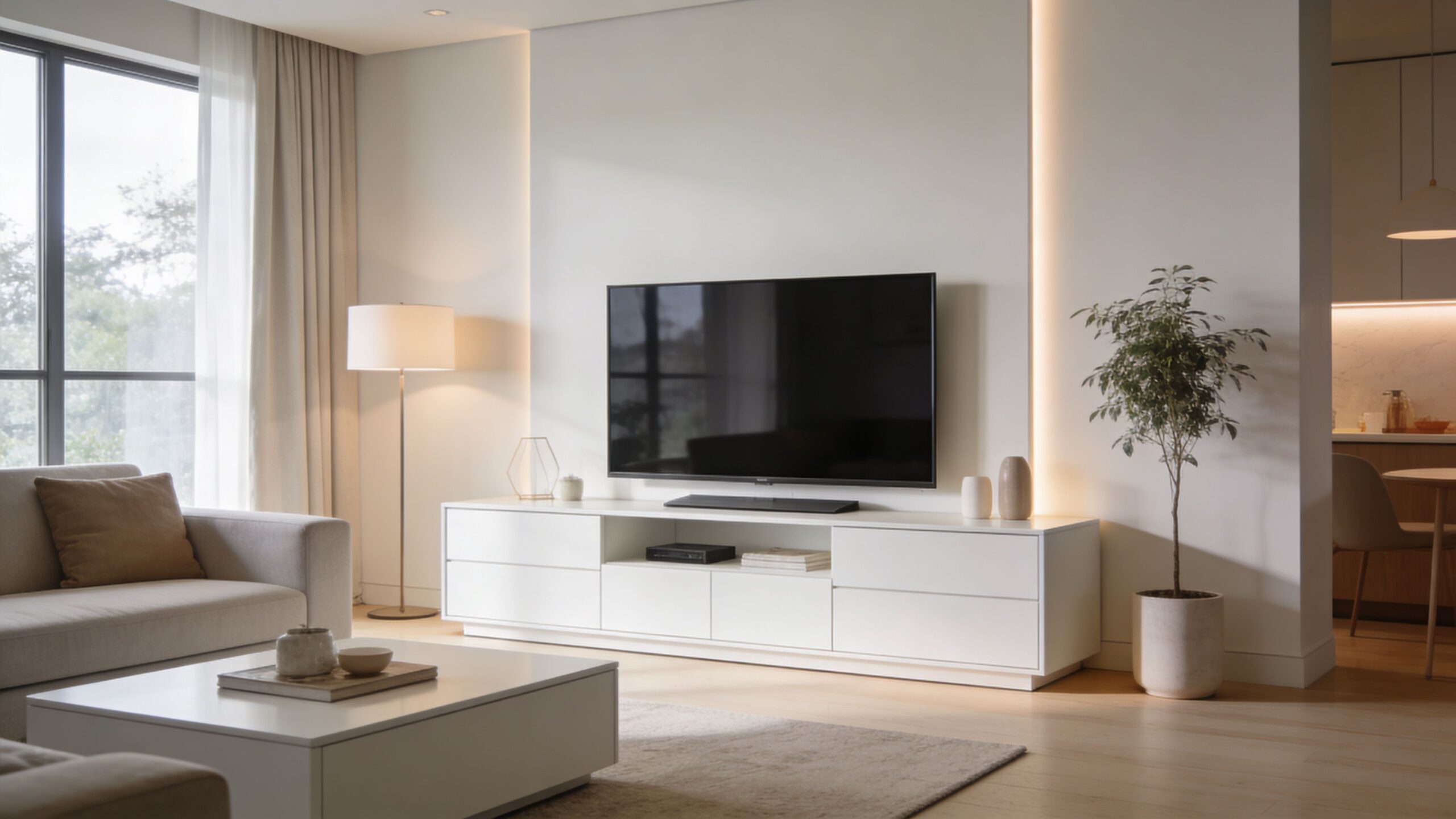
The most reliable rule is simple. Your cabinet should extend at least 2 to 6 inches beyond the TV on each side for stability and visual balance. A 60-inch TV, which is about 52 inches wide, needs a cabinet about 56 to 64 inches wide to avoid overhang and wobble, based on this sizing guidance from Home Depot’s TV stand reference.
That extra width does two jobs. It keeps the setup physically safer, and it gives the TV a visual frame so the screen doesn’t look like it’s perched on a ledge.
Then check viewing height
The same source notes that the ideal screen center is around 42 inches from the floor. That number matters more than most buyers expect. If the cabinet is too tall, the TV ends up too high, especially in apartments where people also wall-mount above the unit.
Practical rule: If you have to tilt your chin up every night, the cabinet and TV combination is too tall, even if the piece looks good in the showroom.
A low, horizontal cabinet usually works better in NYC living rooms because it keeps the wall line long and the sightlines clean.
A quick sizing workflow
Use this before you buy:
- Measure the actual TV width. Don’t shop by the diagonal screen size alone.
- Add side margin. Look for the extra width noted above so the cabinet doesn’t look undersized.
- Check room circulation. In a narrow apartment, depth matters almost as much as width.
- Plan for components. If you have a soundbar, console, or router, leave room for them before falling for a minimalist piece.
- Verify the full setup against room dimensions. A long cabinet can still work in a small room if it stays low and visually quiet.
If you want a quick second check before ordering, Futonland’s sizing charts are useful for comparing furniture dimensions against real room constraints.
Smart Storage and Essential Features
A media cabinet isn’t just a platform anymore. It has to handle streaming boxes, routers, gaming gear, remotes, chargers, and the cables people try hard not to see. That’s where many white tv cabinets separate into two groups. Some stay clean-looking only when styled empty. Others support real daily use.

Search behavior reflects that shift. There has been 35% growth in searches for “hidden cable TV stands”, and features like ventilated panels, built-in USB hubs, and modular shelving appear in only 15% of current market offerings, according to this Wayfair market overview. Buyers are looking for cleaner setups than the average cabinet still provides.
Cable management that actually helps
The minimum is a basic rear cutout. Better than nothing, but not enough for a compact apartment where the cabinet may be visible from multiple angles. More useful solutions include interior pass-throughs, separated channels, and enough rear clearance that plugs don’t force the unit several inches off the wall.
Look for these details:
- Rear access openings: These let cables drop cleanly without bending sharply.
- Concealed channels: Better for keeping power cords and HDMI lines from tangling.
- Removable back panels: Helpful when your setup changes.
- Ventilated sections: Important if you use a console, receiver, or streaming hardware.
Open shelving, drawers, and doors
Different storage types solve different problems. Open shelving works for components that need signal access and airflow. Drawers hide the daily clutter that makes a small room feel busy. Closed doors give the cleanest look, but only if the interior is planned well enough that you’re not stuffing adapters and power strips into one hot compartment.
A balanced layout usually works best:
- Open center shelf for active electronics
- Drawers for remotes, controllers, batteries, and odds and ends
- Side cabinets for bulkier items you don’t need every day
One current option in this category is Futonland’s Jude 2-door 79" TV Stand in white high gloss finish, which fits the type of long, low cabinet many apartment buyers want when they need both closed storage and a cleaner wall line.
Don’t ignore weight and hardware
Even if the top can support the TV, the interior shelves still need to carry whatever you store. Heavy speakers, stacks of media, or a game console collection can stress cheaper shelves over time. Hinges, drawer slides, and shelf pins matter more than decorative trim because those are the parts you use every day.
How to Style Your White Cabinet in Any Decor
White is easy to buy and surprisingly easy to style badly. The common mistake is leaving it too bare and cold, or crowding the top with small decor that turns the cabinet into visual clutter. The piece works best when you treat it as a quiet base layer.
Scandinavian
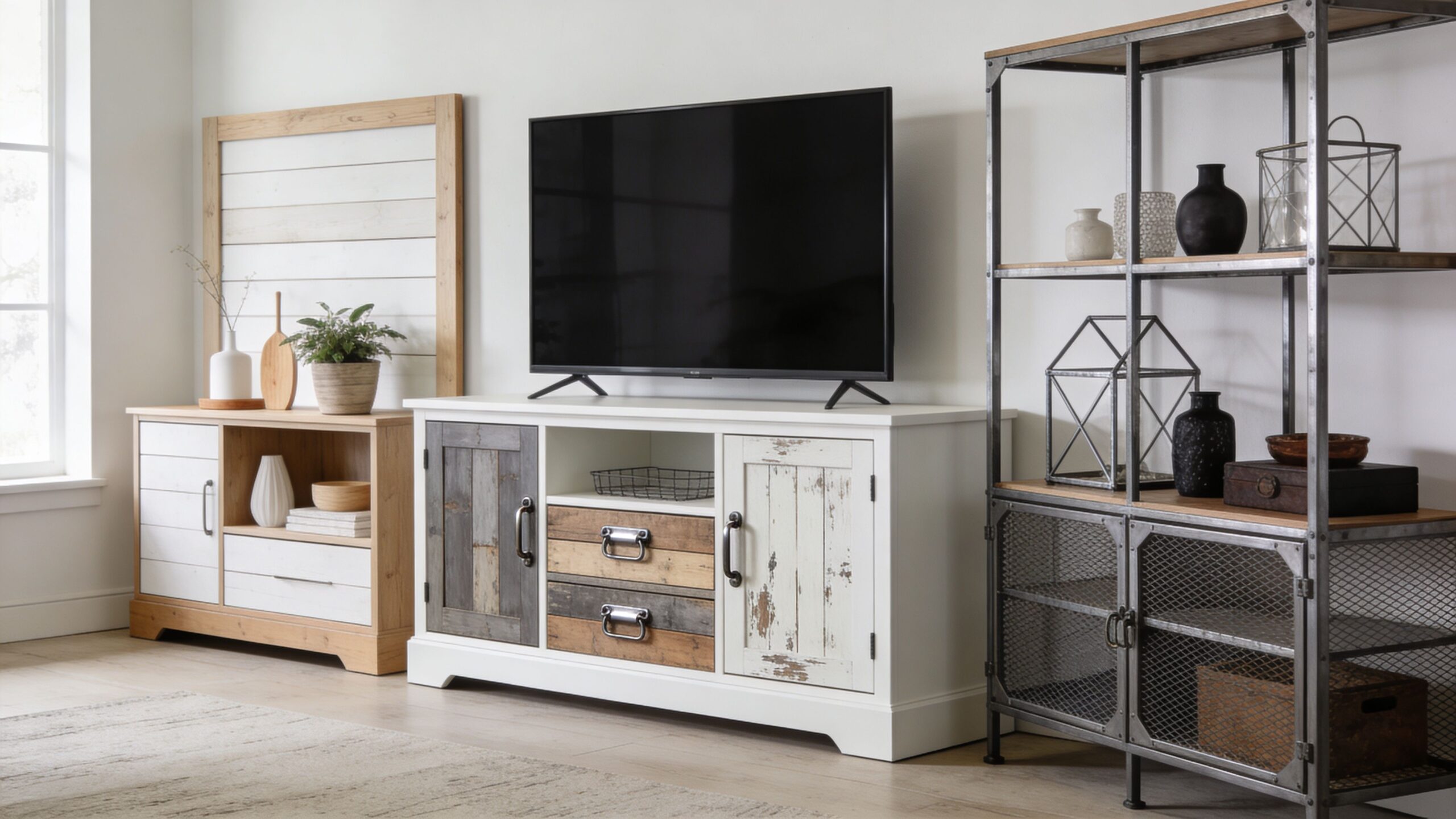
If your room already has light wood floors, pale walls, or simple upholstery, a white cabinet fits naturally. Add warmth with oak, ash, linen, wool, or woven baskets. Keep accessories restrained so the cabinet stays calm rather than sterile.
A few strong choices work better than many small ones:
- A wood tray or bowl to soften the white finish
- A plant with real volume rather than tiny scattered succulents
- Soft textiles nearby like a textured rug or throw
Mid-century modern
Here, white works best when it isn’t trying to be vintage by itself. Let the cabinet stay simple, then bring in warmth through surrounding shapes and hardware. Walnut accents, brass or champagne-toned pulls, and tapered-leg furniture nearby create the bridge.
Hardware finish matters a lot in this look. Silver keeps the piece cooler and more contemporary. Brass shifts it toward a warmer, more collected room. Black hardware gives sharper contrast, but in a small apartment it can make the cabinet feel more graphic and less airy.
A white cabinet doesn’t create style on its own. It gives the rest of the room room to speak clearly.
Contemporary and minimal
For a cleaner modern room, keep the top surface nearly empty. One larger object usually looks more intentional than several small decorative items. If the cabinet is gloss white, repeat that crispness elsewhere with glass, metal, or a simple framed print.
You can also build cohesion through nearby accents. Home decor and accents from Futonland make more sense when you use them to add texture rather than more brightness. White already brings the light. The room usually needs contrast, softness, and a bit of weight around it.
Long-Term Care Keeping Your White Cabinet Pristine
The hesitation with white furniture is predictable. People worry it’ll look great for six months and tired after that. In practice, white cabinets hold up well when the finish matches the household and the piece gets basic care.
Cleaning without damaging the finish
Routine cleaning should stay simple. A soft microfiber cloth, lightly dampened when needed, handles most dust and everyday marks. The goal is to remove grime before it builds up, not scrub aggressively after the fact.
A few habits help:
- Wipe spills early: Rings, sticky residue, and hand oils are easier to remove right away.
- Use soft cloths only: Rough pads can dull gloss and wear painted edges.
- Dry after cleaning: This matters around seams, corners, and hardware.
Matte and satin whites usually hide daily life better than high gloss. Gloss still cleans easily, but it tends to show every fingerprint between cleanings.
Yellowing, sun exposure, and placement
Yellowing is usually less about the color white and more about the quality of the finish, direct sunlight, heat, and indoor air conditions over time. In apartments with strong afternoon light, placement matters. If one side of the cabinet gets hit daily and the other doesn’t, aging can show unevenly.
The safest approach is practical, not complicated:
- Keep the piece out of intense direct sun when possible
- Rotate decor on top so one section doesn’t age differently
- Avoid placing heat-producing electronics directly against delicate finished surfaces
Small repairs and touch-up
Minor scuffs are common on any media cabinet because the front corners catch vacuums, shoes, and bags. Keep a touch-up marker or paint pen matched to the finish if the manufacturer offers one. For painted wood, small chips can often be blended more discreetly than buyers expect. On high-gloss lacquer, the same chip may remain more visible, so prevention matters more.
Clean white furniture ages well when owners treat marks early and don’t wait for buildup, grease, and abrasion to become permanent.
Your Buying Checklist and Next Steps
A good white TV cabinet should fit your screen, your room, and your daily habits. Most buying mistakes happen when one of those three gets ignored.
Use this checklist before you order:
- Finish check: Do you want satin, matte, or high gloss? Are you okay with the upkeep that comes with that choice?
- Material check: Does painted wood or lacquered MDF make more sense for how you live?
- Size check: Is the cabinet properly wider than the TV, and is the overall depth workable for your room?
- Storage check: Do you need drawers, doors, open shelves, or a mix?
- Cable check: Is there a real plan for wires, not just a hole in the back?
- Hardware check: Does the pull or handle finish work with the rest of the room?
- Longevity check: Can you clean it easily and touch it up if needed?
If you’re shopping in New York, seeing white finishes in person is worth the trip. Sheen, panel quality, edge treatment, and hardware all read differently under real light than they do on a product page. You can compare those details at Futonland store locations before deciding which finish feels right for your apartment.
Frequently Asked Questions
How do I judge weight capacity beyond just the TV?
Check the top capacity for the screen, then look at the shelves and drawers separately. A cabinet may support the TV just fine but struggle with a receiver, speakers, or dense storage inside. Think about the full load, not just the item sitting on top.
What should I look for during assembly?
Make sure the cabinet sits square before fully tightening everything. Check that doors align evenly, the back panel isn’t forcing the frame out of shape, and all hardware is snug. A cabinet that starts slightly twisted tends to stay that way.
How do I coordinate a white cabinet with existing wood tones?
Don’t try to match every wood in the room exactly. Pair white with one dominant wood tone, then repeat that tone in small ways through frames, trays, side tables, or shelving. White works best when the room has a clear warm or cool direction around it.