

Futon Sofa Bed Reviews: An Expert Buyer’s Guide (2026)
You’re probably here because you’ve already read a pile of futon sofa bed reviews and noticed the same pattern. One review says a model is perfect for everyday sleep. The next says all futons are lumpy. A third looks less like advice and more like a disguised storefront pitch.
That’s a frustrating way to shop for a piece of furniture that has to do real work. A futon might need to be your sofa, your guest bed, your primary bed, or all three in one week. Generic roundups rarely deal with that reality. They treat every shopper like they live the same way.
Good futon sofa bed reviews should help you sort use cases, not just compare photos and upholstery names. If you’ve ever tried making sense of conflicting product opinions in another category, this guide on navigating product reviews makes a useful point. Reviews become more helpful once you know what problem you’re trying to solve.
Cutting Through the Noise of Futon Sofa Bed Reviews
A customer walks into a showroom after reading “best futon” lists for two nights straight. They usually have one of three reactions. They’re either convinced futons are all uncomfortable, convinced the cheapest one will be “good enough,” or completely stuck because every model seems to claim the same things.
The problem isn’t that reviews are useless. The problem is that most of them test a futon for a few minutes and stop there. They sit on it, fold it open, call it easy, and move on. That misses the part that matters most once the box is gone and the furniture is living in your home.
What matters is fit. Not fit as in style alone. Fit as in how your body uses it, how often you convert it, whether it lives in a studio or spare room, and whether you need sofa comfort, bed comfort, or a balance of both.
A futon that works for weekend guests can be miserable as a nightly bed. A sleek click-clack can look right in a studio but still disappoint if you want deep, loungey sofa seating. A thick mattress can feel good at first and still become annoying if the frame underneath isn’t built for frequent folding.
Most bad futon purchases happen when someone buys for the photo, not for the routine.
That’s why this guide doesn’t rank a fake “top ten.” There isn’t one universal winner. There are better and worse choices for specific lives.
Early on, it helps to compare the category at a glance.
| Buyer need | Prioritize first | Watch out for | Strong fit |
|---|---|---|---|
| Nightly sleeping | Mattress construction and support | Thin foam that feels fine for ten minutes | Hybrid or higher-grade sleep-focused mattresses |
| Guest use | Easy conversion and decent sleeping surface | Overpaying for features you won’t use often | Simple, reliable frame and moderate mattress |
| Main sofa in studio | Seat comfort and mechanism durability | Buying a “bed-first” futon that sits too stiffly | Well-designed modern convertibles |
| First apartment budget | Value, straightforward assembly, flexible size | Cheapest build quality and weak hardware | Entry to mid-tier futons with replaceable parts |
The Three Pillars of a Great Futon Sofa Bed
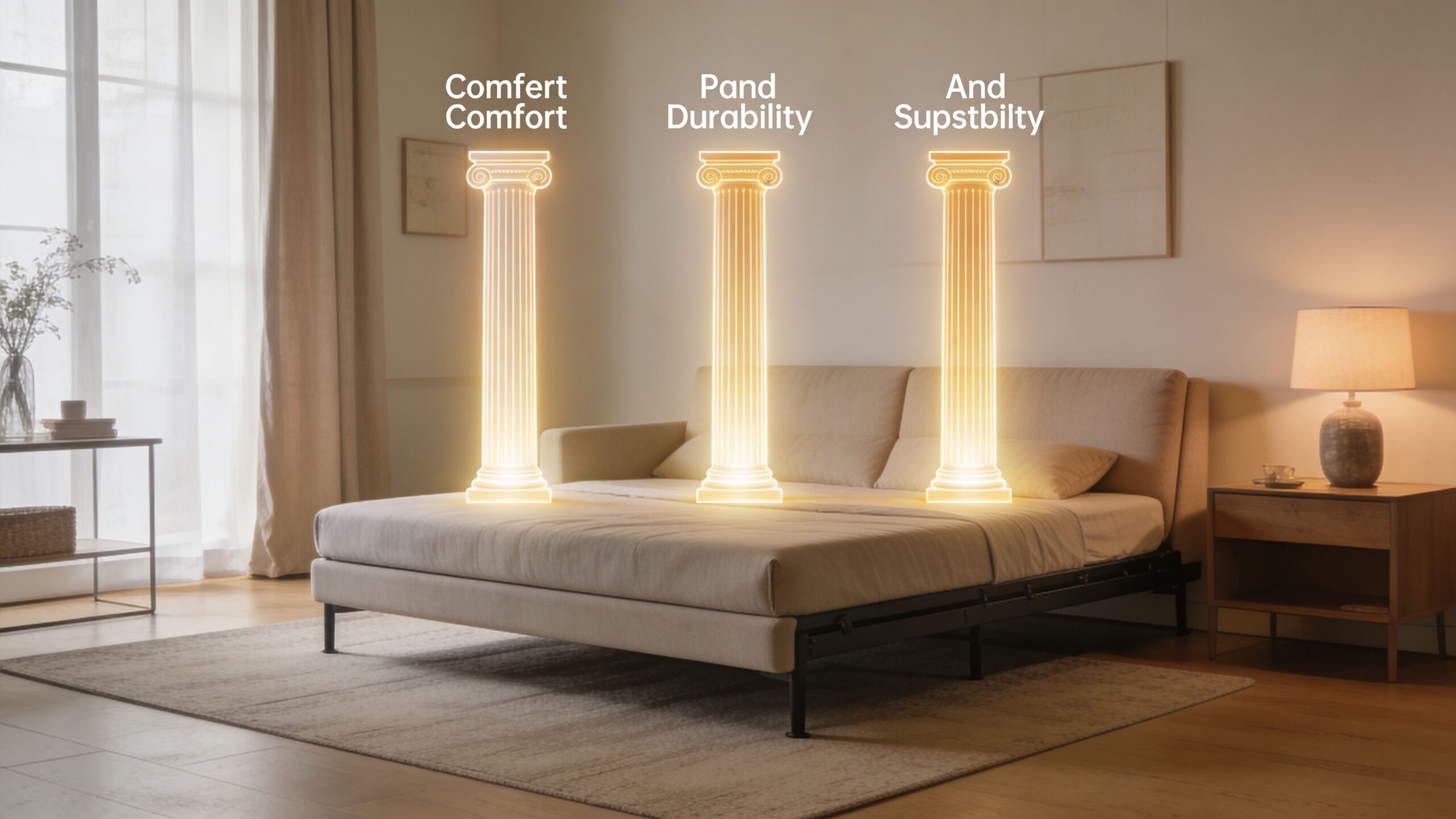
You can judge almost any futon sofa bed by three things: the mattress, the frame, and the conversion mechanism. If one of those is weak, the whole piece feels weak.
Many reviews focus on initial comfort but miss long-term durability. User complaints often highlight rapid sagging and lumpiness, with some comparing the discomfort to a military cot after minimal use, as discussed in this real-world durability review on daily-use futon comfort problems.
The mattress tells you how honest the comfort claim is
This is the part people notice first, but they often judge it too quickly. A futon can feel soft in a showroom or in an unboxing video and still fail once the same spots take repeated pressure.
For sleeping, the question is whether the mattress keeps your weight from dropping through to the frame and whether it stays even over time. For sitting, the question changes. You want support that keeps you upright instead of sliding into a hammock shape.
Cheap mattresses often chase the first reaction. They feel plush for a moment, then compress unevenly. Better mattresses tend to feel more stable from day one, and they age more predictably.
The frame decides whether the futon keeps its shape
A weak frame shows up in small ways first. You hear creaks. One side sits lower. The bed position doesn’t look fully level. Over time, those small problems become the complaint customers remember.
Frame quality affects more than strength. It affects how the mattress is supported, how stable the sofa feels when two people sit on it, and how confident you feel converting it. A better frame usually feels calmer. It doesn’t rock, shift, or fight back.
Here’s what to check in person or in product details:
- Joint stability: The frame shouldn’t twist when weight shifts from one side to the other.
- Support layout: Slats, deck design, and center support all affect whether the mattress stays even.
- Hardware quality: Bolts, hinges, and locking points should feel deliberate, not thin or loose.
Practical rule: If a futon feels unstable as a sofa, it won’t become more reassuring as a bed.
The mechanism is what you live with every day
Polished reviews often become least helpful when they show a neat fold-open motion without showing whether the piece is easy for one person, whether the back catches, or whether the design still works smoothly after repeated conversions.
A good mechanism should feel intuitive. You shouldn’t need a second person just to avoid pinched fingers or awkward lifting angles. The motion should be smooth enough that you’ll consistently use it as intended.
A bad mechanism creates “conversion fatigue.” That’s when people stop opening the futon because it’s annoying, heavy, or inconsistent. Once that happens, the product stops doing the job you bought it for.
What works and what doesn’t
A simple way to think about futon sofa bed reviews is this:
| Pillar | What works | What usually disappoints |
|---|---|---|
| Mattress | Even support, resilient materials, balanced sit/sleep feel | Thin padding, early lumpiness, bottoming out |
| Frame | Solid feel, good center support, durable hardware | Wobble, flex, creaks, uneven deck |
| Mechanism | Predictable conversion, manageable weight, stable locking | Sticky hinges, awkward lifting, unclear alignment |
The strongest futons don’t win because they photograph well. They win because all three pillars support each other. If the mattress is good but the frame is weak, comfort won’t last. If the frame is strong but the mechanism is annoying, daily use becomes a chore.
The Mattress Decision Comfort for Sitting and Sleeping
When people ask whether a futon is “comfortable,” they’re usually asking two different questions at once. Is it comfortable to sit on for hours, and is it comfortable to sleep on through the night? Those aren’t the same thing.
A mattress that feels great for movie night can sleep too hot, too hard, or too unevenly. A mattress built for sleep can feel firmer and less loungy as a sofa. That trade-off is where most useful futon sofa bed reviews should begin.
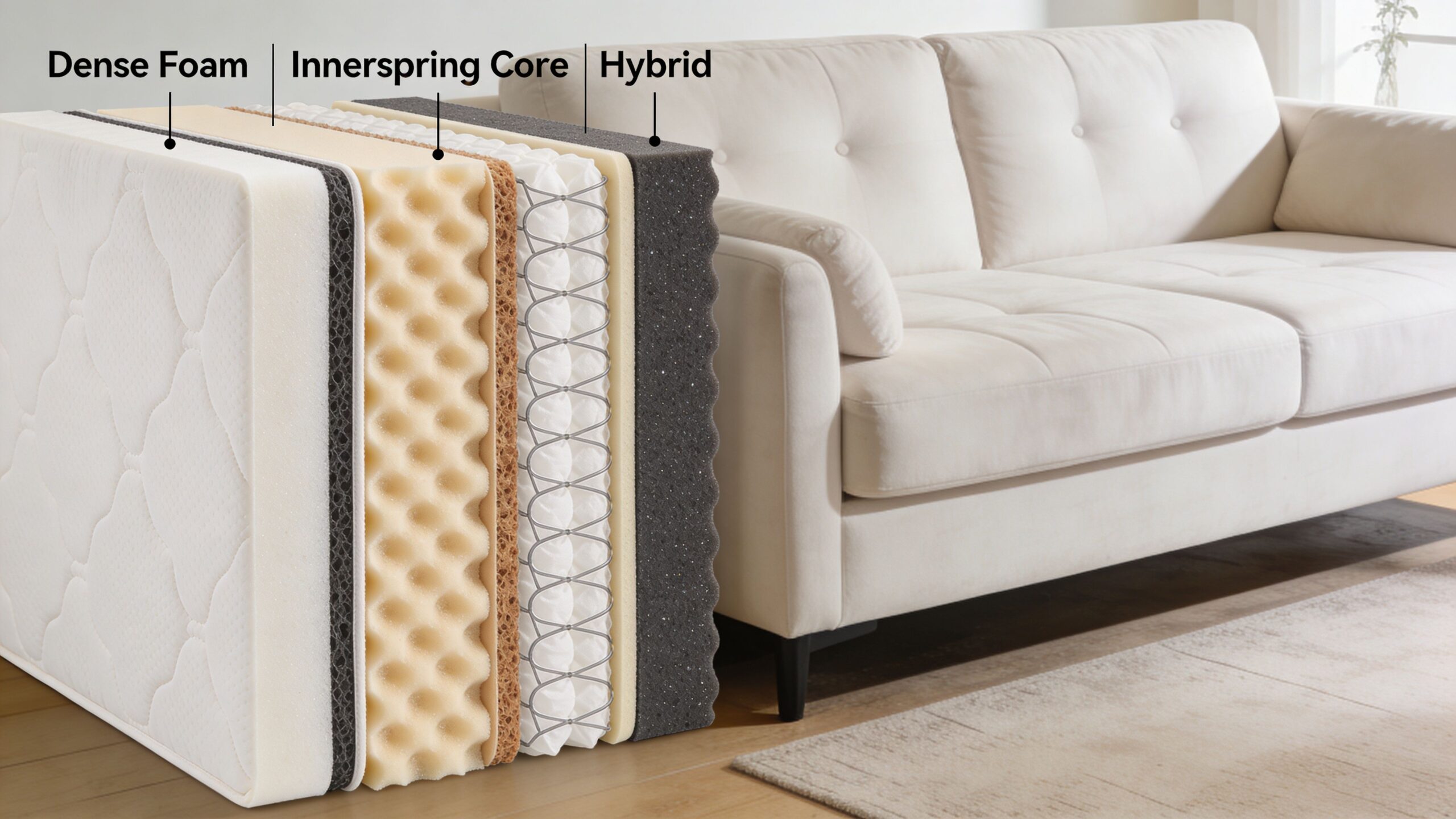
Foam mattresses feel clean and simple, but quality varies fast
Foam futon mattresses are common because they keep lines neat and weight manageable. They also suit modern silhouettes that don’t want the bulk of a traditional tufted futon.
The issue is that “foam” covers a wide range of experiences. Better foam holds shape and rebounds after pressure. Lower-grade foam compresses, forms body impressions, and makes the futon feel tired earlier than expected. If you want a deeper material explanation, this overview of why high-quality foam matters gives a useful background on resilience and support.
Foam-only mattresses can work well for occasional sleeping and for buyers who want a firmer, more structured sofa look. They’re less convincing when the futon is your primary bed unless the foam quality is strong enough to resist early compression.
Innerspring and hybrid builds usually handle mixed use better
The category has seen improvements. Modern futon mattresses with 2-3 inches of high-resiliency foam over innerspring coils can provide orthopedic support equivalent to thicker traditional mattresses, and premium models can maintain 95% of their loft after 10,000 compressions, compared with 75% for budget foam-only versions, according to Cosmopolitan’s roundup of futons for sleeping in this mattress construction review.
That matters because futons don’t just deal with sleeping pressure. They also deal with sit pressure. People tend to sit in the same few spots every day. Springs plus resilient foam generally handle that repeated load better than cheap slab foam.
For a shopper comparing categories side by side:
| Mattress type | Best for | Main strength | Common drawback |
|---|---|---|---|
| Foam-only | Guest use, lighter use, cleaner modern look | Simpler build and lighter feel | More vulnerable to compression if quality is low |
| Innerspring | Mixed sitting and occasional regular sleeping | Support and structure | Can feel firmer than expected |
| Hybrid | Daily sleepers and high-use homes | Better balance of pressure relief and durability | Costs more upfront |
Traditional futon feel versus modern sofa-bed feel
Some shoppers want a classic futon mattress. Others want something that behaves more like an integrated sofa-bed sleep surface. Both can be good. They just solve different problems.
Gold Bond is a strong example of the traditional side of the category. Their mattresses are often the right fit for shoppers who care about support, substance, and the familiar feel of a real futon mattress on a dedicated frame. That kind of build tends to appeal to people who are sleep-focused first and style-focused second.
Modern European-style convertibles often lean the other direction. They use sleeker mattresses or integrated seat-and-back systems that look refined in a living room. They can be excellent, but they usually ask you to be more precise about whether your main priority is sofa feel, bed feel, or visual lightness.
For shoppers comparing options in one place, browsing dedicated futon mattresses can make this easier because you can separate the mattress question from the frame question instead of judging everything as a package.
Don’t shop mattress thickness alone. A thicker futon that uses weaker materials can feel worse over time than a better-built mattress that looks more modest on paper.
What usually works by use case
If I’m guiding someone through this decision, I usually narrow mattress choices by routine:
- Nightly sleeping: Choose hybrid or stronger innerspring-supported construction.
- Mostly sofa use with occasional guests: A firmer, simpler mattress can be enough.
- Shared use by couples: Look for consistent support across the full width, not just center comfort.
- Aesthetic-first rooms: Make sure the cleaner silhouette doesn’t come at the cost of real support.
A mattress is the part your body negotiates with every day. If you get this wrong, the frame and fabric won’t save the purchase.
Frame and Mechanism Durability Meets Ease of Use
A futon can have a decent mattress and still disappoint if the frame underneath is underbuilt or awkward to operate. This is the part many shoppers underestimate because the frame doesn’t feel like “comfort.” Then six months later, it becomes the whole story.
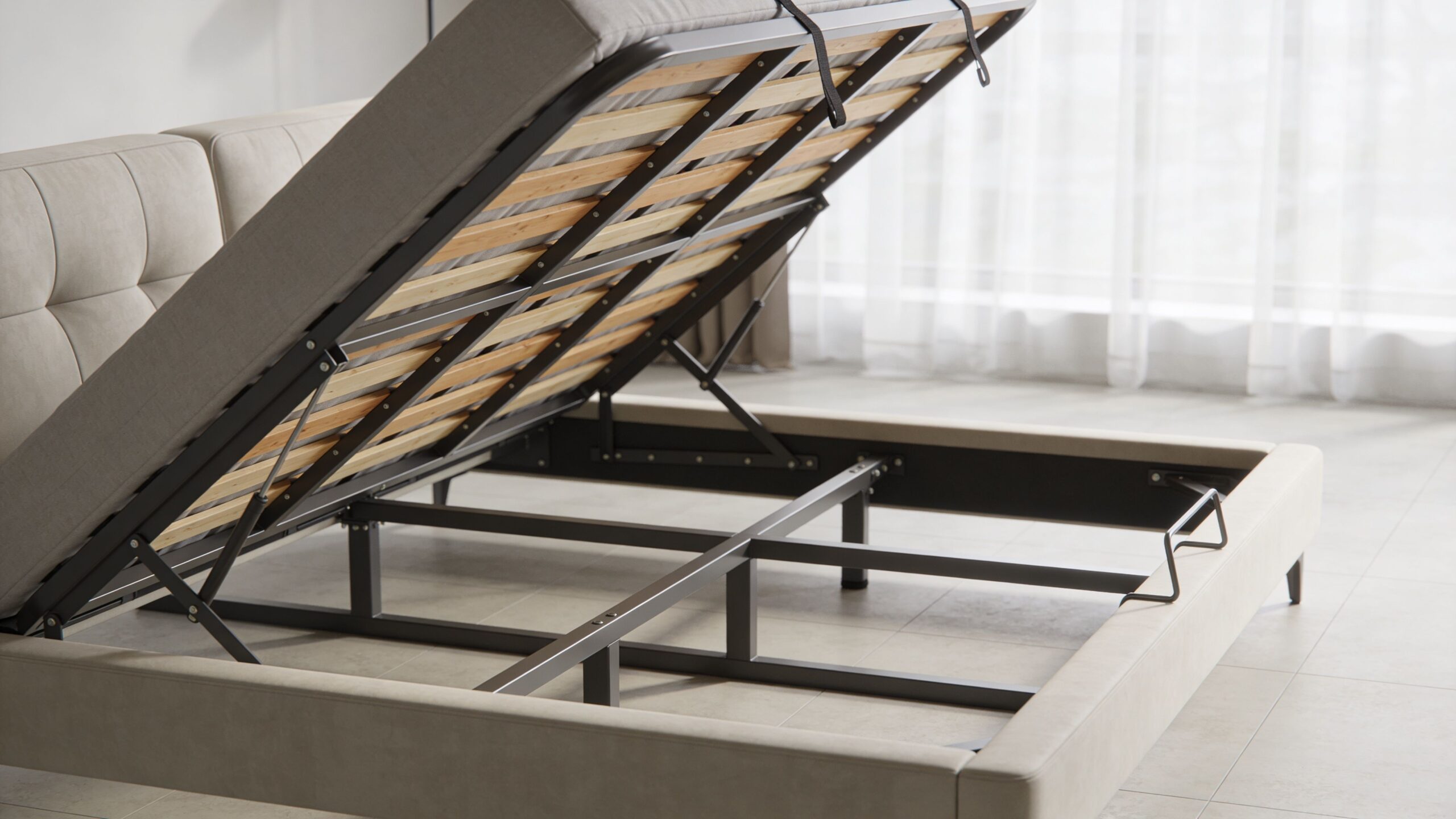
Wood and metal solve different problems
A good hardwood frame usually wins on warmth, visual presence, and the kind of sturdy feel people associate with classic futons. It can make sense in guest rooms, dens, and homes where replaceable mattresses and long-term flexibility matter more than having the sleekest possible profile.
Strata is a useful reference point here because solid wood construction tends to attract buyers who want a more furniture-like frame, not a temporary-looking convertible. That matters if the futon will sit in your main room and needs to feel intentional.
Metal frames often suit modern convertibles better. They can support cleaner lines and lower profiles, and they’re common in pieces where the mechanism is part of the design language. The downside is that lower-end metal frames can feel harsher or less forgiving if the hardware and support structure aren’t well executed.
Weight capacity is one of the clearest durability clues
A futon’s weight capacity tells you a lot about how seriously the frame was built. Standard models support around 500 lbs, while premium options can reach 600 lbs, and that higher benchmark usually points to reinforced frame construction and stronger support systems, as outlined in this breakdown of futon weight capacity and frame durability.
That doesn’t mean every shopper needs the highest number available. It means capacity often reflects the hidden parts of construction that people can’t judge from photos alone. Better support hardware, sturdier legs, and stronger connection points usually show up there.
Mechanisms should match the room and the user
Not every mechanism fits every home. A traditional bi-fold futon is straightforward and serviceable, but it has a different rhythm than a click-clack or a more engineered European convertible.
Innovation Living tends to stand out for shoppers who want a modern silhouette with a mechanism that feels more refined than basic bargain convertibles. That’s especially relevant in studios or living rooms where the piece gets converted often and still has to look like a real sofa the rest of the time.
When comparing mechanisms, ask practical questions:
- Can one person open it comfortably?
- Does it require lifting, pulling, or wall clearance?
- Will you get annoyed doing this at night when you’re tired?
- Does the bed position feel fully supported, or just “good enough”?
For side-by-side browsing, it helps to review different futon frames rather than treating the entire category as one generic product type.
A smooth mechanism matters more in real life than a flashy one. The easiest system is the one you’ll still want to use after the novelty wears off.
Assembly affects durability more than people expect
Frame quality doesn’t end at manufacturing. It also depends on setup. Misaligned bolts, rushed assembly, or skipped instructions can create wobble that shoppers later blame on the product itself.
That’s especially important on heavier units and adjustable designs. A frame that isn’t square when assembled won’t convert as cleanly, and hardware under uneven stress tends to loosen faster.
Finding Your Perfect Fit Four Futon Buyer Profiles
The best futon sofa bed reviews stop being confusing once you sort yourself into the right use case. Most mistakes happen because shoppers buy for someone else’s routine. A guest futon gets used as a primary bed. A sleek studio piece gets expected to feel like a deep family sofa. A budget starter frame gets pushed into heavy daily service.
Here’s the way I’d break it down in a showroom.
The daily sleeper
If this futon is your primary bed, stop thinking of it as accent furniture. You’re buying a mattress system first.
That means the mattress takes priority over almost everything else. You want support that stays even, enough resilience to handle nightly use, and a frame that doesn’t introduce bounce, tilt, or weak spots. To meet these requirements, traditional futon builds and stronger hybrid mattresses usually make the most sense.
Gold Bond belongs in this conversation because sleep-focused buyers often respond well to a more substantial futon mattress feel. Some people want plushness. Others want a flatter, more supportive surface. Daily sleepers usually do better when they choose support first and softness second.
What to prioritize:
- Sleep support: Choose the mattress for eight-hour use, not ten-minute testing.
- Replaceable components: A separate frame-and-mattress setup gives you more long-term flexibility.
- Stable deck support: The frame should keep the sleep surface level across the width.
What not to overvalue:
- Trendy silhouette: A beautiful profile won’t matter if you wake up sore.
- Ultra-fast conversion: If it stays in bed mode most of the time, that matters less than support.
The occasional guest host
This buyer needs balance, not maximum specification. You want guests to sleep comfortably, but you probably don’t need to buy as if someone will use it every night.
That opens the door to simpler setups. A solid frame with a decent mattress is often enough, especially in a guest room, office, or den. You don’t always need the thickest or most specialized mattress if overnight use is periodic.
Wood-frame futons often fit well here because they read as regular furniture when folded up and offer a familiar bed surface when opened. A straightforward build can be easier to maintain and easier to update later with a new cover or mattress.
Guests remember whether they slept comfortably. They rarely care whether the mechanism had the most features.
What to prioritize:
- Easy conversion: You shouldn’t need a rehearsal every time someone stays over.
- Respectable mattress support: Not luxury, but not an afterthought.
- Room fit: Make sure bed mode doesn’t block doors, desks, or storage.
What can stay secondary:
- High-end upholstery options
- Specialized sofa comfort for all-day lounging
The small studio dweller
This is the hardest buyer profile because one piece has to do several jobs well. In a studio, your futon may be your main sofa, your main bed, and the visual center of the room.
That means compromises become more obvious. A very bed-forward futon can feel upright and stiff as a sofa. A very sofa-forward convertible can stop short on nightly sleep quality. You need a stronger middle ground.
Modern designs often make a lot of sense. Innovation Living is relevant for studio shoppers who want Scandinavian-style lines, smoother mechanism design, and a piece that looks intentional in a living space rather than temporary. If sitting comfort matters as much as sleeping comfort, pay close attention to seat depth, back angle, and how the edge feels behind the knees.
Priorities in a studio:
| Studio need | Why it matters |
|---|---|
| Comfortable seating posture | You’ll use it far more as a sofa than a guest-room futon would be used |
| Reliable conversion | Daily folding gets old fast if the mechanism fights you |
| Visual lightness | In one-room homes, bulky furniture dominates the space |
| Durable upholstery | The piece takes constant use, not occasional use |
What usually disappoints studio buyers is trying to save space by buying too small or too slight a piece. The room may be compact, but your body still needs a credible sofa and a credible bed.
The budget-conscious first-timer
For a first apartment, dorm-adjacent setup, or temporary rental, value matters. That’s where futons often make practical sense. They’re often 30-50% less expensive than traditional sofa beds, and many models are designed for assembly in under 30 minutes without special tools, according to Good Housekeeping’s review of budget-friendly futons for apartments and dorms.
That doesn’t mean the cheapest option is automatically smart. Budget buying works best when you identify what you can live without and what you can’t.
If you’re furnishing your first place, a simpler frame and a decent mattress often beat an over-featured bargain convertible. Replaceable covers, standard sizing, and straightforward hardware matter more than cupholders or flashy add-ons.
This is the one place I’d tell shoppers to think modularly. Futonland carries a range that lets buyers mix price points across frames, mattresses, and covers, which can be useful when you need to stay within a budget without choosing the lowest-grade version of every component.
What to prioritize:
- Basic structural integrity: Don’t trade away stability to save a little more.
- Straightforward assembly: First-time buyers benefit from simpler builds.
- Upgrade path: It helps if you can improve the mattress or cover later.
What to accept:
- Less luxurious upholstery
- A firmer feel at entry price points
- Fewer mechanism refinements than premium models
One profile can overlap another
A lot of shoppers are a blend. Someone may be a budget buyer today but still need nightly sleep support. Someone may host guests now and move the futon into a studio later.
That’s why the right choice is usually the one that fits your hardest use case, not your lightest one. If a futon needs to survive daily sleeping, buy for that. If it mainly needs to look sharp and seat well in a studio, buy for that.
Beyond the Basics Sizing Upholstery and Maintenance
The details that sink a purchase are often the least glamorous ones. A good futon can still be wrong if it’s too wide for the room, too annoying to clean, or assembled just slightly out of alignment.
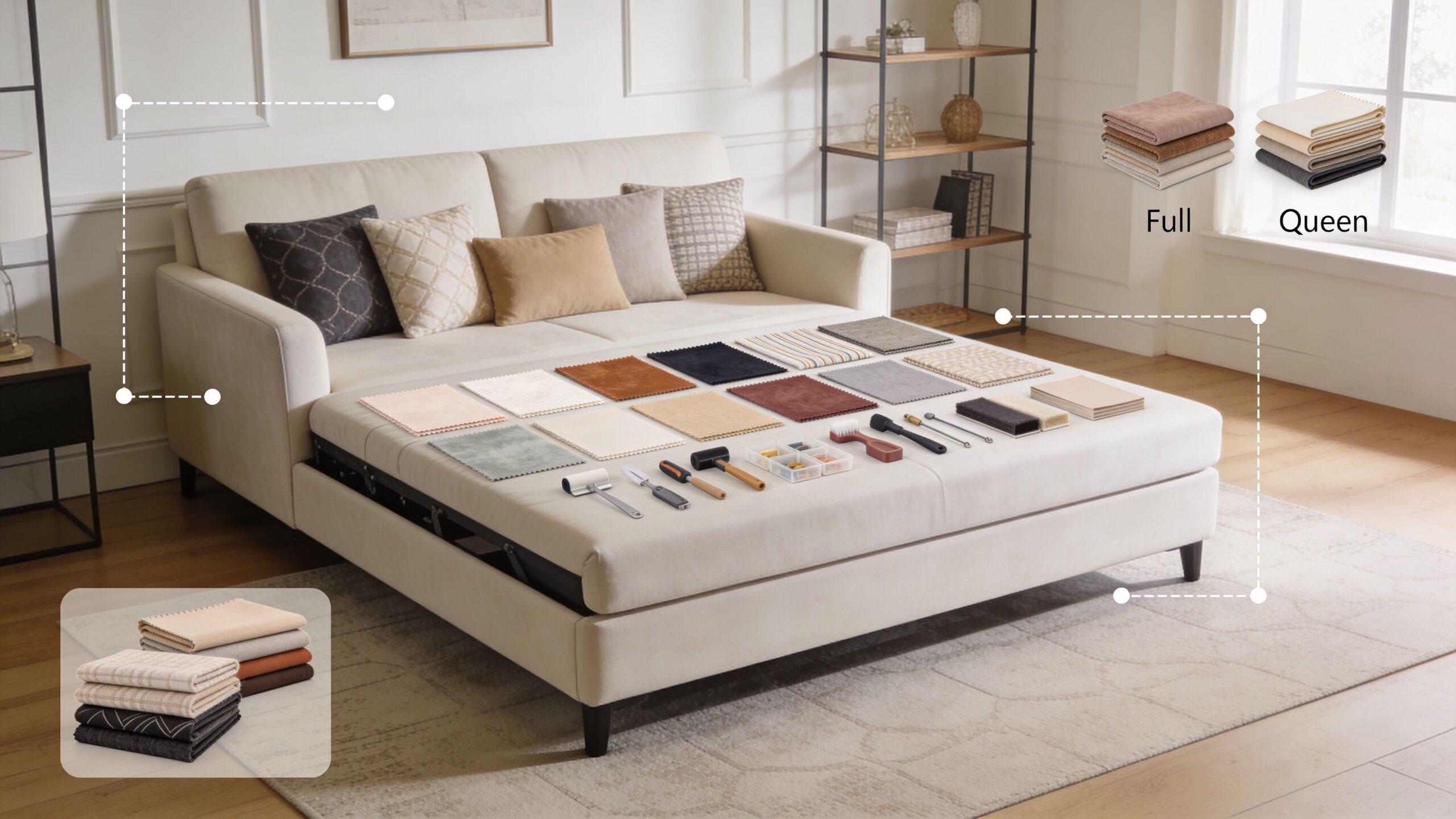
Measure for both modes
Always measure the room in sofa mode and bed mode. Don’t eyeball it. Account for walking space, nearby tables, radiators, doors, and whether you’ll need clearance to convert the frame.
A sizing reference helps because many buyers know mattress names but not actual furniture footprints. Use a proper futon sizing chart before narrowing to a style.
Choose upholstery for your household, not just your mood board
Fabric choice changes how a futon ages. If kids, pets, snacks, or frequent guests are part of the picture, easier-clean fabrics matter more than a delicate texture that looks good online.
A few useful rules:
- Twill and durable woven fabrics: Good for everyday use and a structured style.
- Microfiber-style easy-clean options: Practical for spills and casual households.
- Faux leather: Wipes down easily but can feel less forgiving over long sitting sessions.
- Custom covers: Helpful if you want to refresh the look later instead of replacing the whole piece.
Maintenance is simple, but it has to happen
Real-user assembly experiences can be much more stressful than polished product videos suggest, and misaligned bolts can lead to wobble and premature wear, as noted in this firsthand look at futon assembly pitfalls and frame instability.
Once the futon is assembled, a little maintenance goes a long way:
- Recheck hardware: Tighten bolts periodically, especially after moving the piece.
- Rotate or flip when appropriate: This helps wear stay more even on compatible mattresses.
- Air out the mattress and cover: It keeps the sleep surface fresher.
- Address small wobble early: Don’t wait until uneven stress wears the frame further.
A futon rarely “suddenly” becomes unstable. Usually, the warning signs were there and ignored.
White-glove assembly can make sense for heavier models, for buyers who don’t want to gamble on hardware alignment, or for homes where getting the piece upstairs is half the battle.
The Futonland Advantage See It Try It and Get It Home
For a category this dependent on feel, specs only take you so far. You can read dimensions, upholstery names, and mechanism descriptions all day and still not know whether a futon sits too upright for you or whether the bed surface feels supportive enough.
That’s why store testing matters. In New York City, being able to visit Futonland store locations gives shoppers a way to try mechanisms, compare upholstery by hand, and lie down on different mattress styles before choosing. That’s especially helpful when you’re deciding between a traditional wood-frame futon, a modern convertible, or a sleep-focused mattress upgrade.
The buying experience matters after checkout too. Delivery, room placement, assembly, debris removal, and even old mattress disposal can shape whether the purchase feels easy or frustrating. Those services aren’t side details when the furniture is large, multi-use, and likely headed into a tight apartment.
Good futon sofa bed reviews should point you toward that conclusion. The right futon isn’t the one with the flashiest roundup ranking. It’s the one that suits the way you live, and the one you’ve had a fair chance to test before it becomes part of your daily routine.
If you’re comparing options in person, test three things every time: sit on it for longer than a minute, open and close it yourself, and lie on it the way you actually sleep. That tells you more than most review lists ever will.