

Best Beds for Studio Apartments: NYC Buying Guide 2026
A studio apartment bed has two jobs: sleep well at night, disappear (or double as seating) by day. The five realistic options are futons, sofa beds, Murphy or cabinet beds, daybeds with trundles, and platform storage beds. Which one fits depends on three things: whether it’s your primary bed or a guest bed, how much floor space you have, and your budget.
Comparing Your Options
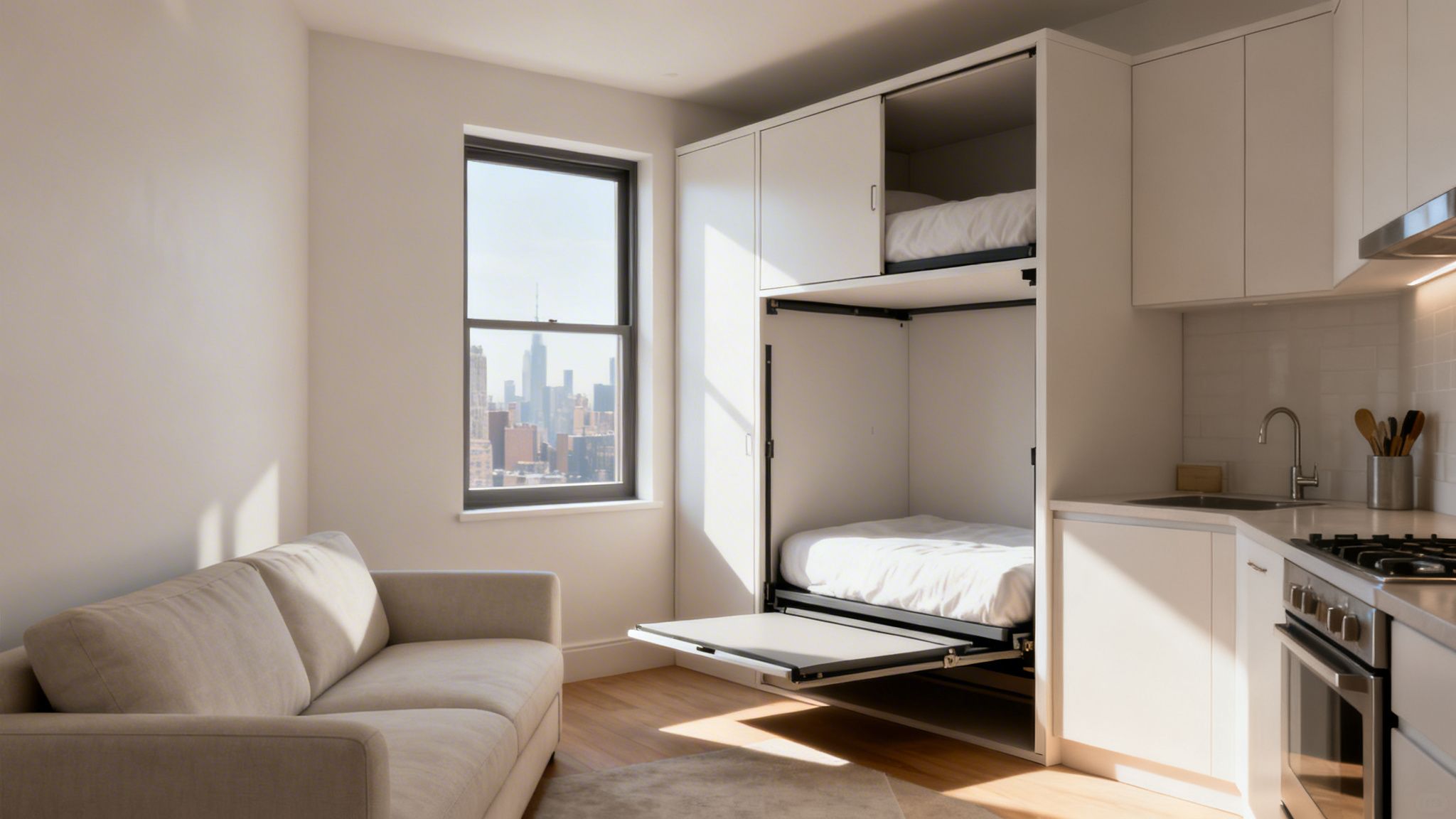
Visiting a Futonland showroom in the Upper West Side, Greenpoint, or Newark lets you test all three before deciding.
| Bed Type | Best For | Closed Footprint | Guest Comfort | Price |
|---|---|---|---|---|
| Futon | Budget, daily use, customizable mattress | 80″W × 38″D | Good to Excellent | $ |
| Sofa Bed | Formal living room look, daily use | 85″W × 40″D | Good to Excellent | $$ |
| Murphy/Cabinet Bed | Maximum floor space, daily use | 85″H × 65″W × 16″D | Excellent | $$$$ |
| Daybed with Trundle | Permanent seating, frequent guests | 80″W × 40″D | Fair to Good | $$ |
| Platform Storage Bed | Permanent bed, needs drawer/closet storage | 80″L × 60″W (Queen) | Excellent | $$$ |
The clearest first filter: futons, sofa beds, and Murphy/cabinet beds fold or hide away and reclaim floor space daily. Daybeds and platform beds stay put permanently but work double duty as seating or storage.
Futons: Budget-Friendly and Customizable
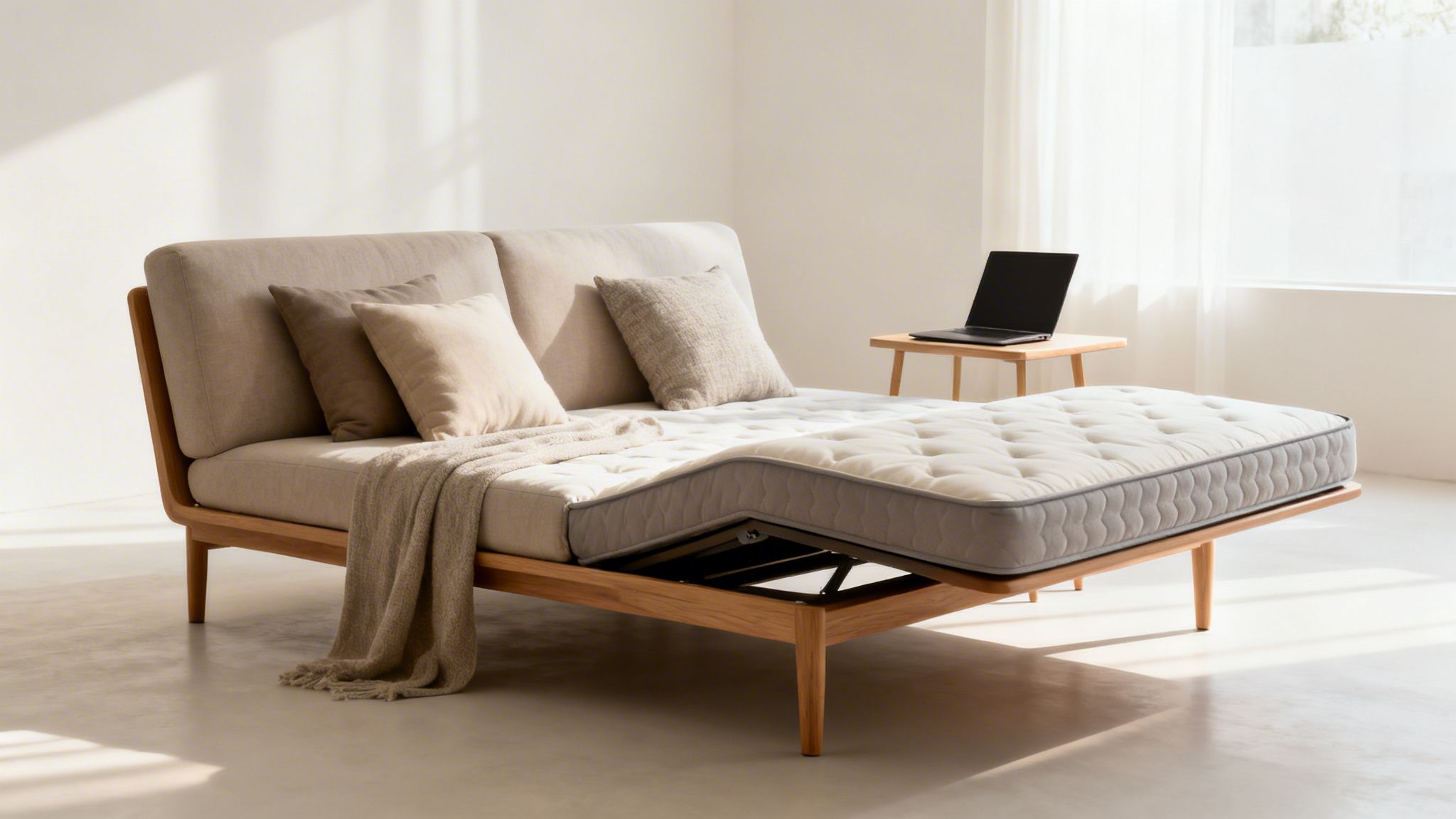
A modern futon separates the frame from the mattress, which is its main advantage: you choose exactly the sleep surface you want — firm innerspring, plush memory foam hybrid, or a budget cotton-foam blend — independent of the frame.
| Pros | Cons |
|---|---|
| Cheapest convertible option; frees budget for a better mattress | Manual conversion — lifting and adjusting, not a one-motion mechanism |
| Mattress upgradeable independent of frame | More casual look than a sofa bed |
| Frame is light and easy to move or rearrange | Need a separate plan for bedding storage when folded |
For daily sleeping, don’t skimp on the mattress — at least 8 inches thick, in innerspring/pocket coil for traditional support, memory foam hybrid for pressure relief, or high-density foam for a firmer, budget-durable option. Browse the full range of futons and mattresses.
Sofa Beds: A Living Room That Doubles as a Bedroom
A sofa bed looks and sits like a standard sofa, with the mattress built in. Where a futon trades style for flexibility, a sofa bed trades flexibility for style — you get a genuine sofa profile but can’t swap the mattress later.
| Pros | Cons |
|---|---|
| Looks like a real sofa, not a convertible bed | Heavy — a real concern in a walk-up |
| Premium mechanisms (pop-up, glide-out) convert in under a minute | Mattress is fixed; can’t be upgraded separately |
| Higher-end models use real mattresses, not thin pads | Costs more than a comparable futon setup |
Because of the moving mechanism, test it in person before buying: open and close it yourself, sit on it as a sofa and lie down on it as a bed, and check the frame for wobble. See the full convertible sofa bed collection.
Murphy and Cabinet Beds: Reclaim the Whole Floor
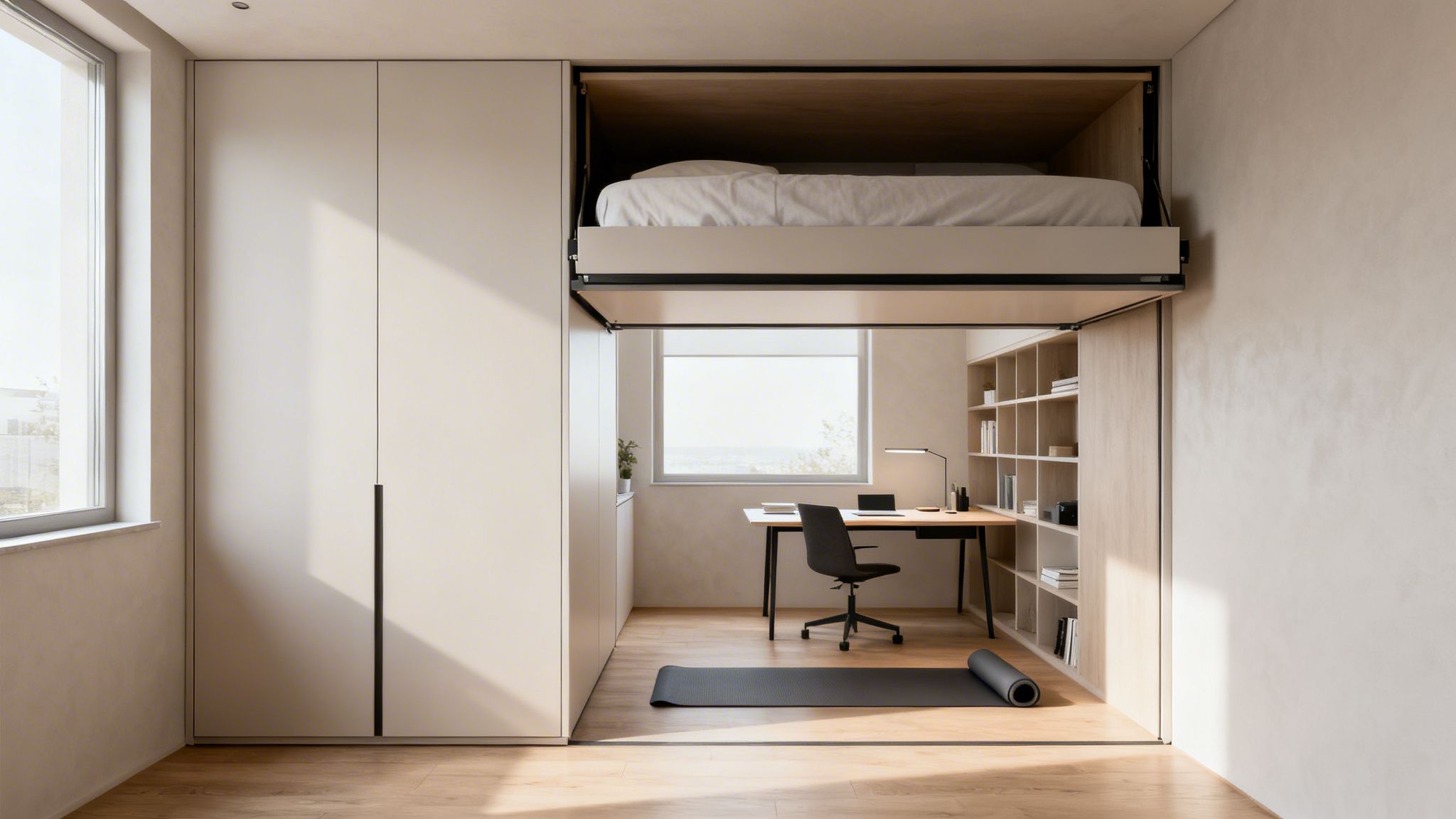
Murphy beds fold up into a wall-mounted cabinet; cabinet beds do the same thing as a freestanding, unmounted piece. Both give back the entire floor, not just part of it — the difference that separates them from futons and sofa beds.
| Pros | Cons |
|---|---|
| Entire floor reclaimed when closed | Highest upfront cost of the five options |
| Holds a standard mattress up to 11″ — full sleep comfort | Murphy beds need professional wall mounting |
| Often integrates shelving, desk, or storage | Murphy beds become a fixed part of the apartment |
If you rent and can’t mount to the wall, a cabinet bed is the alternative: a queen-size mattress folds into a freestanding, low-profile chest, with the front panel folding down to unfold the bed. Because it’s not attached to the wall, it moves with you. Common features on cabinet bed models include a base storage drawer for bedding and built-in USB/power outlets. See wall beds and cabinet beds.
Daybeds and Platform Storage Beds: Permanent, Multi-Purpose
These don’t fold away, but they solve a different problem: getting more function out of a bed you’re keeping in place all the time.
Daybed with Trundle
A three-sided frame gives a daybed a sofa-like profile for daytime lounging; a second, lower mattress (the trundle) slides out from underneath for a guest. Guest comfort is fair to good — trundle mattresses run thinner than the main mattress — which makes this best for occasional, short-stay guests rather than long visits. Footprint is a standard twin (about 80″L × 40″W) that doubles in width to roughly 80″ × 80″ when the trundle is deployed. See daybeds.
Platform Storage Bed
A platform bed with built-in storage functions as a bed and a dresser in one, offering roughly 20–40 cubic feet of hidden storage in a studio where closet space is usually the scarcest resource. Two mechanisms:
- Drawer storage: drawers built into the base — good for frequently accessed items, but confirm you have clearance to fully open them.
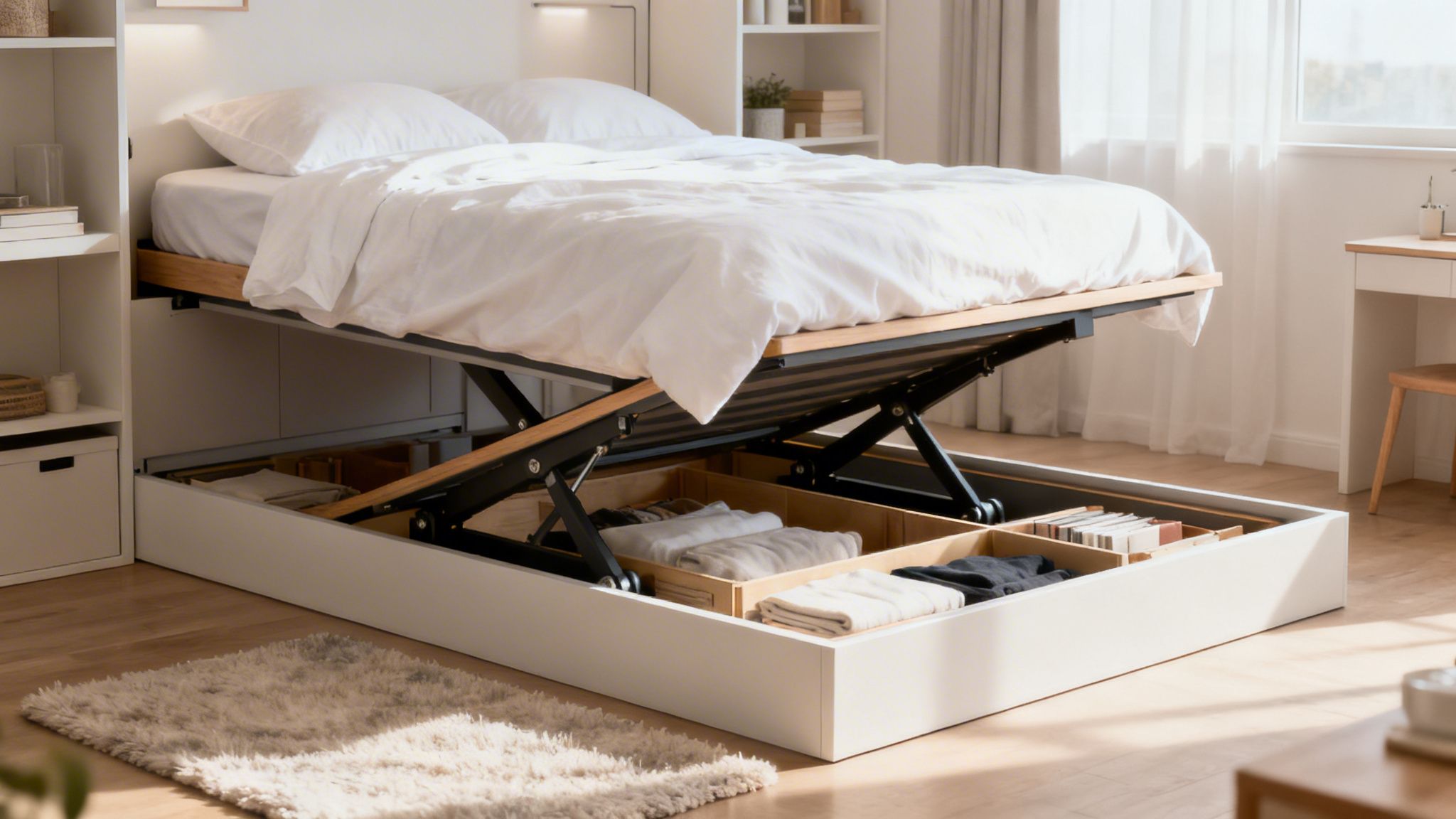
- Hydraulic lift (ottoman-style): the whole mattress platform lifts, exposing one large cavity — better for bulky, infrequently accessed items like luggage or seasonal bedding.
Since it’s a standard frame, mattress choice is unrestricted — sleep quality depends only on the mattress you pick. Footprint doesn’t change from a standard bed of the same size (a queen platform is about 60″W × 80″L), but drawer models need extra clearance on the drawer side.
How to Choose
Measure the full delivery path, not just the final spot — doorways, hallway turns, and stairwells are where deliveries actually fail. For convertible beds, measure both the closed and open footprint; a sofa bed that looks compact closed may need several feet of clearance to fully open.
Decide what the bed’s primary job is. If it’s your nightly bed, prioritize mattress quality and comfort — cabinet beds, platform storage beds, or a futon with an upgraded mattress are the strongest options. If it’s mainly for occasional guests, prioritize daytime function and looks — a daybed with trundle or a sofa bed fits better.
Test convertible mechanisms in person before buying. A description can’t tell you whether a hinge is smooth or whether a mattress is actually supportive. This matters more for sofa beds and Murphy/cabinet beds, where the mechanism is complex, than for platform beds or daybeds, where there’s nothing to test.
Frequently Asked Questions
Can I sleep on a futon or sofa bed every night?
Yes, if you choose a quality mattress rather than the cheapest option. Look for pocketed coils, memory foam, or dense foam at least 5–6 inches thick (8 inches or more for a futon used nightly). A thin mattress will feel poor and break down quickly regardless of the frame.
What’s the best option for frequent guests?
A cabinet bed or a premium sofa bed gives guests the closest experience to a real bed — cabinet beds typically fit mattresses up to 11 inches thick. A daybed with a pop-up trundle is a flexible alternative, since the trundle can form a second twin bed or push together with the main bed for a larger sleeping surface.
How does delivery and assembly work in a walk-up?
White-glove delivery services (Futonland offers this) handle stairs, full assembly in the apartment, and packaging removal, which matters most for bulky pieces like sofa beds and cabinet beds that are impractical to carry and assemble solo.
Which option needs the least assembly or installation?
Futons and daybeds generally require the least setup. Murphy beds require professional wall mounting. Sofa beds and cabinet beds are heavier and benefit from professional assembly even though they don’t need wall mounting.
Seeing a futon, sofa bed, and cabinet bed side by side is the fastest way to judge scale and mechanism quality — visiting a Futonland showroom in the Upper West Side, Greenpoint, or Newark lets you test all three before deciding. Explore the full range of space-saving beds or start with futons.