Futon Mattress Organic: Your Guide To The Best Non-Toxic Sleep
So, what exactly is an organic futon mattress? Simply put, it’s a sleep surface made from natural, non-toxic materials that are grown without synthetic pesticides and put together without harsh chemicals. It’s the healthier, more eco-friendly cousin to conventional futons, which often rely on petroleum-based foams and chemical fire retardants.
Why Choose an Organic Futon Mattress
Staring at mattress labels can feel like trying to read a foreign language. But choosing an organic futon is simpler than you might think. This guide is your roadmap to finding a sleep solution that’s better for you and the planet.
We’ll walk you through what ‘organic’ really means in the world of futons, how to read certifications like a pro, and which materials create the most comfortable and durable mattress for your needs.
Think of this as your personal consultation for making a confident, informed decision. We’ll break down everything you need to know, from initial research to long-term care, so you can invest in a healthier sleep space without any of the guesswork.
Creating a Healthier Sleep Environment
We spend about one-third of our lives sleeping, so the quality of our sleep environment is a pretty big deal. Conventional mattresses often contain synthetic foams treated with chemicals that can release Volatile Organic Compounds (VOCs), which can seriously impact your indoor air quality.
An organic mattress is made of certified organic ingredients like plant-based materials, such as coir, organic cotton, wool and latex which offer excellent breathability and a comfortable sleep environment.
Choosing an organic futon mattress is one of the easiest ways to minimize your exposure to these substances. For a deeper dive into creating a healthy sleep setup, exploring other components like organic mattresses can offer some fantastic insights.
Key Benefits of Going Organic
Opting for an organic futon mattress isn’t just a trend; it comes with real, tangible benefits for your well-being and the environment.
- Reduced Chemical Exposure: Materials like organic cotton and wool are grown and processed without harmful pesticides, formaldehyde, or toxic dyes. You get the good stuff, without the baggage.
- Natural Flame Retardants: Instead of chemical sprays, many organic futons use wool—a natural fiber that is inherently flame-resistant. We cover this in more detail in our guide to mattresses with no fire retardant chemicals.
- Superior Breathability: Natural fibers are champions at regulating temperature. They wick away moisture, keeping you cool and comfortable all night long.
- Sustainable and Eco-Friendly: The materials are biodegradable and sourced from renewable resources, which helps reduce your environmental footprint. It’s a choice you can feel good about. If low environmental impact is a priority, you can also explore our low VOC furniture options.
What Makes a Futon Mattress Truly Organic
When you start shopping for a new mattress, it feels like you need a dictionary just to understand the labels. Words like “natural,” “eco-friendly,” and “organic” get thrown around a lot, but they aren’t interchangeable. Knowing the difference is your first step to finding a futon that’s genuinely healthier for you and your home.
Think of it like shopping at the grocery store. A conventional apple was likely grown with synthetic pesticides. A “natural” apple might be grown without them, but there’s no official proof. But an “organic” apple? That comes with a guarantee—a strict set of rules for how it was grown, harvested, and handled, all checked by an independent certifier. The exact same idea applies to an organic futon mattress.
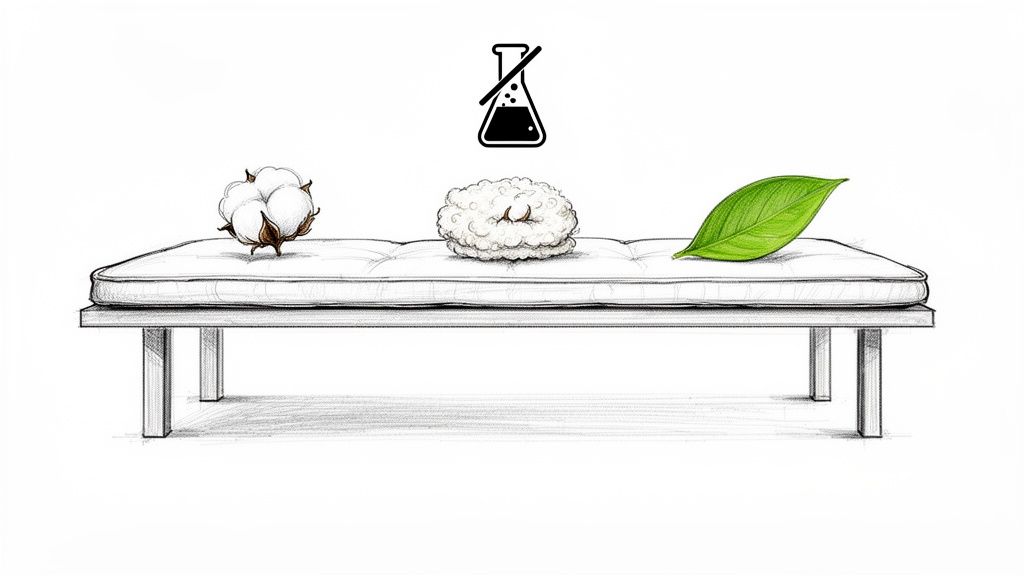
This commitment to purity isn’t just a marketing gimmick; it covers the entire supply chain. A truly organic futon is made from materials grown and processed without nasty chemicals, so you can be sure you aren’t bringing unwanted toxins into your living space.
The Core Difference: Organic vs. Natural vs. Conventional
So, let’s break down what really separates these three categories. It’s not just about what’s inside the futon—it’s about the product’s entire journey, from the farm to your bedroom. Understanding this helps you spot “greenwashing,” where companies make products sound healthier or more sustainable than they actually are.
A conventional futon is usually made with synthetic stuff like polyurethane foam, polyester batting, and chemical glues. These materials are often treated with flame retardants and are known for releasing Volatile Organic Compounds (VOCs), which can really tank your indoor air quality.
A natural futon mattress is a definite step up. It’s built with materials from nature—think latex from rubber trees, cotton, or wool. The catch? “Natural” doesn’t guarantee organic. The cotton might not have been grown under strict organic farming rules, and the final product could still be processed with some chemicals. You can browse our collection of natural mattresses to see some great options in this category.
An organic futon mattress is the gold standard. Every single component, from the cotton cover to the wool fire barrier and latex core, has to be certified organic. This is your assurance that the materials were grown without synthetic pesticides or fertilizers and processed without toxic chemicals like formaldehyde or chlorine bleach.
A genuine organic futon mattress is built on a foundation of certified materials. If a mattress contains any polyurethane foam component—including memory foam, gel foam, or hybrid foam—it cannot be considered organic.
This push for certified organic products is part of a much bigger trend. People want healthier homes, and the proof is in the numbers: the organic bedding market is on track to hit nearly $1 billion by 2033. It’s a clear signal that shoppers are demanding products proven to be safe and sustainable.
Organic vs Natural vs Conventional Futons at a Glance
To make things even clearer, here’s a simple table that lays out what you get with each type of futon. It’s a quick way to compare the most important features side-by-side.
| Feature | Organic Futon Mattress | Natural Futon Mattress | Conventional Futon Mattress |
|---|---|---|---|
| Core Materials | Certified organic cotton, wool, and latex. No synthetic foams. | Natural latex, wool, and cotton (not necessarily certified organic). | Polyurethane foam, memory foam, polyester batting, synthetic blends. |
| Chemical Use | Prohibits synthetic pesticides, herbicides, and toxic processing chemicals. | Minimal chemical processing, but lacks official organic certification. | Often contains chemical flame retardants, adhesives, and formaldehyde. |
| Certifications | Must have third-party certifications like GOTS (for textiles) and GOLS (for latex). | May have some certifications (like OEKO-TEX), but not full organic seals. | Rarely has health-focused certifications; meets basic flammability standards. |
| Air Quality | Excellent; virtually no off-gassing of VOCs. | Good; very low off-gassing compared to synthetic options. | Poor; known to off-gas VOCs, especially when new. |
| Best For | Health-conscious individuals, allergy sufferers, and eco-aware shoppers. | Those seeking a healthier alternative to synthetic foams on a moderate budget. | Shoppers prioritizing the lowest initial cost over material purity. |
By keeping these key differences in mind, you’re in a much better position to spot a truly futon mattress organic product and pick one that perfectly matches your health goals and personal values.
How to Decode Organic Mattress Certifications
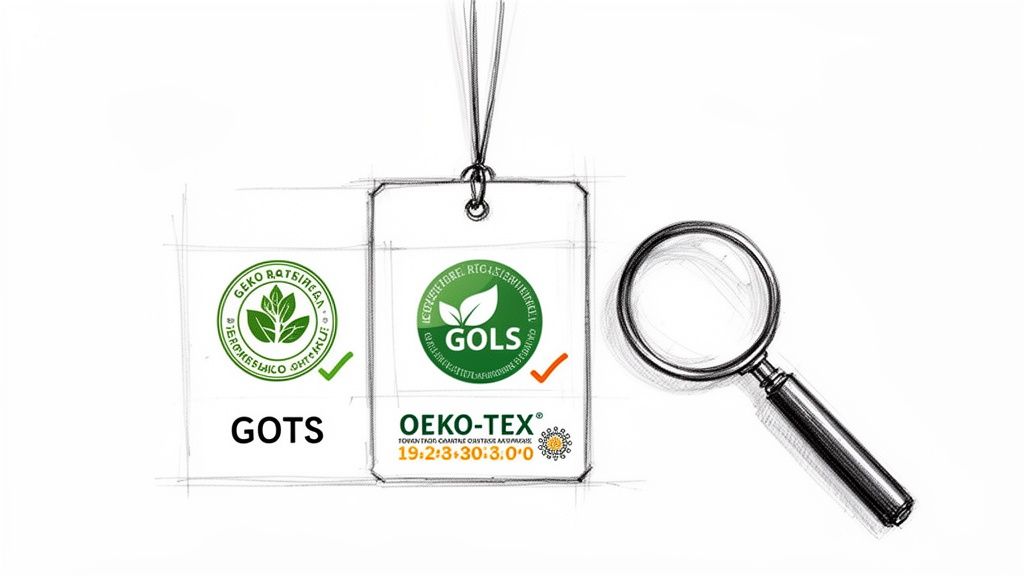
Shopping for an organic futon mattress can feel like you’re trying to read a foreign language. You see all these logos and acronyms on the tags, but what do they really mean? These certifications are your only real guarantee that a product is what it claims to be. They act as a third-party seal of approval, confirming that the mattress meets strict standards for health, the environment, and even social responsibility.
Think of them as a nutritional label for your futon. You wouldn’t buy food without checking the ingredients, right? These certifications tell you exactly what is—and just as importantly, what isn’t—inside your mattress. Without them, terms like “eco-friendly” or “all-natural” are just marketing fluff with no real substance.
Once you get to know the major players, you can shop with total confidence, knowing the futon you bring home is genuinely pure and safe. Let’s break down the most important labels you’ll run into.
GOTS The Gold Standard for Textiles
The Global Organic Textile Standard (GOTS) is the top dog when it comes to certifying organic fibers like cotton and wool. When you spot the GOTS logo on a futon mattress, it means the materials have passed a rigorous farm-to-factory inspection.
This certification goes way beyond just how the cotton was grown; it covers the entire supply chain. It’s a complete promise of purity and ethical production.
- Purity: Guarantees that at least 95% of the fibers are certified organic, which means they were grown without synthetic pesticides or GMOs.
- Processing: Bans harmful chemicals like formaldehyde, heavy metals, and chlorine bleach during manufacturing.
- Social Responsibility: Ensures workers involved in making the product are treated fairly, with safe working conditions and just wages.
A GOTS seal means the cotton cover and wool batting in your futon are as clean and responsibly made as it gets.
GOLS The Guarantee for Organic Latex
If your futon mattress has a latex core for that extra bounce and support, the certification to look for is the Global Organic Latex Standard (GOLS). Latex comes from the sap of rubber trees, and GOLS ensures this whole process is sustainable and organic from the start.
GOLS is to latex what GOTS is to cotton and wool. It’s the definitive certification ensuring the rubber sap was harvested from organically grown trees and processed without any nasty chemicals.
A GOLS-certified latex core has to contain more than 95% certified organic raw latex. This is a big deal, because some “natural” latex products can be mixed with synthetic latex, which is petroleum-based. GOLS is your proof that the supportive core of your mattress is truly plant-based and pure.
OEKO-TEX Confidence in Textiles
While GOTS and GOLS focus on the organic origins of the materials, OEKO-TEX looks at something equally important: product safety. A futon with the OEKO-TEX STANDARD 100 label has had every single component—from the thread to the zipper—tested for harmful substances.
This certification screens for a list of over 350 different chemicals that could be harmful to your health. It’s an extra layer of security, assuring you that the final product is free from a wide range of toxins, even if the raw materials aren’t certified organic.
An organic futon with an OEKO-TEX certification gives you double the peace of mind. It tells you the materials are both organically sourced and tested to be completely safe for direct skin contact.
GREENGUARD Protecting Your Indoor Air Quality
Ever unwrap a new mattress and get hit with that strong chemical smell? That’s called off-gassing, and it’s the release of Volatile Organic Compounds (VOCs) into your home’s air. The GREENGUARD certification is all about tackling this problem head-on by focusing on indoor air quality.
GREENGUARD certified products have been scientifically tested to meet some of the world’s toughest third-party standards for chemical emissions.
- GREENGUARD Certified: Products are tested for over 10,000 chemicals and VOCs, ensuring they help create healthier indoor air.
- GREENGUARD Gold: This is an even stricter level with lower VOC limits, making it perfect for sensitive individuals like kids and the elderly. If air quality is a major concern, also look for CertiPUR certified furniture, which guarantees low emissions from any foams used.
When you pick a GREENGUARD certified futon, you’re making a direct investment in the air quality of your home. It’s a vital certification for anyone with allergies, asthma, or chemical sensitivities. For a closer look at options designed for purity, you can explore our full collection of organic mattresses.
Exploring the Best Materials for Your Organic Futon
The magic of a great organic futon mattress really comes down to what’s inside. Think of it like a chef combining distinct ingredients to create a perfect dish; a futon maker layers different organic materials to nail a specific feel, firmness, and function. Once you understand these core components, you can find a sleep surface that’s not just healthy, but genuinely perfect for you.
Each material has a job to do. Some provide that initial soft cushioning, others offer resilient support, and a few are natural performance-enhancers, managing temperature and moisture all night long. Let’s peel back the layers and get to know the powerhouse materials that make up a high-quality organic futon.
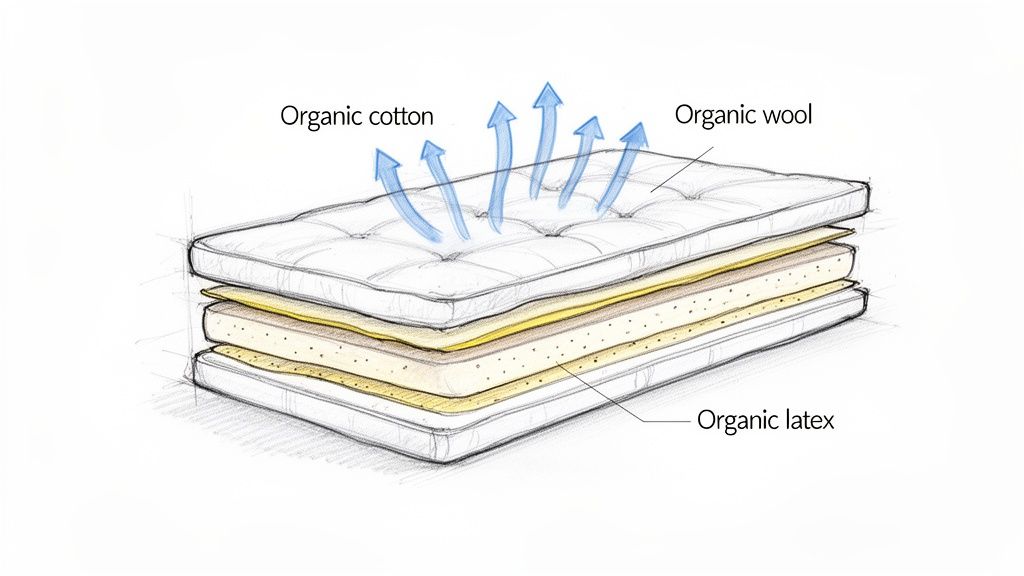
[Image demonstrating a cross-section of an organic futon mattress revealing layers of organic cotton, natural wool, and an organic latex core]
Organic Cotton: The Breathable Comfort Layer
At the heart of just about every futon is organic cotton. This incredibly soft and breathable fiber creates the main comfort layers, giving you a welcoming surface that feels both gentle and supportive. Unlike conventional cotton farmed with a heavy dose of pesticides, GOTS-certified organic cotton is grown in a way that’s better for the soil, the farmers, and your home.
Its natural structure lets air move freely through the mattress. This fantastic airflow helps pull moisture away and lets body heat escape, so you don’t get that clammy, stuffy feeling common with synthetic foams. The result is a cooler, more refreshing sleep—a real game-changer for anyone who tends to run hot.
An all-cotton futon mattress offers a traditional, firm yet forgiving feel that molds to your body’s shape. Over time, it compresses into a denser, even more supportive cushion, making it a durable and classic choice.
Organic Wool: The Natural Performance Fiber
Organic wool is the unsung hero of the futon world. It’s often used as a thin layer right under the outer cover, where it works as both a brilliant climate-control system and a natural safety feature. The secret is in the unique crimped structure of wool fibers, which creates millions of tiny air pockets.
This structure allows it to do two amazing things:
- Temperature Regulation: When it’s warm, wool wicks moisture away from your body and helps it evaporate, creating a cooling effect. In the winter, it traps your body heat, keeping you cozy and insulated.
- Natural Flame Resistance: Wool is naturally flame-retardant. Its high moisture and protein content make it difficult to ignite, and it actually self-extinguishes once a flame source is removed. This allows manufacturers to meet federal flammability standards without resorting to nasty chemical sprays.
This dual-purpose power makes organic wool an essential ingredient for a safe, comfortable, and truly high-performance futon mattress organic sleep system.
Organic Latex: The Responsive Support Core
If you’re looking for a more responsive, pressure-relieving feel, organic latex is the premium choice for a futon’s support core. Sourced from the sap of rubber trees, GOLS-certified organic latex provides a unique blend of softness and buoyant support that synthetic foams just can’t match.
Unlike memory foam, which slowly sinks and can trap heat, latex has a natural springiness that responds instantly to your movements. This gives you targeted pressure relief for spots like your hips and shoulders while keeping your spine properly aligned. It’s also incredibly durable and resists body impressions, giving it a much longer lifespan than many other materials.
How These Materials Work Together
The real genius of an organic futon mattress is how these materials are layered to create completely different feels. It’s all about the recipe.
- All-Cotton Futons: These offer a traditional, firm feel. They are dense and supportive—perfect for anyone who prefers a solid sleep surface.
- Cotton and Wool Futons: By adding a layer of wool, you get better temperature regulation and a slightly softer surface, while the cotton core still provides that firm support.
- Cotton, Wool, and Latex Futons: This is the ultimate combination for daily sleeping. The latex core offers responsive, durable support, the wool layer manages temperature, and the outer cotton layers provide that classic breathable softness.
By understanding what each material brings to the table, you can confidently pick a futon construction that’s a perfect match for your needs, whether it’s for an occasional guest or your own nightly rest.
How to Select the Right Organic Futon Mattress
So, you’ve done your homework on organic materials and certifications. Now comes the fun part: finding the perfect futon mattress for you. Forget the idea of a single “best” mattress out there. The goal is to find the one that fits your life, and that means matching your needs with the right construction and thickness.
Think of it like buying a good pair of shoes. You wouldn’t wear hiking boots to a black-tie event or dress shoes on a mountain trail. The perfect futon for someone sleeping on it every night is going to be worlds apart from one used for the occasional houseguest.
Daily Sleeper vs Occasional Guest Use
The first question to ask yourself is the most important one: how are you going to use this futon? Your answer will instantly clear away the clutter and point you toward a mattress that will actually do its job well.
For a daily sleeper, you’re looking for something built for the long haul. It needs to have serious endurance, support, and comfort that lasts. This is where thicker models, usually in the 8-inch range, really shine. These mattresses almost always have a supportive core made of organic latex, which gives you that resilient, pressure-relieving feel night after night. Combine that latex core with layers of organic cotton and wool, and you get a durable mattress that fights off body impressions and holds its shape beautifully.
If your futon is destined for occasional use—say, in a guest room or on a convertible sofa—your priorities change. A thinner, 6-inch all-cotton or a cotton-and-wool blend is often the perfect fit. These provide plenty of comfort for short-term stays and are usually lighter and more flexible, which makes folding them back into a sofa a whole lot easier.
Your Practical Buying Checklist
Shopping for an organic futon doesn’t have to be complicated. Just keep this simple checklist in mind, and you’ll be able to make a confident choice that covers all the bases.
- Define Its Primary Role: Is this for nightly sleep or for guests? This is the key that unlocks the right thickness and core materials.
- Determine Your Firmness Preference: Do you like a firm, dense surface (think all-cotton) or a more responsive, bouncy feel (that’s the latex core)? Your sleep style can also be a hint—side sleepers often love the pressure relief they get from latex.
- Verify the Certifications: Don’t just take a product’s word for it. Look for the official GOTS, GOLS, and GREENGUARD Gold seals in the product description. These are your guarantee of authentic organic materials and healthy indoor air.
- Consider the Frame: Make sure your new mattress and your futon frame are compatible. A heavier latex-core mattress needs a sturdy frame, ideally with slats no more than 2-3 inches apart to give it the support it needs.
Choosing the right futon is an investment in both your comfort and your home’s health. Taking a moment to align the mattress construction with your lifestyle ensures you’ll be happy with your purchase for years to come.
It’s no surprise that the demand for healthier, more versatile furniture is on the rise. The global futon mattress market was recently valued between $4.1 billion and $7.2 billion, and it’s projected to climb over $12.2 billion by 2033. This growth just goes to show how many people are rediscovering the practical benefits of these sleep solutions.
With this straightforward approach, you’re ready to navigate the options like a pro. You now know exactly what to look for to find a high-quality organic futon mattress that fits your space, comfort needs, and health priorities. To see these principles in action, feel free to explore our diverse range of futon mattresses and see the different constructions for yourself.
Simple Care Tips to Protect Your Investment
An organic futon mattress is a real investment in your health and home, so you’ll want to protect it. The good news is, proper maintenance isn’t about complicated chores. It’s about building a few simple habits that will preserve the natural fibers, keeping your futon comfortable and supportive for years to come.
Think of it like a high-quality wool sweater. You wouldn’t just toss it in the wash with everything else; you’d handle it with a bit of care to maintain its shape and feel. The same idea applies here. A little gentle, regular attention is the key to making it last.
Routine Flipping and Rotating
If you do just one thing, make it this: flip and rotate your futon regularly. Natural fibers like organic cotton and wool are designed to compress under body weight. By changing the mattress’s position, you give those fibers a chance to bounce back and ensure the wear is distributed evenly, preventing any permanent dips or body impressions from forming.
- Rotate It: Every week or two, just spin the mattress 180 degrees. The part that was at the head of the frame should now be at the foot.
- Flip It: Once a month, flip the entire mattress over so the bottom side is now the top. This makes sure both sides get equal use.
This simple routine is the single most effective thing you can do to stop the futon mattress organic materials from getting packed down in one spot.
Consistent flipping and rotating is like airing out a room; it refreshes the mattress, helps the fibers decompress, and significantly extends its comfortable lifespan.
Cleaning and Protecting Your Futon
Accidents happen, but they don’t have to be a disaster. When you need to spot-clean, always reach for gentle, non-toxic solutions. A simple mix of mild soap or a little vinegar with water is usually all you need for natural fibers. Gently dab the spot with a clean cloth—never scrub, as that can force the stain deeper and damage the fibers.
Of course, prevention is always the best strategy. A high-quality, breathable mattress protector is your futon’s best friend. It acts as a barrier against spills, dust, and daily grime while still letting the organic materials breathe and do their job of regulating temperature.
For a durable layer of defense that also adds a touch of personal style, explore our specially designed futon covers. Using one from day one is the easiest way to keep your investment looking and feeling brand new.
Answering Your Top Questions About Organic Futons
Even after digging into all the materials and benefits, you probably still have a few practical questions kicking around. Let’s tackle the most common concerns shoppers have when they’re thinking about investing in an organic futon mattress. My goal is to give you clear, straightforward answers so you can make your final decision with total confidence.
Are Organic Futon Mattresses Worth the Higher Price?
It’s true, there’s a higher upfront cost, but the long-term value is where you really see the payoff. You’re not just buying a mattress; you’re investing in certified materials grown without pesticides and processed without harsh chemicals. For you and your family, that means a genuinely healthier sleep environment.
Plus, the superior quality of organic wool, cotton, and latex means these mattresses are simply more durable. They’re built to last much longer than their conventional counterparts. If you’re dealing with allergies, chemical sensitivities, or just want to make a more sustainable choice, the health and environmental benefits make it a no-brainer.
How Long Does an Organic Futon Mattress Typically Last?
How long it lasts really depends on the materials and how you use it, but these things are built for the long haul. A well-cared-for, all-cotton organic futon can easily give you 5-10 years of solid comfort.
If you opt for a model with layers of organic wool and a latex core, you’re looking at even better resilience—often 10-15 years or more. The natural springiness of wool and the bounce-back of latex do a fantastic job of resisting body impressions, way better than synthetic foams. Just follow the basic care tips, like flipping it regularly, and you’ll get the most out of it.
The durability of an organic futon comes directly from its high-quality, natural ingredients. Unlike synthetic foams that break down and crumble over time, organic fibers are inherently more robust and keep their supportive feel for years.
Can I Use an Organic Futon Mattress on a Regular Bed Frame?
Absolutely. While they’re a perfect match for futon frames, they work wonderfully on platform beds or slatted frames, too. The only thing to watch for is the spacing of the slats—you’ll want to make sure they are no more than 2-3 inches apart. This gives the mattress the consistent, even support it needs and prevents any sagging down the road.
Using an organic futon on a solid bed frame is a great way to create a firm, supportive, and all-natural sleep setup in any bedroom, not just on a convertible sofa. It’s a healthy and versatile alternative to a traditional mattress.
At Futonland, we believe a great night’s sleep should be healthy, comfortable, and sustainable. Explore our full collection of organic futon mattresses and find the perfect foundation for your rest.