
What Is A Platform Bed Frame And Why You Might Need One
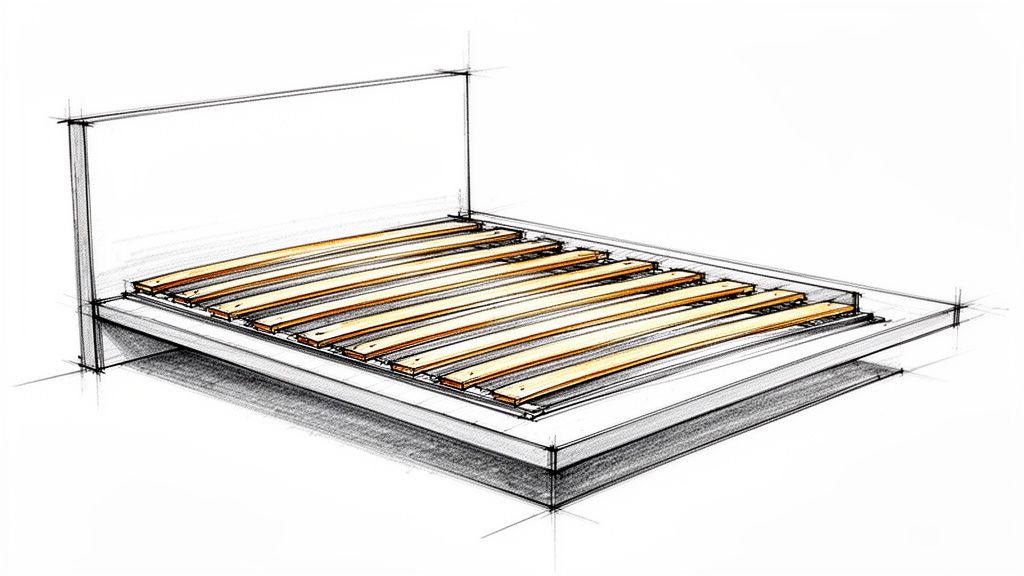
A platform bed frame is a sleek, all-in-one bed base designed to support your mattress directly, letting you finally say goodbye to that bulky box spring. Think of it as a minimalist stage for your mattress—it gives you a sturdy foundation without any extra layers, creating a clean, low-profile look that’s a perfect fit for modern homes.
What Is a Platform Bed Frame Explained
At its core, a platform bed frame is a beautifully simple solution for today’s bedrooms. It has a built-in foundation, which is usually either a set of wooden slats or a solid flat surface designed to hold up your mattress. This integrated support system is the key feature that sets it apart from traditional bed frames that need a separate box spring to keep the mattress from sagging.
But the design is about more than just looks; it’s about smart function. By getting rid of the box spring, a platform bed does a few great things:
- It creates a lower, more modern profile that can make a room feel more open and spacious.
- It provides the firm, even surface that contemporary mattresses like memory foam, latex, and hybrids need to perform their best.
- It often saves you a bit of cash since you’re only buying the frame and the mattress.
While the idea of a low-to-the-ground bed has been around for centuries, its popularity really took off in the mid-20th century with the rise of minimalist design. Now, it’s a go-to choice for city dwellers and anyone trying to make the most of a smaller space where every inch counts.
Key Differences at a Glance
To really get a feel for how a platform bed works, it helps to see how it stacks up against a traditional frame. This side-by-side comparison makes the fundamental differences clear.
Platform Bed Frame at a Glance
| Feature | Platform Bed Frame | Traditional Bed Frame |
|---|---|---|
| Foundation | Integrated slats or solid surface | Requires a separate box spring |
| Profile Height | Typically low to the ground | Higher, more elevated profile |
| Aesthetic | Modern, minimalist, and clean | Classic, traditional, often ornate |
| Cost | Generally more budget-friendly | Higher total cost (frame + box spring) |
The functional differences are easy to spot. For instance, children’s bedroom sets really highlight the safety benefit of being closer to the ground, which is a core principle of the low-profile design. This same idea of simplicity and direct support applies across all sizes and styles, from a simple twin to a sprawling California king.
Why Platform Beds Don’t Need a Box Spring
One of the biggest questions people have about platform beds is how they can possibly work without a box spring. It’s a fair question, especially if you’ve only ever slept on a traditional bed setup. The answer is pretty simple and has everything to do with both history and how much mattresses have evolved.
Back in the day, box springs were non-negotiable for two reasons. First, they were basically shock absorbers for old-school innerspring mattresses, which didn’t have much support on their own. Second, they gave the bed that classic, elevated height most people were used to.
The Shift to Integrated Support
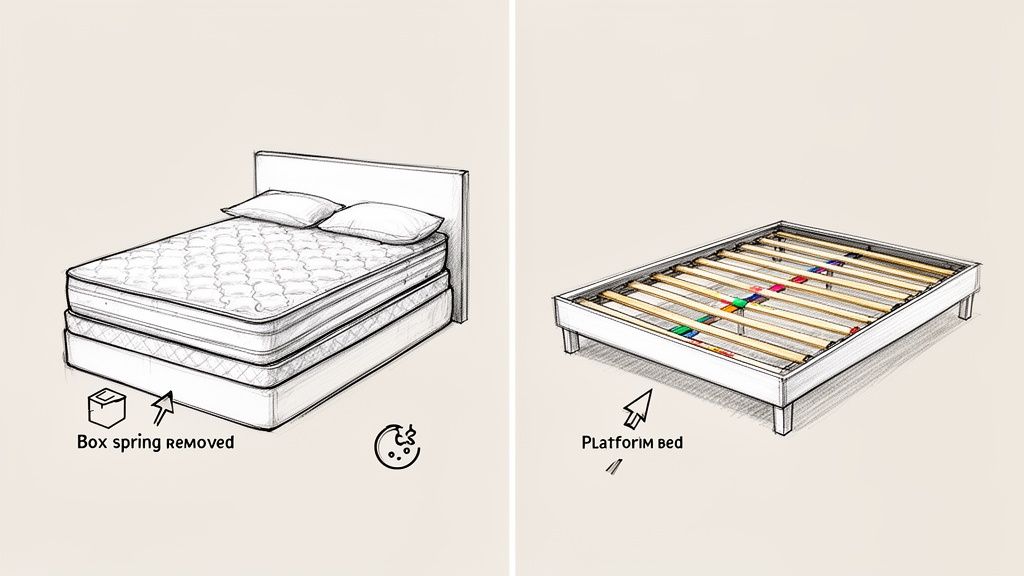
But mattress technology has completely changed the game. Today’s most popular mattresses—memory foam, latex, and hybrids—don’t need any help with shock absorption. In fact, they perform best on a firm, flat, and totally consistent surface. This prevents them from sagging and makes sure you get even support from head to toe.
And that’s exactly what a platform bed delivers. Its built-in support system, whether it’s a series of sturdy wooden slats or a solid deck, acts as both the foundation and the frame in one neat package.
Think of it this way: a box spring is like an old suspension system for a classic car, designed for bumpy roads. A platform bed is like the smooth, integrated chassis of a modern electric vehicle—it’s built for today’s technology and provides all the support needed in one streamlined package.
By building the foundation right into the frame, a platform bed cuts out the need for that extra layer. This gives you a more direct, reliable support system that’s perfectly in sync with how modern mattresses are made.
Functional Benefits of Going Box Spring Free
Ditching the box spring isn’t just about getting with the times; it comes with some real, practical perks that make it a smart move for a lot of people.
- Cost Savings: This is the big one. By not having to buy a separate box spring, you can save a good chunk of cash—often hundreds of dollars. That’s money you can put toward a better mattress or other furniture for your bedroom.
- Sleek, Low-Profile Aesthetic: Platform beds naturally sit lower to the ground, which creates a clean, minimalist vibe. This lower profile can make a room feel more open and spacious, a huge win for smaller apartments and city living.
- Enhanced Mattress Performance: Giving your mattress a solid and even base helps it keep its shape over time. This prevents it from dipping and sagging prematurely, which can extend its lifespan and make sure you’re getting the comfort you paid for.
Since you’re skipping the box spring, it’s key to pair your platform bed with the right mattress for the best support. It also helps to learn more about the differences between boxsprings and other foundations to feel confident in your choice. This functional, all-in-one design is really what defines a platform bed frame today.
Exploring the Different Types of Platform Beds
Platform beds are far from a one-size-fits-all solution. Think of them less as a single design and more as a versatile category of bed frames, each built to solve a specific problem or nail a certain aesthetic. From ultra-minimalist frames to multi-functional storage powerhouses, there’s a style to fit just about any bedroom and lifestyle.
Getting to know these variations is the key to choosing a frame that doesn’t just support your mattress but actually elevates your entire living space. Let’s break down the most popular types to help you find the perfect fit.
Low-Profile and Floating Beds
The low-profile platform bed is the quintessential modern frame. It sits much closer to the ground than a traditional bed, creating an open, uncluttered feeling that works wonders in smaller rooms or spaces with lower ceilings. It’s a style that champions simplicity, putting the focus squarely on your bedding and decor. You can learn more about the unique appeal of these low-profile beds and see how they can transform a room.
Taking this idea a step further is the “floating” platform bed. These frames use a recessed base that’s completely hidden from view, creating a striking illusion that the bed is hovering above the floor. It’s a bold, contemporary statement piece perfect for anyone aiming for a high-impact, minimalist look.
Storage Platform Beds
For anyone battling clutter or making the most of a compact apartment, the storage platform bed is an absolute game-changer. These incredibly practical designs integrate storage solutions right into the frame, turning the often-wasted space under your bed into a valuable asset.
Common storage options include:
- Drawers: Built into the sides or foot of the bed, these are perfect for stashing clothes, extra linens, or shoes.
- Lift-Up Mechanisms: Some frames feature a hydraulic lift that lets you raise the entire mattress and foundation, revealing a massive hidden storage compartment. This is ideal for tucking away seasonal items like bulky blankets or luggage.
A storage platform bed is like getting a dresser for free. It maximizes every square foot of your room, providing a smart, seamless solution that keeps your space tidy without adding extra furniture.
Slatted vs. Solid Foundations
The type of support system is another critical difference you’ll find. A slatted platform bed uses a series of wooden or metal slats spaced across the frame to hold up the mattress. This is the most common design out there, largely because the gaps between the slats allow for excellent airflow, which helps keep your mattress cool, dry, and fresh.
In contrast, a solid platform bed uses a single, flat sheet of material (like plywood or particleboard) for a completely even and firm surface. This offers maximum, unyielding support, which can be a great choice for certain heavy mattresses or for sleepers who prefer an exceptionally firm feel.
Industry trends show that platform styles are leading the charge in the growing bed frame market. Digging into the data, you’ll find that 60% of buyers favor slatted designs specifically for their superior ventilation, which can reduce mold risk by up to 40% in humid climates. These frames also save a crucial 12-18 inches in vertical space compared to traditional beds, a huge advantage for maximizing ceiling height in lofts and small rooms.
Choosing the right platform bed comes down to what you value most—be it sleek design, clever storage, or a specific type of mattress support. To make it easier, here’s a quick breakdown to help you decide.
Which Platform Bed Type Is Right for You?
| Bed Type | Best For | Key Feature |
|---|---|---|
| Low-Profile | Small rooms, minimalist decor, modern aesthetics | Creates an open, spacious feel by sitting close to the ground. |
| Floating | Contemporary or high-tech bedrooms, making a statement | Recessed base gives the illusion that the bed is hovering. |
| Storage (Drawers) | Apartments, kids’ rooms, anyone needing accessible storage | Built-in drawers for organizing clothes, linens, or shoes. |
| Storage (Lift-Up) | Storing bulky or seasonal items (luggage, winter blankets) | The entire mattress base lifts to reveal a large hidden compartment. |
| Slatted Foundation | Hot sleepers, most mattress types (especially foam) | Gaps between slats promote airflow to keep the mattress cool. |
| Solid Foundation | Heavy mattresses, sleepers who prefer a very firm feel | A single, flat surface provides maximum, unyielding support. |
Ultimately, the best platform bed is the one that fits seamlessly into your space and your life. By weighing these different styles and features, you can find a frame that’s not just functional, but a true centerpiece for your bedroom.
Choosing the Right Materials and Construction
So, what separates a great platform bed from one that’s just… okay? It almost always boils down to the materials and the quality of its construction. Getting a handle on these factors is the key to picking a frame that not only looks fantastic but will also give you solid, reliable support for years to come.
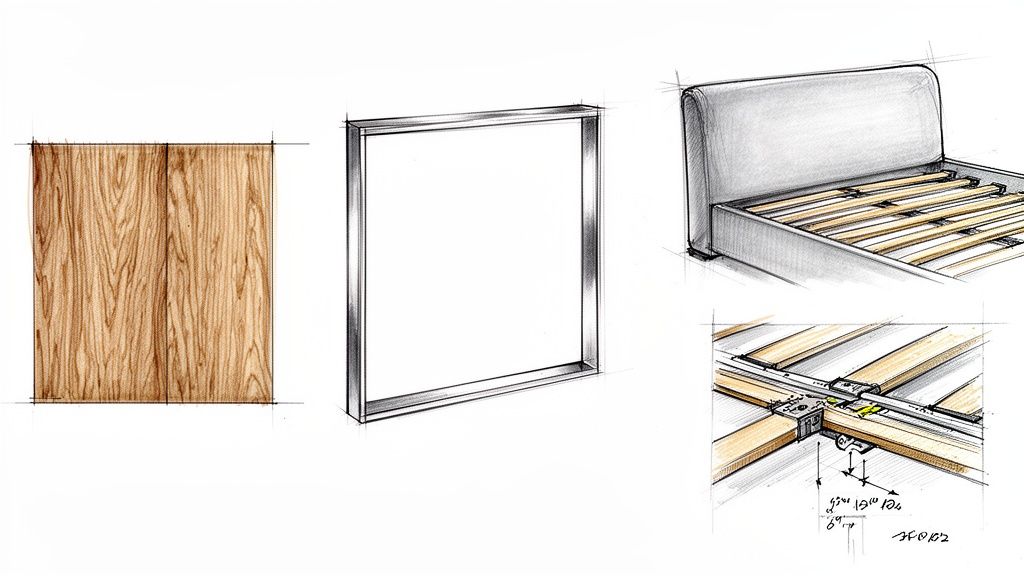
The material you choose really sets the whole vibe for your bedroom. Solid wood gives you that timeless, sturdy appeal, while metal frames lean into a sleek, industrial look perfect for modern spaces. Then you have upholstered frames, wrapped in fabrics like linen or velvet, which bring a soft, contemporary touch that instantly makes a room feel cozier.
A Closer Look at Common Materials
When you’re weighing your options, think about both style and substance. Each material comes with its own personality and practical advantages.
- Solid Wood: Known for its longevity and classic beauty, solid wood frames bring a natural warmth into any room. Woods like oak, walnut, and pine are popular for a reason—they offer robust support and a premium feel that makes them a great long-term investment.
- Metal: If you’re going for a minimalist or industrial look, a metal bed frame is a fantastic choice. Usually made from steel or iron, these frames are lightweight yet incredibly strong. They’re also a breeze to clean and often more budget-friendly than solid wood.
- Upholstered: For a touch of softness and elegance, nothing beats an upholstered bed frame. They have a padded headboard and frame wrapped in fabric, giving you a comfortable backrest for reading or binge-watching your favorite show in bed.
Why Construction Details Matter
Beyond the main material, it’s the little construction details that make a huge difference in your bed’s stability and lifespan. The support system is where the rubber meets the road—or in this case, where the mattress meets the frame—so pay close attention to it.
The quality of a platform bed frame isn’t just in what you see; it’s in the unseen details. Solid hardware, proper slat spacing, and a center support leg are the hallmarks of a frame built to prevent squeaking, sagging, and premature wear.
One of the most critical details is the spacing between the slats. Most mattress warranties today get specific about this, usually requiring a gap of no more than 2 to 3 inches. If the slats are too far apart, a foam mattress can start to sag through the gaps, which can ruin your comfort and even void your warranty.
Always double-check that measurement before you buy. Also, for queen sizes and larger, look for a frame that has a center support rail with extra legs. This is crucial for preventing the bed from bowing in the middle over time. You can explore a wide variety of well-constructed bed frames to see these quality features in action.
The Real Pros and Cons of a Platform Bed
Deciding on a new bed frame is always a balancing act between style, function, and what feels right for you. Platform beds are a fantastic modern solution, but it’s smart to look at both the benefits and the potential drawbacks before you commit.
Like any big furniture purchase, what’s perfect for one person might not work for another. By taking an honest look at both sides of the coin, you can find a bed that supports your sleep, fits your space, and suits your lifestyle down to the ground.
The Upsides Platform Beds Offer
Right off the bat, one of the biggest wins is cost-effectiveness. A platform bed has built-in support, so you don’t need to buy a box spring. You’re essentially buying one piece of furniture instead of two, and those savings can be pretty significant—money you can put toward a better mattress or other bedroom essentials.
Then there’s the look. Platform beds are known for their sleek, minimalist aesthetic. Their low-profile design creates a sense of openness, making even small rooms feel larger and less cluttered. This is a huge plus for city apartments, guest rooms, or anyone just trying to create a clean, contemporary vibe.
Finally, they offer incredible, versatile support. Modern mattresses—especially memory foam, latex, and hybrids—need a firm, consistent surface to perform their best, and that’s exactly what a platform bed provides. This solid foundation helps prevent your mattress from sagging, protecting your investment for years to come.
A platform bed simplifies your setup without sacrificing support. It’s a modern foundation built for today’s mattresses, combining style, savings, and function into one streamlined package.
Potential Downsides to Consider
On the other hand, there are a few things to keep in mind. The most common point of hesitation is the lower height. While it looks stylish, getting in and out of a bed that’s closer to the ground can be a challenge for anyone with mobility issues, joint pain, or back problems. You have to be honest about what’s comfortable for your body day in and day out.
Also, the support from a slatted or solid platform is noticeably firmer than a traditional bed with a box spring. A box spring has a little give to it, creating a bouncier feel. If you’re used to that springiness, the unyielding surface of a platform bed might feel a bit too rigid at first.
We’re seeing this blend of pros and cons play out in the market. For instance, low-profile adjustable platforms with built-in motors are catching on with health-conscious sleepers who want elevation options. Queen sizes are still the most popular, holding 26.8% of the market share, especially with students and professionals who need sturdy frames for tight spaces.
Ultimately, the choice comes down to personal preference. If you love a modern look, want to save some money, and prefer a firm sleep surface, a platform bed is an excellent choice. But if you need a taller bed or a softer, bouncier feel, you might be happier exploring other options.
Your Platform Bed Questions Answered
Even after weighing all the pros and cons, it’s totally normal to have a few last-minute questions before you commit. This is where we clear up any lingering doubts with quick, straightforward answers to the most common things people ask. Think of this as the final check-in to feel completely confident about bringing a platform bed home.
We’ll cover everything from mattress compatibility and weight limits to what you can expect on assembly day.
Can I Use My Existing Mattress on a Platform Bed?
This is easily the most common question we get, and the answer is almost always yes. The vast majority of modern mattresses—memory foam, latex, hybrids, and even many newer innerspring models—are built to work perfectly on the solid, even surface a platform bed provides.
The one thing you absolutely must do is check your mattress warranty. Some manufacturers specify a maximum gap between slats (usually 2 to 3 inches) to guarantee proper support and prevent sagging. As long as your platform bed meets that spec, your current mattress should feel right at home. You can learn more about finding the perfect match in our guide to mattresses.
How Much Weight Can a Platform Bed Support?
Weight capacity varies a lot depending on the materials and how the frame is built. But as a general rule of thumb, here’s what you can expect:
- Metal Frames: These are typically workhorses. Many standard models can easily support between 500 and 1,000 pounds.
- Wooden Frames: A well-made solid wood or engineered wood frame is right there with metal, often holding anywhere from 600 to 1,200 pounds. This includes the weight of the mattress plus the sleepers.
Always, always check the manufacturer’s specs before you buy. For queen, king, and Cal king sizes, look for a frame that has a center support rail with extra legs. This is non-negotiable, as it dramatically boosts stability and distributes weight evenly, preventing that dreaded dip in the middle over time.
Is Assembling a Platform Bed Difficult?
Most platform beds are designed specifically for you to assemble at home. They usually show up flat-packed with all the hardware you’ll need and a set of instructions. It’s definitely easier with two people, but the process is generally pretty manageable, even if you’re not a DIY pro.
Think of it like building a large piece of IKEA furniture. The key is to lay out all the parts, carefully follow the step-by-step instructions, and make sure every bolt is securely tightened. A little patience goes a long way.
If you’d rather skip the whole process, many retailers (including us) offer white-glove delivery and assembly. This is a fantastic option for more complex models, like storage beds with hydraulic lifts, ensuring everything is put together correctly and safely right from the start.
Will a Platform Bed Feel Too Low?
The low-slung design is a signature look, but whether it feels “too low” really comes down to personal taste and physical needs. The average platform bed sits somewhere between 10 to 18 inches from the floor to the top of your mattress. For comparison, a traditional bed with a box spring can easily be 25 inches high or more.
A lower height can make a room feel bigger and more open, which is why it’s a go-to for modern, minimalist design. On the other hand, if you have knee or back issues, getting in and out of a lower bed might feel like a chore. The best advice is to test out beds at different heights in a showroom to see what feels most comfortable for your body.
Ready to find the perfect foundation for your sleep space? At Futonland, we offer a curated selection of high-quality platform beds designed for modern living. Explore our collection and discover the ideal frame to match your style and needs.