Discover Studio Apartment Furniture Layout For Small Spaces
The secret to a great studio apartment layout isn’t magic; it’s a solid plan. You’re working with a single room, so your goal is to create distinct, functional “zones” for sleeping, living, and working without putting up walls. This is where smart, multi-functional furniture and strategic placement become your best friends.
It all starts with mapping out your space before you even think about buying furniture.
Your Blueprint for a Brilliant Studio Layout
Living in a studio isn’t about sacrifice—it’s about being clever with your design. The challenge of one open room is also its greatest strength. Think of it as a blank canvas waiting for a thoughtful plan that makes your home feel organized, spacious, and perfectly suited to your life.
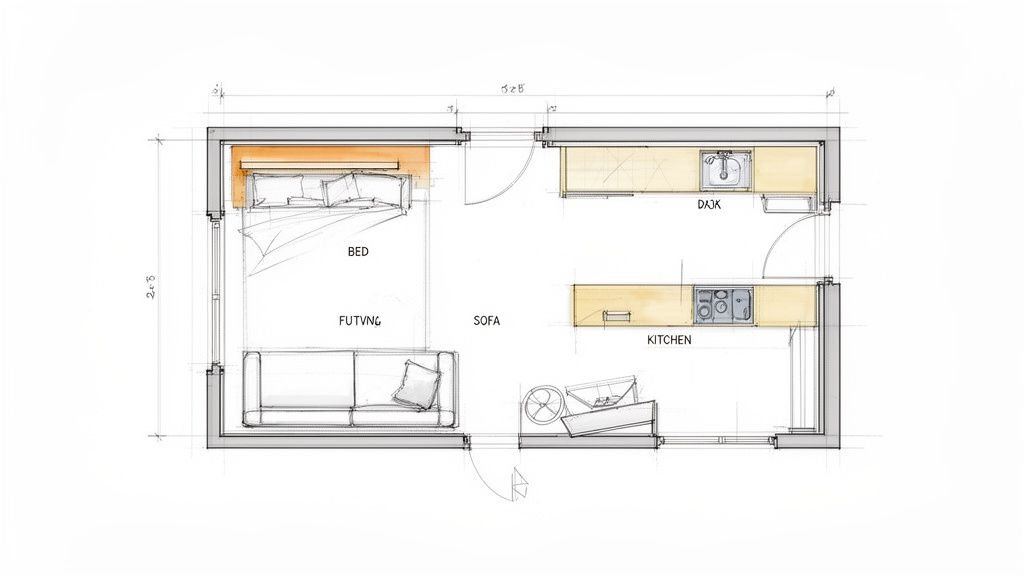
This guide will walk you through the whole process, from measuring your space to adding the final styling touches. We’ll kick things off with the most critical step: creating an accurate floor plan. This little map is the key to unlocking a layout that works for you, not against you.
Embracing the Small-Space Mindset
Small-space living is more than a trend; it’s a reality for many. In 2023, requests for space-saving furniture solutions jumped by 20% across the U.S. This is a direct response to rising city density and the need to get the most out of studios, which average just 470-600 square feet worldwide.
With a projected 68% of the world’s population living in cities by 2050, furniture that does double duty is no longer a novelty—it’s an absolute necessity.
The secret to a great studio layout isn’t owning less stuff; it’s about owning smarter stuff. Every piece should serve at least two functions, whether it’s a bed that’s also a sofa or a coffee table with hidden storage.
Planning Your Essential Zones
Before you hit “add to cart,” take a moment to think about your daily routines. How do you actually use your space? A well-designed studio typically has four core zones, even if they flow into one another.
We can break these down into the four essential areas you’ll need to account for in your floor plan.
The Four Essential Zones of a Studio Apartment
| Zone | Primary Function | Key Furniture Examples |
|---|---|---|
| Sleep Zone | Your private sanctuary for rest and calm. | Futon, convertible sofa, wall bed, loft bed. |
| Living Zone | The main area for relaxing and entertaining guests. | Sofa, armchairs, coffee table, media console. |
| Work/Dining Zone | A dedicated spot for meals or productivity. | Small dining table, desk, kitchen island with stools. |
| Storage Zone | The often-overlooked area for managing clutter. | Closets, shelving units, storage ottomans, bookcases. |
Thinking in zones helps you choose every piece of furniture with a clear purpose. A convertible futon, for example, can anchor your living zone by day and easily transform into your sleep zone at night.
Just make sure you get the scale right. The biggest mistake people make is buying furniture that’s too big for the room. To avoid this, always check our comprehensive sizing charts before you make a final decision. It’s a simple step that prevents a world of headache later on.
Mastering the Art of Zoning Without Walls
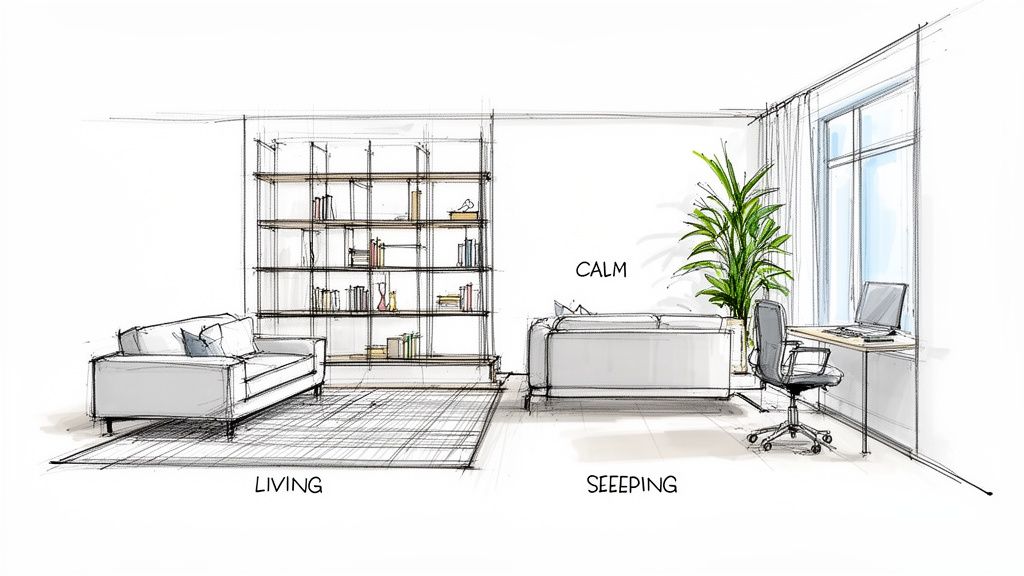
Let’s be honest: the biggest challenge in any studio is making one big room feel like an actual home with separate spaces. This is where zoning comes into play. We’re not talking about putting up walls. Instead, we’re going to use furniture and decor to create clever visual cues that signal a shift from one area to another.
Think of each zone—sleep, live, work, dine—as its own little island. Your job is to define the “shoreline” of each one. This brings a sense of order that makes your studio feel way larger and much more intentional.
Use Furniture to Create Natural Divisions
One of the easiest ways to create zones is with the furniture you already have. The back of your sofa is probably the most powerful room divider you own, and most people just push it against a wall. Don’t!
By floating your sofa in the middle of the room, you instantly create a boundary. For example, placing a convertible sofa with its back facing your bed clearly separates the living area from your sleeping quarters. It’s a simple move that tells your brain, “This is where I relax,” and “That is where I sleep.”
You can even place a slim console table right behind the sofa to reinforce that line and give yourself a handy spot for keys, mail, or a lamp. This trick also works wonders for carving out a home office. Just position a desk behind the sofa to create a distinct workspace that feels separate from your lounge zone.
Anchor Zones with Area Rugs
Area rugs are the unsung heroes of studio apartments. They work like visual anchors, grounding all the furniture in a specific zone and clearly marking its territory. A rug under your sofa, coffee table, and armchair instantly screams, “This is the living room.”
The key is getting a rug that’s big enough for at least the front legs of all the main furniture pieces in that zone. This pulls everything together into a cohesive look. You could use a completely different, maybe softer, rug for your sleeping area to create a textural shift that signals a move into a more private, cozy space.
By using distinct rugs for different zones, you’re essentially drawing a floor plan with textiles. It’s a powerful psychological trick that establishes separation without adding a single physical barrier, making the entire studio feel more organized and expansive.
Employ Permeable Room Dividers
Physical dividers are great, but they don’t have to be solid walls. For a studio, you want permeable dividers—things that create separation while still letting light and air flow through. This keeps the space from feeling cramped or dark.
Here are a few of my favorite options:
- Open-Backed Bookshelves: This is the classic for a reason. A tall, open shelving unit can partition off your sleeping area while giving you a ton of storage and display space. Light passes right through, so you get privacy without the gloom.
- Tall Plants: Never underestimate the power of a well-placed plant. A tall fiddle-leaf fig or a snake plant can soften a corner and create a subtle visual break between two zones. A whole cluster of them can act as a lush, living screen.
- Folding Screens: If you want something more flexible, a decorative folding screen is a beautiful solution. You can easily move it or fold it away when you want a more open feel, giving you privacy on demand.
For those who want something a bit more structured, you can explore dedicated room dividers designed specifically for small spaces. These pieces often blend form and function perfectly, offering both separation and style. Choosing the right one is a huge step in nailing your studio layout for both flow and privacy.
Choosing Your Multi-Functional Furniture
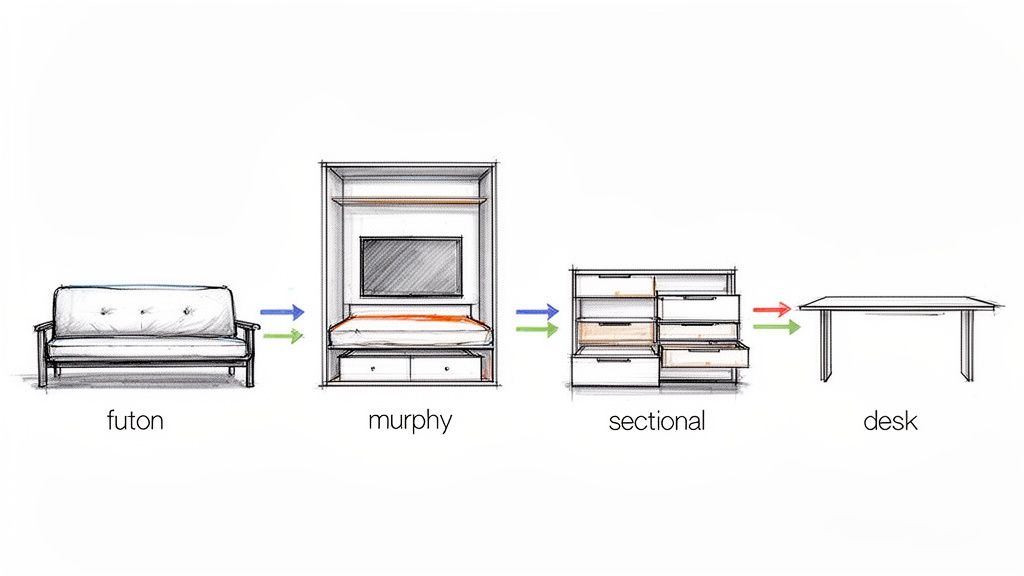
In a studio, every single piece of furniture needs to pull its weight. The absolute best studio apartment furniture layout is built around items that refuse to be one-trick ponies. Forget thinking about a separate couch and bed; instead, imagine one piece that effortlessly handles both jobs. This is where you’ll want to invest, because these are the heavy lifters of your home.
Picking the right multi-functional furniture is probably the most important decision you’ll make for your space. These pieces aren’t just about saving a few square feet—they completely transform your single room to match the rhythm of your day. Your living room for a movie night becomes your bedroom in minutes, all thanks to some really clever engineering.
The Classic Futon and Convertible Sofa Bed
There’s a good reason the modern futon or convertible sofa bed is a cornerstone of studio living. The simple click-clack mechanism makes going from a comfy sofa to a bed incredibly easy. That versatility makes it the perfect anchor for your living zone, giving you plenty of seating for guests without eating up your sleeping space.
And let’s be clear, today’s options are a world away from the lumpy dorm room staple you might be picturing. You can find incredibly stylish designs that fit right into sophisticated decor, from sleek mid-century modern looks to plush, inviting models. A quick look at a guide on convertible sofa beds shows just how far the styles and mechanisms have come.
When you’re shopping around, keep these points in mind:
- Mattress Quality: Is this actually comfortable enough to sleep on every night? Look for options with innersprings or high-density foam.
- Frame Durability: A solid wood or metal frame will handle the daily conversions way better than particleboard ever could.
- Ease of Use: Can you convert it by yourself without a struggle? Test the mechanism in the store if you get the chance.
Murphy Beds: The Ultimate Space Savers
If your main goal is reclaiming as much floor space as possible during the day, nothing beats a Murphy bed. Period. These beds fold vertically into a wall-mounted cabinet, which means your bed basically disappears. That single move can free up 50-70 square feet of floor space, turning your bedroom into a spacious home office, a yoga spot, or an area for entertaining.
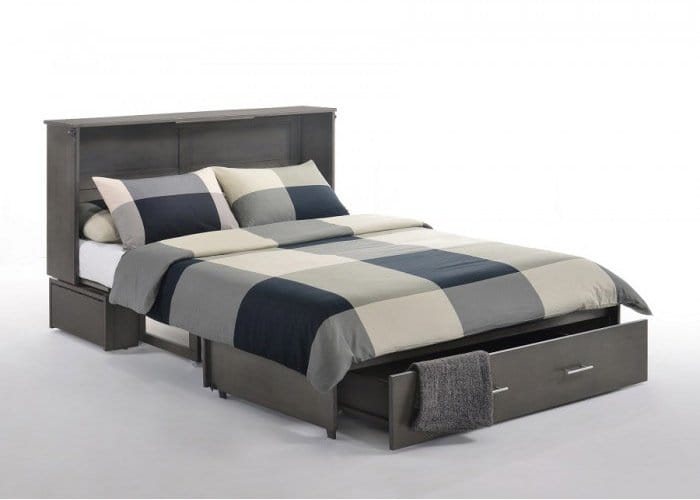
Modern Murphy cabinet and chest beds have also become masters of disguise. Many systems now integrate desks, shelving, or even a sofa that stays put when the bed is folded down. A Murphy cabinet bed can look just like a stylish media console or credenza, hiding its true purpose until bedtime. It’s a bigger investment, for sure, but for many studio dwellers, getting that open space back every single day is priceless.
Storage Sectionals: The Clutter Killers
What if your sofa could solve your clutter problem and provide a place for guests to sleep? That’s exactly what a storage sectional does. These L-shaped sofas are brilliant for defining a corner of your living zone, but their hidden talents are what make them a studio apartment powerhouse.
Many sectional sleeper sofas have a pull-out mattress that turns the sofa into a queen-size bed. But the real secret weapon is usually hiding in the chaise lounge.
A storage chaise is a complete game-changer. That lift-up cushion reveals a deep compartment perfect for stashing bulky things like extra bedding, pillows, and seasonal clothes. This can easily add 10-15 cubic feet of hidden storage, meaning you might not need that extra dresser or storage bin.
By combining seating, sleeping, and storage into one footprint, a sectional sleeper maximizes every last inch it occupies. It anchors your living area, welcomes guests, hides your stuff, and guarantees a comfortable night’s sleep.
Comparing Your Space-Saving Sleeper Options
Choosing between these brilliant pieces can be tough. Each one solves the space problem in a slightly different way, so the best choice really depends on your lifestyle, budget, and how you want your studio to feel day-to-day. This table breaks down the key differences to help you decide.
| Furniture Type | Best For | Space-Saving Feature | Typical Price Range |
|---|---|---|---|
| Futon/Sofa Bed | Budget-conscious renters, frequent movers, and daily use as a sofa. | Folds down from a sofa into a bed in one footprint. | $400 – $1,500 |
| Murphy Bed | Maximizing daytime floor space for a home office, gym, or open feel. | Folds vertically into the wall, completely clearing the floor. | $2,000 – $5,000+ |
| Storage Sectional | Those needing to combine seating, guest sleeping, and serious storage. | Offers a pull-out bed plus hidden storage compartments. | $1,000 – $3,000 |
Ultimately, whether you want the simple efficiency of a sofa bed, the disappearing act of a Murphy bed, or the triple-duty power of a storage sectional, you’re investing in a piece that makes small-space living not just possible, but comfortable and stylish.
Proven Layouts for Common Studio Shapes
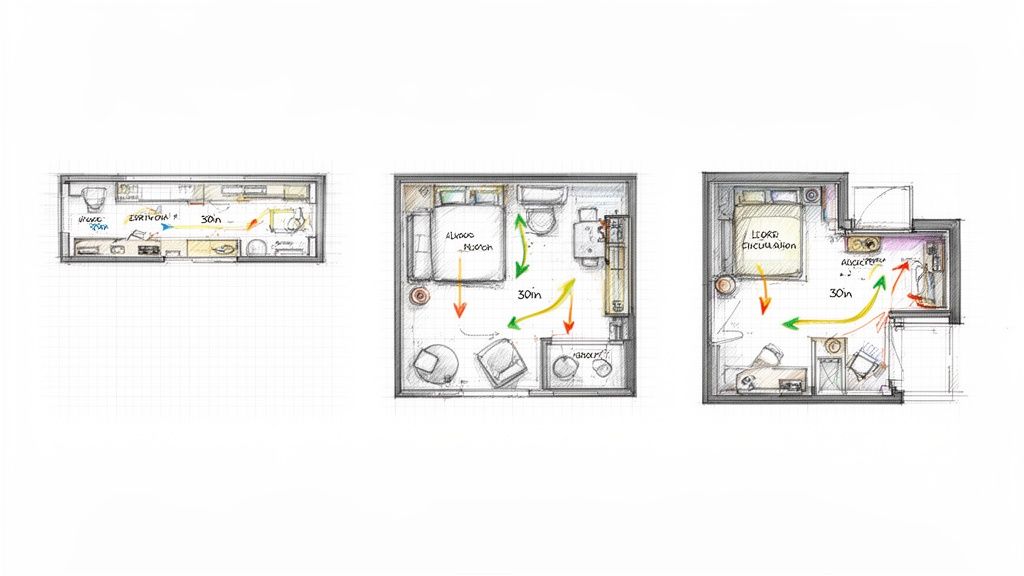
While the core ideas of zoning apply everywhere, the actual shape of your studio really dictates the game plan. Not all single-room apartments are created equal, and what works beautifully in a long, narrow space will just feel off in a square one. Getting familiar with your apartment’s footprint is the first step to unlocking a furniture arrangement that feels natural and surprisingly roomy.
The secret is to work with your apartment’s architecture, not fight against it. When you tailor your layout to the specific geometry of the room, you can create effortless flow and distinct zones that make the whole place feel bigger. Let’s walk through some tried-and-true blueprints for the most common studio shapes.
The Long Rectangular Studio
The rectangular studio is probably the most common type out there, and it often feels a bit like a shoebox. The big challenge is avoiding that “bowling alley” look where all your furniture is just lined up against one wall. The fix? A linear zoning strategy that breaks the long room into a sequence of functional areas.
Start by putting your bed at one of the far ends of the rectangle—ideally, the end that’s furthest from your front door. This move alone creates a bit of psychological distance, making the sleeping area feel more private and secluded. You can amplify this effect by placing a tall, open-backed bookshelf or even a decorative folding screen next to the bed to act as a semi-transparent wall.
Next, set up your living zone in the middle of the room. A great trick here is to “float” a convertible sofa so it’s perpendicular to the long walls, with its back facing the bed. This one move does a ton of work to define the living space. Finish it off with a coffee table and maybe a small armchair opposite the sofa, just make sure you leave clear walking paths on either side.
Pro Tip: Always maintain a clear walkway of at least 30 inches from the entrance all the way to the furthest window. This uninterrupted path is absolutely critical for making a long, narrow space feel functional and open, not like an obstacle course.
The Square Studio Apartment
A square studio gives you more flexibility, but it can also feel a bit like a big, empty box if you’re not careful. The rookie mistake is pushing all your furniture against the walls, which creates a dead, useless space right in the middle. A much better approach is a corner-bed layout.
Tuck your bed snugly into one corner. This immediately anchors your sleeping zone and leaves a generous L-shaped area for your living and dining spaces. Use a large area rug to define the living zone in the center of the remaining floor space, grounding your sofa, a chair, and a coffee table.
This setup has a few key advantages:
- Maximizes Open Space: It keeps the center of the room clear, which makes the whole studio feel larger and easier to move around in.
- Creates a Focal Point: The living area naturally becomes the main focus when you walk into the room.
- Natural Zoning: The corner placement gives the bed a subtle but effective sense of privacy.
The L-Shaped Studio Layout
Finding an L-shaped studio is like hitting the jackpot, because it comes with built-in zoning. That little alcove—the “L” part of the shape—is the perfect spot for any function that could use a little separation, like a cozy sleeping nook or a dedicated home office.
If you put your bed in the alcove, you’ve instantly created a semi-private bedroom. You can take it a step further by hanging a simple curtain across the opening of the nook for privacy whenever you need it. This leaves the main rectangular part of the studio completely open for a spacious and distinct living and dining area.
Alternatively, that alcove makes for a fantastic home office. A desk, a comfy chair, and some wall-mounted shelves fit perfectly. This setup keeps your work life contained and visually separate from your relaxation space, which really helps you switch off at the end of the day. This studio apartment furniture layout lets the architecture do most of the hard work for you.
Elevating Your Space with Smart Storage and Style
Once your core furniture pieces are in place, the real magic begins. This is where you layer in the clever storage and personal touches that turn a functional layout into a home you love. In a studio, that means looking up—not just out—to reclaim unused space and inject your personality into every corner.
This final stage isn’t about filling empty spots; it’s about refining what you have. The right solutions don’t just hide clutter. They actually improve the look and feel of your studio apartment furniture layout, making a small home feel organized, expansive, and completely your own.
Go Vertical to Maximize Storage
When floor space is at a premium, the only way to go is up. Vertical space is your secret weapon in a studio apartment. Using it not only gives you a ton of extra room for storage but also draws the eye upward, creating an illusion of height that makes the whole apartment feel bigger.
Forget about bulky furniture that hogs the floor. Your goal is to get things off the ground whenever possible.
- Floating Shelves: These are fantastic for books, plants, and photos without the visual heaviness of a traditional bookcase. Mount them above your TV, desk, or even over a doorway to use wall space that would otherwise go to waste.
- Wall-Mounted Desks: A slim, wall-mounted desk gives you a dedicated workspace that either folds up or has such a minimal profile that it barely takes up any room.
- Tall, Narrow Bookcases: If you need more serious storage, find tall, slender book shelves that make the most of your apartment’s height. An open-backed model is a great choice because it can also work as a subtle room divider that still lets light pass through.
The game plan is simple: lift storage off the floor. Every item you can get on a wall is one less thing cluttering up your limited footprint, making the entire studio feel lighter and more open.
Use Lighting to Define Zones and Mood
Lighting is one of the most powerful—and most overlooked—tools for defining different areas in a studio. The right lamps and fixtures can visually separate your living, sleeping, and work zones while setting the perfect mood for each one. Relying on a single, harsh overhead light makes a studio feel like a sterile box; layering your lighting makes it feel like a home with multiple rooms.
Try a three-point lighting strategy:
- Ambient Lighting: This is your primary light source, like a central ceiling fixture.
- Task Lighting: These are focused lights for specific activities. Think of a reading lamp next to your sofa, under-cabinet lights in the kitchen, or a desk lamp for your workspace.
- Accent Lighting: This is what adds warmth and personality. A floor lamp tucked in a corner or a stylish table lamp creates a cozy glow that makes the space feel intimate and inviting.
Style Tricks That Create an Illusion of Space
Your final decor choices can make or break how large your studio feels. With a projected 68% of the world’s population living in cities by 2050, smart small-space design is more important than ever. This has even led to a 28% jump in “dopamine décor” trends, where functional pieces that also bring joy are essential, especially in cities like NYC where studios average just 500 square feet.
A classic trick that always works is to hang a large mirror on the wall opposite a window. It will bounce natural light around the room and create a serious sense of depth, instantly making the space feel bigger.
Sticking to a light, cohesive color palette also does wonders. Soft whites, light grays, and muted pastels on the walls create an airy, open vibe. You can bring in pops of color with pillows, artwork, and rugs to show off your personality without visually shrinking the space. For anything that doesn’t fit your aesthetic, like out-of-season clothes or extra linens, relying on hidden compartments like storage ottomans can be a lifesaver.
Answering Your Studio Layout Questions
Even the most carefully crafted plan can hit a few snags. As you start placing furniture (even just virtually), you’re bound to have questions. This is totally normal. It’s those little details that can make or break how your studio apartment really feels.
Let’s tackle some of the most common questions and roadblocks people run into when designing their studio layout.
I’m Ready to Start. What’s the Very First Thing I Should Do?
Before you even think about adding that gorgeous velvet sofa to your online cart, you need to get intimate with your space. That means grabbing a tape measure. Measure everything accurately. Get the full dimensions of the room, but don’t stop there. Note exactly where the windows, doors, closets, and—crucially—electrical outlets are.
With those numbers in hand, sketch out a to-scale floor plan. You can go old-school with graph paper or use a simple online tool. This little map is your secret weapon. It stops you from making the soul-crushing mistake of buying furniture that won’t fit through the door and lets you play around with layouts without throwing your back out.
How Can I Create Some Privacy in a One-Room Apartment?
This is probably the biggest challenge in any studio. You want a dedicated sleeping area that feels like a retreat, but without closing the space off and making it feel like a cave. The trick is to create visual boundaries, not solid walls.
Here are a few of the most effective ways I’ve seen this done:
- Use an Open-Backed Bookshelf: This is a classic for a reason. A tall, étagère-style bookshelf acts like a see-through wall. It divides the space and gives you a ton of storage, all while letting light and air flow freely.
- Install a Ceiling-Mounted Curtain: For a softer, more adaptable solution, hang a curtain from a ceiling track. You can pull it closed at night for total privacy and then whisk it open in the morning to keep things bright and airy.
- Let Your Sofa Do the Work: The back of your convertible sofa or futon is a natural room divider. By floating it in the middle of the room, facing away from your bed, you create a powerful psychological line that says, “This is the living room, and that’s the bedroom.”
The goal isn’t to build actual walls. It’s about sending signals. You’re creating visual cues that tell your brain you’re moving from a public space (the living area) to a private one (your sleep sanctuary).
What’s the Best Type of Bed for a Studio?
There’s no single “best” bed—it all boils down to your lifestyle. Are you trying to maximize floor space for a home office? Do you need a piece that works for seating and sleeping? Or is storage your number one priority?
Let’s break down the top contenders:
| Bed Type | Its Superpower | Perfect For… |
|---|---|---|
| Murphy Bed | Unmatched Space-Saving | Anyone who needs to reclaim their entire floor for daytime activities like yoga or working from home. |
| Convertible Sofa/Futon | All-in-One Versatility | Combining your primary seating and sleeping functions into a single, efficient footprint. |
| Sectional Sleeper | Multi-Functional Powerhouse | People who need ample seating, a guest bed, and a place to stash blankets and pillows. |
| Platform Bed with Drawers | Traditional Comfort | Those who don’t want to compromise on a real mattress but still need smart, built-in storage. |
If you need the absolute maximum amount of open floor space, nothing beats a Murphy bed. It literally disappears into the wall. But if you’re looking for a workhorse that handles both sitting and sleeping, a high-quality convertible sofa is your best friend.
Any Tricks to Make My Studio Look Bigger Than It Is?
Absolutely. Making a small space feel bigger is all about optical illusions, and they’re easier to pull off than you think. It really comes down to light, color, and clever furniture choices.
Start by painting your walls with a light and cohesive color palette. Soft whites, pale grays, and other muted tones are fantastic at reflecting light, which instantly makes a room feel more expansive. Next, hang a large mirror. Placing one on the wall opposite a window is a pro move—it will bounce natural light all over the room and create an incredible sense of depth.
Your furniture plays a huge role, too. Look for pieces with “legs,” like a sofa or TV stand that’s raised off the ground. When you can see the floor underneath, your brain registers the space as being larger. Finally, layer your lighting. A mix of overhead, task, and accent lighting gets rid of shadowy corners and makes the whole studio feel brighter and more welcoming.
Ready to find the perfect multi-functional furniture to bring your studio layout to life? At Futonland, we specialize in smart, space-saving solutions designed for modern living. Explore our collection of convertible sofa beds, wall beds, and storage sectionals that work as hard as you do.
Visit us online to find pieces that fit your space and your style at Futonland.