


Mattress For A Futon: Upgrade Comfort the Right Way
A great mattress for a futon has to do two jobs at once: it needs to be comfortable enough for real sleep, but resilient enough to handle daily sitting. You can’t just throw any mattress on a futon frame. Futon mattresses are built to bend, recover, and support—without breaking down after a few months of use.
This guide walks you through what matters most: materials, thickness, firmness, sizing, and the simple care steps that help your futon stay comfortable long-term.
The Secret to a Truly Comfortable Futon
Most people have a “bad futon” memory—thin dorm-style cushions, hard edges, and no real support. The good news is that modern futon mattresses can feel dramatically better, especially when you choose a build that matches how you’ll actually use it.
A futon mattress isn’t just a mattress—it’s a flexible sleep surface that also functions as a seat cushion. That dual role is why materials, thickness, and fit matter more here than they do with a standard bed.
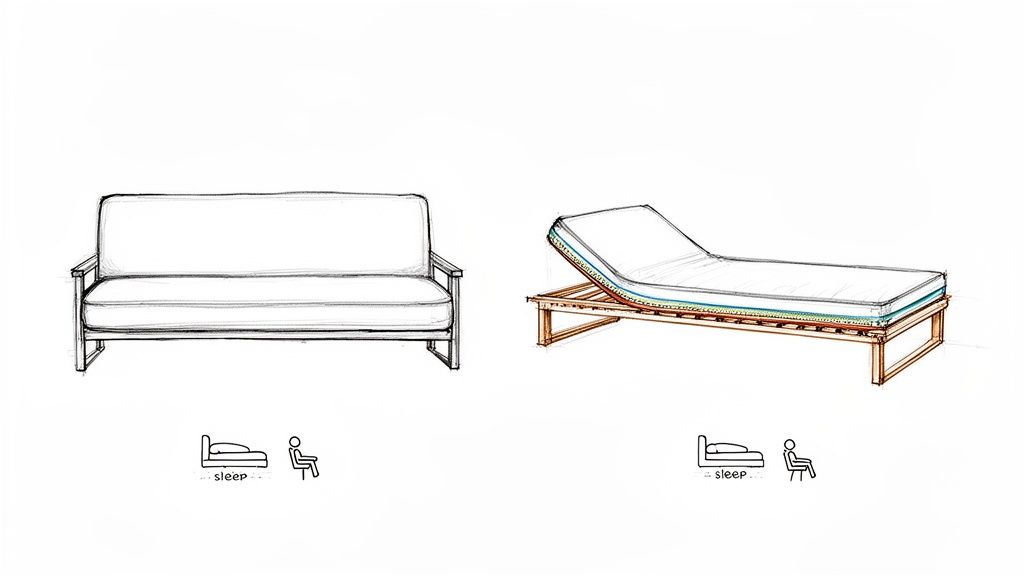
We’ll break down the tradeoffs between classic cotton builds and modern foam or coil options, how thick your mattress should be for everyday comfort, and how to make sure the size matches your exact frame. If you’re also looking for an easy comfort upgrade, see mattress toppers and pads for added cushioning and pressure relief.
Choosing Your Futon Mattress Materials
What’s inside your futon mattress is the biggest factor in how it feels—and how long it stays comfortable. Some materials are ideal for a traditional, firm futon feel. Others are designed to feel more like a conventional bed, with better pressure relief for nightly sleeping.
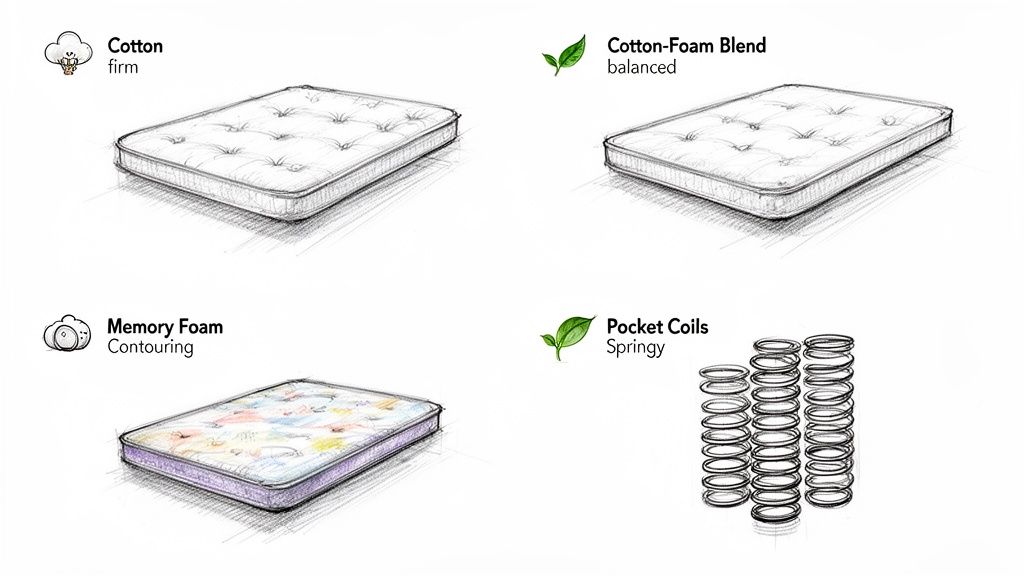
Futon Mattress Material Comparison
| Material | Feel & Comfort | Best For | Durability | Flexibility |
|---|---|---|---|---|
| Cotton | Very firm, dense, breathable | Traditional feel, occasional sleeping, guest use | Compresses over time; benefits from flipping/rotating | Excellent; folds easily |
| Cotton/Foam Blend | Balanced; supportive with more cushion | Everyday sitting + frequent sleeping | Very good; foam core helps resist flattening | Very good for most bi-fold frames |
| Memory Foam | Contouring, pressure-relieving | Daily sleeping, sore joints/pressure points | Excellent when high quality | Good; may be less “bend-friendly” than cotton |
| Innerspring / Pocket Coils | Bouncy, responsive, bed-like | Daily sofa use + people who want bounce | Excellent when well-built | Varies; best for bi-fold or frames rated for coils |
Traditional All-Cotton and Blended Builds
If you want an authentic, firm surface, an all-cotton futon mattress delivers dense support and great breathability. The tradeoff is that cotton naturally compresses with use. Regular flipping and rotating helps keep the feel more even.
For a more versatile everyday option, a cotton and foam blend adds resilience without losing that classic futon character. The foam core helps the mattress recover from daily sitting and reduces the “packed down” feel that can happen faster with cotton-only fills.
Modern Foam and Coil Options
Memory foam is popular for one simple reason: pressure relief. It contours to your body and can feel significantly more comfortable for nightly sleeping, especially if your futon doubles as your primary bed.
If you want your futon to feel closer to a conventional sofa or bed, innerspring and pocket coil options bring a responsive, supportive feel with better bounce.
- Innerspring: A classic coil feel with good airflow and support.
- Pocket Coils: Coils move more independently for more targeted support and less motion transfer.
Finding the Best Material for Your Routine
Start with how you’ll use the futon most:
- Mostly a sofa + occasional sleep: cotton/foam blend or supportive foam.
- Frequent sleeping: thicker foam, memory foam, latex, or coil-based builds (if your frame supports it).
- Traditional Japanese-style firmness: explore Shiki futon mattresses.
If you’re prioritizing natural materials, look for builds featuring organic cotton, wool, and latex for a cleaner-feeling sleep environment—without giving up comfort.
Why Thickness and Firmness Matter Most
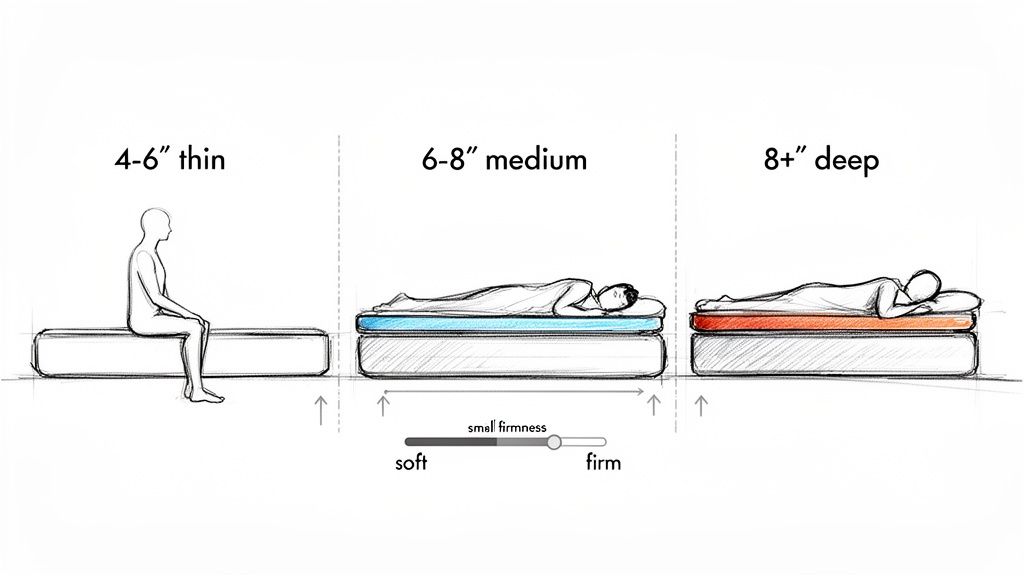
Thickness and firmness define how your futon feels in both modes—sofa and bed. Too thin, and you may feel the frame. Too thick or too rigid, and the mattress may not fold smoothly (or may stress the frame over time).
-
4–6 inches (light & flexible): Great for tight spaces, occasional sleeping, and many tri-fold or compact designs. Best when the futon is primarily seating.
-
6–8 inches (the sweet spot): The most popular range for everyday use. Comfortable enough for regular sleeping while still supportive for daily sitting.
-
8+ inches (sleep-first comfort): Best when the futon is used as a primary bed. More cushioning and a stronger buffer from the frame.
Choosing Firmness Without Guesswork
Firmness is about both comfort and function. A futon used daily as a sofa should usually lean medium-firm to firm so it holds shape and doesn’t sag quickly. For sleep comfort, the right firmness depends on your sleep position:
- Side sleepers: medium to medium-firm to cushion shoulders and hips.
- Back sleepers: medium-firm to firm for spinal alignment.
- Stomach sleepers: firmer support to prevent hip sink.
The best futon mattress is supportive enough for healthy sleep, but flexible enough to fold without fighting the frame.
How to Ensure a Perfect Fit for Your Frame
Even the best mattress won’t perform well if it doesn’t fit your frame. A mismatch can cause sliding, bunching, poor folding, and premature wear—on both the mattress and the mechanism.
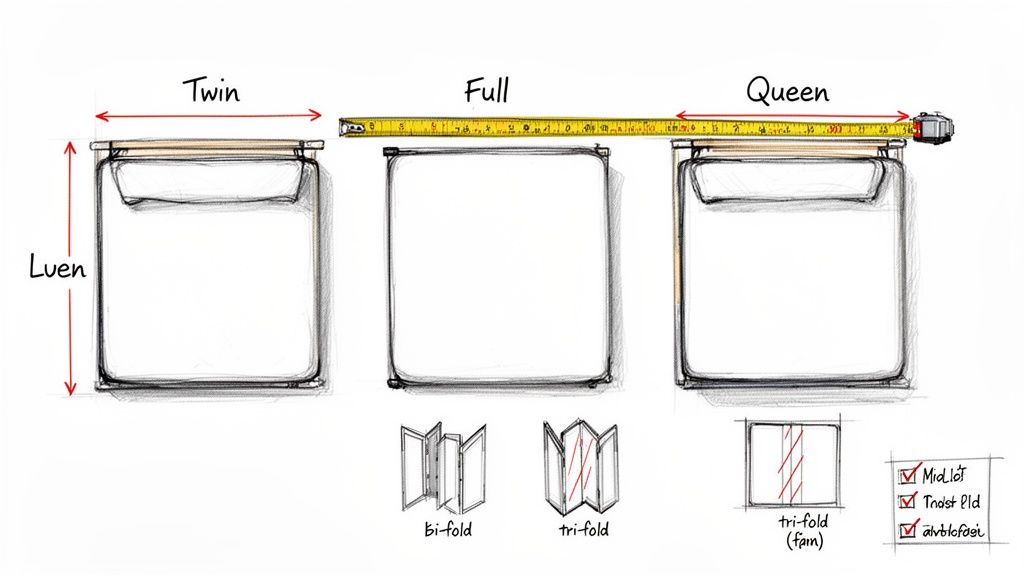
Step 1: Know Your Frame Type
-
Bi-Fold Frames: The most common style. One fold creates the seat and back. These work with most standard futon mattresses.
-
Tri-Fold Frames: Two fold points. These often need a more flexible mattress and typically work best with thinner builds (many people choose 4–6 inches). Always check your frame’s recommendations.
Step 2: Measure the Sleeping Surface
Measure the frame when it’s fully open and flat. Measure the interior sleeping surface where the mattress sits (not the outer arms). If you have mattress retainer brackets, measure between them as well.
Key takeaway: Always measure your frame in the bed position. Measuring in sofa mode can lead to the wrong size.
Step 3: Match to Standard Futon Sizes
- Twin: 39″ x 75″
- Full (Double): 54″ x 75″
- Queen: 60″ x 80″
- Loveseat: 54″ x 54″ (often paired with a separate ottoman cushion)
If you’re between sizes, it’s usually better to avoid going larger than the frame’s interior surface—oversized mattresses can fight the fold and strain seams and hardware. For quick comparisons, use the futon sizing charts.
Simple Ways to Extend Your Futon Mattress Life
A futon mattress works hard. With a few habits, you can keep it feeling better for longer—especially in high-use living rooms.
Flip and Rotate Regularly
Flipping and rotating helps distribute wear, reduces body impressions, and keeps fills from packing down in one spot. A simple routine (such as monthly or every few months, depending on use) makes a noticeable difference over time.
Protect It from Daily Life
- Use a removable cover: A washable cover protects against spills, dust, and wear. Browse futon covers for options.
- Use a gripper pad: Helps reduce sliding and stress on seams.
- Air it out: Let it breathe when you change the cover or rotate the mattress.
For spot cleaning, use a mild soap solution and dab gently. Avoid soaking the mattress, and always let it dry completely before covering again.
Frequently Asked Questions About Futon Mattresses
Can I Use a Regular Mattress on a Futon Frame?
Usually, no. Standard mattresses are designed to lie flat and stay flat. A futon frame requires a mattress that can bend repeatedly without damaging its internal structure. Futon mattresses are built specifically for that flexibility.
How Often Should I Replace My Futon Mattress?
It depends on materials and how heavily it’s used. Cotton-heavy builds can compress faster with daily sitting and sleeping, while higher-quality foam, latex, and well-built coil options often hold shape longer. Replace it when you notice persistent sagging, you can feel the frame, or comfort drops enough to affect sleep.
What Is the Best Futon Mattress for Everyday Sleeping?
If your futon is a primary bed, prioritize thickness and supportive materials. Many people prefer 8 inches or more (if the frame supports it), with foam, latex, or pocket coil builds that offer better pressure relief and alignment. If the futon is also your main sofa, aim for a supportive build that resists sagging over time.
Do Futon Mattresses Come with a Warranty?
Most reputable mattresses include a warranty, but coverage varies by build and brand. Warranties typically address manufacturing defects (seams, unusual sagging beyond a stated depth, or coil issues). Always check the requirements—many warranties assume the mattress is used on a proper futon frame and maintained reasonably (like rotating).
At Futonland, we’re here to help you find a futon mattress that fits your space and your routine—whether you’re upgrading a living room setup or building a guest room that actually feels inviting.


