

Sofa Bed NYC: The Local Buyer’s Guide
A practical sofa bed for a small apartment usually needs a mattress in the 4 to 6 inch range to balance comfort with reliable folding. The right choice must sleep well, preserve circulation in the room, and physically fit through your building’s door, hallway, and elevator.
A guest arrives at a tiny East Village studio after a late train, and the sofa that looked fine in the listing turns out to be decorative rather than usable. The cushions are too shallow for comfortable sitting, the frame feels through the mattress, and opening the bed blocks the only path to the bathroom. The immediate goal is simple: find a sofa bed that can handle real overnight use and still make it through the apartment door.
That combination makes shopping for a sofa bed in NYC different from choosing an ordinary couch. The closed dimensions matter, but so do the folded mattress, hinge path, stairwell turns, elevator clearance, and the space required to open the mechanism. A beautiful sleeper that can’t enter the apartment is an expensive measurement error.
Why a Sofa Bed Is Essential for New York Living
A sofa bed earns its floor space in New York because the same room often has to serve several jobs. In a Brooklyn apartment, a living room may function as a lounge, dining area, home office, and guest room without gaining an extra closet, let alone a separate bedroom. A conventional couch handles only one of those roles. A well-designed sleeper can change the room without requiring permanent bed space.
The city’s housing patterns support that practical choice. Studios and one-bedroom apartments together make up a large share of the city’s housing stock — well over a third of all units, according to the city’s own housing survey data — and most households, whether renting or owning, consist of just one or two people. That’s a structural fit for compact, multifunctional furniture, not a novelty. A meaningful share of occupied households also meet the official definition of crowded, which underscores how little spare room most New Yorkers actually have to work with.
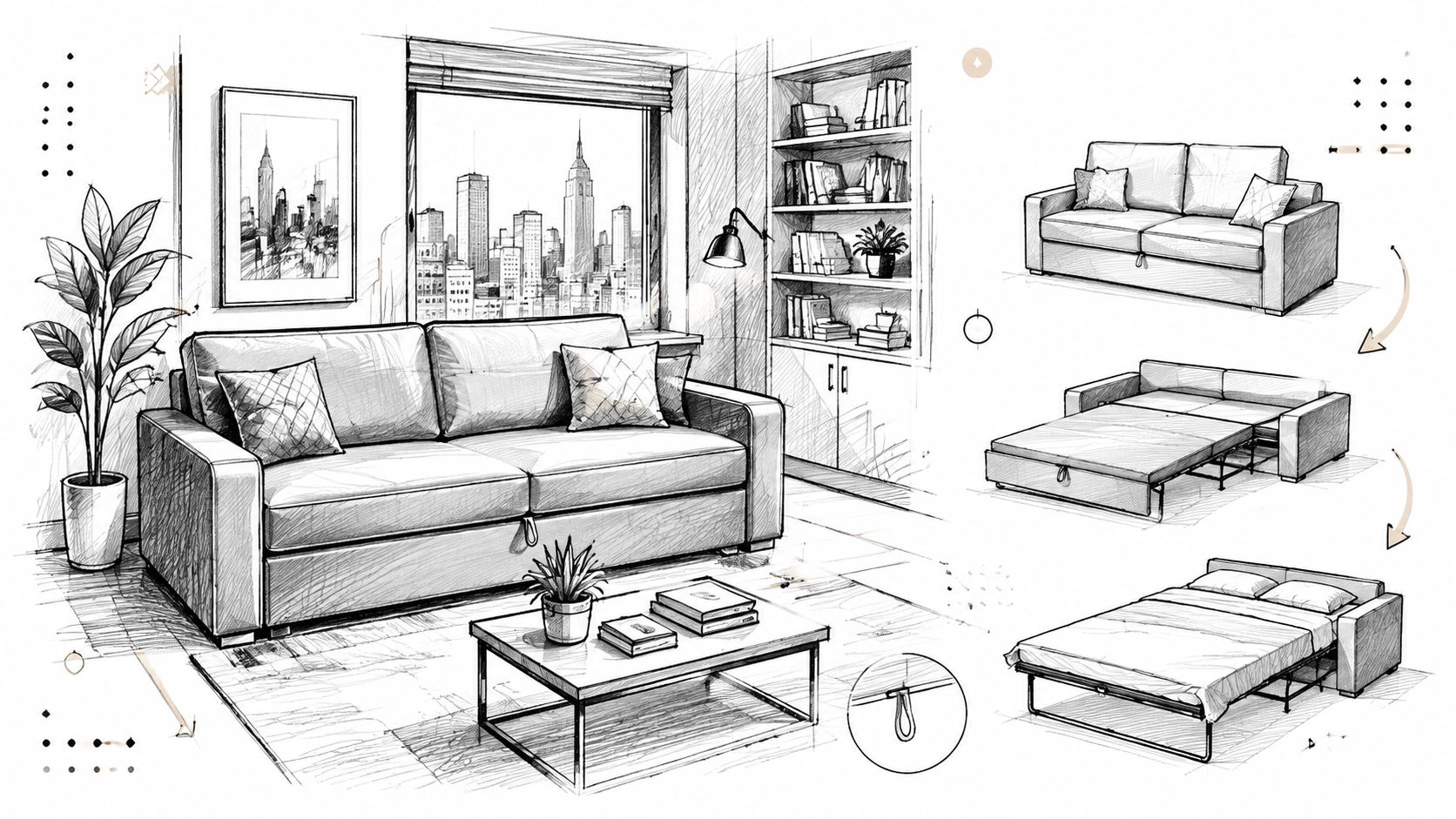
The room has to change jobs
A renter hosting a sibling for a weekend doesn’t need an empty guest room. They need a seating piece that can become a sleep surface without making the apartment unusable. That means conversion speed, mattress support, and open clearance deserve as much attention as upholstery color.
The best fit depends on how often the bed will be used. Occasional guests can tolerate a simpler conversion if the sleeping surface remains supportive. Nightly use demands a stronger frame, a mechanism that won’t become frustrating, and cushions that still feel like a proper sofa during the day. A home office sleeper needs a particularly careful footprint because desk chairs, cabinets, and the open bed compete for the same circulation zone.
The sofa bed should be treated as part of the floor plan from the start, whatever apartment you’re furnishing. Measure the room before browsing styles, then reserve space for the bed in its open position. In a compact apartment, that planning prevents the common mistake of buying around the closed sofa and discovering that the sleeping function works only if furniture is dragged into the hallway.
The category itself was born from this exact problem. Fold-out and convertible sleeping furniture has been solving the “one room, two jobs” problem in dense cities since the early 1900s. The mechanisms have changed a great deal since then, but the urban need has not: one footprint must do more than one job.
Understanding Sofa Bed Types and Mechanisms
Before you worry about upholstery, understand how the bed opens. In a New York apartment, the mechanism determines more than appearance. It affects the floor area needed for conversion, the weight movers must handle through hallways and elevators, and whether the mattress can reach a practical thickness without making the sofa too large. A compact-looking frame can still fail if its opening path conflicts with a door, radiator, or narrow circulation route.
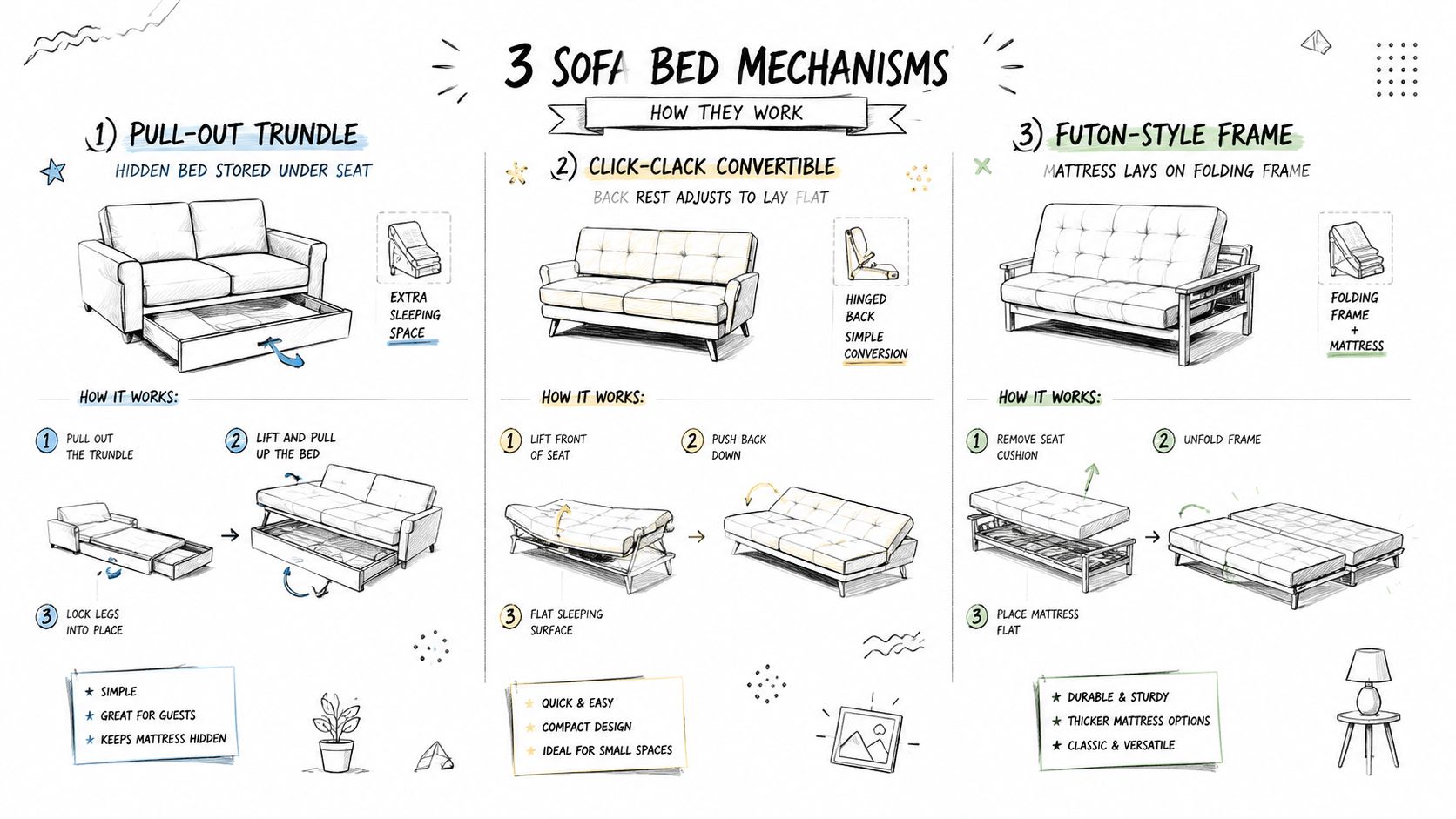
Pullout sleepers
Inside a traditional pullout sleeper, a folded mattress and metal support frame sit beneath the sofa cushions. Remove the cushions, pull or lift the frame forward, and unfold the sleeping surface. The raised bed suits adults who dislike sleeping close to the floor, but the added frame weight increases delivery demands and requires open space directly in front of the sofa.
Operate the mechanism with one hand when possible. It should move without scraping, binding, or dropping suddenly. Confirm that the legs lock firmly and that the mattress folds without catching on the frame. In a tight apartment, an awkward action becomes a daily nuisance, especially when the bed must be opened late at night.
Click-clack and futon frames
Converting a click-clack usually means releasing the backrest and lowering it until the sofa lies flat. The design can take less floor space than a pullout, though it may require clearance behind the frame or around its sides. Its sleeping surface also tends to sit closer to the floor.
Futon-style frames use hinged seat and back sections that fold flat, so the mattress is generally easy to remove or replace. Comfort depends heavily on the mattress and on the spacing of the frame supports. Check the hinges, lift the frame, and confirm that the back locks securely in both seating and sleeping positions. A soft couch without a stable locking frame is not a functional futon.
Upholstery construction also affects long-term behavior. Slipcovered designs are generally easier to clean and refresh, while tight-back constructions tend to hold their shape more consistently after repeated conversion — worth weighing against how the piece will actually be used.
Trundles and concealed chassis
A trundle pulls a second platform from beneath a sofa or daybed. It can create a clean sleeping surface and sometimes adds storage, but the lower platform needs an unobstructed path across the floor. Concealed chassis designs hide the visual signs of a sleeper, while their specialized frames may add weight and make delivery more difficult.
Ask the retailer to demonstrate five points before ordering:
- Release: does the lock disengage without force?
- Travel: does the frame clear rugs, tables, and nearby furniture?
- Support: are the legs, slats, or platforms stable when open?
- Closure: can one person fold it without pinching fabric or fingers?
- Cushions: where will the removed cushions sit overnight?
The mechanism sets the opening path, mattress compatibility, and much of the delivery risk. In dense New York housing, those details determine whether the sofa bed remains practical after it reaches your apartment.
Choosing the Right Size for Your Space
The closed sofa tells only half the story. A sleeper has a second footprint, and that footprint often determines whether the room remains usable after conversion. A loveseat may fit against a short wall, yet its open bed can reach into a kitchen path or prevent a closet door from opening.
The common sleeping surfaces are Twin, 39 by 75 inches, Full, 54 by 75 inches, Queen, 60 by 80 inches, and King, 76 by 80 inches. Those bed dimensions are separate from the sofa’s exterior measurements, so confirm both before ordering. Sofa and futon sizing charts can help you compare mattress dimensions with the frame specifications.
| Size Category | Typical Closed Width | Typical Open Depth |
|---|---|---|
| Loveseat-size sleeper | 60 to 80 inches | 80 to 90 inches |
| Queen-size sleeper | 75 to 85 inches | 85 to 95 inches |
Measure the complete path
Measure the wall where the sofa will sit, then mark the open depth on the floor with painter’s tape. Include the arm width, the position of the front legs, and any space needed to walk around the bed. Don’t measure only from wall to coffee table. Measure to the nearest obstruction, including radiators, desks, media consoles, kitchen counters, and doors.
Delivery measurements matter just as much. Record the width and height of the apartment entrance, the building vestibule, elevator door, elevator interior, hallway, and the tightest turn. For a walk-up, measure stair width and landing depth. Ask whether the sofa arrives assembled, partially disassembled, or boxed, because the package dimensions can differ substantially from the finished piece.
Match size to use
A Twin or compact loveseat sleeper suits an office, alcove, or occasional single guest. A Full offers a broader sleep surface without the open depth of many queen models, making it a practical compromise for a multi-use room. A Queen makes sense when two adults will sleep on it regularly and the room can absorb the larger deployed footprint.
Capacity also follows the size and frame design. Comfort-focused full and queen sleepers often target a combined capacity somewhere in the 500 to 600 pound range, but that specification must be verified for the exact model rather than assumed from the mattress label. A stronger frame doesn’t solve a clearance problem, so size the open bed first, then evaluate construction.
Practical rule: If the open bed blocks the only route through the room, the sofa is too large for that layout, even if it fits perfectly against the wall.
Selecting a Comfortable Mattress Thickness
Mattress thickness sets one of the clearest technical limits in a sleeper. The mattress must fold inside a constrained frame, leave enough room for the mechanism, and still let the sofa close fully. In a New York apartment, that clearance matters because a replacement mattress or topper has few convenient storage options once floor space is already committed.
The practical range for small-apartment sofa beds is about 4 to 6 inches. A 4.5 to 6 inch mattress is commonly workable for regular adult use, while a build under 4 inches generally suits short naps or children better. Mattresses above 6 inches add weight and folding resistance, and the extra bulk can prevent closure on some frames.
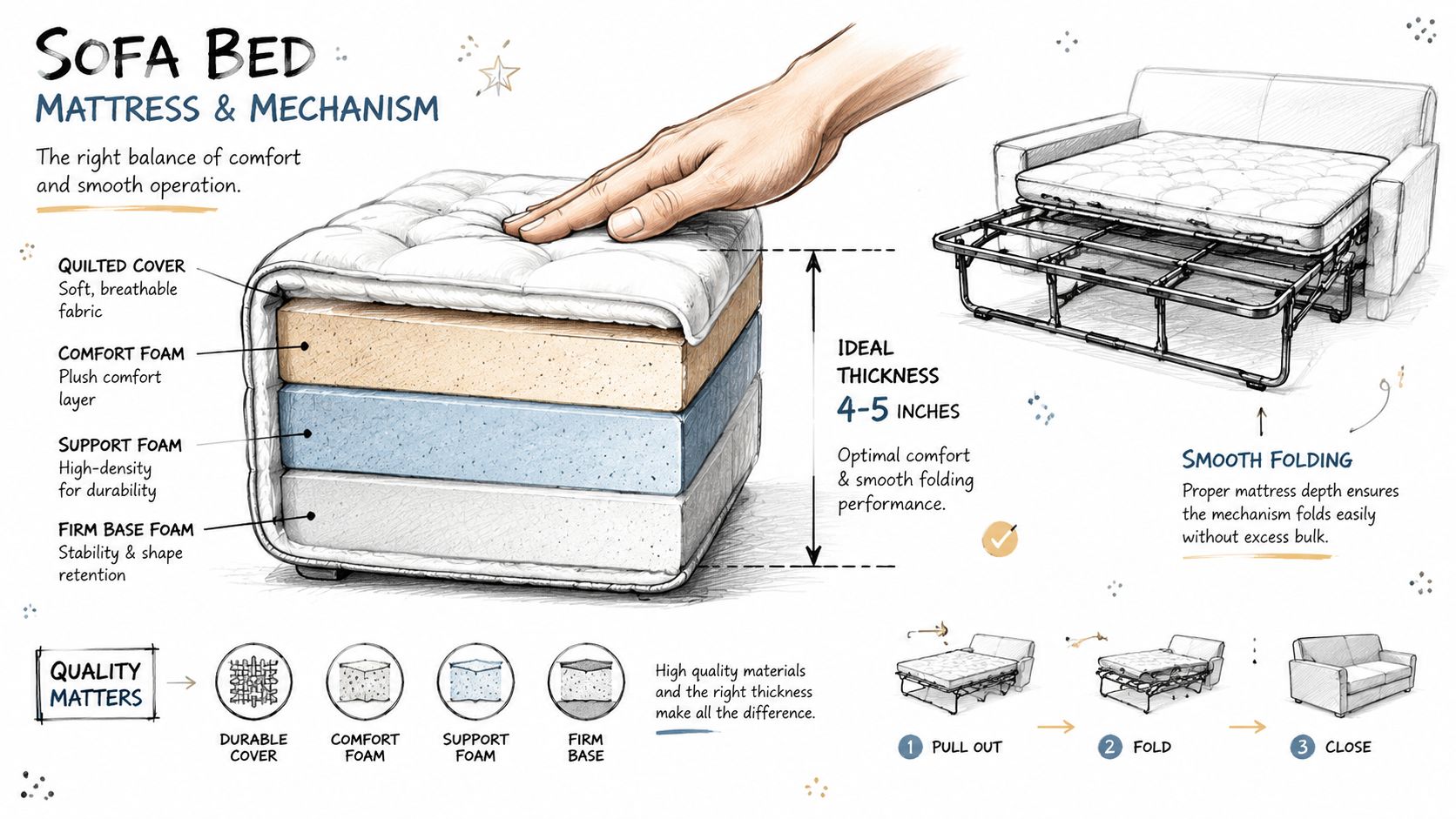
Compare support within the limit
A thinner mattress can perform well when its foam density, layer composition, and platform support are properly matched. A thicker mattress can still feel poor if soft material compresses into metal bars or sags between supports. Evaluate the materials and the structure underneath, not thickness alone.
Traditional pullouts require a folding profile that stays within the manufacturer’s clearance. Click-clack and platform designs can accept different constructions, but their hinges still need to close without excessive compression. Check the exact maximum thickness for the model you are buying. A general recommendation for another frame is not enough.
For replacement options and material details, compare the specifications in convertible sofa bed mattresses. Check the foam composition, coil system if present, cover removal, and compatibility with the existing frame before ordering.
Test for pressure and movement
Lie in the actual sleeping position. Roll from your back to your side, and feel for bars, hinges, gaps, or hard edges beneath your shoulders and hips. Listen for creaks. Then close and reopen the bed yourself, because a salesperson’s smooth demonstration does not show whether the motion suits your height, strength, or apartment routine.
A topper can change the feel, but it requires storage when the sofa is closed and can make conversion harder. If nightly sleep is the priority, choose the mattress and mechanism as a matched package rather than planning to correct a weak sleeper with accessories later.
Evaluating Durability and Upholstery Options
A New York sofa bed handles two kinds of wear. People sit on it every day, and someone may open it repeatedly at night. That combination stresses the seat cushions, hinge areas, seams, legs, and upholstery more than a decorative sofa in a formal room.
The frame deserves inspection before color selection. Hardwood and heavy-gauge metal generally offer a more stable foundation than particle board, but construction quality depends on joinery, bracing, welds, fasteners, and how the moving frame connects to the outer shell. Push the arms, sit near the front edge, and open the bed while listening for shifting or grinding.
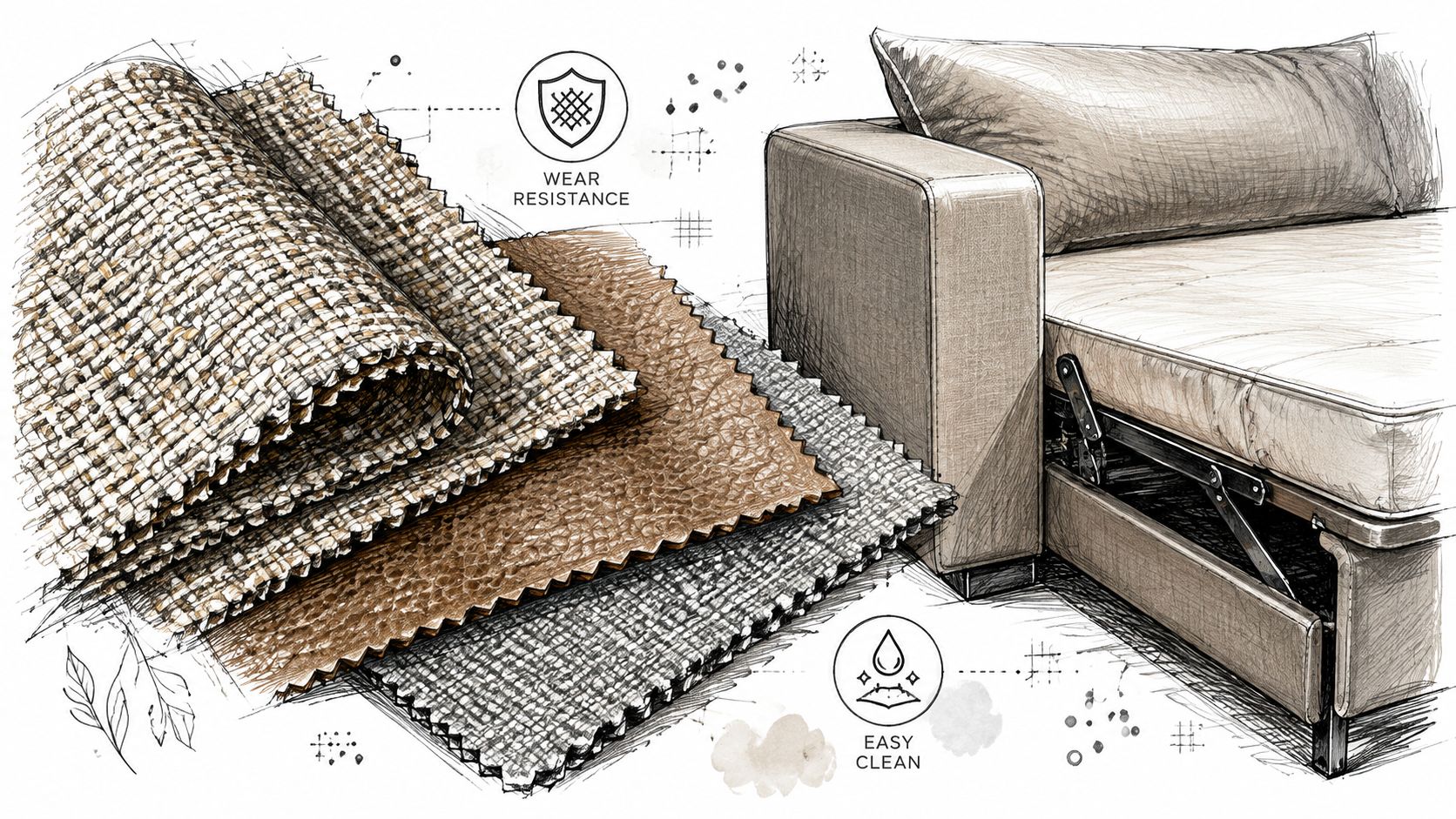
Choose fabric for the household
Microfiber usually feels soft and can disguise minor marks, but its nap can show directional changes. Leather wipes clean and develops character, though scratches and temperature feel may matter in a small apartment. Cotton blends offer a familiar hand and broad styling range, while performance textiles are often chosen for stain resistance and easier maintenance.
A removable cover can be useful when the sofa is doing daily work. Before choosing one, inspect the fastening system and ask whether replacement covers are available.
Inspect the failure points
Look closely at the areas that absorb movement:
- Seat edges: they shouldn’t collapse when you sit near the front.
- Hinges: they should move evenly without exposed pinch points.
- Legs: they need firm attachment and stable contact with the floor.
- Seams: stitching should remain even around arms and corners.
- Cushions: they should return to shape rather than staying compressed.
For fabric-led designs, fabric convertible sofa beds can help narrow the search by upholstery type and conversion format. The key is to judge fabric and frame together. A stain-resistant cover won’t compensate for a mechanism that loosens, and a strong frame won’t make a fabric practical if you can’t clean it.
Buyers with pets or children should favor texture, removable components, and accessible cleaning instructions over delicate finishes. In a rental, neutral upholstery may be easier to live with, but durability comes from the underlying construction, not the color.
Finalizing Your Purchase with Local Considerations
A sofa bed purchase isn’t complete when the order is placed. In NYC, the delivery plan is part of the product decision. A sleeper that arrives fully assembled may be difficult to turn through a narrow hallway, while a model that separates into manageable components may be easier to carry, set up, and remove later.
Confirm building access before payment
Ask the retailer for the boxed dimensions, shipping weight, and largest rigid component. Then compare those measurements with the building entrance, vestibule, elevator, hallway, stair landing, and apartment door. Don’t rely on the phrase “standard elevator.” Older buildings vary, and a few inches at a corner can determine whether the delivery succeeds.
Send the retailer photos of tight turns if the route is complicated. Mention stoops, freight-elevator rules, low ceilings, security desks, loading zones, and restricted delivery hours. A building manager may require advance notice or a certificate of insurance, and the delivery crew needs that information before arriving.
Decide which services you need
White-glove delivery can include bringing the sofa inside, placing it in the room, assembling it, and removing packing debris, but the exact scope varies. Confirm each service in writing. Ask whether the crew will remove an old sofa, dispose of an old mattress, or only remove cardboard and plastic.
Use this checklist:
- Access: verify doors, elevators, stairs, turns, and building rules.
- Preparation: clear rugs, lamps, tables, and wall décor from the route.
- Assembly: confirm whether legs, arms, backs, or the sleeper chassis arrive separately.
- Inspection: open and close the bed before the crew leaves.
- Paperwork: keep the delivery receipt, warranty terms, and return conditions.
- Removal: arrange old-furniture or mattress disposal separately unless included.
Returns require similar care. Ask who pays return shipping, whether an assembled sleeper can be returned, and whether made-to-order upholstery carries different terms. Keep the packaging until you’ve inspected the frame, mattress, seams, and mechanism.
Use local support strategically
Seeing a sleeper in person lets you test the conversion, sit on the edge, inspect the underside, and judge whether the sofa feels too firm for daytime use. A local showroom can also help compare formats without guessing from photographs. For shoppers who want to visit before ordering, Futonland store locations provide a starting point for finding a nearby showroom and discussing space-saving furniture options.
The right sofa bed NYC purchase is the one that survives the entire chain, from showroom test to building entrance to nightly conversion. Measure first, choose the mechanism and mattress together, and put delivery requirements in writing before you pay. If you’re furnishing a New York apartment now, sketch the open footprint on the floor, record every tight measurement, and take that information to a local sleeper specialist before selecting a frame.