Small Space Living Room Furniture Ideas: Clever Pieces For Style And Storage
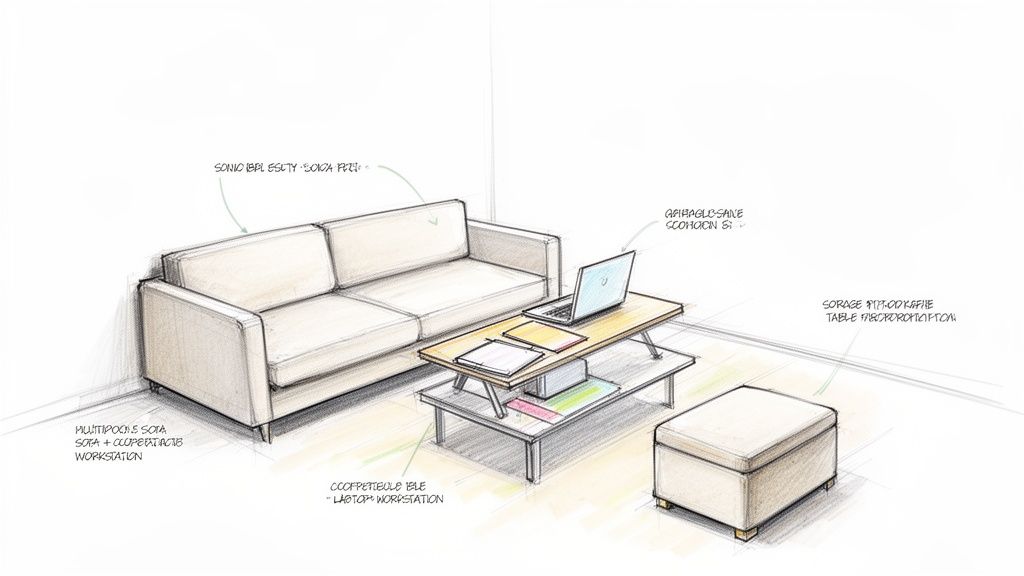
When you’re trying to furnish a small living room, the secret is to choose smart, multifunctional pieces. You want things that save space without killing your style. This means thinking beyond the usual suspects and embracing furniture that works harder, like convertible sofa beds, coffee tables with lift-tops that become workstations, and nesting side tables. This approach can take a cramped room and turn it into a hub that’s actually functional and versatile.
Rethinking Your Small Living Room Layout
Designing for a small living room isn’t just about filling the space; it’s about making every single square inch work for you. Before you even think about individual pieces, take a step back and consider the room’s main purpose. How does it need to function day-to-day? Is it going to be a home office, a guest room, a dining area, and a place to relax all rolled into one?
This is exactly where multifunctional furniture becomes your best friend. These pieces are the true heroes of compact living, designed to wear multiple hats and adapt as your needs change. A stylish futon sofa can easily fold out into a comfortable bed for guests, while a sleek ottoman can offer extra seating and hide away blankets or magazines.
The Power of Dual-Purpose Design
The market for this kind of furniture is absolutely booming. The global multifunctional furniture market was valued at around US$7.21 billion in 2023 and is expected to grow by 6.6% every year through 2030. For you, this means a flood of incredible small space living room furniture ideas, from slim sectionals with hidden storage to nesting tables that can replace a single, bulky coffee table.
The best furniture for small living rooms pulls double duty. A lift-top coffee table isn’t just a surface; it’s your dining table and desk. A sleeper sofa isn’t just for seating; it’s your guest suite.
When you start planning your layout, getting the measurements right is everything. It’s not just about what physically fits, but how the room feels with the furniture in it. Start by carefully measuring your room, making sure to account for traffic flow. Then, figure out the maximum size your main anchor pieces can be. A great place to start is by reviewing our furniture sizing charts to get a feel for what will work without overwhelming the space.
To make things a bit easier, here’s a quick look at some key furniture pieces and how they solve common challenges in compact living rooms.
Essential Multifunctional Furniture for Small Spaces
| Furniture Piece | Primary Use | Space-Saving Solution |
|---|---|---|
| Sleeper Sofa/Futon | Seating | Doubles as a guest bed, eliminating the need for a separate guest room. |
| Lift-Top Coffee Table | Surface for drinks/décor | Rises to become a dining table or a comfortable workstation. |
| Storage Ottoman | Footrest or extra seat | Provides hidden storage for blankets, remotes, and other clutter. |
| Nesting Tables | Side tables | Can be spread out when needed or stacked to save floor space. |
| Wall-Mounted Shelves | Display and storage | Utilizes vertical space, keeping the floor clear and open. |
These pieces aren’t just about saving space; they’re about adding functionality and making your living room a more adaptable and comfortable place to be, no matter its size.
Choosing Your Anchor Piece: The Convertible Sofa
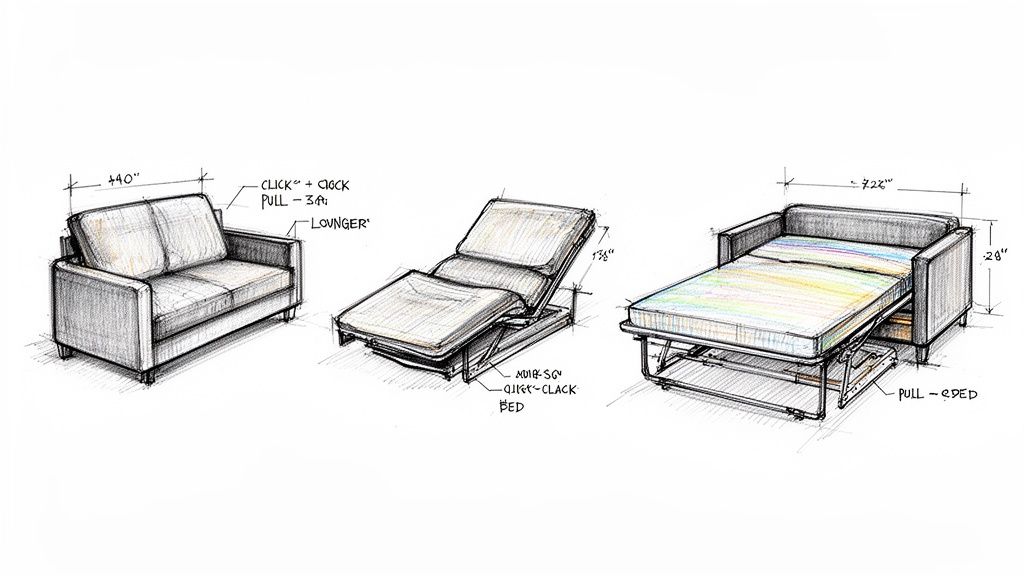
[Image demonstrating the conversion mechanisms of a click-clack futon, a pull-out sleeper, and a sleeper sectional]
In a small living room, your sofa isn’t just a place to sit; it’s the anchor for the entire space. It has to be the hardest-working piece you own, ready to go from a daytime lounge spot to a comfortable bed at a moment’s notice. This is where convertible sofa beds really shine, offering one of the most practical small space living room furniture ideas out there.
Forget the lumpy, unforgiving sofa beds of the past. Today’s market is full of sophisticated designs that look just as good as they feel, so you don’t have to sacrifice a chic living room for a good night’s sleep.
Decoding Convertible Sofa Mechanisms
Your first big decision is the mechanism. The way your sofa transforms from seating to sleeping impacts its ease of use, comfort, and even how much floor space it takes up when fully open. Think about its primary job—is this for the occasional overnight guest or a bed you’ll be using every night?
Here’s a quick rundown of the most common types:
- Click-Clack Futons: These are the definition of straightforward. The backrest simply “clicks” down to lie flat, creating a bed. They’re a perfect fit for seriously tight spaces and often come with a friendlier price tag.
- Pull-Out Sleepers: This is the classic design you’re probably familiar with. You remove the seat cushions and pull out a folded mattress from inside the sofa’s frame. These often give you a more traditional mattress feel.
- Sleeper Sectionals: Many modern sectional sofas have a secret. A hidden trundle can be pulled out from underneath, rising to meet the cushions and forming a surprisingly spacious bed. They’re fantastic if you need to host more than one person.
Balancing Comfort for Day and Night
The real challenge is finding that sweet spot between a comfy couch and a supportive bed. A sofa that feels amazing to sink into for a movie marathon might not offer the right support for eight hours of sleep.
Pro Tip: When you’re shopping, don’t be shy. Test the sofa in all its positions. Sit on it, lie down on it, and work the mechanism yourself. The right piece will feel just as good for lounging as it does for sleeping.
Look for models with high-density foam or innerspring mattresses, as they provide much better sleep support. The fabric choice matters, too. For a piece that sees this much action, a durable, easy-to-clean material like microfiber or a tight-weave polyester blend is a smart investment.
And my final piece of advice: measure your space twice. First for the sofa in its upright position, and then again for when it’s fully extended as a bed. You need to make sure you can still walk around it without creating a roadblock.
Finding Supporting Furniture That Works Harder
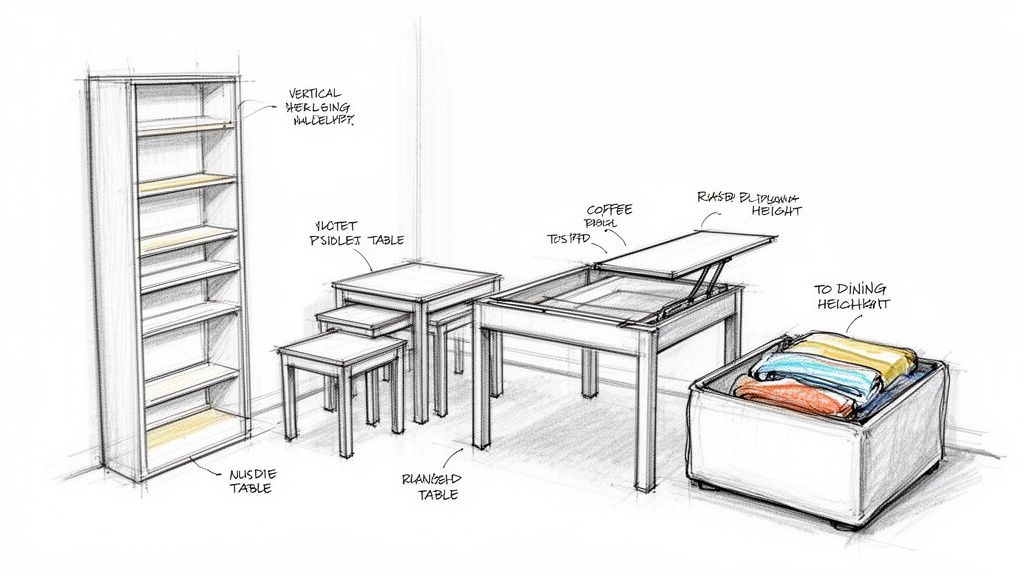
Once your convertible sofa is in place, every other item in the room needs to earn its keep. There’s just no space for single-use furniture in a small living room. The supporting cast—from the coffee table to the shelving—has to pull double or even triple duty, adding function without adding clutter.
This is where you can get really clever with your small space living room furniture ideas. Instead of a standard coffee table, look at a lift-top model. These things are brilliant; in seconds, they go from a place for your remote to a dining table or a surprisingly comfortable workstation.
Maximizing Every Corner
That same multi-use mindset applies to side tables, too. Why get one bulky end table when a set of nesting tables gives you so much more flexibility? You can spread them out for guests to use or tuck them away to open up the floor.
Another game-changing strategy is to think vertically. Wall-mounted or vertical book shelves use that often-ignored space above our heads, giving you storage and display spots without eating up a single inch of the floor. It’s a classic trick that not only keeps the room feeling open but also creates the illusion of higher ceilings.
By selecting pieces that can adapt, stack, or store, you’re not just furnishing a room; you’re building a system that responds to your needs. The goal is to make your furniture work for you, not the other way around.
The Unsung Hero of Small Spaces
If there’s one piece that perfectly captures this workhorse mentality, it’s the storage ottoman. It’s a true triple-threat: a comfy footrest, an extra seat when company comes over, and a hidden spot to stash blankets, games, or magazines. Take a look at the range of storage ottomans to see just how much clutter they can solve.
This move toward smarter, harder-working furniture isn’t just a fleeting trend; it’s a direct response to how we live now. Apartments are getting smaller, and people are looking for these clever, compact solutions. Incorporating storage-focused furniture is a practical way to keep a small space organized and stylish.
Using Visual Tricks To Create More Space
The furniture you pick is only half the battle; how you arrange it can make your room feel twice as large. Mastering a few simple design secrets will visually open up your living area, making it feel brighter and more spacious. These are the little details that turn good small-space furniture ideas into a room that’s both beautiful and genuinely functional.
One of the easiest yet most powerful tricks is choosing furniture with exposed legs. When sofas, chairs, and tables are raised off the ground, your eye can travel uninterrupted across the floor, which instantly makes the room feel bigger and airier. It’s a small change that keeps furniture from looking too heavy or bulky.
The Power of Profile and Shape
The silhouette of your furniture makes a huge difference. Low-profile sofas, for instance, are a fantastic choice because they trick the eye into thinking the ceilings are taller. By keeping the main furniture pieces low to the ground, you create a sense of vertical space that wasn’t there before.
Another smart strategy is to embrace curves. Trend data shows that 43% of designers are highlighting curvy furniture as a key look. This isn’t just about style—it’s incredibly practical for tight quarters. A sofa with rounded corners softens the room’s hard angles and improves traffic flow, making the space feel less boxy and more inviting.
The goal is to reduce visual weight. Think airy, light, and open. Furniture that lets you see the floor and walls behind it will always make a small room feel larger than one filled with solid, blocky pieces.
To push this feeling of openness even further, bring in some decorative elements that work for you, not against you. Browsing our collection of mirrors is packed with options that can bounce light around and visually double your space. Adding reflective surfaces can amplify this effect even more, creating an illusion of depth that makes any small living room feel more spacious and welcoming.
Arranging Your Furniture For Better Flow
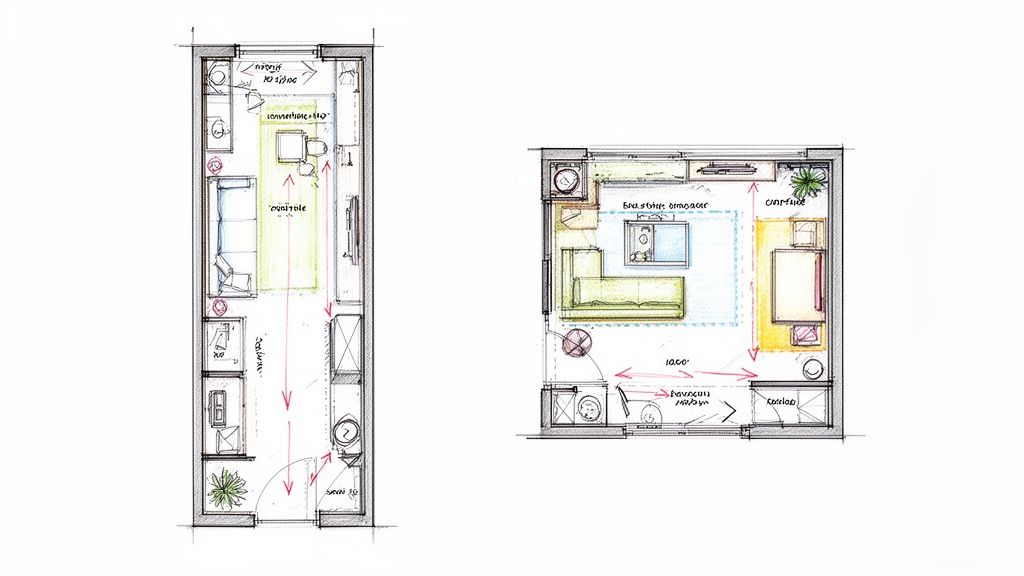
Once you’ve picked out the right pieces, the next puzzle is figuring out where everything should go. A smart layout can make a small room feel surprisingly open and organized, while a bad one turns it into a cluttered obstacle course you have to navigate every day. The main goal here is simple: create clear pathways so you can move around without bumping into things.
As a rule of thumb, I always recommend leaving at least 24 to 30 inches for any major traffic routes. This ensures you’re not constantly squeezing past furniture just to get across the room. Before you start dragging heavy sofas around, it’s a huge help to sketch a quick floor plan on paper or play around with an online room planner. It saves a ton of backache.
Creating Functional Zones
Even in a tiny space, you can carve out distinct zones for different activities, like lounging, reading, or working. One of the best tools for this is a simple area rug. It works wonders to visually anchor your main seating area, separating it from the rest of the room. Try placing just the front legs of your sofa and accent chairs on the rug to pull the whole conversational grouping together.
Don’t make the classic mistake of pushing all your furniture flat against the walls. Pulling your sofa even a few inches away from the wall creates a sense of breathing room and tricks the eye into thinking the space is larger than it is.
Think about how the shape of your room affects the layout. If you’re dealing with a long, narrow room, the last thing you want is a “bowling alley” look with all the furniture lined up on the long walls. A better approach is to break the space into two smaller zones—maybe a cozy seating area at one end and a small reading nook or workspace at the other.
Common Layout Solutions
Here are a couple of common tricky room shapes I see all the time, and some go-to ways to handle them:
- The Small Square Room: Instead of lining the walls, try “floating” a small sofa in the center of the room, facing the main focal point (like a window or TV). You can place a narrow console table behind it and add two small accent chairs opposite the sofa. This creates a really balanced and inviting layout that feels intentional.
- The Long, Narrow Room: Position your sofa against one of the shorter walls to counteract the room’s length. A round coffee table can help soften all the linear angles, and placing an armchair at a slight angle will break up those long lines and improve the overall flow.
Common Questions About Small Space Furniture
When you’re trying to furnish a small living room, a lot of questions come up. It’s totally normal. Getting the right answers helps you feel confident in your choices, so let’s clear up a few of the most common ones.
What Is The Most Important Piece Of Furniture For A Small Living Room?
Hands down, it’s a multifunctional sofa. Think about a convertible futon or even a sleeper sectional that comes with built-in storage.
This one piece of furniture solves your two biggest problems: where to sit and where guests can sleep. You get maximum function out of a minimal footprint, especially if you pick a model with a clean, streamlined profile.
How Can I Make My Small Living Room Look Bigger Without Buying New Furniture?
This is all about creating an illusion of space. A few classic tricks work wonders.
Mirrors are your best friend here; they bounce light around and add a surprising amount of depth. Sticking to a light color palette for your walls, rugs, and curtains also makes a huge difference. The goal is to make the entire area feel brighter and more open by maximizing both natural and artificial light.
Pro Tip: Look at your existing furniture. Pieces with exposed legs, like you see in mid-century modern designs, let you see the floor underneath. That simple visual trick creates a sense of openness that heavy, blocky furniture just can’t match.
Are Modern Futons Comfortable Enough For Everyday Use?
Absolutely. Futons have come a long, long way from the thin pads you might be picturing.
Today’s high-quality futon mattresses are often made with advanced materials like innersprings or memory foam, giving them a level of comfort that’s right up there with traditional sofas. When you pair a great mattress with a sturdy, stylish frame, you get an incredibly practical piece that’s perfect for both daily sitting and sleeping.
Of course, getting the size right is a huge part of comfort. For a full breakdown of measurements, our furniture sizing charts will make sure you get the perfect fit for your room.
At Futonland, we specialize in finding the perfect furniture to fit your space and lifestyle. Explore our collection of living room furniture, storage solutions, and more today!