


The Ultimate Guide to Queen Futon Beds
Queen futon beds are a brilliant two-for-one deal for any home, perfectly merging a comfy sofa with a roomy guest bed. They’ve become the go-to for anyone trying to squeeze a little more life out of their square footage, giving you all the comfort of a queen bed without hogging the floor space 24/7.
The Smart Solution for Modern Living Spaces
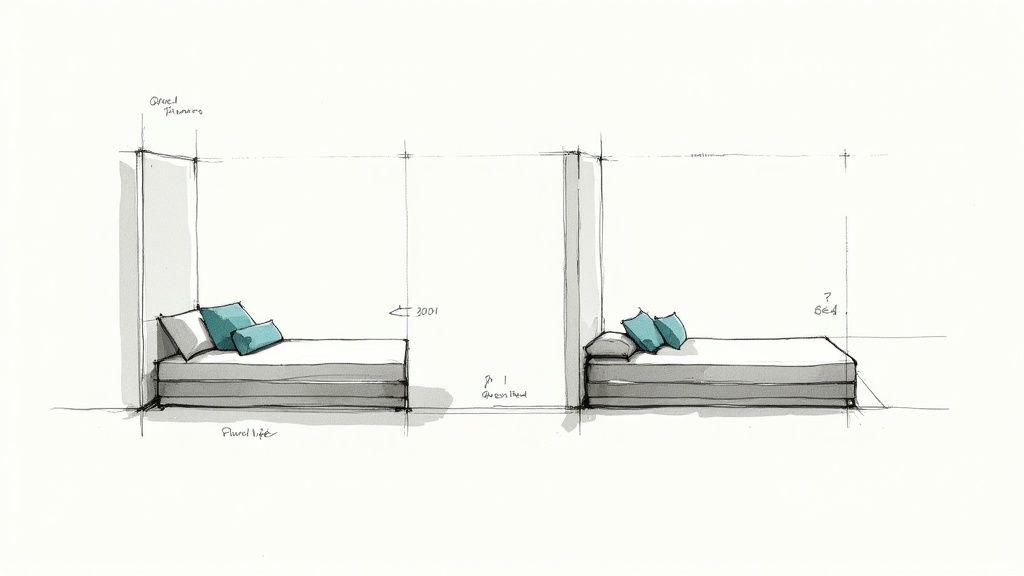
Struggling to find furniture that can keep up with your life? You’re not alone. The biggest challenge in so many homes today—whether it’s a studio apartment or a spare room that doubles as an office—is making the space flexible. Queen futon beds are designed to solve exactly that problem.
By day, your futon is a stylish sofa, perfect for kicking back with a book or having friends over. When it’s time to call it a night, it smoothly converts into a queen-sized bed with plenty of room for one or two people. You get a guest room on demand, without actually needing a dedicated guest room. It’s this dual personality that truly unlocks a room’s potential.
Why Choose a Queen Futon Bed?
The real magic of a queen futon bed is its ability to adapt. A traditional bed is a permanent fixture, taking up a huge chunk of real estate. A futon, on the other hand, gives you that floor space back when you need it most.
This makes it a fantastic fit for:
- Small Apartments: Where one room has to be the living room, bedroom, and office.
- Home Offices: Instantly create a welcoming guest space without giving up your desk.
- Multi-Use Guest Rooms: Let the room be a den, playroom, or workout area that’s always ready for overnight visitors.
This isn’t just a fleeting trend; it’s a direct response to how we live now. The global futon mattress market hit about USD 7.2 billion in 2024 and is expected to climb to USD 12.2 billion by 2033. That growth is fueled by city living and the need for smart, space-saving furniture.
A queen futon bed isn’t just furniture; it’s a strategic investment in your home’s functionality. It’s a piece that molds to your needs, offering everyday comfort and pop-up hospitality all in one.
To make sense of all the options out there, we’ve put together a quick reference guide. It breaks down the most important factors, from mattress types to frame mechanisms. You can also dive into our full collection of stylish and durable futons to find your perfect match.
Queen Futon Bed Quick Reference Guide
To simplify your decision, this table highlights the key things to think about when choosing your queen futon bed.
| Consideration | Key Factors to Evaluate | Best For |
|---|---|---|
| Space & Size | Frame dimensions (open & closed), clearance for conversion | Apartments, multi-use rooms, home offices. |
| Mattress Type | Foam, innerspring, latex, organic materials | Daily sleepers, occasional guests, back support. |
| Frame Style | Wood or metal, bi-fold or tri-fold mechanism | Modern aesthetics, classic decor, long-term durability. |
| Usage | Daily sleeping vs. occasional guest use | High-traffic areas, primary beds, dedicated guest rooms. |
This guide should give you a solid starting point for finding a futon that not only fits your space but also fits your life.
Getting the Dimensions Right for Your Space
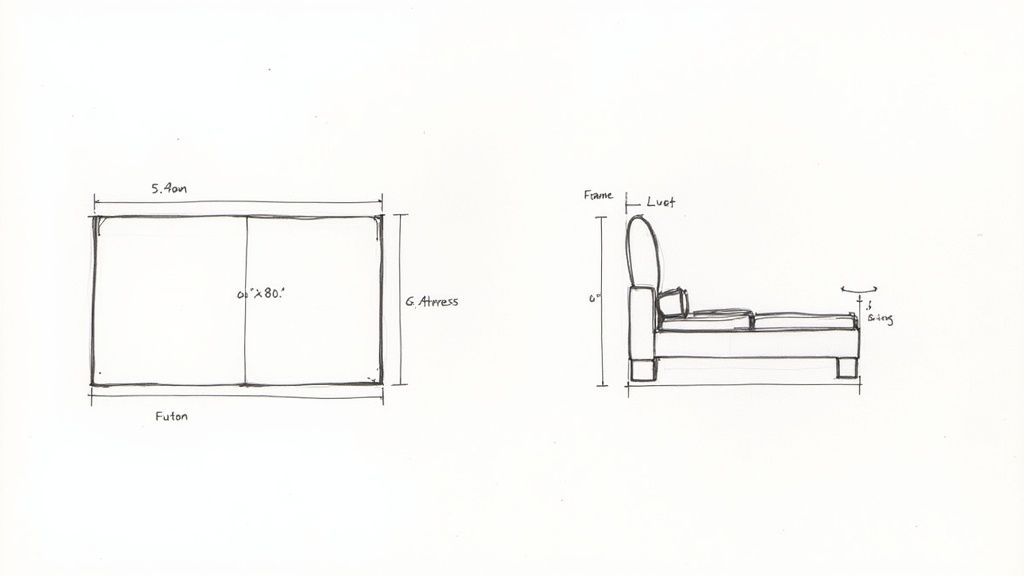
We’ve all been there—you find a piece of furniture that looks perfect in the showroom, but once it’s home, it completely swallows your room. It’s a classic mistake, but one you can easily sidestep by understanding that a futon’s size is about much more than just the mattress.
A standard queen futon mattress is always 60 inches wide by 80 inches long, but the frame is where things get tricky. Think of the frame as the border around a painting; the art itself is a set size, but a big, ornate frame can dramatically increase its overall dimensions. A sleek, armless metal frame will have a much smaller footprint than a solid oak frame with chunky, decorative arms.
This is especially important with a futon because you’re dealing with two different footprints: its size as a sofa and its size as a bed. Forgetting to account for both is the number one reason people end up with a piece that just doesn’t work in their space.
Measure Twice, Buy Once
To make sure your new queen futon is a perfect fit, grab a tape measure and run through these quick steps. A few minutes of measuring now will save you a major headache on delivery day.
- Measure for the Sofa Position: Figure out where the futon will live in its upright sofa form. Measure the frame’s total width (arm to arm) and depth. You’ll want to leave at least 24-30 inches of open space around it for comfortable foot traffic.
- Measure for the Bed Position: Next, measure its fully opened dimensions as a bed. Check the total length from the back of the frame to the front edge of the mattress, as this is often more than the mattress’s 80 inches. When it’s open, will it block a doorway, a closet, or a major walkway?
- Account for Conversion Clearance: Don’t forget the space you need to actually open the futon. Most mechanisms need a few inches of clearance behind them to let the backrest drop down smoothly. Having to drag a heavy sofa away from the wall every night is a hassle you can easily design around.
Remember: The overall frame size is always larger than the mattress size. Always check the product specifications for the frame’s total dimensions in both its sofa and bed configurations before you buy.
Visualizing Your Futon’s Footprint
Here’s a great pro tip: use painter’s tape to outline the futon’s dimensions on your floor. Mark out the sofa footprint first, then extend the tape to show where it will land as a bed. This simple trick gives you a real-world visual of how the futon will fit in with your other furniture and pathways.
Taking these measurements ensures you’ll choose a queen futon that complements your room instead of consuming it. For a more detailed breakdown of different frame styles and their typical measurements, check out our comprehensive futon sizing charts to find the perfect match.
Finding The Perfect Queen Futon Mattress
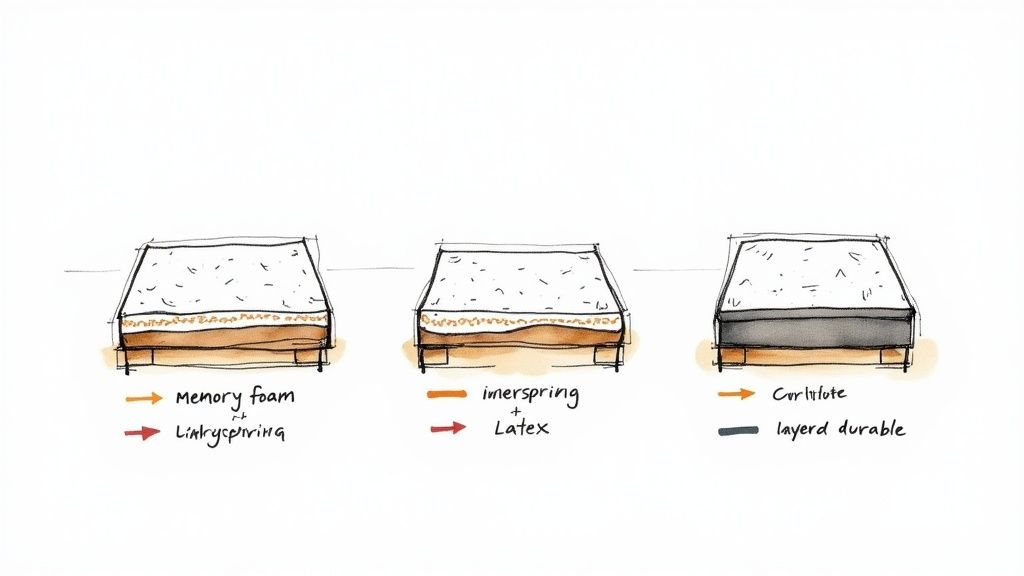
The frame might be the skeleton, but the mattress is the heart and soul of any queen futon bed. This is where your comfort is won or lost. Think of it like buying tires for your car; some are designed for a quiet, smooth highway ride, while others are built for rugged durability. The same logic applies here.
Choosing the right one means going beyond a simple list of materials. It’s about understanding how each one feels and performs day-to-day. Whether you need a plush surface for occasional guests or a rock-solid foundation for nightly sleep, the mattress core will make all the difference.
Decoding The Core Materials
What’s inside a queen futon mattress determines everything—from its bounciness and support to how it holds up over time. Each material offers a completely different experience. Let’s break down the most common options you’ll find.
- Memory Foam: Famous for its signature body-hugging feel, memory foam conforms to your shape, delivering fantastic pressure relief. This makes it a great choice for side sleepers or anyone who needs extra cushioning for their hips and shoulders.
- Innerspring Coils: If you prefer a more traditional, responsive feel with some bounce, this is it. The network of steel coils provides firm support and promotes airflow, which is a huge plus for keeping the mattress cool all night long.
- Latex: Often seen as a premium option, latex gives you the best of both worlds: contouring comfort and responsive support. It’s also naturally hypoallergenic and incredibly durable, resisting sagging far better than many other materials.
- Cotton and Foam Blends: The classic futon choice. These mattresses combine layers of dense cotton with foam cores for a firm, supportive surface that’s perfect for sitting. They’re a budget-friendly option, though they can compress over time with daily use.
Comparing Queen Futon Mattress Types
Choosing the right material can feel overwhelming. This table breaks down the key differences to help you find the best fit for your comfort needs and budget.
| Mattress Type | Feel & Comfort | Durability | Best for Daily Use? | Price Range |
|---|---|---|---|---|
| Memory Foam | Body-contouring, pressure relief | Good | Yes, especially thicker models | $$ – $$$ |
| Innerspring | Bouncy, responsive, traditional feel | Very Good | Yes | $$ – $$$ |
| Latex | Responsive, supportive, and cool | Excellent | Yes, a top-tier choice | $$$ – $$$$ |
| Cotton/Foam Blend | Firm, supportive, classic futon feel | Fair to Good | Better for occasional use | $ – $$ |
Ultimately, the right choice comes down to how you’ll use the futon and what feel you prefer. For a daily sleeper, investing in a durable innerspring or latex model is a smart move. For a guest room, a quality foam blend often does the trick.
The Critical Role of Mattress Thickness
The thickness of your futon mattress is a delicate balancing act. You need enough cushion for sleeping comfortably but not so much that it’s a wrestling match to fold the frame.
A mattress in the 8- to 10-inch range is the sweet spot for a queen futon that gets frequent or daily use. This thickness allows for substantial support layers—like robust innersprings or dense foam—that can easily compete with a traditional bed.
For a futon that’s mainly a sofa and only hosts occasional guests, a slightly thinner 6- to 8-inch mattress will be perfectly fine and much easier to manage.
When in doubt, lean toward a thicker mattress. The boost in sleep quality almost always outweighs the little bit of extra effort it takes to convert the frame. A good night’s sleep is the real goal here.
The rising popularity of queen futon beds, especially in cities, has pushed manufacturers to get creative. In fact, queen size futon mattresses make up over 55% of total revenue in the global futon mattress market, showing just how dominant they are in space-conscious homes. This demand is why we’re seeing more options in eco-friendly materials and ergonomic designs, with the market segment projected to grow at 5.8% annually through 2033. You can read more on these futon market trends at MarketIntelo.com.
Daily Sleeper vs. Guest Bed: Which Mattress Is Right?
How you plan to use your futon is the single most important question to answer. A mattress that feels great for a weekend guest might not deliver the support needed for restorative sleep, night after night.
- For Daily Sleeping: Your priorities should be durability and support. Don’t skimp here. A high-quality innerspring, latex, or thick memory foam mattress is a worthy investment. These are built to handle nightly use without developing dreaded lumps or sags.
- For Occasional Guests: Comfort is still important, but you have more wiggle room. A good quality foam blend or a mid-range memory foam mattress will give your visitors a comfortable spot without the premium price tag of a daily-use model.
Ultimately, the “right” feel is a personal journey. You can explore a wide variety of queen futon mattresses to compare different materials and find the perfect match for your home and lifestyle.
How to Choose the Right Frame and Style

While the mattress is the heart of your comfort, the frame is the hardworking foundation that defines your queen futon bed’s style and function. A great frame gives you essential support, makes switching from sofa to bed a breeze, and ties the whole piece into your room’s decor. Picking the right one means looking at both its material and its mechanics.
The frame you choose is more than just a base; it’s a piece of furniture that needs to stand up to daily life. The two most common options—hardwood and metal—each bring their own strengths in looks and durability. This is your first big decision.
Hardwood vs Metal Frames
The frame material you pick has a huge impact on the look, feel, and lifespan of your futon. Hardwood frames, often made from oak, maple, or cherry, have a classic, substantial presence. They’re incredibly sturdy and are usually the best choice if your futon will be your main sofa or bed.
Metal frames, on the other hand, offer a more modern and lightweight alternative. Their clean, minimalist lines are perfect for contemporary or industrial-style rooms. While they are often more budget-friendly, a well-made metal frame can still provide reliable support for years.
- Hardwood Frames: Known for their timeless appeal and tough construction. They’re ideal for high-traffic areas and daily use.
- Metal Frames: Offer a sleek, modern look and are often more affordable and easier to move.
Ultimately, it comes down to your personal style and how you plan to use your futon. It’s a good idea to explore different futon frames to see how these materials translate into various designs.
Understanding Bi-Fold and Tri-Fold Mechanisms
The mechanism is the clever engineering that lets your futon transform from a sofa to a bed. The two main types are bi-fold and tri-fold, and knowing the difference is key for planning your space.
Think of it like folding a map. A bi-fold frame folds the mattress in half, right down the middle. This simple, strong design creates a full-depth sofa seat and a standard bed height, making it the most common—and comfortable—choice for a queen futon bed you’ll use every day.
A tri-fold frame folds the mattress into three sections. This design is more compact and often creates a lounger-style seat. While it saves floor space when it’s a sofa, the mattress is usually split into a seat and a separate ottoman-like piece, which can be less ideal for everyday sitting.
For a queen futon that’s your primary sofa or bed, a bi-fold mechanism is almost always the better choice. It offers a more traditional sofa feel and better mattress support. A tri-fold is a space-saving specialist, best for smaller rooms where lounging is the main goal.
This dual-functionality is a huge reason why queen futon beds are major players in the global sofa bed market, an industry valued at roughly USD 8.9 billion in 2024. In North America, which holds a 38% market share, the demand for furniture that maximizes compact living spaces drives over 52% of all sofa bed purchases.
While many futon frames are designed for DIY assembly, some people prefer to use professional furniture assembly services for a perfect, hassle-free setup, especially with heavier hardwood models. By carefully considering the frame’s material and mechanism, you can make sure your new futon isn’t just a beautiful piece of furniture, but a perfectly functional solution for your home.
Keeping Your Futon Bed in Great Condition
When you invest in a queen futon bed, you’re bringing a seriously versatile piece of furniture into your home. And just like any other quality piece you own, it’ll perform best with a little routine care. A simple maintenance plan is all it takes to protect that investment, ensuring it stays comfortable and looks fantastic for years.
We’re not talking about complicated upkeep here—just a few simple, proactive steps. By dedicating a few minutes each month to the mattress and frame, you can head off common issues like lumps, squeaks, and sticking mechanisms. Think of it as a quick tune-up that keeps your futon feeling and working like new.
Essential Mattress Care
The mattress is the heart of your futon’s comfort, and keeping it fresh is incredibly simple. The main goal is to prevent moisture from building up and to make sure the filling wears evenly. Without a bit of attention, any mattress can eventually develop indentations or musty odors.
Your best tool for this is a simple rotation schedule.
- Flip and Rotate Monthly: Once a month, just flip the mattress over and give it a 180-degree turn (head to foot). This simple action distributes weight and compression evenly, stopping those permanent dips from forming where you sit or sleep the most.
- Airing It Out: Every few months, pull the mattress off the frame entirely and lean it against a wall for a few hours. This allows air to circulate all around it, wicking away any trapped moisture and keeping it smelling fresh.
Proper mattress care is non-negotiable if you want it to last. Consistent flipping and airing prevent the natural fibers and foam from compacting—the number one cause of uncomfortable lumps and premature wear.
A protective cover is another must-have. A removable, machine-washable cover is your first line of defense against spills, dust, and general wear and tear. Trust us, it’s a whole lot easier to toss a cover in the laundry than to spot-clean the mattress itself.
Frame and Mechanism Upkeep
The frame is the supportive skeleton of your queen futon, and its moving parts need a little attention now and then to keep operating smoothly. A few quick checks can stop minor annoyances from turning into bigger problems.
Whether you have a wood or metal frame, get in the habit of checking all the bolts and screws. The constant motion of converting the futon from a sofa to a bed can sometimes work the hardware loose. Hand-tighten anything that feels wobbly to keep the frame stable and silence any squeaks.
For cleaning, a soft, damp cloth is really all you need for either material. Steer clear of harsh chemical cleaners, as they can strip the finish on both wood and metal frames. To keep the conversion mechanism working flawlessly, a light spray of silicone lubricant on the hinges or rollers once a year will ensure a smooth, effortless transition every time. This one simple step prevents that frustrating sticking or grinding that can happen over time.
Styling Your Futon for Comfort and Decor
A queen futon bed is a master of function, but its form is where your personal style really gets to shine. With the right accessories, you can take this practical piece from a simple convertible sofa to an inviting centerpiece that pulls the whole room together. It’s all about layering textures, colors, and a few key comfort-enhancing elements.
The best place to start is with the single most impactful accessory a futon can have: the cover. Think of the futon cover as the outfit for your furniture. It’s your chance to introduce a bold pattern, a calming neutral, or a rich texture like corduroy or faux suede. A quality cover does more than just look good; it’s also a crucial protective layer, guarding your mattress against spills, dust, and daily wear.
Choosing the Perfect Cover
A new cover can instantly change the entire mood of a space. To really personalize your futon bed and refresh its look, consider exploring options from a diverse collection of futon sofa bed covers. When you’re picking one out, think about both the look and the practical side of things.
- Fabric Choice: A durable cotton or denim cover is a smart pick for high-traffic areas, while something like a soft microsuede adds a touch of luxury.
- Color and Pattern: Do you want your futon to blend in or stand out? A solid, neutral color creates a calm backdrop, while a sharp geometric pattern or a vibrant hue can make the futon a true focal point.
- Ease of Care: Always look for covers that are machine-washable. This small detail makes cleanup incredibly simple and keeps your futon looking its best without any fuss.
Boosting Comfort with a Topper
While the futon cover handles the style, a mattress topper is all about upgrading the comfort. This is a game-changer, especially if your queen futon bed gets a lot of use for sleeping. Adding a topper is the secret to making your futon feel less like a temporary fix and more like a luxury bed.
A 2- to 3-inch memory foam or plush fiberfill topper can dramatically soften the sleeping surface, giving you extra cushioning and support right where you need it. When guests aren’t visiting, you can just roll it up and tuck it away in a closet. It’s a simple but incredibly effective upgrade.
The combination of a stylish, protective cover and a comfortable topper bridges the gap between a functional futon and a genuinely welcoming bed. It’s how you ensure your guests (or you) get a fantastic night’s sleep.
Final Touches with Pillows and Throws
The final step is to style your futon just like you would any high-end sofa. Layering a few throw pillows of various sizes, shapes, and textures adds depth and makes it look much more interesting. Try mixing a couple of large square pillows with a smaller lumbar pillow for a curated, professional look.
Drape a soft throw blanket over an armrest or casually across the back. Not only does this add a cozy, inviting element, but it also introduces another layer of texture and color. These are the finishing touches that make your futon feel intentional and fully integrated into your home, proving that practical furniture can absolutely be beautiful.
Common Questions About Queen Futon Beds
Making the final call on a piece of furniture as important as a queen futon bed usually comes with a few last-minute questions. To help you feel completely confident in your choice, we’ve gathered the questions we hear most often and answered them directly. Think of this as your final checklist before you bring your new futon home.
Our goal is to give you the expert advice and quick solutions you need, so every part of your decision feels crystal clear.
Can a Queen Futon Bed Replace a Regular Bed?
Absolutely. A high-quality queen futon can definitely replace a traditional bed for everyday use, but the secret is in choosing the right mattress and frame. This isn’t the place to cut corners.
For sleeping on it every night, a thick mattress is non-negotiable. You’ll want to look for something that’s 8 to 10 inches deep to make sure it has enough cushion and support to last. The best ones are usually made from dense memory foam, springy latex, or a sturdy innerspring coil system. These materials are built to prevent back pain and give you the kind of deep sleep you’d expect from a high-end bed.
The frame is just as crucial. A solid hardwood bi-fold frame is what we recommend for its strength and stability, especially with the daily wear and tear of converting it from a sofa to a bed. Save the thin, all-cotton mattresses and lightweight frames for the guest room—they just won’t hold up to nightly use.
How Much Should I Expect to Spend?
The price for a complete queen futon set—that’s the mattress and the frame together—can vary quite a bit depending on the materials and craftsmanship. It helps to think about the cost in a few different tiers based on how you plan to use it.
- Entry-Level to Mid-Range ($400 – $800): In this range, you’ll find great, reliable options perfect for a guest room or den. These typically come with a metal or basic hardwood frame and a standard foam or cotton/foam blend mattress.
- Premium Setups ($900 – $2,000+): If the futon is going to be your primary bed, this is where you should be looking. These sets feature beautiful solid wood frames (like oak or cherry) and top-of-the-line mattresses made from latex, dense memory foam, or advanced innersprings.
Remember, the mattress is where a big chunk of the cost goes. Investing a little more in a quality mattress is the single best way to guarantee you’ll be happy with your futon for years to come.
What Is the Best Way to Stop the Mattress from Sliding?
A sliding mattress is a classic futon problem, but thankfully, it’s one with some really easy fixes. The most popular and effective solution is a non-slip futon gripper pad. It’s a thin, tacky mat that you just place on the frame’s seat deck, right under the mattress. It creates enough friction to hold everything in place, even if you’re constantly sitting down and getting up.
Another great trick is to find a futon cover that has a non-slip texture already built into the underside. For a quick DIY solution, you can attach strips of heavy-duty hook-and-loop fasteners (like Velcro) to both the frame slats and the bottom of your mattress. This locks it in place and stops any annoying shifting.
Are Queen Futon Mattresses the Same Size as Regular Ones?
Yes, they are! When it comes to the actual measurements, a queen futon mattress is identical to a standard queen mattress for a traditional bed. Both are 60 inches wide by 80 inches long.
This is a huge plus because it means you can use any standard queen-sized fitted sheets, mattress protectors, and toppers without any trouble. No more hunting for specialty bedding! The only real difference is that a futon mattress is designed to be flexible enough to fold, while a regular mattress is rigid. So while you should always double-check the product dimensions, you can shop for your bedding with confidence.
At Futonland, we specialize in helping you find the perfect space-saving furniture to fit your life. From durable frames to premium mattresses, we have everything you need to create a comfortable and functional living space.
Explore our complete collection of queen futon beds and find your ideal solution today!


