
The Ultimate Guide To Sofa Beds For Small Apartments
The best sofa beds for small apartments are true masters of disguise. By day, they’re a stylish, comfy spot to sit. By night, they transform into a genuinely restful bed. They’re the secret weapon for making a single room work twice as hard, giving you a multi-purpose living space without compromising on style.
Your Smart Solution for Compact Living
Staring at the floor plan of a small apartment can feel like playing a losing game of Tetris. Every piece of furniture is fighting for the same few square feet, and it seems impossible to find that sweet spot between function and breathing room. This is where the modern sofa bed comes in and saves the day, completely shedding the clunky, back-breaking reputation of its ancestors.
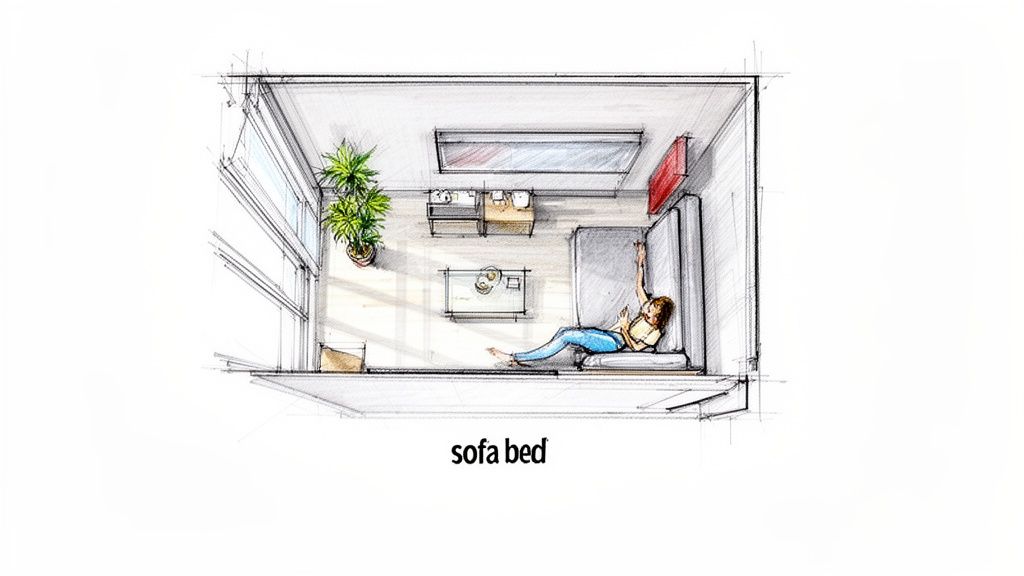
Today’s designs are built for the reality of urban living. They bring sophisticated style and real comfort together in one smart package. Whether you’re outfitting a studio in the city, a guest room that’s also your home office, or even a college dorm, the right sofa bed is your key to unlocking your home’s true potential.
Making Every Square Foot Count
The real challenge in a small space isn’t just about making everything fit—it’s about creating a place that feels open, welcoming, and easy to live in. The right furniture is what makes that happen.
The big idea behind a great sofa bed is simple: Don’t let your furniture be a one-trick pony. In a small apartment, every item needs to earn its keep, and a sofa bed works harder than anything else, shifting seamlessly from living room centerpiece to cozy bedroom.
This move toward multi-purpose furniture isn’t just a niche idea; it’s a global shift. Think about a tiny New York City studio where every inch matters. It’s no wonder that a huge 52% of consumers worldwide pick sofa beds specifically for this dual-functionality. This demand is driving a market that’s expected to jump from USD 17.15 billion in 2025 to USD 28.73 billion by 2034.
This guide is all about giving you practical advice to reclaim your living area. We’ll walk you through how to choose a piece that doesn’t just squeeze into your layout but actually makes your lifestyle better. To take it a step further, thinking about other space-saving furniture like wall beds can also help unlock your room’s full potential.
How to Measure Your Space for the Perfect Fit
Before you get lost in fabric swatches and cool designs, we need to talk about the most crucial step: measuring. Trust me on this. Your tape measure is your best friend here, and using it properly will save you from the heartbreak of finding a beautiful sofa that just won’t fit. Getting this right from the start avoids a logistical nightmare and makes sure your new furniture feels like it belongs, not like a bulky mistake.
Think of your floor space like a dance floor. Your sofa bed needs enough room to pull off its signature move—transforming from a couch into a bed. This means you need to measure for both its closed and fully extended positions. It’s a classic mistake to only measure for the sofa form, which can make a room completely unusable once the bed is pulled out.
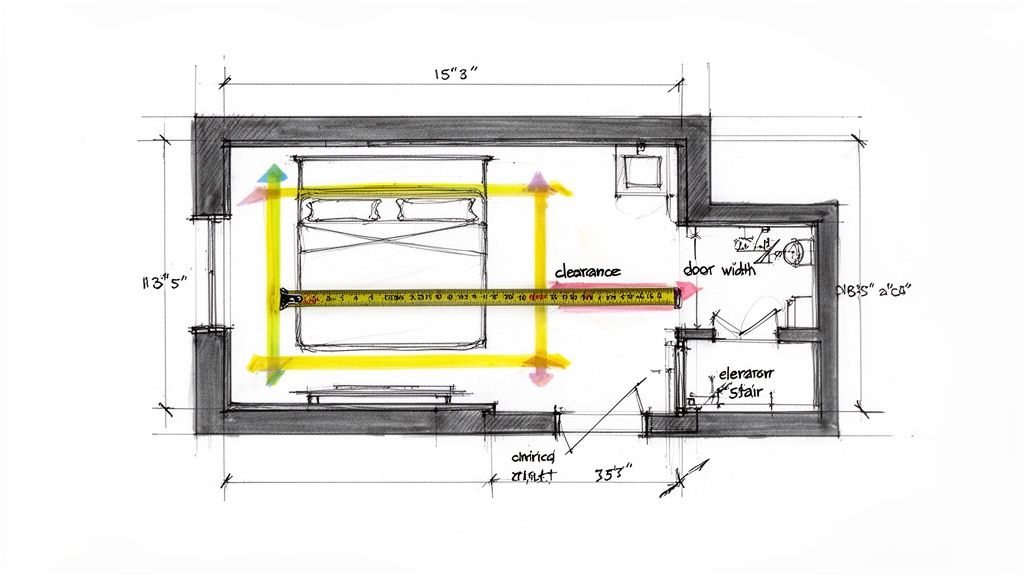
[Image demonstrating how to measure the fully extended open depth of a sofa bed using painter’s tape on a living room floor]
Mapping Out Your Primary Space
First, measure the wall where you plan to put the sofa. Note the maximum width you can work with, and try to leave at least a few inches on either side so it doesn’t feel crammed in. Next, measure the depth from the wall out into the room. This tells you how much space it will take up when it’s just being a sofa.
Now for the most important part: the open dimension. Check the product specs for the sofa bed you’re eyeing and find its length when fully opened. Measure that distance out from the wall in your apartment. Does it block a doorway? Crash into your coffee table? Make it impossible to walk through the room? This is your “clearance zone,” and you have to respect it.
Pro Tip: Grab some painter’s tape and outline the sofa’s footprint and its extended bed dimensions right on your floor. This simple trick lets you physically walk around the “furniture” to see how it feels and how it messes with the flow of your room before you buy anything.
To give you a head start, here’s a quick reference for common sofa bed sizes.
Sofa Bed Dimensions at a Glance
| Size | Typical Sofa Dimensions (Width x Depth) | Typical Bed Dimensions (Width x Length) |
|---|---|---|
| Chair / Twin | ~52″ x 36″ | ~39″ x 75″ |
| Loveseat / Full | ~72″ x 36″ | ~54″ x 75″ |
| Sofa / Queen | ~84″ x 36″ | ~60″ x 80″ |
These are just general guidelines, of course. Always, always check the specific dimensions of the model you’re interested in before making a final decision.
Conquering the Delivery Gauntlet
A sofa that fits perfectly in your living room is completely useless if you can’t get it through the front door. This is where so many apartment dwellers run into a surprise headache. You need to measure every single point of entry, from the building lobby all the way to its final spot.
Make a quick checklist of all the potential choke points:
- Doorways: Measure the height and width of every door frame. Don’t forget to account for the door itself and any doorknobs sticking out that might shrink the usable width.
- Hallways & Stairwells: Note the width of your hallways, paying close attention to any tight corners. For stairs, measure the width and the clearance from the steps to the ceiling, especially on landings.
- Elevators: If you’re in an apartment building, measure the elevator’s interior height, width, and depth. You’ll also need the height and width of the elevator door opening.
Compare these numbers to the sofa bed’s packaged dimensions, which you can usually find on the product page. Always look at the sofa’s smallest dimension (often the depth or height) to see if it can squeeze through the narrowest point of entry. To make this easier, you can reference detailed guides and furniture sizing charts that help simplify the whole process. A few minutes of planning here will guarantee a smooth, stress-free delivery day.
Decoding Sofa Bed Mechanisms and Mattresses
The real magic of a great sofa bed isn’t what you see on the surface; it’s what happens behind the scenes. Its internal mechanism and mattress dictate everything from how easy it is to open to how well you (or your guests) sleep. Getting this combination right is the difference between a frustrating piece of furniture and something you genuinely love using.
Think of the mechanism as the engine. It’s the part that powers the transformation from sofa to bed, and just like car engines, they aren’t all created equal. Some are simple and manual, while others are engineered for an effortless, almost automatic conversion.
Unpacking the Main Mechanism Types
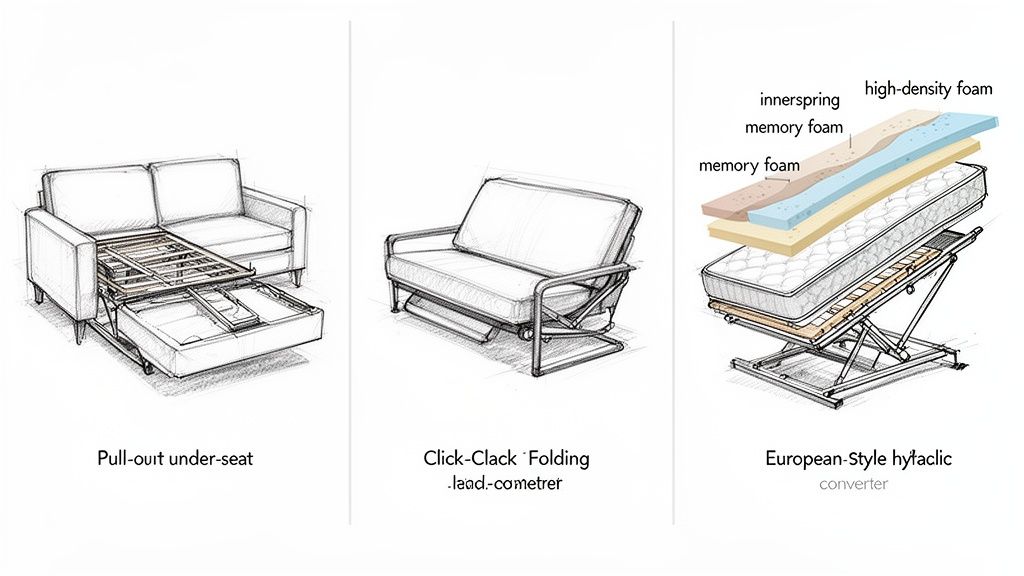
When you start shopping, you’ll mostly run into three popular systems. Each one offers a totally different user experience.
-
Traditional Pull-Out: This is the classic system most people picture. You yank off the seat cushions, grab a handle, and unfold a metal frame with a thin mattress tucked inside. While they’re common, older models can be clunky and often have that dreaded support bar you can feel right through the mattress.
-
Click-Clack Mechanism: This is often the simplest and most user-friendly option out there, making it perfect for small apartments. The sofa back just clicks forward and then flattens to become level with the seat, creating a flat sleeping surface. It’s fast, straightforward, and a lifesaver if you’re converting it daily.
-
European-Style Converter: These are the premium systems you find in higher-quality sofa beds. The mechanism smoothly unfolds the entire mattress from within the sofa in one or two simple motions, often without you even having to remove the cushions. It feels less like manual labor and more like a smooth, counter-balanced lift.
For small apartments where the sofa bed will see a lot of action, a Click-Clack or a European-style converter is almost always the better choice. Their ease of use keeps the daily conversion from feeling like a workout.
Knowing how these systems work helps you picture how you’ll interact with your furniture every day, so you can pick one that actually fits your lifestyle.
The Foundation of Comfort: Your Mattress
If the mechanism is the engine, the mattress is the ride quality. An amazing mechanism paired with a lousy mattress still equals a terrible night’s sleep. The biggest complaint about old-school sofa beds was always the mattress—too thin, lumpy, and zero support. Thankfully, things have changed.
When you’re looking at a sofa bed’s mattress, zero in on three things: material, thickness, and support. A mattress that’s at least 5-6 inches thick is a good starting point for regular sleeping, as it provides enough cushioning to keep you comfortable.
Here’s a quick rundown of the most common mattress types you’ll find:
-
Innerspring: These use a traditional coil system for support. They have that familiar, bouncy feel and allow for good air circulation to keep you cool. The downside? On cheaper models, you might feel the springs, and they aren’t great at stopping motion from transferring when someone moves.
-
Memory Foam: Famous for its incredible pressure relief, memory foam molds to your body for personalized support and does an amazing job of isolating motion. If you or a partner toss and turn, this is a fantastic choice. Just be aware that some can retain heat, though newer versions often include cooling gel to combat this.
-
High-Density Foam: This is a firm, supportive option that gives you a stable sleeping surface. High-density foam is super durable and holds its shape well over time, preventing the sagging that plagues cheaper alternatives. It’s a great middle-ground, offering solid support without that “sinking” feeling you get from some memory foams.
For those who want an even more customized feel, exploring a wider variety of specialized futon and sofa bed mattresses can open up options tailored to specific sleep styles, from extra-firm to ultra-plush. Ultimately, the best choice boils down to what feels good to you—whether it’s the contouring hug of memory foam or the sturdy support of a high-density foam core.
Genius Features That Maximize Every Inch
When you live in a small apartment, your furniture can’t just do one job—it has to multitask. The smartest sofa beds on the market are designed as complete systems to help you win the constant battle for space and order. They’re much more than just a place to sit and sleep; they’re strategic tools for creating a home that’s functional and free of clutter.
These clever designs anticipate the unique headaches of compact living, like where to hide extra bedding or how to make a single room work for different activities. They solve these problems with built-in features that make every square inch pull its weight.
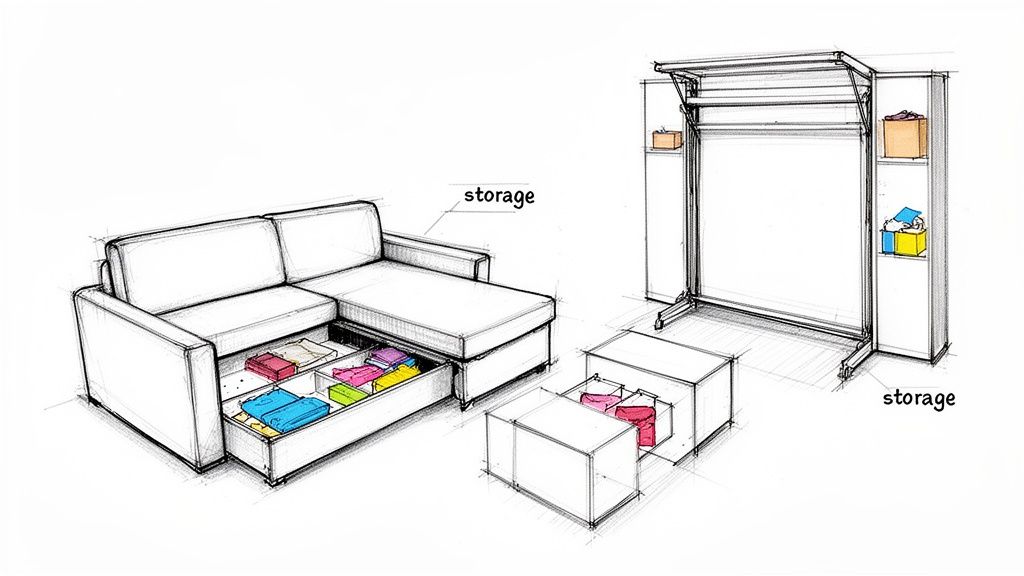
Uncover Hidden Storage Opportunities
One of the most valuable features you can find is integrated storage. Picture a sectional sleeper with a chaise lounge; that solid-looking piece can hide a surprisingly roomy compartment right under the cushion. It’s the perfect spot to stash bulky items like pillows, blankets, and off-season clothes, often eliminating the need for a separate dresser or storage chest.
This isn’t just a nice little perk; it’s a game-changer. In fact, the demand for sofa beds with storage is a huge driver of the market’s projected 6% CAGR from 2023 to 2030. This trend is tied directly to the needs of city dwellers and small-space living, where every piece of furniture has to justify its footprint.
Embrace the Flexibility of Modular Designs
Modularity is another game-changing feature for small spaces. Think of a modular sofa bed as a set of building blocks for your living room. It’s made up of individual sections—chaises, armless chairs, corner units, ottomans—that you can arrange and rearrange to fit your life perfectly.
This adaptability is incredible.
- Custom Layouts: You can create an L-shaped sectional one day and a long, straight sofa with two separate chairs the next. It lets you reconfigure your room for movie nights, parties, or just a fresh new look.
- Easier Moving: When it’s time to move, getting several smaller pieces through tight hallways and doorways is worlds easier than wrangling one giant sofa.
- Scalable Furniture: You can start with a few core pieces and add more later if you move to a bigger place. Your furniture grows with you, which is a much smarter long-term investment.
Modular designs put you in control of your layout, ensuring your furniture serves you, not the other way around.
The Ultimate Space-Saver: Wall Beds
For those dealing with truly tight square footage, a wall bed (or Murphy bed) integrated into a sofa system is the ultimate solution. By day, it’s a stylish sofa sitting in front of a handsome cabinet or shelving unit. By night, you remove the sofa cushions, and a full-size bed smoothly folds down from the wall, turning your living room into a comfortable bedroom in seconds.
Wall bed sofa systems are the masters of illusion in small-space design. They allow a single room to serve as both a fully functional living area and a dedicated bedroom without any sense of compromise.
This is multi-functional design at its peak. The bed effectively disappears when you’re not using it, freeing up precious floor space for everything else you do during the day. It’s the perfect choice for studio apartments or home offices that need to double as guest rooms. If you’re working with a truly minimal footprint, you might also want to check out some convertible sofa beds under 39 inches wide.
Choosing Materials for Durability and Style
A sofa bed in a small apartment is more than just furniture; it’s the command center of your home. It’s where you unwind after a long day, host movie nights, and offer a cozy bed for guests. That kind of constant, high-traffic use means both its fabric and internal frame have to be tough enough to handle daily life without showing their age.
Choosing the right materials is all about balancing style, practicality, and longevity. The fabric you pick determines not just the look but also how you’ll handle spills and everyday messes. Underneath it all, the frame is the hidden skeleton that decides whether your investment lasts for years or starts to wobble after just a few months.
Finding the Perfect Fabric for Your Lifestyle
The best upholstery for a small-space sofa bed is one that looks fantastic while standing up to real-world challenges like spills, pets, and constant use. Just think about your daily routine. Do you have kids or pets? Do you eat or drink on the sofa? Your answers will guide you to the perfect material.
Here are a few of the most popular and practical choices:
-
Microfiber: This synthetic fabric is a true champion of durability. Its fibers are woven so tightly that they naturally resist stains and water, often causing liquids to bead right on the surface for a quick cleanup. It’s also soft to the touch and a smart pick for pet owners, as it doesn’t snag easily.
-
Performance Fabrics: These are modern marvels, engineered from the ground up to resist stains, moisture, and fading. Many are treated with special finishes that stop spills from soaking in, making them incredibly easy to clean with just a bit of water. For a busy apartment, performance fabrics offer peace of mind without sacrificing style.
-
Leather and Faux Leather: Genuine leather is famously durable and develops a beautiful, unique patina over time. High-quality faux leather offers a similar look at a more accessible price point. Both are a breeze to wipe clean, making them excellent choices for families.
If you want to explore a variety of textures and colors, you can find a wide range of durable fabric convertible sofa beds that blend style with resilience.
Why a Strong Frame Is Non-Negotiable
While the fabric is what you see and feel, the frame is what gives your sofa bed its strength and backbone. A weak frame leads to creaking, sagging, and a disappointingly short lifespan—a frustrating outcome for such an important purchase. Investing in a solid frame is the single best thing you can do to make sure your sofa bed lasts.
A sofa bed’s frame is its foundation. Just as you wouldn’t build a house on shaky ground, you shouldn’t invest in a sofa bed with a flimsy frame, especially when it needs to support both sitting and sleeping day in and day out.
Here’s what to look for under the surface:
-
Solid Hardwood: Kiln-dried hardwood—like oak, maple, or ash—is the gold standard for furniture frames. The kiln-drying process removes moisture, which prevents the wood from warping or cracking over the years. This creates an incredibly sturdy and long-lasting foundation.
-
Engineered Wood: Also known as plywood or particleboard, this is a more budget-friendly option. High-quality, multi-layered plywood can be surprisingly strong and durable. Just be cautious of low-density particleboard, which can be susceptible to damage and may not hold up well to heavy use or a future move.
-
Metal Frames: Metal offers excellent strength with a slim profile, which can be a huge advantage in a small apartment. These frames are resistant to warping and provide consistent, reliable support for the mattress and mechanism, ensuring everything operates smoothly for years to come.
Expert Answers to Your Sofa Bed Questions
Even after you’ve done all the research, a few nagging questions can stand between you and the right sofa bed. Think of this final section as a chance to clear up those last-minute doubts. We’ve gathered the most common questions we hear from people shopping for small apartments to help you make your final choice with total confidence.
Can a Sofa Bed Really Be Comfortable for Everyday Sleeping?
Absolutely, but it all comes down to the mattress and the mechanism. It’s time to forget the flimsy, back-breaking sofa beds of the past. Modern sofa beds are built from the ground up for real, restorative sleep. The best ones feature high-density foam or quality innerspring mattresses that are every bit as good as what you’d find on a traditional bed.
A good rule of thumb is to look for a mattress that’s at least 5-6 inches thick. That thickness provides the proper cushioning and support you need for nightly use. If you want to take the comfort up another notch, throwing a mattress topper on is an easy and fantastic upgrade. When you prioritize a quality mattress from the get-go, you’re investing in a good night’s sleep, not just a space-saving trick.
How Do I Protect My Floor From a Heavy Sofa Bed?
This is a smart question, especially for renters who have a security deposit on the line. The good news is that preventing scratches and scuffs is incredibly simple.
First, take a look at the sofa bed’s legs—many modern designs already have plastic or felt glides built right in. If not, a quick trip to the hardware store for some self-adhesive felt pads is a cheap and effective fix.
For really delicate floors like soft hardwood or luxury vinyl, an area rug is the perfect two-for-one solution. It adds a serious layer of protection while also helping to visually anchor the sofa and define your living area.
And don’t forget, professional delivery services are trained for this. A good white-glove assembly team knows how to handle heavy furniture and will take every precaution to set up your new piece without leaving a single mark behind.
What Is the Real Difference Between a Futon and a Sofa Bed?
While both are fantastic space-savers, they’re built on fundamentally different ideas. A traditional futon is a two-piece system: you have a frame and a separate, flexible mattress that folds over it. This straightforward design often leads to a firmer sleeping surface and can be a very budget-friendly option.
A sofa bed, on the other hand, is an all-in-one piece of furniture. The mattress and the opening mechanism are built directly into the sofa’s frame, hidden away. Modern sofa beds tend to use more advanced opening systems (like the smooth European converters) and often use conventional mattresses like memory foam or innersprings, all with the goal of mimicking the feel of a standard bed.
Are There Stylish Sofa Beds That Do Not Look Like Convertible Furniture?
Yes, and this is where contemporary design has really stepped up. The days of the clunky, obvious sofa bed you’d try to hide in a corner are long gone. Today, many of the best brands focus on creating sofa beds that are completely indistinguishable from high-end stationary sofas.
These models use clever, hidden mechanisms and come in a massive range of designer fabrics, from rich velvets to durable performance textiles. The entire point is to give you a beautiful, stylish piece of furniture that just happens to convert into an amazing bed. With these options, you never have to compromise on style for the sake of function—you really can have it all.
Ready to find the perfect multifunctional piece for your home? Explore the extensive collection of stylish and comfortable convertible sofa beds at Futonland, designed to maximize every inch of your space without compromising on style. Find your ideal sofa bed today!