Futon Waterproof Cover: The Complete Guide to Protection and Care
A futon waterproof cover isn’t the decorative fabric you see on the outside—it’s the real hero working behind the scenes. Think of it as an essential, protective shield that sits right on the mattress itself, guarding your investment against spills, stains, and all the little accidents life throws your way.
Why Your Futon Needs A Waterproof Shield
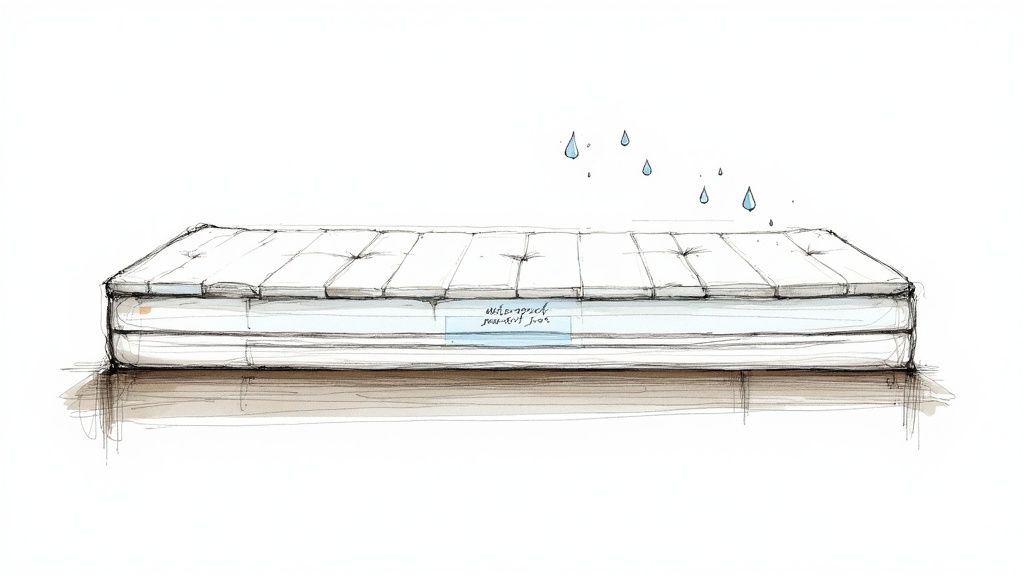
Before you even think about picking a stylish cover to match your decor, it’s critical to consider what lies beneath. A dedicated protector is the foundation of a clean, long-lasting futon, stopping liquids in their tracks before they can cause any real damage.
This invisible barrier is the difference between a quick cleanup and a completely ruined mattress. Spills from coffee, juice, or wine can soak deep into the mattress fibers, leading to stubborn stains, funky odors, and even mold or mildew growth. A proper waterproof cover prevents all of that from ever happening.
It’s really important not to mix up a decorative cover with a functional protector. Although our handmade futon covers are not waterproof, we recommend using a waterproof futon mattress protector which offers ultimate protection for your mattress. That’s why we always recommend pairing them for the ultimate defense.
The First Line of Defense
A waterproof cover does a lot more than just block spills. It’s a multi-purpose tool for keeping your futon hygienic and durable, especially in a busy home.
- Stain Prevention: It forms a barrier that keeps liquids from ever reaching the mattress, so it always looks fresh and new.
- Odor Control: By stopping moisture from soaking in, it prevents those musty, unpleasant smells from developing over time.
- Allergen Barrier: It’s a great way to block dust mites, pet dander, and other allergens from making a home inside your mattress.
- Durability: It protects the internal materials from breaking down, significantly extending the life of your futon.
A common mistake is thinking “water-resistant” is the same as “waterproof.” Water-resistant fabric might handle a tiny splash, but it will eventually let liquid seep through. A truly waterproof cover creates an impenetrable shield, giving you total peace of mind against even major spills.
This protective layer is a must-have for futons in high-traffic areas or any home with kids and pets. It’s all about being proactive to protect your furniture.
Here’s a quick breakdown to help you see the difference clearly.
Waterproof Protector vs Standard Futon Cover
| Feature | Waterproof Futon Protector | Standard Decorative Futon Cover |
|---|---|---|
| Primary Function | Protects the mattress from liquids, allergens, and stains | Provides a decorative, stylish look and feel for the futon |
| Placement | Goes directly on the mattress, underneath the decorative cover | The outermost layer, which is visible in the room |
| Material | Often has a polyurethane lining or other impermeable layer | Typically made of cotton, microfiber, suede, or other textiles |
| Benefit | Extends mattress life, ensures hygiene, prevents damage | Enhances room decor, can be easily changed, adds comfort |
Ultimately, a waterproof protector handles the function, while a standard cover handles the fashion.
The takeaway is simple: they aren’t competing products; they’re meant to be used together. The protector keeps your mattress safe and sound, while the decorative cover lets you express your personal style.
The Real Value of a Futon Waterproof Cover
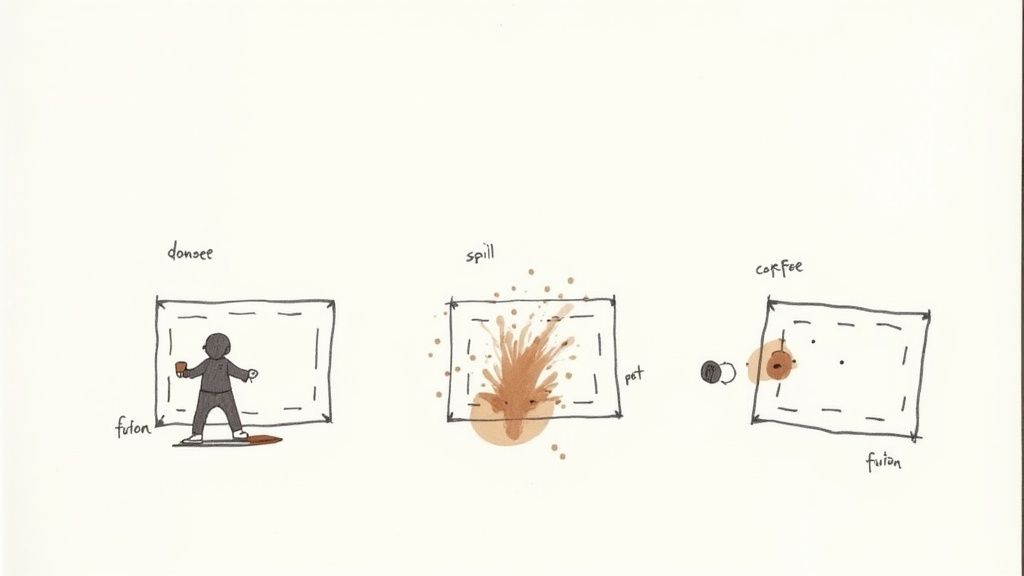
It’s tempting to think of a futon waterproof cover as just another accessory, but it’s better to see it for what it truly is: essential insurance for your mattress. This isn’t just about buying another piece of fabric; it’s a smart, one-time investment to protect your futon from the unavoidable messes of everyday life.
In any busy home, spills aren’t a question of if, but when. The risk skyrockets in households with kids and pets, or for futons that pull double duty as the main living room sofa. A single accident—a tipped coffee mug, a spilled glass of wine, or a pet mishap—can permanently damage a mattress in seconds.
Once a liquid gets through, it doesn’t just leave an ugly stain. It seeps deep into the fibers, creating a breeding ground for mold and mildew. That leads to stubborn odors and can break down the mattress materials, dramatically shortening its lifespan.
Protecting Your Investment
A quality waterproof protector acts as an impenetrable shield, stopping damage before it even has a chance to start. This simple layer is the secret to keeping your futon fresh, clean, and comfortable for both sitting and sleeping. It turns a potential disaster into a minor inconvenience you can wipe away.
When you look at it as a small upfront cost, you quickly realize how much money a protector saves you down the road. Instead of dropping hundreds on a premature mattress replacement, you make one modest purchase that adds years to your futon’s life.
The true value lies in prevention. A futon waterproof cover is the most effective way to safeguard the comfort, hygiene, and structural integrity of your mattress, ensuring it remains a valuable part of your home for as long as possible.
This practical mindset is why functional furniture protection has grown so popular. Waterproof futon covers really started taking off in the 2010s, riding a larger wave of demand for protective home goods. By the early 2020s, major retailers were listing hundreds of options as people began choosing easy-care, pet-friendly solutions over purely decorative ones.
More Than Just Spill Protection
The benefits go far beyond guarding against liquids. A good protector also creates a barrier against dust mites, allergens, and pet dander that inevitably build up inside a mattress. This contributes to a healthier living space, which is especially important for anyone with allergies or respiratory sensitivities.
At the end of the day, it’s all about creating a clean, durable, and worry-free space for your family to enjoy.
Decoding Waterproof Materials and Technology
To find the right futon waterproof cover, it helps to know a little about the tech that keeps your mattress dry. Not all waterproof materials are created equal. The differences in how they’re made have a huge impact on comfort, noise, and whether or not you’ll feel overheated.
Think of it like choosing a raincoat—some feel like a clammy plastic bag, while others keep you bone dry without making you sweat. It’s the same idea with mattress protectors.
The real magic behind modern protectors is a microscopic membrane, sort of like Gore-Tex for your futon. This is exactly how a polyurethane (PU) or thermoplastic polyurethane (TPU) layer works. An ultra-thin film is bonded to a soft fabric, creating a barrier with pores so tiny that water molecules can’t squeeze through. But, they’re just big enough to let air and vapor escape, which means the cover is breathable and won’t trap body heat.
Common Waterproofing Materials Compared
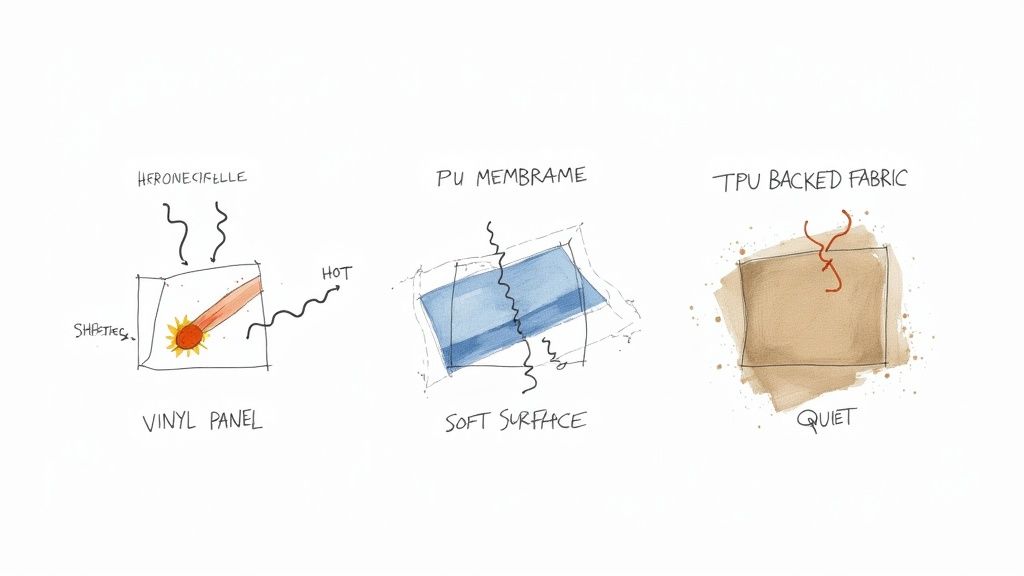
Older waterproof covers often used vinyl (PVC). While it’s certainly a barrier against liquids, it comes with some serious downsides. Vinyl is notorious for being noisy, crinkling with every movement, and it doesn’t breathe at all. The result is often a hot, sweaty, and frankly, unpleasant sleeping experience.
Thankfully, today’s advanced materials give you top-tier performance without the drawbacks. The goal is to find that perfect balance between total protection and total comfort.
- Vinyl (PVC): This material is 100% waterproof and easy on the wallet, but it’s often loud, stiff, and feels like sleeping on plastic.
- Polyurethane (PU) Laminate: A huge step up in comfort. PU is quiet, breathable, and soft to the touch while still providing excellent waterproof protection.
- TPU-Backed Fabrics: Think of TPU as the more advanced, eco-friendlier version of PU. It’s incredibly durable, flexible, and completely silent. It offers the best waterproofing and breathability, making it the premium choice.
Here’s a key distinction: “water-resistant” is not the same as “waterproof.” A water-resistant cover might handle a small splash, but it won’t stand up to a real spill. A truly waterproof futon cover is engineered to stop a full-on accident in its tracks, giving you complete peace of mind.
Reading Labels Like a Pro
Once you know these materials, you can read product descriptions with confidence. You’ll see that the industry has moved toward more comfortable technology, combining impermeable barriers with soft, breathable fabrics. Polyurethane laminates have become the standard for a reason.
When you’re shopping, keep an eye out for terms like “PU membrane,” “TPU backing,” or “breathable waterproof barrier.” These are your clues that you’re looking at a modern, high-quality protector that won’t make you sacrifice comfort for function.
You can explore a variety of modern bed mattress protectors to see these advanced materials in action. This knowledge ensures you pick a cover that actually delivers on its promise, keeping your futon safe, dry, and comfortable for years to come.
How to Measure for a Perfect Fit
Finding the right futon waterproof cover is about more than just picking a material you like. A cover that fits poorly is almost as useless as having no cover at all. If it’s too loose, it will bunch up and feel lumpy underneath you. Too tight, and you’ll strain the seams or leave the corners exposed—exactly where spills tend to happen.
Getting the measurements right the first time is simple, and it guarantees your protector will do its job properly. Don’t just guess based on standard sizes like “Full” or “Queen,” because futon mattresses often have their own unique dimensions. When it comes to a perfect fit, precision is your best friend.
The Three Critical Measurements
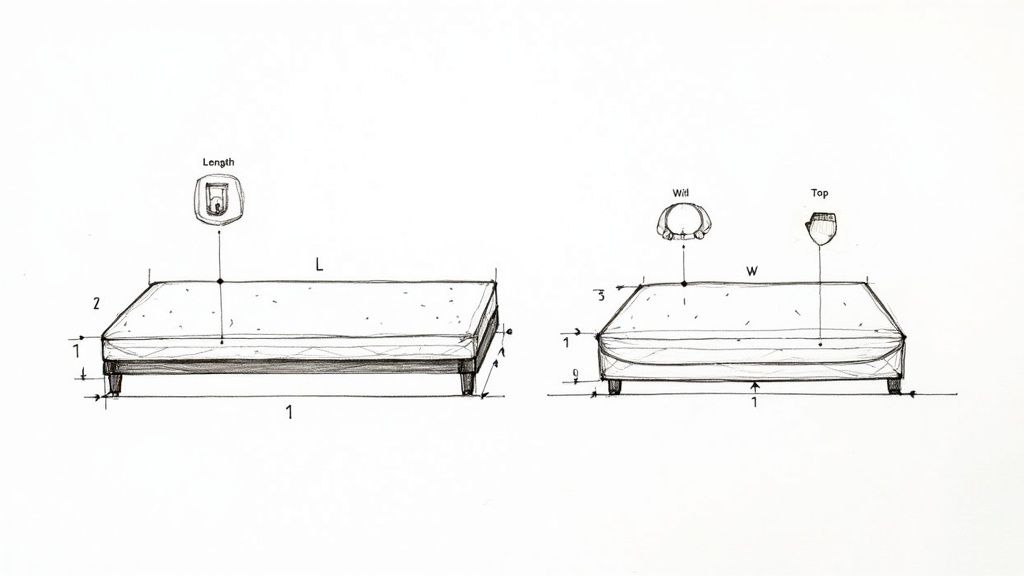
Before you even start browsing, grab a tape measure and get these three numbers down. It’s a quick step that makes all the difference, ensuring a snug fit that stays put.
- Length: Measure your futon mattress from head to foot, right along the longest side.
- Width: Measure from one side to the other across the shorter dimension.
- Depth (or Thickness): This is the one people often forget, but it’s the most important. Measure the height of the mattress from the bottom seam to the top seam. This tells you how deep the cover’s pocket needs to be to tuck in securely.
With these three numbers in hand, you can pick a cover that hugs your futon just right. If you want a little extra help, you can always check our detailed futonland sizing charts to double-check your work.
Fitted Style vs Zippered Encasement
Waterproof protectors typically come in two main styles. Each one offers a different balance of convenience and protection, so understanding how they work will help you choose the best one for your setup.
A fitted sheet style protector goes on just like a regular fitted sheet. It has deep, elasticized pockets that stretch neatly over the corners of your mattress, making it incredibly easy to put on and take off.
Best For: Quick changes and frequent washing. If you have kids or pets and your futon sees a lot of action, being able to strip the cover off for a quick wash is a huge plus.
On the other hand, a zippered encasement completely seals your mattress on all six sides. You slide the futon inside and zip it up, creating a total barrier against the outside world.
This style delivers the ultimate defense—not just against spills but also from allergens, dust mites, and even bed bugs. It takes a little more effort to get on, but the complete, 360-degree protection is unbeatable for anyone who puts a premium on hygiene.
No matter which style you lean toward, getting your measurements right is the key to making sure it works.
Installation and Care for Lasting Protection
Once you’ve picked out the perfect futon waterproof cover, how you install and care for it will make all the difference. Think of it as a reliable shield for your mattress—with just a little attention, it’ll keep up its defenses for years to come.
First things first, let’s get it on the mattress correctly. The waterproof cover should always go directly on the futon mattress itself. It acts as the first line of defense, sitting right underneath any decorative cover you’re using for style. This setup ensures it catches any spills long before they can dream of reaching the mattress fibers.
A snug, smooth fit is what you’re aiming for. Bunching is not only uncomfortable to sit on, but it can also create weak spots in its protection. If you notice your protector or decorative cover is shifting around—especially on a slicker mattress—a set of specialized futon non-slip strips and grip pads can work wonders to keep everything locked in place.
Proper Washing and Drying Instructions
Washing your waterproof protector is simple, but it does require a gentle touch to preserve that all-important waterproof membrane. It’s a bit like high-tech athletic gear; you wouldn’t throw it in a hot wash with harsh chemicals, and the same logic applies here.
Follow these guidelines for a safe and effective clean:
- Go Gentle: Always use the gentle or delicate cycle on your machine with cold or lukewarm water. Hot water is the enemy here—it can damage the polyurethane membrane, causing it to crack and peel over time.
- Mild Detergent Only: Stick with a mild, bleach-free detergent. Harsh chemicals and bleach will quickly break down the waterproof barrier, making your cover useless against spills.
- Skip the Softener: Fabric softeners are a no-go. They leave behind a residue that can clog the pores of the breathable membrane, which ruins its ability to block liquids while still letting air through.
The most critical rule is to avoid high heat at all costs. Heat is the number one killer of waterproof futon covers, both in the wash and, especially, in the dryer.
When it’s time to dry, your best bet is to tumble dry on the lowest heat setting possible. Even better, let it air dry completely. The intense heat from a standard dryer cycle can cause the waterproof backing to melt, blister, or separate from the fabric. By sticking to these simple care instructions, you’ll ensure your protector remains a steadfast guardian for your futon, ready to handle whatever life throws at it.
Pairing Protection with Your Personal Style
Think of a waterproof protector and a stylish futon cover as the ultimate power couple for your furniture. It’s a two-part system that delivers the best of both worlds: unbeatable protection working silently behind the scenes, and beautiful design that defines your living space. You really don’t have to choose one over the other.
The waterproof protector is the quiet workhorse. It fits directly over your mattress, creating an invisible shield that handles all the heavy lifting. This is the layer that stops spills, guards against stains, and keeps your futon hygienic and fresh. It’s the functional foundation that ensures your mattress investment lasts for years.
Then you have the outer decorative cover, which is all about aesthetics. This is where you get to express your personal style and set the visual tone for your room.
The Perfect Two-Layer System
This two-layer approach gives you complete design freedom without ever compromising on protection. Although our handmade futon covers are not waterproof, we recommend using a waterproof futon mattress protector which offers an ultimate protection for your mattress. This allows you to customize your look with total confidence.
This means you can change your decorative cover as often as you like. Want to switch from a neutral solid to a bold pattern for the summer? Go right ahead. Your essential waterproof shield will remain underneath, quietly doing its job no matter what your outer style is.
The real beauty of this system is its flexibility. You can refresh your decor on a whim, knowing your mattress is always safe from life’s messes. It’s the smartest way to combine practicality with personal expression.
Customizing Your Look with Confidence
With a reliable protector in place, choosing a decorative cover becomes a purely creative decision. You can focus entirely on finding the perfect fabric, color, and texture to match your vision without having to worry about spills.
At Futonland, we offer a huge range of high-quality, handmade futon covers that let you achieve any look you desire. Because you aren’t relying on this layer for protection, you can pick delicate fabrics or light colors without a second thought. If you’re not sure which material will best suit your home, you can easily explore our futon cover fabric sample swatches to find the perfect match. This combination empowers you to design a space that’s both beautiful and built for real life.
Common Questions About Futon Waterproof Covers
Even after reading a guide, you might still have a few questions rolling around in your head about picking the right futon waterproof cover. To help you feel completely confident in your choice, we’ve put together answers to some of the most common questions we hear.
Can I Use a Regular Mattress Protector on My Futon?
While it might seem like a quick fix, it’s not the best idea. Futon mattresses are built differently than standard bed mattresses—they’re typically thinner and much more flexible.
Protectors designed specifically for futons account for this unique construction. They provide a snug fit that won’t slip, bunch up, or tear when you convert your futon from a sofa to a bed and back again. For reliable performance that moves with your futon, you’ll always want a protector made for the job.
Will a Waterproof Cover Make My Futon Hot or Noisy?
This is a classic concern, usually born from bad experiences with old-school, plastic-y vinyl covers. Thankfully, modern waterproof protectors are in a completely different league.
Today’s high-quality options use advanced, breathable materials, like a polyurethane (PU) membrane bonded to a soft fabric surface. This design allows air to circulate freely, preventing heat from getting trapped and keeping the surface cool and comfortable. It’s also virtually silent, so you won’t hear any distracting crinkling sounds when you move.
How Often Should I Wash My Waterproof Futon Cover?
Good news: your waterproof protector doesn’t need to be washed nearly as often as your decorative cover or sheets. A good rule of thumb is to give it a wash every two to three months as part of your regular home cleaning routine.
The most important rule, however, is to wash it immediately after any spills or accidents. This prevents stains from setting and keeps the sleeping surface hygienic. Always check the manufacturer’s care label to preserve the waterproof barrier and ensure long-lasting protection.
At Futonland, although our handmade futon covers are not waterproof, we recommend using a waterproof futon mattress protector which offers an ultimate protection for your mattress. This two-layer system is the secret to getting the best of both worlds: great looks and total protection for your mattress investment.