
Custom Couch Cushion Covers: Measuring, Fabric & Fit Guide
A lot of people live with a couch they still like but no longer enjoy looking at. The frame is solid. The seat still feels familiar. Then one cushion starts showing wear, another picks up a stain that never fully disappears, and the whole piece begins to look older than it really is.
That problem shows up even faster with futons, sleeper sofas, and other convertible pieces. They do double duty. People sit on them every day, then fold, unfold, and sleep on them. Standard slipcovers rarely account for that movement, and replacing the whole piece often costs more than the problem justifies. Custom couch cushion covers are often the cleanest fix when the furniture itself still deserves to stay.
Give Your Favorite Couch a Second Life
A common scenario is simple. Someone bought a decent sofa or futon a few years ago, the upholstery took the abuse first, and now the furniture looks tired long before the structure has failed. Families see it from snack spills and constant use. Students see it in hand-me-down seating that fits the apartment but not their style. Small-space households see it with convertible furniture that works hard and shows it.
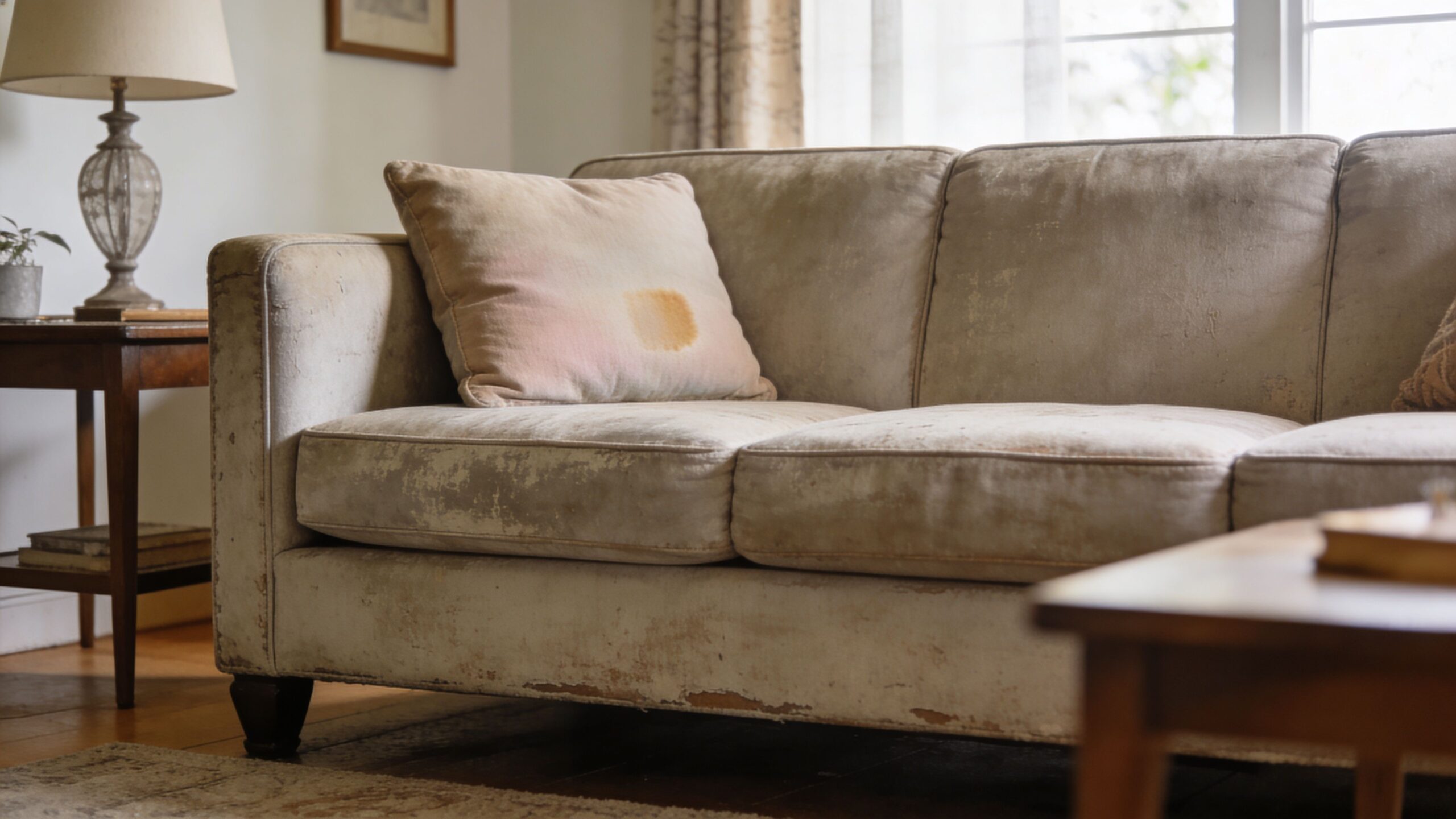
Custom covers solve a very specific set of problems. They let you keep a sofa that still feels good. They let you deal with non-standard cushion sizes that off-the-shelf covers won’t fit properly. They also let you change fabric, color, or texture without committing to a full furniture replacement.
Why more homeowners are choosing custom
In apartments, guest rooms, and mixed-use spaces, replacing a cover is often more practical than replacing a usable piece of furniture — the frame is doing its job, and the upholstery is what actually failed.
Practical rule: If the frame is sound and the comfort is still there, upholstery is usually the first thing worth fixing.
Custom work is especially valuable on futons and sofa beds because fit matters more than it does on a stationary couch. A loose cover can bunch during conversion. A bulky seam can land in the wrong place. Fabric that looks good on a display sofa may not behave well on a piece that folds into a bed every night.
What custom covers actually change
A well-made cover can do three useful things at once:
- Restore appearance by replacing faded, stained, or dated upholstery with something clean and intentional.
- Improve function by fitting the cushion shape correctly instead of shifting around with use.
- Extend service life by letting you refresh the parts that wear first instead of discarding the whole furniture piece.
That last point matters. Furniture replacement isn’t always the smart answer. Sometimes the smartest upgrade is the one that keeps a good piece in service and makes it look like it belongs in the room again.
Is a Custom Cover Right for Your Furniture?
Not every furniture problem calls for custom fabrication. Sometimes a generic slipcover is good enough. Sometimes the piece is too far gone and replacement makes more sense. The useful question is whether your issue is mostly about fit, fabric, or structure.
If your couch has standard cushions and you only need a temporary visual fix, a store-bought slipcover may be enough. If the cushions are unusual, the furniture converts into a bed, or you’re trying to match a room rather than just hide wear, custom usually becomes the better choice. If the frame creaks, the mechanism fails, or the comfort is already gone, no new cover will rescue it.
Choosing your upholstery solution
| Factor | Off-the-Shelf Slipcover | Futonland Custom Cover | New Furniture |
|---|---|---|---|
| Fit | Best on common sizes and simple shapes | Best for non-standard cushions, box cushions, and convertible furniture | Comes built for the piece |
| Fabric choice | Limited colors and materials | Broad selection, including fabric-by-the-yard options and swatches | Limited to what’s offered on the model |
| Appearance | Can look loose or temporary | Tailored, cleaner lines | Brand-new look |
| Best use case | Quick budget fix | Keeping a good frame and upgrading worn upholstery | Replacing furniture that’s structurally done |
| Convertible furniture suitability | Often poor | Strong option when measurements account for folding and stress points | Depends on model |
A good way to think about it is this: slipcovers hide; custom covers refit; new furniture resets everything.
When custom is worth the money
The economics improve when the cushions themselves are also being upgraded. Pairing a custom cover with a high-density foam insert generally holds its shape and comfort far longer than a stock cushion filled with lower-grade foam, which is why the combination tends to pay for itself over several years of daily use rather than being a purely cosmetic expense. That matters most on heavily used seating, especially in apartments where one piece might serve as sofa, guest bed, and lounge spot all week long.
A custom cover makes the most sense when you’re protecting a frame you already trust.
Custom also earns its keep when style matters. If you need a specific texture, a quieter neutral, or a fabric that works with the rest of the room, the broader selection available through Futonland fabric by the yard gives you more control than a generic cover package ever will.
When custom is not the right answer
Custom isn’t automatically the best option. Skip it if these problems are the main issue:
- Broken structure. A failing frame, bent sleeper mechanism, or loose arms won’t be fixed by new covers.
- Collapsed comfort. If the support is gone and you don’t want to replace inserts, the result will still feel disappointing.
- Ultra-short-term use. If you’re staging, moving soon, or furnishing a temporary place, a simple slipcover may be enough.
People usually regret custom work only when they ask it to solve the wrong problem. It works best when the furniture is worth keeping and the upholstery is the weak link.
How to Measure Cushions and Select the Perfect Fabric
Most cover problems start before the sewing begins. They start with measurements that are close, not exact. On a regular sofa, that creates wrinkles or looseness. On a futon or sleeper, it can create drag at the fold, stress on the zipper, or bunching when the furniture converts.
Measure the cushion you have, not the opening you guess
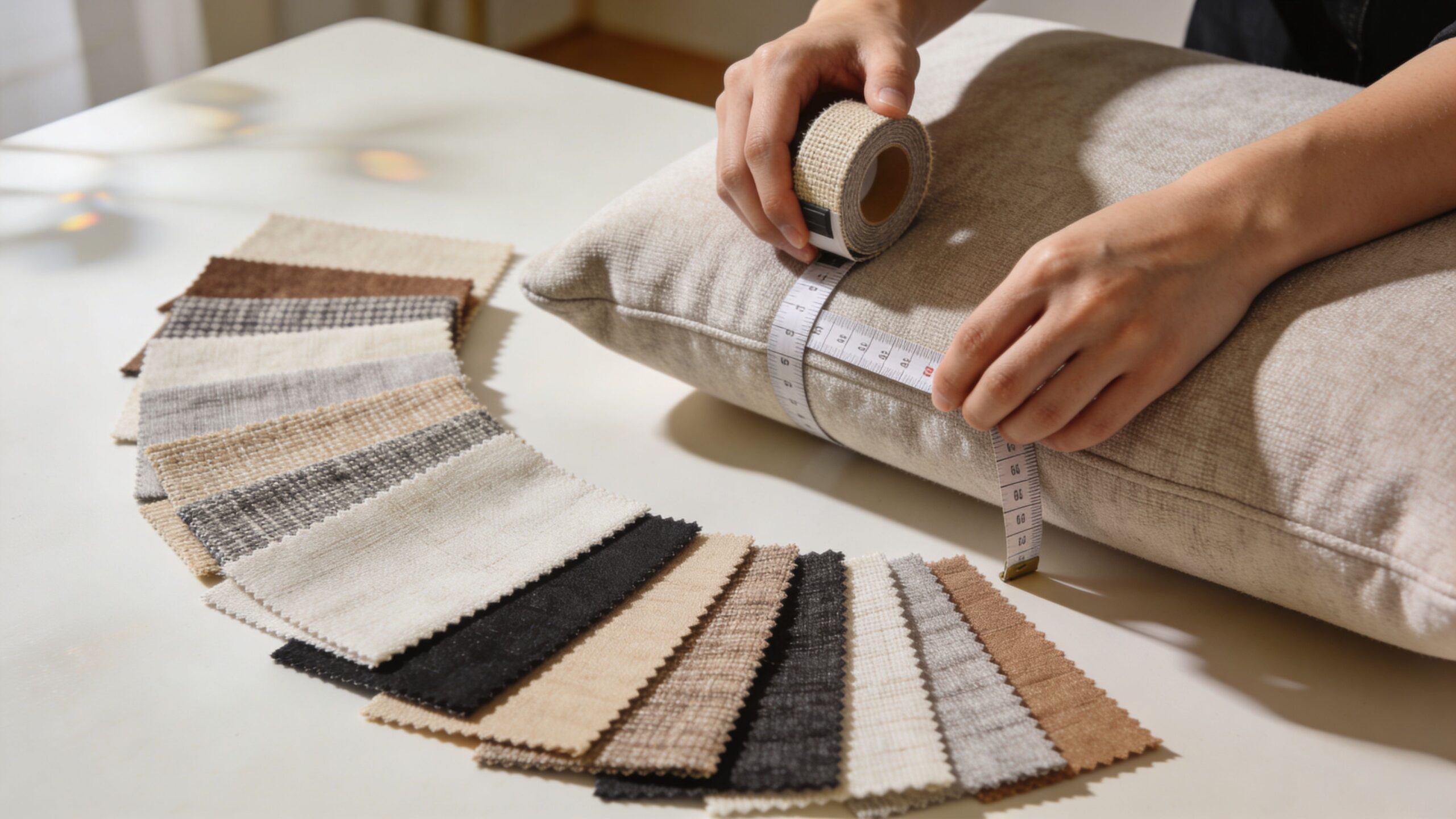
Use a tape measure, write everything down, and measure each cushion separately. Even matching seat cushions can vary slightly over time.
A reliable measuring routine looks like this:
- Remove the cushion and set it on a flat surface. Don’t measure while it’s compressed inside the frame.
- Measure width side to side at the widest point.
- Measure depth front to back.
- Measure thickness through the center, not just at an edge that may have softened.
- Note the shape. Box cushions, T-cushions, and knife-edge cushions need different pattern handling.
- Photograph details. Welt, zipper location, rounded corners, and tufting all matter.
“Close enough” is usually what creates the sloppy result people were trying to avoid — precise measurement at this stage saves a redo later.
A few shape-specific notes
- Box cushions are the easiest to measure. Record width, depth, and thickness, then note whether the corners are sharp or softened.
- T-cushions need extra attention where the cushion wraps around the arm area. Measure the full width and the projections separately.
- Knife-edge cushions need shape notes because the seam treatment changes the final look.
- Futon and sofa-bed cushions should be measured with conversion in mind. If the cushion bends, folds, or shifts during use, mention that early.
If you want a reference point before ordering, Futonland sizing charts can help you compare common furniture dimensions with what you’re measuring at home.
Bring photos of the full piece, not just the cushion. Upholstery decisions make more sense when the cutter or sewer can see how the furniture opens, folds, and sits in the room.
Choosing fabric for how the furniture actually gets used
Fabric selection isn’t just about color. It’s about friction, heat, cleaning, and whether the piece sits still or converts.
For pet owners, this decision gets more technical. Futon-specific wear points — like exposed zippers during unfolding, or shrinkage after washing that distorts the fit — matter more than they do on a stationary sofa. Breathable, durable blends often outperform fully waterproof materials, which can trap moisture and heat against the fabric instead of letting it escape.
That matters on sleepers. A fabric that feels protective can become uncomfortable if it holds heat, and a cover that shrinks even slightly can become hard to zip or awkward to fold flat.
Match the fabric to the use case
Consider the room before the swatch.
- For family seating choose a durable, easy-clean weave that won’t show every handprint or crumb.
- For futons used as beds prioritize breathable fabric with a hand that still feels comfortable when someone actually sleeps on it.
- For pet households avoid surfaces that catch claws easily and think carefully about zipper placement.
- For style-driven updates textured neutrals, woven solids, and tailored piping usually age better than trendy prints.
Swatches beat guessing
Digital color is helpful, but fabric is tactile. The hand, weight, and weave tell you things a screen can’t. Rub the swatch. Fold it. Place it next to the wall color and flooring. If it’s going on a futon, think about whether you’d want that fabric against your skin overnight.
People make better choices when they test the fabric against the reality of use, not just the photo of the room they hope to create.
Placing Your Order with Futonland
Once your measurements and fabric direction are clear, ordering gets easier. The custom process works best when the details are specific early. That includes shape, zipper placement, seam style, and whether the furniture sits still or converts.
Convertible pieces deserve extra attention here. Upholstery on a futon or sleeper wears differently than upholstery on a static sofa, since the fold line and conversion points take repeated stress that a stationary cushion never experiences — these orders should be discussed as moving furniture, not static furniture.
What to bring to a consultation
In-person help is valuable when the project is unusual. A customer who brings the cushion, old cover, or at least good photos usually gets to a cleaner result faster than someone working from memory.
Helpful items include:
- The old cover, even if it’s damaged. It shows seam placement and zipper orientation.
- The cushion itself when practical. This is ideal for odd shapes or heavily used futons.
- Fabric photos or room photos so color choices fit the space.
- Notes about use such as daily sleeping, pets, kids, or frequent conversion.
For people who want to narrow the fabric field before they commit, Futonland futon cover fabric sample swatches make that decision easier.
Details that affect the final result
Customers often focus on color first, but the construction details matter just as much.
- Zipper placement should be chosen for access and wear resistance. On convertible furniture, a poor zipper location can end up right at a fold or pressure point.
- Piping or welt creates definition, but it also changes the look from casual to structured.
- Seam reinforcement matters more on furniture that gets pulled, folded, or used by guests.
- Fabric direction can affect how the cushion looks when the bed is open versus when the sofa is closed.
If a cover has to survive daily conversion, treat the fold line like a stress point, not an afterthought.
Lead time and expectations
Custom cut-and-sew work takes longer than grabbing a ready-made slipcover off a shelf. That’s normal. Fabric availability, complexity of shape, number of cushions, and whether old covers can be used as patterns all affect timing.
The practical mindset is to expect a process, not an impulse purchase. Ask questions early. Confirm what is being duplicated and what is being changed. If you’re refreshing a sleeper sofa or futon, mention that at the first conversation so the project is built around real use, not just appearance.
Installing and Caring for Your New Cushion Covers
A professionally sewn cover can still look wrong if it’s installed carelessly. Most trouble shows up at the same moment: getting foam back into the cover. People rush, tug on the zipper, shove from the wrong angle, and then assume the fit is off when insertion is the issue.
Install the cover without fighting it
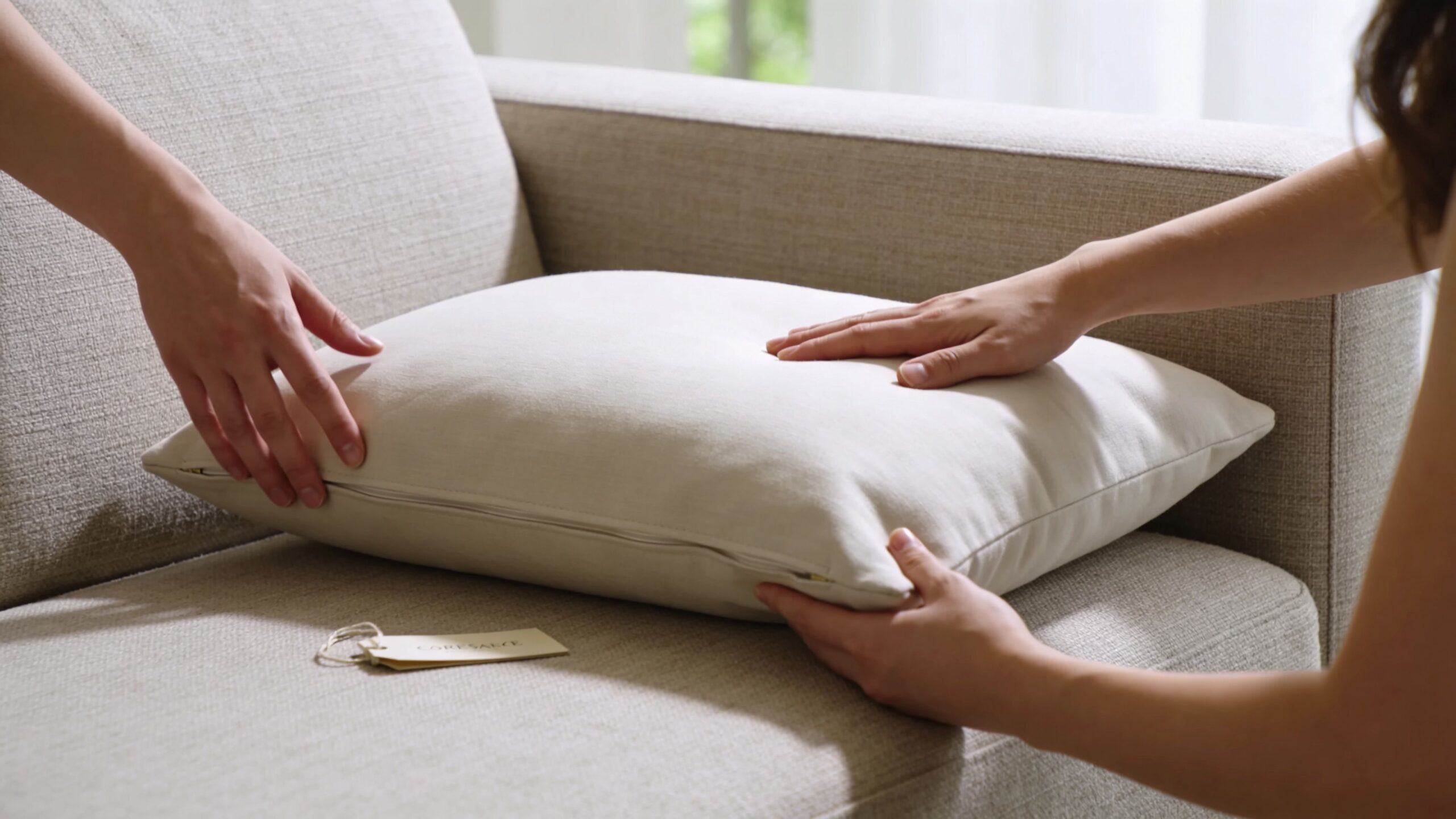
Foam insertion is where most DIY covers go wrong — sizing mismatches and uneven compression during insertion cause more perceived “fit problems” than the cover pattern itself. Compressing the foam gradually rather than forcing it in, and inserting corner-first, makes a real difference.
A good installation routine is simple:
- Open the zipper fully and lay the cover flat.
- Lead with one back corner of the cushion, not the broad face.
- Compress the foam gradually instead of forcing it in all at once.
- Rotate and guide the insert so each corner lands properly.
- Massage the outside of the cover to remove trapped air and bunching.
- Zip slowly while checking that no fabric or batting is caught.
If the cover looks twisted, stop and reopen it. Forcing the last few inches of zipper is how people damage a good cover.
Getting the tailored look
A clean install isn’t only about getting the zipper closed. It’s about getting the cushion to sit evenly once it’s on the furniture.
Use these finishing habits:
- Square the corners by hand after insertion.
- Pat and smooth the boxing panels so the side walls don’t roll.
- Let the cushion rest before judging the fit, especially if the insert was heavily compressed.
- Recheck on the frame because some covers settle differently once weight is distributed.
Don’t judge a new cover in the first minute. Most of the wrinkles people notice right away relax once the insert settles and the seams are adjusted by hand.
Care that protects the investment
Cleaning depends on the fabric. Some covers do best with spot cleaning. Others can handle more routine washing. What matters most is following the care guidance for the fabric you chose and avoiding habits that change the fit.
A few rules keep custom couch cushion covers looking better longer:
- Treat spills quickly so stains don’t set into the weave.
- Vacuum seams and welting where dust and pet hair collect.
- Wash only if the fabric allows it, and be cautious with heat because shrinkage can affect reinstallation.
- Rotate use when possible so one seat doesn’t take all the wear.
- Check zipper areas on futons and sofa beds after conversion to make sure they’re not being bent or exposed in the wrong position.
The best maintenance is consistent, not aggressive. Light routine care does more good than occasional deep cleaning done too harshly.
Refresh Your Space with Confidence
A custom cover is one of the most sensible furniture upgrades you can make when the piece still has life left in it. It solves the right problems. Poor fit from generic covers. Worn upholstery on furniture that’s otherwise sound. The need for a cleaner look without replacing a perfectly usable couch, futon, or sleeper.
It’s also one of the few upgrades that works on both comfort and appearance at the same time. A better fit feels better to use. A better fabric makes the room feel more intentional. On convertible furniture, those details matter even more because the piece has to work in more than one position and hold up under repeated use.
If you’re ready to refresh a favorite seat instead of replacing it, start with the practical steps: measure carefully, compare fabrics objectively, and get help when the furniture is unusual. For finishing touches after the upholstery is handled, decorative throw pillows from Futonland can help tie the updated piece back into the room.
If you want a direct cut-and-sew solution for custom couch cushion covers, especially for futons, sofa beds, and other hard-to-fit furniture, Futonland is one of the few retailers that offers that service. Bring a cushion or sample into one of the NYC store locations, or start remotely with measurements and fabric ideas. The right cover can give a good piece of furniture a real second life.