

Best Futons for Small Spaces
When you’re working with a small space, the best futons are almost always going to be armless, tri-fold, or Japanese-style frames. Why? Because these designs are all about minimizing their footprint while maximizing what they can do for you. Models like the armless Dillon or Aksel are brilliant at saving those precious inches, while tri-folds are fantastic for narrow rooms. For a low-profile, elegant look, Japanese styles like the Okinawa are hard to beat.
Your Guide to Choosing the Right Futon for Your Small Space
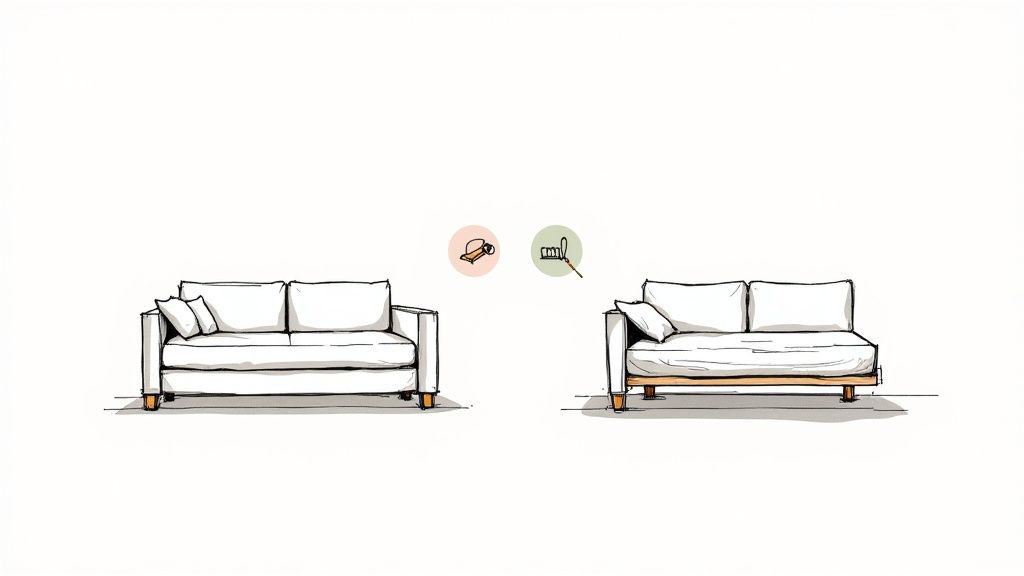
Trying to furnish a small home without giving up on style or comfort can feel like a high-stakes game of Tetris. But the modern futon has completely shed its old dorm-room reputation. It’s now the sophisticated, multi-purpose hero for compact living in apartments, studios, and tiny homes. It’s no longer just a temporary fix but a smart, deliberate choice for anyone looking to make every square foot count.
This guide is your roadmap to picking the perfect futon, making the whole process simple and stress-free. We’ll walk through three essential steps: measuring your room like a pro, understanding which frame types are built for tight quarters, and choosing a mattress that perfectly balances plush comfort with a slim profile.
Making a Smart and Informed Choice
The demand for furniture that works hard in small spaces is surging, especially in cities where every inch is prime real estate. This isn’t just a hunch; it’s a clear trend in the global futon market. Here in the U.S., over 60% of futon sales are to city dwellers living in apartments or small homes.
Digging into the data, it’s no surprise that twin and full-size futons are the top picks for small spaces, making up nearly 70% of all futon mattress sales in North America and Europe. You can explore more about these market trends and see how they’re shaping furniture design.
By focusing on frames designed for efficiency—like wall-huggers that don’t need to be pulled away from the wall to convert—you can unlock your room’s true potential. This clever engineering is a game-changer for daily use.
A Framework for Your Decision
Navigating the world of futons becomes a whole lot easier when you know exactly what to look for. Think of this guide as your cheat sheet for thinking like an interior designer and making a choice you’ll be happy with for years.
We’re going to break it all down:
- Precise Measurement Techniques: Learn how to account for everything—doorways, hallways, and the futon’s footprint when it’s both a sofa and a bed.
- Space-Saving Frame Designs: We’ll dive deep into the real-world benefits of armless, tri-fold, and Japanese-style futons.
- Mattress Selection: Find that sweet spot between a thick, comfy mattress and one that’s flexible enough to convert without a struggle.
By the time you’re done here, you’ll have all the know-how to pick a futon that doesn’t just fit into your space but genuinely makes your life easier and your home more beautiful.
To help you get started, here’s a quick reference table that breaks down the best options for different small-space scenarios.
Quick Futon Selection Guide for Small Spaces
| Futon Style | Best For | Key Feature |
|---|---|---|
| Armless Futon | Studio apartments, multi-use rooms | Saves 10-15 inches of width compared to armed models. |
| Tri-Fold Frame | Long, narrow rooms or hallways | Extends away from the wall, not sideways. |
| Wall-Hugger Mechanism | Rooms with limited clearance | Converts to a bed without needing to be pulled from the wall. |
| Japanese Shikibuton | Minimalist spaces, temporary guest beds | Rolls up for easy storage, freeing up floor space. |
This table should give you a solid starting point for figuring out which direction to go. As you read on, we’ll explore each of these concepts in much more detail.
Mastering Your Space with Smart Measurements
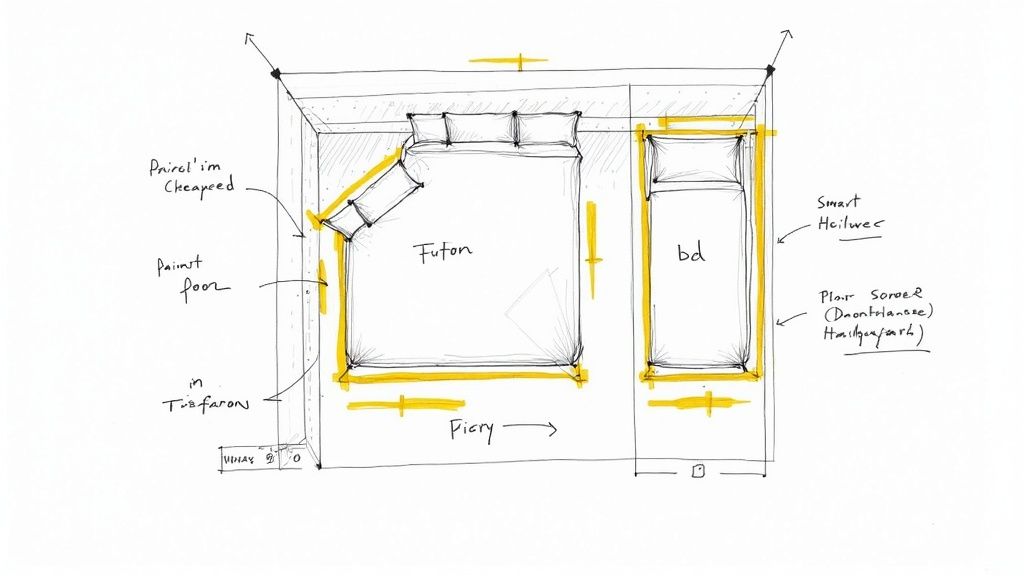
Before you fall in love with a particular futon style, let’s talk about the single most critical step: measuring your space. It’s so easy to just measure the one wall where you think the futon will go, but a successful purchase starts with the full picture. You want to be sure it not only fits perfectly but can actually make it into the room without a fight.
Think beyond the simple length and width of the floor. You need to become a bit of a detective, mapping out the entire journey your futon will take from the front door to its final home. This means getting friendly with your tape measure and noting the width of tight hallways, doorways, and any sharp corners it will have to navigate.
The Two Critical Futon Dimensions
Every single futon has two distinct footprints you have to plan for. Honestly, forgetting to account for both is one of the most common mistakes we see, and it leads to a futon that feels bulky and impractical. Getting these two numbers right is the secret to finding the best futons for small spaces.
First is its upright sofa size. This is the futon’s day-to-day footprint—how much room it takes up when it’s being a couch. This number tells you how it will sit against your wall and play with your other furniture, like coffee tables or side chairs.
The second, and equally important, measurement is its fully extended bed size. This is the total space it commands when laid flat for sleeping. This dimension is crucial because it dictates how much clear floor space you’ll need to convert it into a bed without bumping into things. You still need a walkable path around it, after all.
For a detailed breakdown of what to expect, our comprehensive futon sizing charts offer a great starting point for your planning.
A Practical Visualization Technique
Numbers on a tape measure can feel a bit abstract. To really understand how a futon will change your living area, you need to see it in the room. This is where a simple roll of painter’s tape becomes your best friend.
Once you have the ‘bed’ dimensions of a futon you’re looking at, use the painter’s tape to mark out that exact rectangle on your floor. This simple trick gives you an undeniable visual of the space it will occupy when it’s open.
Pro-Tip: After taping the outline, walk around it. Try opening nearby closet doors or pulling out drawers on a dresser. This real-world test instantly flags any potential traffic jams or blocked furniture before you even think about buying.
Don’t Forget the Delivery Path
Finally, remember the futon has to actually get into the room. This is a step people often forget, but it’s absolutely essential for a stress-free delivery day.
Here’s a quick checklist for measuring the route:
- Doorway Height and Width: Measure every door frame the futon has to squeeze through.
- Hallway Width: Note the width of any hallways, especially at their narrowest points.
- Stairwell Clearance: If you’re in a multi-level home or apartment building, measure the width and turning clearance of stairwells.
- Elevator Dimensions: For apartment dwellers, get the interior height, width, and depth of the elevator.
Taking a few extra minutes to measure everything guarantees a smooth ride from shopping to setup. This careful planning ensures your new futon is a perfect, functional part of your home—not a frustrating puzzle on delivery day.
Finding the Perfect Futon Frame for Tight Quarters
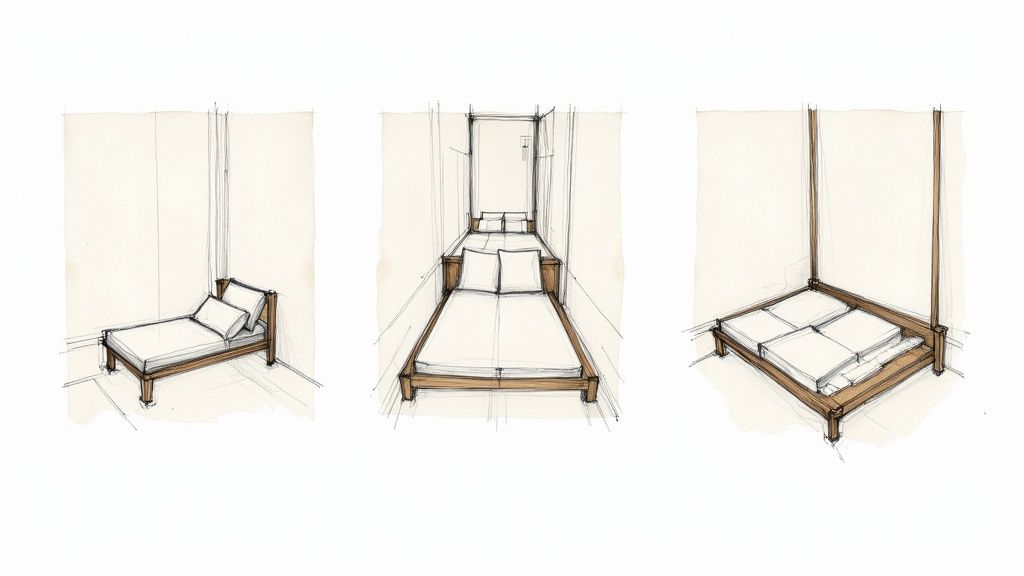
The frame is the skeleton of your futon. It dictates the furniture’s footprint, how it functions, and the overall vibe it brings to your room. When you’re dealing with limited square footage, the right frame is more than just a style choice—it’s a strategic move that can make a small room feel surprisingly spacious and uncluttered. The best futons for small spaces almost always rely on some clever engineering that makes the most of every last inch.
Instead of a one-size-fits-all approach, a few frame styles are specifically designed to solve the classic problems of compact living. We’re going to dive into three winning designs that have proven themselves time and again: armless designs, tri-fold mechanisms, and Japanese-style frames. Each one offers a distinct advantage, whether it’s saving horizontal space or making the most of a room’s depth.
Embrace Openness with Armless Futons
Picture a traditional sofa. Its arms can easily tack on an extra 8 to 12 inches of bulk to its total width, all without adding a single inch of seating or sleeping space. In a cozy apartment or a narrow den, that’s valuable real estate you just can’t afford to waste. This is where armless futons really shine.
By getting rid of those bulky side panels, armless designs like the Dillon and the Aksel reclaim that lost width. It’s a seemingly small change that has a huge visual impact. The clean lines and open sides create an illusion of airiness, preventing the futon from visually dominating the room. It feels less like a heavy anchor and more like a light, integrated piece of furniture.
An armless futon is the design equivalent of taking a deep breath. It opens up sightlines and gives you more flexibility with placement, letting you tuck in a side table or floor lamp much closer than a traditional sofa would allow.
On top of that, many of these sleek frames incorporate another brilliant feature: the wall-hugger mechanism. This clever design allows the futon to convert from a sofa to a bed by gliding the seat forward on a track. This means you don’t have to pull the entire frame away from the wall to open it. You can learn more about how these smart frames work by exploring the different types of wall-hugger futon frames available.
Maximize Vertical Space with Tri-Fold Futons
What if your biggest challenge isn’t the overall width of your room, but its depth? In long, narrow spaces like a converted hallway, home office, or tiny guest room, a standard bi-fold futon might completely block the walkway when it’s open. The solution is to think vertically with a tri-fold futon.
A tri-fold frame works on a completely different principle. Instead of folding in half like a book (bi-fold), it folds into three sections. In its sofa position, the mattress is folded into a deeper, more compact shape that creates a lounge-like seat. When it’s time for bed, the frame extends forward, out into the room, rather than sideways along the wall.
This offers a few key advantages for tight layouts:
- Ideal for Narrow Walls: It fits perfectly on a short wall where a bi-fold frame would stick out on both sides.
- Creates a Lounger: Many tri-fold models can be set up as a chaise lounge, giving you a third configuration beyond just sitting and sleeping.
- Reduced Sofa Depth: The chair-like depth of a tri-fold futon in its upright position can free up precious floor space in front of it.
This design is a perfect example of how the best futons for small spaces can adapt to unconventional room shapes.
Discover Elegance and Storage with Japanese-Style Futons
Inspired by the minimalist principles of traditional Japanese living, these futons offer a low-profile, grounding look that works beautifully in modern small spaces. Frames like the Okinawa are set very low to the ground, which has the powerful effect of making ceilings feel higher and the room appear larger and more open.
But their benefits go far beyond just looks. This style masterfully blends form with function.
The low-slung platform design often includes one of the most sought-after features in a small home: integrated storage. Many Japanese-style frames come with large, rolling drawers built right under the seating platform. These deep drawers are perfect for stashing away bedding, pillows, and blankets, keeping your living space tidy and clutter-free without needing a separate storage chest. This multi-purpose approach is what modern small-space living is all about.
Solving the Futon Mattress Dilemma
The frame gives a futon its structure, but the mattress is where you live and breathe—it’s the heart of its comfort. When you’re picking a futon for a small space, the mattress forces a classic puzzle: How do you get that plush, supportive feel without a bulky profile that turns folding into a workout? It all comes down to matching the mattress materials and thickness to how you really plan to use it.
Start with one simple question: Is this going to be your everyday bed or just a spot for occasional guests? Your answer changes everything. For daily sleeping, you need durability and consistent support. For a guest futon, you can lean more toward flexibility and a slimmer design that converts with ease.
Finding Your Perfect Comfort Level
What’s inside your futon mattress dictates how it feels, how easily it folds, and how many years you’ll get out of it. High-density foam, for example, gives you that firm, consistent support that’s great for your back, making it a solid choice for daily use. Memory foam, on the other hand, is all about contouring to your body, melting away pressure points for a much cushier feel.
Then you’ve got your classic cotton blends, which offer a firm, traditional feel. They’re often lighter and more pliable, a big plus for frames you’ll be converting back and forth all the time. Each material strikes its own balance between luxurious comfort and everyday practicality.
To really get a feel for what each material offers, it’s worth exploring the wide world of futon mattresses available and comparing their specs side-by-side.
The Thickness Trade-Off
Mattress thickness is where the rubber really meets the road in the comfort vs. flexibility debate. A thicker mattress, usually around 8 inches, delivers a sleep experience that can honestly rival a traditional bed. That extra depth allows for more layers of supportive foam or even innersprings, making it the hands-down winner if your futon is pulling double duty as your main bed.
But all that extra padding comes with a trade-off. A thicker, denser mattress is naturally stiffer and heavier. This can make it a real hassle to fold, especially on a tri-fold or bi-fold frame.
If you know you’ll be converting your futon from a sofa to a bed almost daily, a slimmer mattress—around 6 inches—is the far more practical choice. It’s more flexible, takes less muscle to fold, and sits much more neatly in the frame when it’s in its upright sofa position.
This focus on getting the most out of every square inch isn’t just a local trend. In the Asia-Pacific region, rapid urbanization has made futons a go-to solution. In fact, surveys show that 72% of buyers there prioritize compact design above all else, with twin and full sizes dominating 80% of sales. It’s a clear signal that people everywhere are looking for smarter, more efficient furniture. You can read more about this global shift on databridgemarketresearch.com.
Eco-Friendly and Healthy Sleep Options
Your bedroom should be your sanctuary—a healthy one. More and more people are looking for mattresses made with eco-friendly materials that are low in volatile organic compounds (VOCs). These are chemicals that can off-gas from synthetic materials and impact your home’s air quality.
Luckily, you don’t have to sacrifice a healthy home for a comfortable futon. Many modern futon mattresses are made with wellness in mind.
- Organic Cotton: Grown without pesticides, it’s a naturally breathable and hypoallergenic option that’s gentle on your skin.
- Natural Wool: Wool is a powerhouse. It’s a natural flame retardant, so there’s no need for chemical additives. It also does an incredible job of regulating temperature, keeping you cool when it’s hot and warm when it’s not.
- Low-VOC Foams: Keep an eye out for certifications like CertiPUR-US®. This seal means the foam is made without a list of harmful chemicals and has low VOC emissions for better indoor air quality.
Choosing a mattress with these materials isn’t just about comfort; it’s about investing in restful sleep that’s better for you and your home. It’s the final piece of the puzzle—finding a futon that not only fits your space but also fits into a healthier way of life.
Unlocking Your Futon’s Multifunctional Potential
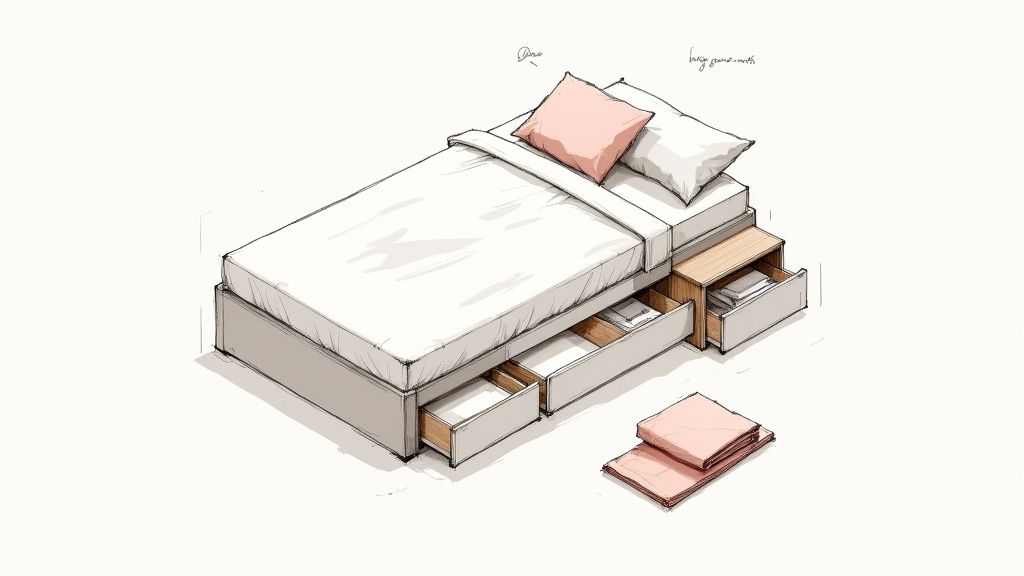
In a compact home, every piece of furniture has to earn its keep. The best futons for small spaces are the ones that work smarter, not harder—pulling double or even triple duty. A futon shouldn’t just be a seat that turns into a bed; it should be an active player in your home’s storage and organizational strategy.
When you choose a model with smart, integrated features, it transforms from a simple piece of furniture into a hard-working hub for your home. These clever designs help you conquer clutter and make the most of every square inch, proving you don’t need a huge space to live an organized life.
Reclaim Your Floor with Under-Frame Storage
One of the biggest headaches in any small apartment is finding a home for everyday items like extra bedding, pillows, and seasonal blankets. This is where futons with built-in storage become absolute game-changers. Instead of letting the space under your sofa become a dust-bunny graveyard, you can put it to good use.
Models with large, rolling drawers tucked neatly beneath the frame offer a seamless solution. These compartments are surprisingly roomy, providing the perfect hideaway for everything that would otherwise jam up your closet or living area. By choosing a frame with this feature, you essentially gain a dresser’s worth of storage without losing any floor space. For anyone serious about decluttering, exploring different designs of futon bed storage drawers can be a real eye-opener to the potential hiding right under your seat.
Smarter Armrests and Side Tables
Believe it or not, even the arms of a futon can do more than just support your elbow. While armless designs are fantastic for saving precious inches, some armed models have evolved to include clever features that add major convenience without adding bulk.
Look for designs that incorporate smart functionalities right into the frame itself. These small enhancements can turn a standard futon into a truly multi-purpose command center.
- Built-in Magazine Racks: Some wooden frames have slats or pockets worked into the arms, creating a tidy spot for magazines, books, or your tablet.
- Fold-Down Trays: Certain models include small, fold-down side tables perfect for holding a cup of coffee, the remote, or a laptop. When you’re done, they tuck away cleanly.
These details might seem minor, but in a tight layout where a separate end table just won’t fit, they make a huge difference in your day-to-day life.
A futon is no longer just a convertible sofa. It’s a strategic piece of engineering designed for modern living, where every element must serve a purpose.
The Power of a Removable Cover
Perhaps the simplest yet most powerful multifunctional feature is a removable, machine-washable cover. Life is messy, and being able to easily clean your main piece of furniture is a practical must. A washable cover takes the stress out of spills and keeps your futon looking fresh for years.
Beyond easy cleaning, a removable cover offers incredible style flexibility. You can completely change the look and feel of your room just by swapping it out. Go from a cozy, neutral gray for winter to a bright, vibrant floral for summer. This one simple feature lets your futon adapt to your evolving taste and decor, making sure it’s always a piece you love.
Your Guide to a Stress-Free Futon Purchase
Picking out the perfect futon is the fun part. But getting it home and set up? That’s where the headaches usually begin, especially if you’re dealing with a third-floor walk-up or a building with impossibly tight corners. The practical side of buying furniture can quickly turn a great decision into a frustrating chore.
This is exactly why we’ve built our services around eliminating those common hassles. You shouldn’t have to wrestle a bulky frame up three flights of stairs or spend your weekend deciphering assembly instructions.
Saving Time and Effort with White Glove Assembly
Let’s be honest: once the futon is finally in your apartment, the last thing you want to do is build it. While most frames come with instructions, putting one together correctly takes time, patience, and the right tools. Our White Glove Assembly service handles all of that for you.
An expert team will make sure every bolt is tight and every mechanism works perfectly from day one. They’ll place the futon exactly where you want it and, best of all, they haul away all the cardboard and packaging. You’re left with nothing to do but kick back and enjoy your new furniture.
Personalizing Your Futon to Perfection
One of the best things about a quality futon is that you can truly make it your own. You’re not stuck with just one or two color options. With our massive selection of custom covers, you can dial in the exact look you want for your space.
We have hundreds of fabrics, colors, and patterns to choose from. This is your chance to match your existing decor perfectly or create a bold statement piece that anchors the whole room. It transforms a functional piece of furniture into something that reflects your personal style.
A high-quality futon is an investment that pays you back for years in comfort and durability. Flexible financing options make it easier to get the right piece for your home without compromising.
Making Your Purchase More Accessible
Good furniture that’s built to last is an important part of making a house a home. To make that investment easier, we offer flexible financing plans that break down the total cost into smaller, more manageable monthly payments.
This way, you don’t have to settle for a lower-quality futon just because of the upfront cost. You can get the best futon for your small space now and pay for it on a schedule that actually works for your budget.
Common Questions About Futons for Small Spaces
Jumping into the world of convertible furniture can bring up a few questions. To help you feel completely confident in your choice, we’ve put together some straightforward answers to the things we hear most often from shoppers trying to find that perfect futon for a small room.
Are Modern Futons Actually Comfortable for Daily Sleeping?
Yes, absolutely. Today’s futons are a world away from the lumpy, thin pads you might be picturing from a college dorm room. A high-quality futon mattress made from supportive memory foam, latex, or even a durable innerspring can honestly rival the comfort of many traditional beds.
If you’re planning on using it for everyday sleeping, the key is investing in the right mattress. We strongly recommend choosing one that’s at least 8 inches thick to make sure you get the proper support and durability needed for a great night’s sleep, every single night. In the end, comfort really comes down to matching the mattress material and thickness to your own personal sleep style.
How Do I Confirm a Wall-Hugger Futon Will Fit My Room?
A wall-hugger is a brilliant piece of engineering that lets you convert the futon from sofa to bed without ever pulling the frame away from the wall. This is a total game-changer in tight spaces where every last inch of floor matters.
To be sure it’ll work in your room, just find the futon’s “fully reclined depth” measurement on its product page. Then, measure that same distance straight out from the wall where you want to put it. As long as that patch of floor is clear of coffee tables or other obstacles, the mechanism will work perfectly, saving you from that daily shuffle of moving furniture around.
What Is the Best Way to Clean and Care for a Futon?
Keeping your futon looking and feeling fresh is simpler than you’d think. Your best line of defense is a removable cover, which is a standard feature on most modern futons.
Pro Tip: Always check the care tag first, but the vast majority of futon covers are designed to be machine washable. This makes dealing with spills or just doing a routine cleaning incredibly easy.
For the mattress itself, a few simple steps will keep it in great shape:
- Regular Vacuuming: Use an upholstery attachment to keep the mattress free of dust, crumbs, and allergens.
- Flip and Rotate: To make sure the mattress wears evenly and keeps its loft, we suggest flipping and rotating it every one to two months.
- Spot Clean Spills: If a spill happens, act fast. Blot the area and spot clean with a mild detergent and water, but be careful not to completely soak the mattress core.
Ready to find a futon that fits your home and lifestyle perfectly? Explore the huge collection at Futonland, where our space-saving designs and expert guidance make it easy to get the most out of your space without giving up comfort or style.
Discover your perfect fit at https://futonland.com.