
How to Clean Sofa Upholstery the Right Way
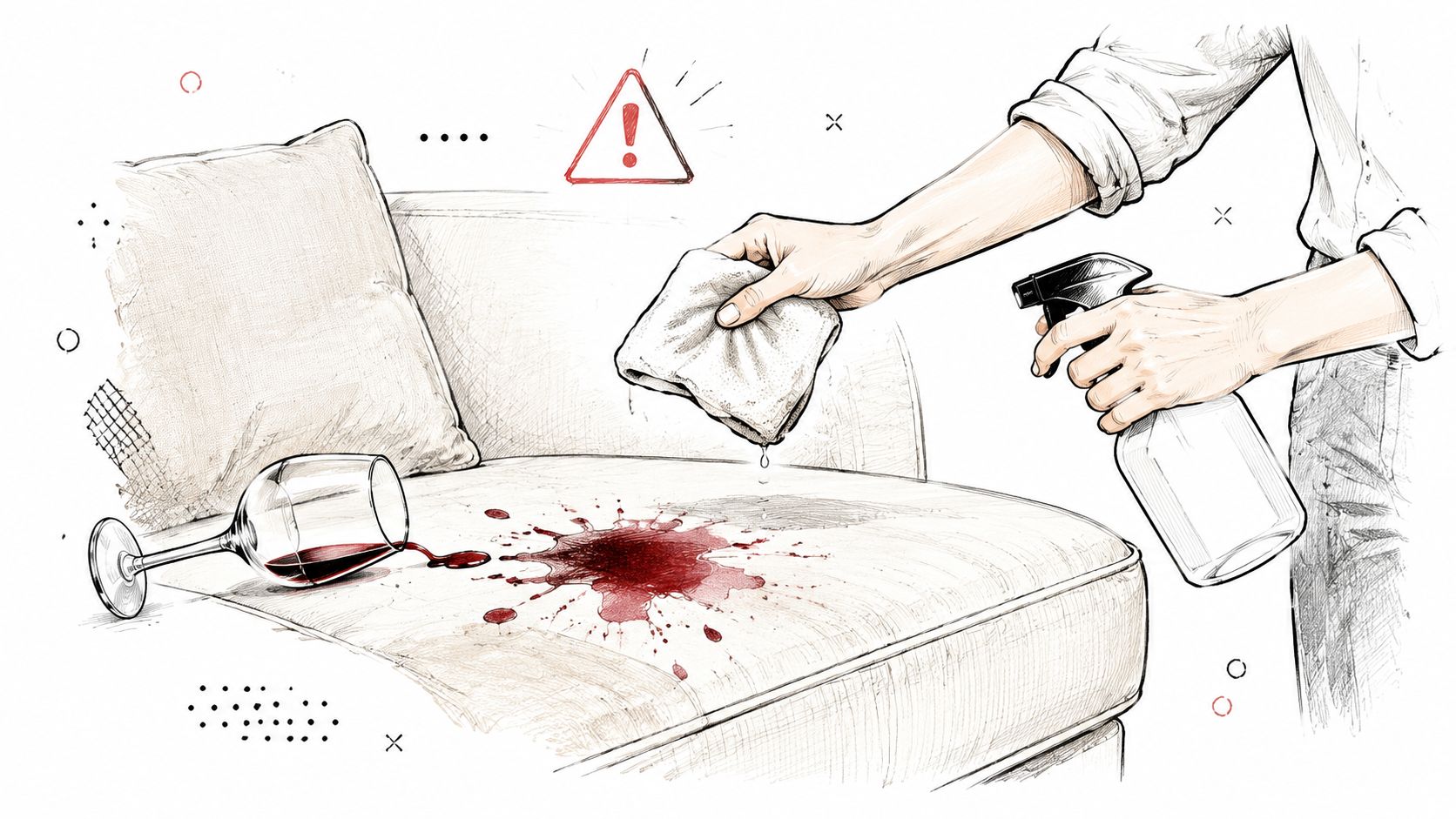
A fresh drink spill on a sofa creates a dangerous reflex: grab a damp cloth, scrub hard, and reach for whatever spray is nearby. That reaction often spreads the mark, pushes liquid deeper into the cushion, and leaves a ring that looks worse after drying. How to clean sofa upholstery safely depends on two things in front of you: the fabric code and the stain’s chemistry.
Start by slowing down. Blotting, controlled moisture, and the right cleaner usually work better than force. Upholstery-care habits worth following consistently: work from the outside toward the center, avoid rubbing, limit water, and keep heat away from the treated area. Those habits protect the fibers while giving you the best chance of removing the spill before it settles.
What to Do Before You Touch the Stain
The first mistake is scrubbing a fresh spill with a wet cloth. Rubbing spreads the stain and can drive soil farther into the weave, while excess water can reach the batting or cushion foam. Heat creates another problem because it can set some stains and leave water marks.
Use this order instead:
- Blot immediately. Press a clean white microfiber cloth onto the spill. Lift the cloth, move to a dry area, and repeat. Work from the outer edge toward the center so the mark doesn’t feather outward.
- Find the care tag. Look beneath a loose cushion, inside a zippered cover, or under the sofa frame. You need to know whether water is permitted before choosing a cleaner.
- Remove solids first. Use a spoon or dull knife to lift food, wax, mud, or other material from the surface. Don’t grind it into the fibers with a cloth.
- Check the depth. A surface mark needs a different response from liquid that has soaked through a cushion cover into the batting. If the cushion feels wet below the visible area, reduce the moisture you add.
- Test your method. Apply the planned cleaner to a hidden seam and let it dry fully. Look for color transfer, fading, texture changes, or a dark edge before treating the visible area.
Practical rule: The less liquid you add at the beginning, the more control you keep over the final result.
Keep a small response kit close to the sofa. White cloths prevent dye transfer, a soft upholstery brush handles dry debris, and a turkey baster can help remove pooled liquid from a seam without spreading it. A fan is useful later, but direct heat from a hair dryer isn’t.
For removable or replaceable covers, check the manufacturer’s instructions before washing or treating them. A properly fitted sofa cover option can also make future spill control simpler, but it still needs fabric-compatible care.
Reading Your Sofa’s Cleaning Code
The small tag under your cushion is a cleaning decision, not just a label. It may be sewn into the underside of a cushion, attached beneath the frame, or tucked near a zipper. If you find several tags, use the one that identifies upholstery-care instructions rather than the manufacturing label.
| Code | Meaning | Safe Cleaners | DIY Caution |
|---|---|---|---|
| W | Water-based cleaning is permitted | Distilled water, mild soap, suitable water-based upholstery cleaner | Avoid soaking and test first |
| S | Solvent-based cleaning is required | Rubbing alcohol or an S-compatible dry-cleaning solvent | Water can leave rings, marks, or texture changes |
| W/S | Water or solvent methods may be used | Either compatible approach, chosen after testing | Don’t assume every product is suitable |
| X | Professional cleaning only | No household wet or solvent treatment | Stop DIY testing and seek specialist advice |
The letters reflect how the upholstery responds to cleaning chemistry. A W-code fabric can usually tolerate carefully controlled moisture, while an S-code fabric needs a solvent that evaporates without creating a water tide mark. A homemade water-and-vinegar spray may look harmless, but it can permanently alter an S-code velvet or another delicate surface.
For W upholstery, use a small amount of distilled water and mild soap on a cloth, not a heavy spray directly on the sofa. For S upholstery, choose a product specifically marked as compatible with solvent-cleaning upholstery and follow its instructions. W/S gives you more flexibility, but it doesn’t remove the need for a hidden test.
An X code is a hard stop. It often signals a fabric or construction that can react badly to both water and consumer solvents, including delicate blends or older upholstery. If the tag is missing or faded, treat the sofa as S until a professional identifies it. Before buying replacement seating or covers, compare the care information for the fabric sofa sets available from Futonland, since the upholstery specification should guide your maintenance plan.
Cleaning Methods by Fabric Type
Fabric names help, but the code still comes first. Two sofas may both be called “linen” or “velvet” while having different treatments, backing, or cleaning restrictions. Vacuum dry debris before any wet or solvent method, then test in an unseen area.
Microfiber
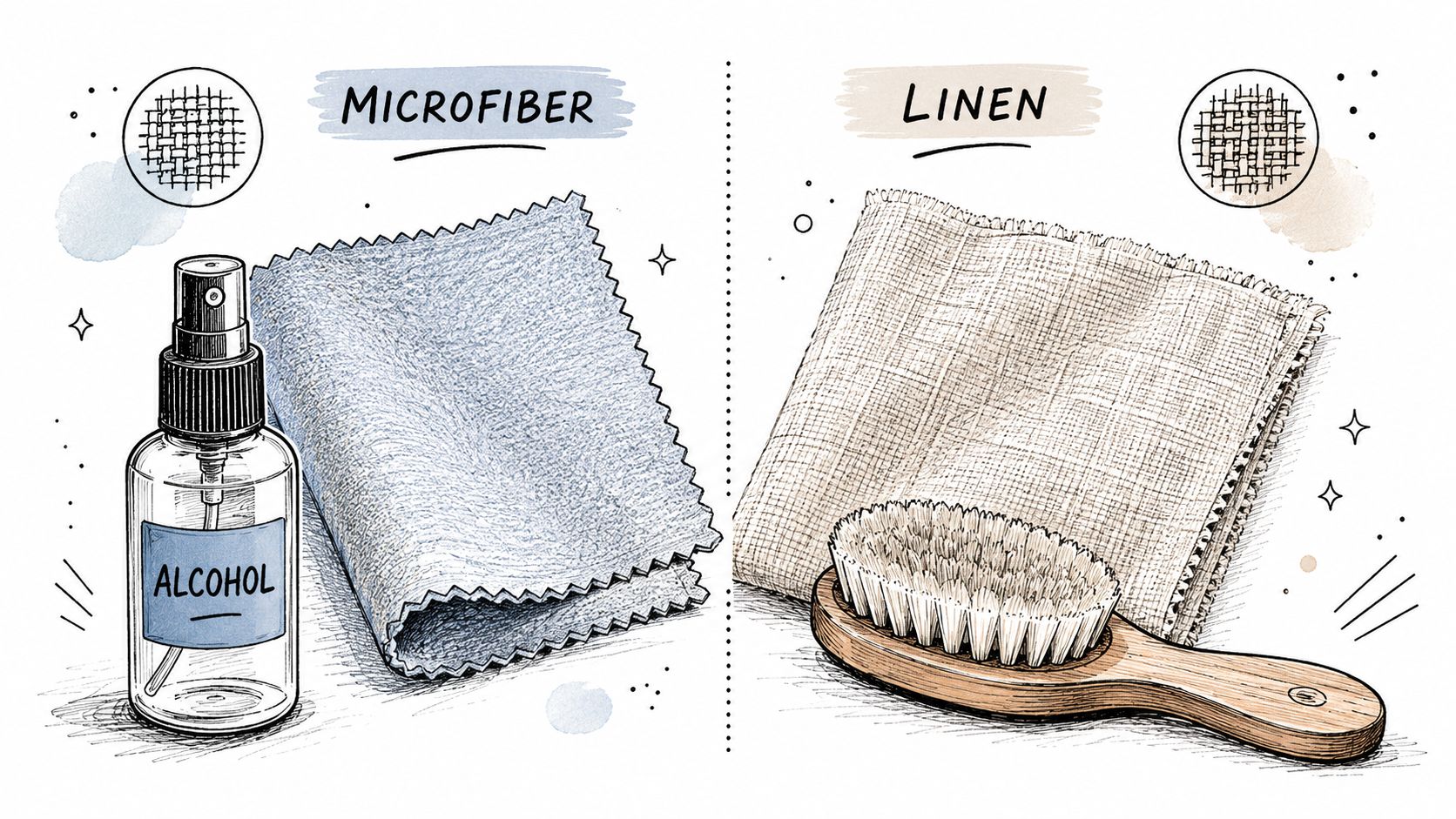
Microfiber is often treated as an S-code material, especially when water leaves visible rings. After vacuuming, place a small amount of rubbing alcohol in a spray bottle or apply it to a white cloth, depending on the product instructions. Work in a small area, blot rather than scrub, and allow the surface to dry before using a soft brush to lift the nap.
Alcohol can evaporate more cleanly than water on suitable microfiber, but it isn’t automatically safe for every version. Check the tag, keep the room ventilated, and watch for color transfer during the hidden test.
Avoid: saturating the cushion in an attempt to remove a dark ring. You can spread the original soil and create a larger drying boundary.
Leather
Leather needs a leather-specific process rather than a fabric recipe. Vacuum seams with a soft attachment, wipe loose dust away, and use a pH-balanced leather cleaner according to the manufacturer’s directions. Follow with a compatible conditioner when the surface is dry.
Don’t soak leather, and don’t use vinegar, baby wipes, or household degreasers. Those products can strip or disturb the finish, leaving a dull or uneven surface that’s harder to restore.
Avoid: treating finished leather like a washable textile. A wet cloth may be appropriate for a small surface response, but flooding the grain or seam is not.
Velvet
Velvet is sensitive to pressure, moisture, and direction. Vacuum gently with the upholstery attachment, following the pile rather than pressing aggressively into it. For general refreshing, use a handheld steamer held away from the surface so the vapor loosens the pile without wetting it heavily.
For a spot on solvent-compatible velvet, use the approved dry-cleaning solvent and a careful blotting technique. Water can crush pile or create tide marks, although the care code and manufacturer’s treatment still control the decision.
Avoid: rubbing across the pile with a wet cloth. Even if the stain fades, the flattened texture may remain visible.
Cotton and linen
W-code cotton and linen can respond to a small amount of mild dish soap diluted in warm or lukewarm water — a small amount of clear dish soap in a cup of warm water is a reasonable starting dilution for suitable synthetic fabrics, but that ratio shouldn’t be transferred blindly to every cotton or linen weave. Test first, apply the solution to a cloth, and work gently with a soft brush only when the tag and test support it.
Blot with a clean damp cloth to remove residue, then press dry towels into the area. Covers can shrink or warp when oversaturated, and a removable cover may need professional cleaning to preserve its shape.
Avoid: washing a cushion cover because it has a zipper. The cover’s label and construction determine whether home laundering is safe.
Performance fabrics
Performance upholstery, including some treated polyester blends and outdoor-grade fabrics such as Sunbrella, may tolerate stronger cleaning products than untreated natural fibers. Even so, use the manufacturer’s care instructions, remove dry soil first, and test before applying a cleaner to the visible panel.
For mildew-related problems, a diluted oxygen-bleach product may be permitted on some performance fabrics. Don’t assume that a stain-resistant finish makes the fabric immune to discoloration, and don’t combine products.
Avoid: treating “performance” as a universal code. The tag still decides whether the particular sofa is water-safe, solvent-safe, or professional-cleaning only.
Pet beds, throws, and nearby soft furnishings can hold the same odors as a sofa — the same principle applies: distinguish surface fabric from odor that’s been absorbed into the foam underneath before choosing a treatment.
For leather seating, compare the material guidance with the care instructions for leather sofa sets before using a household cleaner.
Matching Cleaners to Common Stains
Stain names can mislead you. The useful question is what the substance contains: protein, tannin, oil, or dye. The correct cleaner class also depends on the fabric code, so a method that suits a W-code cotton may be wrong for S-code microfiber.
| Stain | Family | First Cleaner Choice | First Action |
|---|---|---|---|
| Coffee or tea | Tannin | Fabric-approved mild cleaner, with cautious acidic treatment only where compatible | Blot from edge inward |
| Red wine or juice | Tannin and dye | Fabric-code-compatible upholstery cleaner | Absorb liquid before treating |
| Ink or marker | Dye | Compatible solvent or specialty remover | Hidden-test before contact |
| Grease or butter | Oil | Dish soap, absorbent powder, or approved dry solvent | Lift excess and absorb |
| Urine, sweat, milk, or blood | Protein | Enzyme or mild alkaline cleaner where the code permits | Use cool treatment and blot |
Protein marks
Blood, urine, sweat, and dairy contain protein. Use cool water rather than heat, and choose an enzyme or mild alkaline upholstery product only if the fabric code allows it. Pet accidents need enough extraction to address what reached the cushion, not just a fragrance spray on the surface.
Tannin stains
Coffee, tea, wine, and juice can leave strongly colored marks. Blot first, then use a fabric-compatible cleaner; a mild acidic solution such as diluted white vinegar may suit some water-safe fabrics after testing. Don’t apply heat, because heat can set remaining tannin or protein residue.
Oil and dye
Grease, makeup, butter, and salad dressing respond better to absorbent powders, suitable dish soap, or approved solvent chemistry than to plain water. Ink, marker, berries, and mustard are dye-heavy problems, so test a specialty remover on a hidden seam and stop if color lifts from the upholstery itself.
Never mix cleaners. Chlorine bleach and ammonia can react dangerously, while hydrogen peroxide and vinegar shouldn’t be combined. If the stain is old, unidentified, or on a restricted fabric, use a dry-method approach first and ask a specialist before adding water.
Drying and Deodorizing Without Damage
A stain can look gone while the upholstery is still holding too much moisture. Drying controls whether the clean area blends into the surrounding fabric or develops a ring, odor, or distorted texture.
Press a dry microfiber cloth into the treated area, then repeat with another towel. For a deeper damp patch, place a dry towel over it and add light weight for 10 to 15 minutes, replacing the towel when it becomes damp. Don’t twist the cushion or compress it so hard that moisture moves toward the foam.
Airflow matters more than heat. Aim an oscillating fan across the panel or open windows on opposite sides of the room so air crosses the sofa. A cleaned sofa may take a few hours to dry for lighter microfiber or cotton, while dense velvet or heavily saturated cushions can take considerably longer, depending on fabric, airflow, and humidity.
Drying check: Don’t sit on the sofa until the treated area feels dry through the cover, not merely dry on top.
For odor control, use a light layer of baking soda only after cleaning, let it sit briefly, and vacuum thoroughly. Persistent pet odor may require an upholstery-safe enzyme deodorizer because fragrance sprays can mask rather than remove the source. If a ring appears as the area dries, lightly dampen the surrounding panel with clean water and feather the boundary so the whole zone dries evenly.
Keep decorative textiles, including decorative throw pillows, out of the damp area while the sofa dries. They can transfer dye or hold moisture against the upholstery.
Building a Realistic Cleaning Routine
A realistic routine reduces rushed scrubbing after spills. Stained sofas are common in most households, and coffee and tea are among the most frequent culprits — which is exactly why it’s worth keeping the appropriate treatment on hand for your fabric’s code before the next spill happens.
Set the schedule around use:
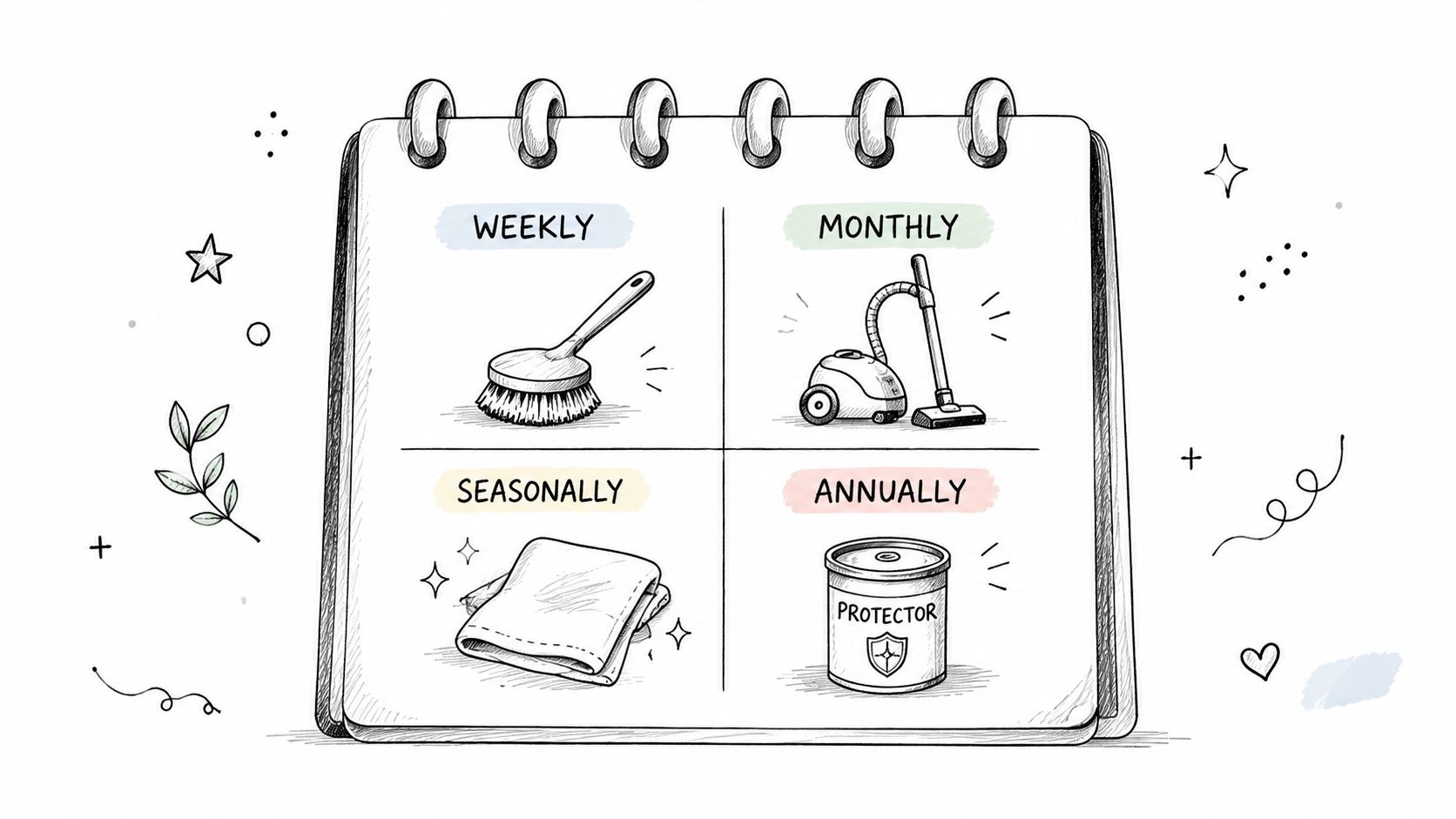
- Weekly: remove crumbs and pet hair with a brush or vacuum, then rotate loose cushions to spread wear.
- Monthly: vacuum seats, backs, arms, seams, crevices, and the platform beneath removable cushions using the upholstery attachment.
- Quarterly: treat established marks with a code-compatible product, refresh high-contact areas, and deodorize only after removing dry soil.
- Yearly: book a fabric-appropriate deep clean, inspect seams and loose threads, and check for sagging cushion cores.
Shedding pets and indoor smoking call for more frequent dry-soil removal. With young children, store white cloths, mild soap, and a stain product matched to the sofa’s code close by. A rushed spill is a poor time to search for the right cleaner.
Keep microfiber cloths, a soft brush, baking soda, mild dish soap, white vinegar for compatible fabrics, an upholstery enzyme cleaner, and a stain pen suited to the dominant fabric in one kit. Label the kit with the cleaning code. That simple step prevents someone from applying a water-based product to solvent-only upholstery.
When to Call a Professional
DIY cleaning has reached its limit when the stain keeps returning, the fabric changes texture, or the moisture has traveled into the cushion. An old coffee, wine, or urine mark that wicks back after drying usually needs more than another surface application. Professional equipment and controlled chemistry can address deeper contamination without forcing you to keep wetting the same area.
| Stain or Fabric Signal | Why DIY Often Fails | Recommended Action |
|---|---|---|
| Old tannin stain that returns | Residue remains below the surface and wicks upward | Stop repeated wet treatments and request professional cleaning |
| Ink or dye on S-code fabric | Water or the wrong solvent can spread color or strip finish | Use a specialist familiar with solvent upholstery |
| Rings or browning on velvet or chenille | Moisture has dried unevenly or disturbed the pile | Seek professional assessment before rewetting |
| Oil-darkened suede or microfiber | Oil changes the nap and may need controlled solvent work | Consult a fabric specialist |
| Mold, tears, or separated seams | Cleaning alone won’t correct structural or biological damage | Arrange restoration or repair |
| Pet odor in foam | Surface deodorizer can’t reach the absorbed source | Ask about cushion and foam treatment |
Professional work is especially sensible for S-code velvet, silk, rayon blends, X-code upholstery, heirloom pieces, and furniture covered by a warranty that DIY treatment could void. Isolated spot cleaning can also leave rings or fading of its own — cleaning the entire piece at once often produces a more even result than repeatedly treating just one spot.
There’s no reliable universal price range to quote without knowing the sofa’s size, fabric, access, damage, and location. Ask whether an in-home service includes inspection, vacuuming, spot treatment, overall extraction or solvent work, drying advice, and protection of nearby flooring. Shop-based restoration may include deeper disassembly, cover cleaning, foam treatment, repair, or dye work, but it requires transporting the furniture or covers.
When you contact a professional cleaner, describe the code, fabric, stain type, age of the mark, and any products already used. That information helps the cleaner avoid repeating a treatment that caused the problem.
Professional care protects a costly piece of furniture. It isn’t an admission that you failed. It’s the sensible choice when fabric restrictions, deep contamination, or structural damage make experimentation riskier than the cleaning itself. For owners of modular or convertible furniture, Futonland also offers service-related options involving sectional covers, futon mattresses, and applicable performance-fabric warranties, so check the product’s documentation before treating it.
Quick answers after cleaning
What does each cleaning code mean in practice? W permits carefully controlled water-based cleaning, S calls for compatible solvent methods, W/S permits either after testing, and X means professional cleaning only. The code should be checked before the stain category determines the product.
Why do rings appear after drying? A ring forms when dissolved soil or moisture dries at an uneven boundary. Blotting, limiting liquid, drying with cross-flowing air, and feathering the surrounding panel can reduce that contrast.
Can removable cushion covers go in a home washer? A zipper doesn’t guarantee that washing is safe. Follow the cover’s care label, because shrinkage, backing damage, and warping can make it impossible to refit.
How can you identify fabric when the tag is missing? Check the original purchase documents, contact the manufacturer, and inspect the weave and finish without applying cleaner. Until the material and code are confirmed, avoid water and ask a professional.
Are steam cleaners safe on every upholstery type? No. Steam adds heat and moisture, which can damage restricted fabrics, crush velvet pile, shrink natural fibers, or set remaining stains. Use it only when the manufacturer and code permit it.
How do you keep a light sofa from yellowing? Remove spills quickly, vacuum dry soil regularly, avoid excessive moisture, and keep heat away from treated areas. Residue, uneven drying, and unsuitable cleaners are more controllable risks than color alone.
What mental model should guide the next spill? Identify the code, classify the stain, use the least aggressive compatible method, and dry the area evenly. If any step is uncertain, stop before the fabric becomes the next problem.
Check your sofa’s care tag today, assemble the small cleaning kit, and photograph the label for future reference. If a current stain has reached the cushion interior, keeps returning after drying, or sits on S- or X-code upholstery, contact a qualified cleaner before applying another product.