How to Maximize Space in a Small Apartment Your Ultimate Guide
Maximizing space in a small apartment starts long before you buy a single piece of furniture. The real secret is to create a detailed floor plan and define functional zones for living, working, and sleeping. Taking this step first makes every decision more intentional, helping you avoid expensive mistakes and turning a cramped layout into one that feels open and organized from day one.
Blueprint for a Bigger-Feeling Space
It’s tempting to jump straight into furniture shopping — that’s the fun part. But it’s also the fastest way to end up with pieces that technically “fit,” yet make the apartment harder to live in. A sofa that blocks a walkway or a desk that turns your entry into an obstacle course can make a small place feel even smaller.
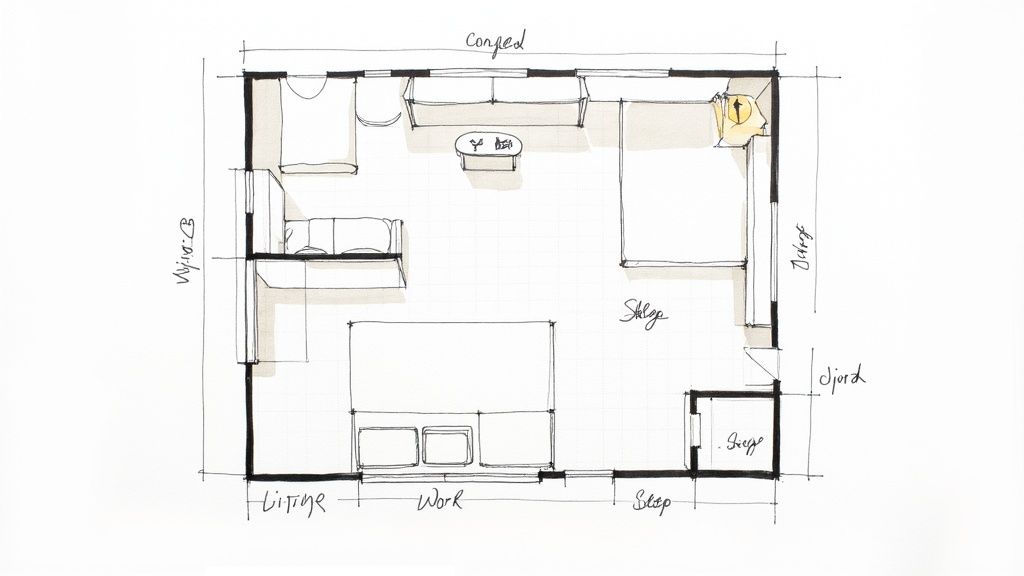
The fix isn’t complicated: measure first, then plan. A simple to-scale floor plan helps you understand proportions and flow. You don’t need to be an architect. You just need a clear picture of what you’re working with and where your apartment needs breathing room.
Map Your Layout and Traffic Flow
Start by measuring the main dimensions of the room. Include windows, doors, radiators, baseboards, and any awkward features like columns or recessed nooks. Sketch it on grid paper or plug the numbers into a basic floor planner. Once the outline is set, map how you actually move through the space.
- Primary paths: The routes you walk most often — front door to kitchen, living area to bathroom — need to stay open.
- Secondary paths: Access to windows, closets, a balcony, or a fuse box still matters, even if it’s not constant.
This immediately shows where large furniture can go and where it can’t. A bulky item placed in a high-traffic zone is one of the quickest ways to make a small apartment feel cramped.
When you plan around movement first, you avoid bottlenecks and “dead corners.” A good layout guides you naturally, which is why it feels bigger — even when the square footage hasn’t changed.
Define Your Functional Zones
Even in a studio, you can create distinct “rooms” without adding walls. Use your floor plan to designate areas for different activities: lounging, eating, working, sleeping. This isn’t just aesthetic — it helps you keep routines separate, which makes a small home easier to live in.
An area rug is a classic tool for a reason: it works. A rug anchors your living area and visually separates it from your dining spot or work setup. Another simple move is positioning a desk facing a wall or corner to create a dedicated office nook. Small zoning choices like these create structure in an open space.
Once you’re zoning, furniture footprint matters. Our detailed sizing charts can help you compare dimensions so you’re not guessing.
Choosing Furniture That Works Harder Than You Do
In a small apartment, furniture can’t just look good — it has to earn its footprint. The best pieces do double or triple duty: seating that becomes sleeping space, storage that doubles as a table, a dining setup that expands only when you need it.
Think of multifunctional furniture as a “space budget” decision. A single-use sofa takes up the same floor area as a convertible sofa bed, but only one of them turns your living room into a guest setup when you need it.
Beyond the Basic Sofa Bed
Space-saving furniture has improved dramatically. The best modern designs are cleaner, easier to use, and built for everyday living — not just occasional emergencies.
-
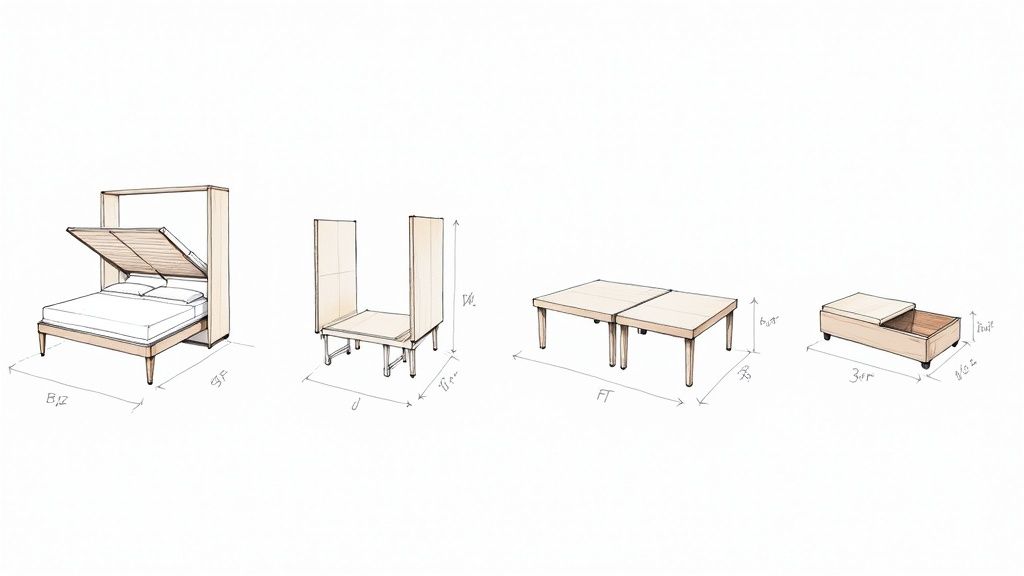
Modern wall beds: Today’s wall beds are designed to feel stable and streamlined, and many integrate shelving or cabinetry. When folded up, they free up the floor and make the room usable for something else.
-
Storage ottomans and benches: One of the easiest upgrades you can make. A storage ottoman can act as a footrest, extra seat, coffee table, and a place to stash blankets or games.
-
Expandable dining tables: Perfect if you want to host occasionally without dedicating your daily floor space to a full-size table. Drop-leaf and extendable styles can stay compact most of the time and expand when guests arrive.
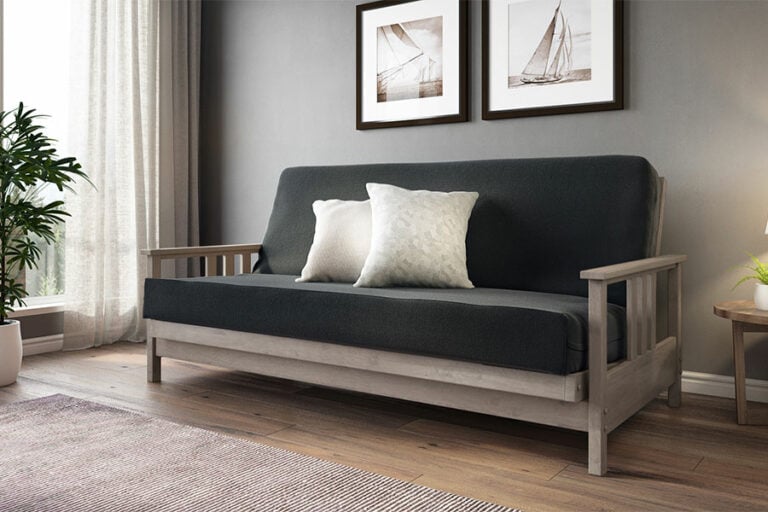
If you’re prioritizing seating that can also host overnight guests, our convertible sofa beds collection is built specifically for flexible, small-space living.
Multifunctional Furniture Comparison
This table breaks down popular space-saving options and where they tend to work best.
| Furniture Type | Primary Space-Saving Benefit | Best For | Considerations |
|---|---|---|---|
| Convertible Sofa Bed | Combines seating and sleeping in one footprint | Studios; living rooms that double as guest rooms | Comfort varies by model; choose an easy mechanism you’ll actually use |
| Wall Bed | Clears floor space when not in use | Studios; home offices that also host guests | Usually a bigger investment; may require more planning for placement |
| Storage Ottoman | Adds hidden storage and flexible seating | Clutter control (blankets, remotes, accessories) | Limited capacity; not a primary seating solution |
| Expandable Dining Table | Adjusts for everyday vs hosting | Small dining nooks; open-plan layouts | Plan for chair storage and extension clearance |
| Nesting Tables | Multiple surfaces in a small footprint | Living rooms needing flexible tabletop space | Lighter look; may feel less substantial than a single coffee table |
Quality and Ease of Use Matter More Than Features
Multifunctional furniture only works if you’ll use it. A sleeper sofa should open smoothly without feeling like a workout. A wall bed should feel stable and controlled. The best pieces are the ones that transition so easily you don’t dread converting them.
If a piece is annoying to operate, it turns into a “nice idea” instead of a daily solution. In a small apartment, you want furniture that makes life easier, not fussier.
Mastering the Art of Vertical Space
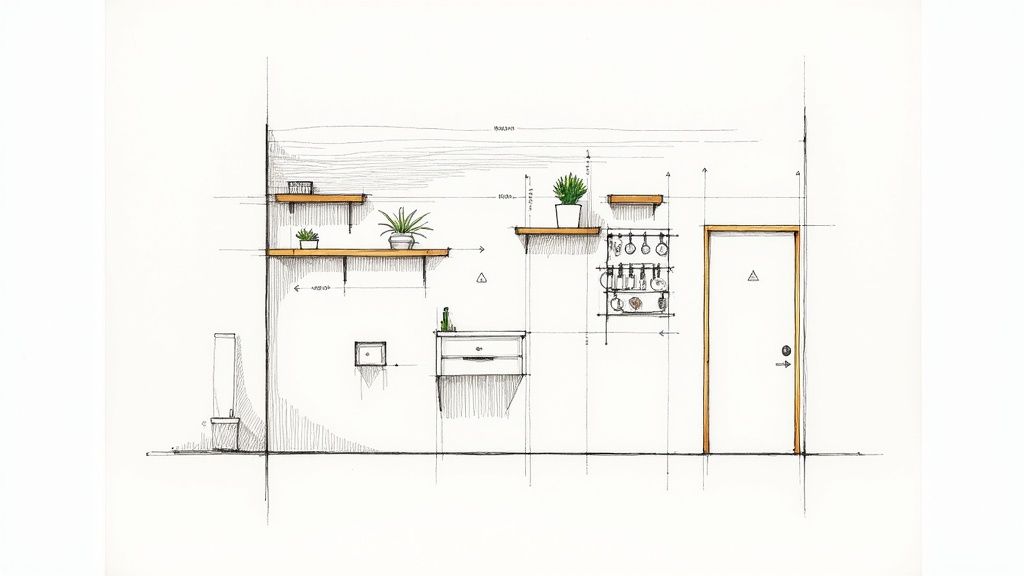
When your floor space is maxed out, your walls become the most valuable real estate you have. Using vertical space well does two things at once: it increases storage and reduces visual clutter on the floor. That combination is what makes a small apartment feel calmer and more open.
Go Floor-to-Ceiling for Maximum Impact
Floor-to-ceiling shelving is one of the strongest moves you can make. It adds serious storage, but it also creates a tall visual line that makes the ceiling feel higher. A low bookcase cuts the wall in half; a tall unit stretches the room upward.
For a clean look, consider shelves painted the same color as the wall. That helps them blend in visually while still doing heavy lifting for storage. If you’re looking for options that work in compact layouts, browse our book shelves collection for different footprints and styles.
Vertical storage isn’t just “more shelves.” It’s a way to reclaim the floor by moving clutter off surfaces and into designated storage zones.
Wall-Mounted Solutions That Keep the Floor Clear
Wall-mounted pieces “float,” which makes a room look less crowded and keeps cleaning easier.
- Home office: A wall-mounted desk paired with a few floating shelves creates a compact workstation.
- Living room: Mount the TV and use a slim floating shelf for devices instead of a bulky media console.
- Bedroom: Small floating shelves can replace nightstands and free up floor space on both sides of the bed.
Think Beyond Traditional Shelving
Some of the best vertical storage ideas are simple, low-profile, and easy to maintain.
- Over-the-door organizers: Great for bathrooms, pantries, and closets.
- Magnetic strips: Handy in kitchens and inside cabinets for small metal tools.
- Pegboards: Flexible and rearrangeable for office supplies, entryway items, or kitchen tools.
- Tiered shelf risers: Useful in cabinets and pantries to create visibility and prevent “lost” items.
Decluttering and Organizing for Good
You can install shelves and buy space-saving furniture, but if the apartment is overfilled, it will still feel tight. The fastest way to create space is to reduce what’s taking it up. Decluttering isn’t about being extreme — it’s about being honest about what you use and what you’re storing out of habit.
A Practical Way to Start Decluttering
Start small so you don’t stall out: one drawer, one cabinet, one shelf. Then use a few simple questions to make decisions easier.
- Have I used this in the last year? If not, it may be time to donate or toss.
- Do I own duplicates? Keep the best version and let the extras go.
- Would I buy this again today? This cuts through guilt and “but it was expensive” thinking.
Create three piles: Keep, Donate/Sell, Toss. Keep it realistic. If something is broken or heavily worn, it’s usually not a donation item.
Build Organization Systems That Last
Once you’ve pared down, assign every category a “home.” The goal isn’t perfection — it’s ease. When items have a logical place, tidying up becomes quick because you’re not deciding where things go each time.
Organization is a system, not a weekend project. The best setup is the one you can maintain without thinking about it.
Matching bins or baskets help, especially on open shelving. They reduce visual noise and keep small items from spreading out across every surface.
Conquer Common Problem Areas
The overflowing closet
The most effective closet upgrades are usually the simplest.
- Add a second rod to double hanging space for shorter items.
- Switch to slim hangers to free up rod space.
- Use drawer dividers so small items don’t turn into a pile.
- Use under-bed storage for off-season clothing and bulky items.
The crowded pantry (or kitchen cabinets)
Visibility is half the battle in small kitchens.
- Use clear containers for staples so you can see what you have.
- Add shelf risers for cans and jars to create “tiers.”
- Use a turntable in corner cabinets so nothing disappears in the back.
Design Tricks That Create the Illusion of Space
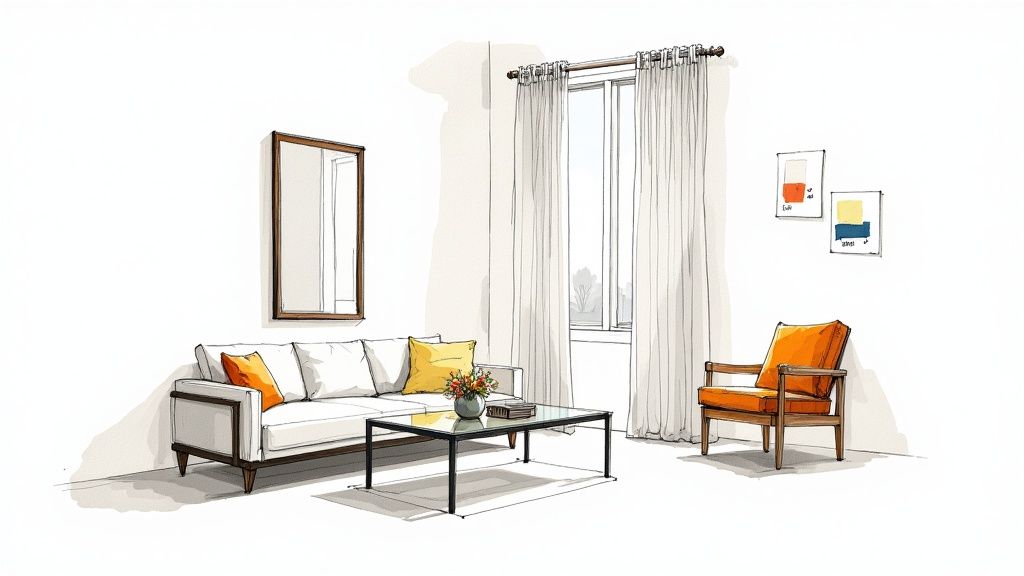
Once your layout and storage are working, design choices can make the apartment feel even larger. The goal is to increase light, reduce visual weight, and keep sightlines open.
Use Mirrors to Add Depth and Light
A well-placed mirror can change the feel of a room instantly. Hang a large mirror across from a window to bounce natural light around and create a sense of depth. In narrow hallways, it helps break up that boxed-in feeling.
Mirrors work because they reflect both light and space — you’re essentially adding a “second view” to the room, which makes the boundaries feel farther away.
If you’re shopping for styles that fit smaller layouts, explore our mirrors collection.
Use Color Strategically
Light colors reflect light and help walls feel less “close.” That’s why soft off-whites, light grays, and pale blues are so common in small apartments. But you don’t have to avoid darker tones completely.
- Monochromatic palettes can blur transitions between walls, trim, and ceiling.
- An accent wall can add depth — especially at the far end of a narrow room.
- A lighter ceiling can make the room feel taller.
Choose Furniture That “Breathes”
In small rooms, visual weight matters as much as measurements. Furniture with exposed legs lets you see more floor, which makes the space feel more open. Glass or acrylic pieces (like a coffee table) can also reduce visual clutter because they don’t block sightlines.
Your Small Apartment Questions Answered
What’s the Best Bed for a Very Small Studio?
If you want maximum floor space during the day, a wall bed is hard to beat because it clears the room when folded up. If that isn’t realistic, a high-quality sleeper sofa is usually the most flexible alternative. It gives you seating and sleeping in one footprint, which is exactly what studios need. For compact options built for tight layouts, browse convertible sofa beds.
How Can I Add Storage to a Small Kitchen?
Go vertical and get things off the counter. Floating shelves for everyday items, wall-mounted hooks for utensils, and magnetic strips for knives can free up work surface quickly. If you have space for it, a slim rolling cart can act like a flexible pantry or extra prep station that tucks away when you don’t need it.
Are Dark Paint Colors a Bad Idea?
Not necessarily. Dark colors can look excellent in small spaces when they’re used intentionally — for example, on one accent wall — and balanced with good lighting, lighter furniture, and reflective elements like mirrors.
My Landlord Doesn’t Allow Drilling. What Can I Do?
There are plenty of damage-free options that still add function:
- Tension rods for closets and small niches
- Freestanding shelving (tall and narrow works best)
- Over-the-door organizers for bathrooms, pantries, and closets
- Adhesive hooks for lightweight items (always check weight limits)
Another smart workaround is furniture with built-in storage — ottomans, benches, and storage-friendly sleepers — which adds function without touching the walls.
At Futonland, we focus on space-smart furniture that helps small homes live bigger — from convertible sleepers to storage-friendly pieces that keep your layout flexible. Explore options that fit your footprint in convertible sofa beds and start planning a setup that feels open, organized, and easy to live in.