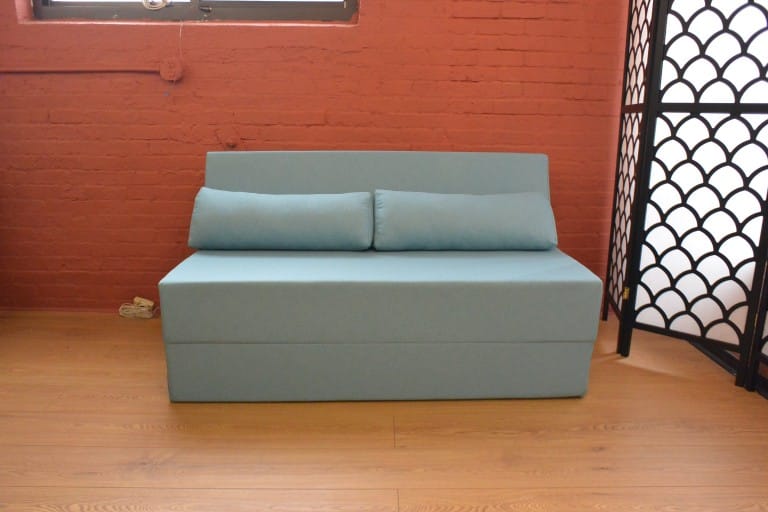

Finding the Best Full Size Futon for Your Space
Let’s be honest, the word “futon” probably conjures up images of a lumpy, uncomfortable couch from a college dorm room. But it’s time to forget that cliché. Today’s best full-size futons are a completely different animal—versatile, stylish, and genuinely comfortable pieces of furniture perfect for modern living.
They’ve evolved, incorporating smart mechanics like space-saving wall hugger designs, the timeless strength of eco-friendly hardwood frames, and mattresses that offer real, all-night comfort.
Your Guide to a Smarter Futon Purchase

A modern full-size futon is a seriously smart solution for anyone dealing with a smaller living space, a home office that doubles as a guest room, or just a desire for adaptable furniture. But with all the options out there—from different frame mechanisms to various mattress types—it’s easy to feel a bit lost.
This guide is here to cut through the confusion. We’ll break down the clever engineering and key features that separate a great futon from a mediocre one.
This trend toward adaptable furniture isn’t just a feeling; it’s a massive market shift. The multifunctional furniture market, which includes futons, was valued at a whopping USD 7.21 billion in 2023 and is only expected to grow. It’s a direct response to city living and the rise of remote work, where every piece of furniture needs to earn its keep. You can find more market insights on Grand View Research.
What Makes a Great Futon Today?
The difference between a high-quality futon and the lumpy relics of the past comes down to a few key innovations that make a world of difference in daily use. We’re not just talking about aesthetics; we’re talking about real functional upgrades.
Here are the features you should actually be looking for:
- Wall Hugger Mechanisms: These are a game-changer for small rooms. The clever design lets you convert the futon from a sofa to a bed without having to drag the whole frame away from the wall. It’s a simple feature that saves a ton of space and hassle.
- Japanese-Style Frames: Known for their clean lines and low-to-the-ground profile, these frames, like the Okinawa Bi-Fold Futon Frame, bring a minimalist elegance to any room. They feel open and are a great way to make a space feel less cluttered.
- Front-Closing Eco-Friendly Hardwood: A good hardwood frame means durability and sustainability. When you add a front-closing mechanism, converting it from sofa to bed becomes incredibly simple and smooth. It’s a massive leap forward in user-friendly design.
Understanding these core components is the first step. You’re not just buying another piece of furniture; you’re investing in a long-term solution that’s truly built for your space and how you live.
Whether you’re setting up a guest room, furnishing a studio apartment, or creating a home office that can host overnight visitors, this guide will give you the confidence to pick the best full-size futon for the job.
Choosing a Frame That Works for Your Space
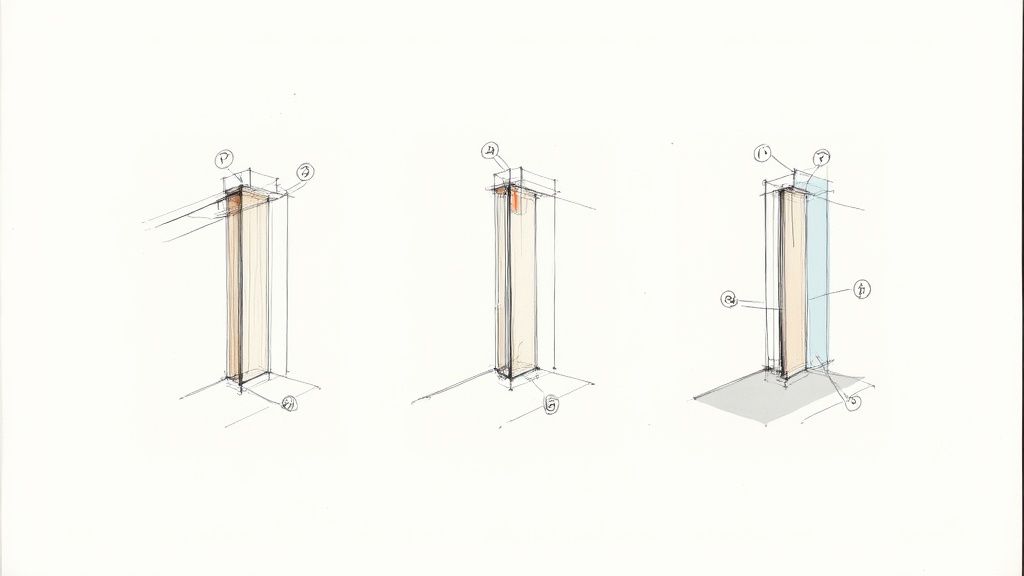
The frame is the unsung hero of any great full-size futon. It’s not just a base for the mattress—it’s the backbone providing durability and the engine that transforms it from a sofa into a bed. A well-built frame means stability and smooth operation. A cheap one leads to squeaking, wobbling, and a whole lot of frustration.
When you’re picking out a frame, you’re really looking at two things: the material it’s made from and, just as importantly, the mechanism that lets it convert. These features dictate how the futon fits into your room and how easy it is to use every single day. The best full-size futon isn’t just comfy; it’s also engineered for real life.
The Power of Smart Conversion Mechanisms
How a futon changes from a couch to a bed is where modern engineering truly shines. A clunky, difficult mechanism will quickly turn a useful piece of furniture into a hassle you’d rather ignore. Thankfully, today’s innovative designs have solved the biggest problems of older models, making the conversion process practically seamless.
This is a game-changer for anyone in a smaller apartment or a multi-use room where every square inch of floor space counts. The mechanism is the difference between a futon that works for you and one that you have to work around.
The right mechanism isn’t just a feature; it’s a fundamental part of the futon’s functionality. It determines whether you’ll need to rearrange your room every time you have a guest or if the process can be quick and effortless.
Here are a few of the most popular and practical designs you’ll run into:
- Wall Hugger Mechanism: This is an absolute must-have for tight spaces. A wall hugger frame uses a clever gliding system that moves the seat forward as the backrest lowers. This means you can place the futon right up against a wall and convert it without ever having to pull the entire unit away. It’s a brilliant space-saving solution.
- Front-Closing Mechanism: Simplicity is the name of the game here. To convert, you just lift the front of the seat deck and pull it forward until it lays flat. You’ll often find this design on sturdy front-closing eco-friendly hardwood frames, and it’s praised for its reliability and straight-up ease of use.
- Japanese-Style Bi-Fold Frames: Embodying a minimalist aesthetic, these frames are often lower to the ground and feature clean, simple lines. The bi-fold design folds the mattress in half lengthwise, creating a compact and elegant sofa. They are perfect for creating an open, uncluttered feel in a room.
Hardwood and Materials That Last
While the mechanism is crucial, the frame’s material dictates its longevity and sturdiness. Metal frames can offer a sleek, modern look and are often more budget-friendly, but solid hardwood remains the gold standard for durability.
Hardwoods like oak, maple, and cherry are not only incredibly strong but also beautiful, adding a timeless quality to your decor. As you explore the different full size futon frames available, you’ll find that many premium options are crafted from sustainably sourced wood, making them a great eco-conscious choice.
These eco-friendly hardwood frames are built to withstand years of daily use—from sitting to sleeping—without losing their structural integrity. They provide a solid, quiet base for your mattress, so you won’t be disturbed by creaks or shifts during the night. Investing in a high-quality hardwood frame means you’re buying a piece of furniture that’s truly built to last.
Finding the Right Mattress for Real Comfort
Let’s be honest: a futon is only as good as its mattress. If you’re picturing those thin, lumpy pads from college dorms, you’ll be happy to know things have changed. A lot. Today’s futon mattresses can easily go head-to-head with a traditional bed, but only if you choose the right one.
Think of the mattress as the heart of your futon. It’s what makes the difference between a piece of furniture that’s just “good enough” for guests and a bed you’d happily sleep on every single night. The key is knowing what’s inside.
Full-size futons are a lifesaver in city apartments and smaller spaces where every square foot counts. It’s no surprise that full and queen sizes absolutely dominate the market, making up over 55% of all futon mattress sales. People rely on these for daily living, not just for occasional guests. For a deeper dive into current trends, you can explore the full futon mattress market report.
Unpacking the Four Main Mattress Types
Just like with a regular bed, futon mattresses are built using different materials, and each one has a totally unique feel. The big question is: do you want a mattress that feels bouncy and responsive, or one that sinks in and cradles you? Let’s break down the main players.
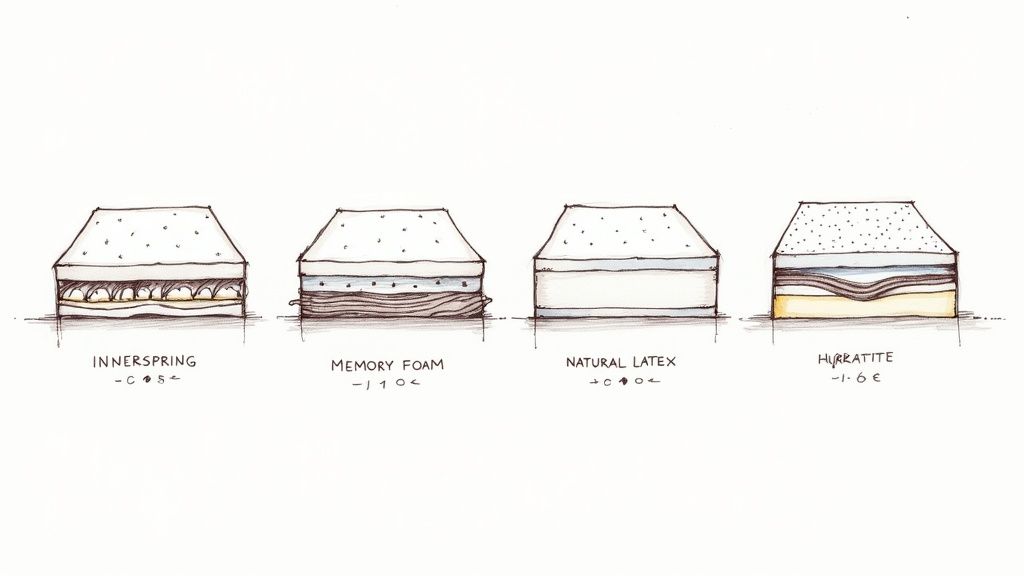
Full Size Futon Mattress Construction Comparison
To help you see the differences at a glance, here’s a quick comparison of the most common mattress types. Each one shines in different situations, so think about how you’ll be using your futon most often.
| Mattress Type | Best For | Feel & Support | Durability | Price Range |
|---|---|---|---|---|
| Innerspring | Daily sitting & occasional sleeping. Great for hot sleepers. | Bouncy, firm, traditional mattress feel. Excellent airflow. | Good, but coils can sag over many years of heavy use. | $$ |
| Memory Foam | Nightly sleeping, especially for side sleepers. | Contouring, pressure-relieving, “hugging” sensation. | Very good, but can retain heat unless it has cooling tech. | $$$ |
| Latex | Eco-conscious buyers & allergy sufferers. Nightly use. | Buoyant, responsive, and naturally cooling. | Excellent; one of the most durable materials available. | $$$$ |
| Hybrid | The best of both worlds; daily sitting and nightly sleeping. | Balanced feel with coil support and foam/latex comfort. | Excellent; combines the longevity of coils and foam. | $$$ |
Ultimately, your choice comes down to personal preference. Let’s look a little closer at what makes each one tick.
A Closer Look at Construction
Innerspring Futon Mattresses
Built around a core of steel coils, innerspring models have that classic, springy feel you’re probably used to. They offer fantastic airflow, which is a huge plus if you tend to sleep hot.
- Feel: Supportive and bouncy, like a traditional mattress.
- Best For: Everyday use as a sofa because of its resilience, and for anyone who prefers a firmer, more responsive surface.
Memory Foam Futon Mattresses
Memory foam is all about pressure relief. This material is designed to contour perfectly to your body, distributing your weight evenly and taking the pressure off your joints. If you want to sink into a deep, cushioned hug, this is the one for you.
- Feel: Soft and absorbent, with almost no motion transfer.
- Best For: Side sleepers who need extra cushioning for their hips and shoulders, or anyone who loves that “sinking in” feeling.
Latex Futon Mattresses
Natural latex is pretty unique. It manages to be both responsive and contouring at the same time, offering a buoyant, lifting sensation that prevents you from feeling “stuck.” As a bonus, it’s naturally hypoallergenic and resistant to dust mites.
- Feel: Bouncy, breathable, and supportive.
- Best For: Eco-conscious shoppers, people with allergies, and anyone who wants pressure relief without the deep sink of memory foam.
Hybrid Futon Mattresses
Just like the name says, hybrids combine the best features of other types. They usually start with an innerspring coil base and top it with comfort layers of memory foam, latex, or both. This gives you the rock-solid support of coils plus the cushy, pressure-relieving comfort of foam.
- Feel: A perfect balance of springy support and contouring softness.
- Best For: Anyone who wants a versatile mattress that isn’t too firm or too soft. They are often the best all-around choice for a futon that gets used daily for both sitting and sleeping.
Key Takeaway: The mattress material directly impacts your comfort. For frequent sitting, an innerspring or hybrid offers durable support. For nightly sleeping, a thick hybrid or high-density foam mattress provides the pressure relief needed for restorative rest.
Picking the right material is the single most important decision you’ll make. If you’re ready to see how these different constructions look and feel, you can browse a wide selection of futon mattresses to compare all your options in one place.
Making Sure Your New Futon Actually Fits
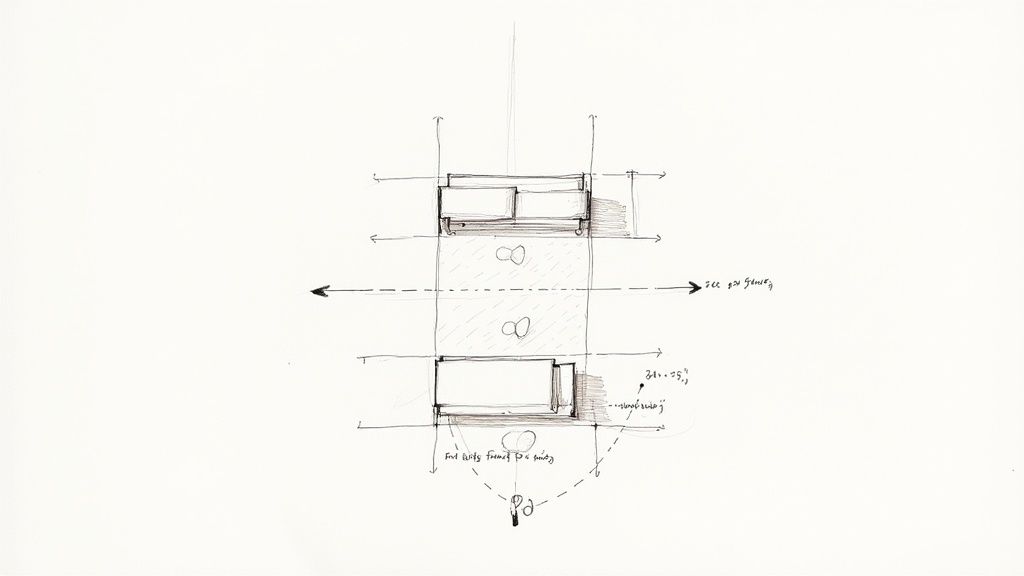
You’ve picked the perfect style and the comfiest mattress, but hold on—there’s one last, crucial step. You have to make sure your new futon actually fits in your room. It sounds obvious, but you’d be surprised how often this gets overlooked. A futon that’s too big can completely overwhelm a space, making it feel cramped and killing the flow.
The rookie mistake is only looking at the mattress dimensions. A standard full-size mattress is 54 inches wide by 75 inches long, but the frame adds a surprising amount of bulk. The arms, back, and overall structure can easily tack on several inches in every direction, turning a “perfect fit” into a tight squeeze.
Measure Twice, Buy Once
Before you get too attached to a specific model, grab your tape measure. You need to account for the futon’s entire footprint, both as an upright sofa and as a fully flat bed. This two-part measurement is non-negotiable if you want your new furniture to feel like a natural part of the room, not a bulky intruder.
When you measure, focus on these three critical dimensions:
- Overall Width: Go from the outermost edge of one arm to the other. This tells you how much wall space it’s going to eat up.
- Upright Depth: Measure from the very back of the frame to the front edge of the seat. This is how far it will stick out into your room as a sofa.
- Flat Depth: This is the big one. Measure from the back of the frame to the foot of the bed when it’s fully extended. This is the futon’s largest footprint and determines if you’ll still have room to walk around.
Don’t just measure the exact spot where the futon will sit. Check the surrounding area to make sure you can still open doors, pull out drawers, and walk through without bumping into things.
Visualize Its Place in Your Room
Once you have the dimensions, it’s time to bring those numbers to life. A great trick is to use painter’s tape to outline the futon’s footprint right on your floor. Mark out the shape for both the sofa and the bed positions.
This simple step lets you physically see how much real estate the futon will claim. You can walk around the taped-off area and immediately spot potential issues. Learning how to plan a room layout properly before you buy is the secret to avoiding frustrating mistakes.
Keep in mind that different mechanisms need different amounts of space. A wall hugger frame, for example, is a game-changer for small rooms because it can convert without being pulled away from the wall. A more traditional frame will need that extra clearance. To compare different styles, it’s a good idea to consult detailed futon sizing charts to see how the numbers stack up.
What to Look for Beyond the Basics
Once you’ve got the frame style, mattress type, and room dimensions sorted, it’s time to dig into the details that truly separate a good futon from a great one. These are the things people often forget to check—like the health of the materials, how it’s actually going to get into your apartment, and even the cover. Thinking about these factors is what turns a simple purchase into a long-term investment you’ll love.
This is more important than ever. Futons have officially moved out of the dorm room and into the mainstream, with the residential sector now making up about 68% of all futon mattress demand. They’ve become a go-to for living rooms, guest rooms, and home offices. As they grow in popularity, choosing one that genuinely fits your lifestyle and values is key. You can dig into this trend a bit more over at dataintelo.com.
Prioritizing a Healthier Home Environment
Furniture shopping used to be all about looks and how long it would last. These days, health and sustainability are just as high on the list. The good news is that many futon makers are on board, using eco-friendly and low-VOC materials that are a huge win for your indoor air quality.
- Eco-Friendly Hardwood Frames: Keep an eye out for frames made from sustainably sourced hardwoods. Not only are they built like a tank, but they’re also a more responsible choice for the planet.
- Low-VOC Finishes: “VOCs” (Volatile Organic Compounds) are nasty chemicals that can off-gas from paints, stains, and glues. A futon with a low-VOC or zero-VOC finish helps keep your indoor air clean and breathable.
- Natural and Organic Mattresses: Mattresses built with materials like organic cotton, natural latex, or chemical-free wool mean you’re sleeping on a healthier surface. It’s a simple way to minimize exposure to synthetics and potential allergens.
Demystifying Delivery and Assembly
The thrill of buying new furniture can vanish pretty quickly when you’re staring at a giant, heavy box and an instruction manual written in hieroglyphics. Figuring out your delivery and assembly options ahead of time will save you a world of hurt.
A futon is a significant piece of furniture. While DIY assembly can save money, a professional service ensures it’s built correctly and safely, which is crucial for a convertible piece that will see a lot of use.
Here’s a quick breakdown of what you’ll encounter:
- Standard Delivery: The futon gets dropped off at your curb or doorstep. From there, it’s on you to haul it inside, unpack everything, and put it together.
- White-Glove Service: This is the “easy button.” The delivery team brings the futon into your room of choice, assembles it professionally, and takes all the cardboard and plastic with them. For a heavy hardwood futon, this service is often worth every penny.
- Mattress and Furniture Removal: Some companies, especially in big cities, will offer to haul away your old mattress or furniture when they deliver the new one. This is a massive convenience that makes the whole swap-out process painless.
Finding Quality at Different Price Points
A full-size futon can run you anywhere from a couple of hundred bucks to well over a thousand. Knowing what you get for your money helps you set realistic expectations and find the best value for your budget.
Budget-Friendly (Under $500)
In this range, you’re mostly looking at basic metal frames paired with thinner, all-cotton or simple foam mattresses. They’re fine for a guest who stays over once in a blue moon but probably won’t hold up to daily sitting or sleeping.
Mid-Range ($500 – $1000)
This is the sweet spot for most people. Here, you’ll find quality, front-closing eco-friendly hardwood frames and much thicker, more supportive mattresses like innerspring or dense foam hybrids. These models give you a fantastic balance of comfort, style, and longevity.
Premium (Over $1000)
At the top end, you’re paying for premium materials and serious craftsmanship. Think solid hardwood frames with slick, advanced mechanisms, and luxury mattresses made from natural latex or high-end memory foam. These are built to be your primary sofa and bed for years to come.
Finally, don’t forget the finishing touch. A good cover not only protects your mattress but also lets you dial in the look to match your decor perfectly. You can get a feel for all the different styles and fabrics by exploring some full size futon covers.
Your Simple Futon Buying Checklist
Alright, you’ve done the homework on mechanisms, materials, and measurements. Now it’s time to pull it all together. Think of this as your final pre-flight check before you buy—a straightforward list to make sure you’re choosing a futon you’ll love for years, not just one that looks good online.
Answering these questions honestly will point you straight to the perfect futon, taking you from “just browsing” to “ready to buy” with total confidence.
First, What’s This Futon Actually For?
Let’s get real about how you’ll be using this piece of furniture. Your answer here is the single biggest factor that will guide your mattress and frame choices.
- Mostly for guests? If it’s for the occasional overnight visitor, a solid innerspring or a good-quality foam mattress on a simple, sturdy frame will do the trick. You can focus a bit more on sofa comfort and style.
- Your everyday bed? This is a different story. For nightly use, you can’t compromise on comfort and support. You’ll want to invest in a high-density hybrid or latex mattress (at least 8 inches thick) and pair it with a robust eco-friendly hardwood frame.
- A multi-purpose sofa? If it’s destined for a home office or living room and will mainly be used for sitting, a resilient innerspring mattress is a fantastic choice. It holds its shape really well against the daily grind of being a sofa.
Nail Down Your Space and Style
Next up, let’s deal with the reality of your room and your personal taste. The last thing you want is a futon that’s technically great but clashes with your decor or, worse, doesn’t even fit.
Measurements:
- Width: Have you measured the wall space where the futon will live? Get the total width of the frame, from arm to arm.
- Sofa Depth: How far will it stick out into the room when it’s folded up as a couch?
- Bed Depth: Have you measured its full footprint when it’s laid flat as a bed? Make sure there’s still room for doors to open and people to walk by.
Mechanism and Style:
- Working with a tight space? If so, a wall hugger mechanism is a non-negotiable. It lets you convert the futon without having to drag the whole frame away from the wall every time.
- What’s your aesthetic? Are you leaning toward the minimalist, low-slung vibe of a Japanese-style frame? Or do you prefer the classic, substantial feel of a traditional hardwood model?
- How important is ease of use? A front-closing mechanism is about as straightforward as it gets, offering a reliable conversion process that anyone in the house can handle.
Getting these details right is everything. It’s the difference between buying a futon that just fits and one that truly elevates your room.
Final Gut Check
You’re almost at the finish line. These last few questions cover the practical side of the purchase itself, from the nitty-gritty of materials to how it will actually get into your home.
- Mattress: What’s your comfort preference? The bounce of an innerspring, the hug of contouring foam, or the responsive support of latex?
- Frame Material: Are you after the timeless durability of hardwood or the sleek, modern look of metal?
- Health and Sustainability: Do low-VOC finishes and natural materials like organic cotton matter to you?
- Warranty: What kind of warranty comes with the frame and the mattress? How long does it last, and what exactly does it cover?
- Delivery and Assembly: Are you ready to tackle assembly yourself, or is a white-glove service—where they handle the setup and haul away the trash—a better fit for a heavy piece of furniture?
By running through this checklist, you’ve covered all your bases. Now you can move forward and pick a futon that doesn’t just meet your needs but becomes a genuinely useful and loved part of your home.
A Few Final Questions
Even after you’ve narrowed down your choices, a few last questions might pop up. Getting those answered is the final step to feeling great about your decision. Let’s tackle the most common ones that come up.
Can I Use a Full Size Futon as My Main Bed Every Day?
Absolutely, but you have to choose the right mattress. This is non-negotiable. If you’re planning on sleeping on it every night, you need something that can handle the job—think a mattress that’s at least 8-10 inches thick.
A flimsy, thin mattress will flatten out and become uncomfortable in no time. You want something built with durable, supportive materials like high-density foam, natural latex, or a proper innerspring system that won’t pack down. Pair a premium mattress with a solid eco-friendly hardwood frame, and you’ve got a setup that’s just as comfortable and supportive as a traditional bed. It’s a fantastic solution for apartments, studios, or any space where furniture needs to pull double duty.
What Is a Wall Hugger Futon and Why Is It Important?
A wall hugger futon is a total game-changer, especially in tight spaces. It’s all about the mechanism—it’s designed to convert from a sofa to a bed without you ever having to pull the frame away from the wall.
Here’s how it works: as you pull the seat forward, the backrest cleverly slides down and forward into the space the seat just left. This means you don’t have to leave that awkward few inches of “dead space” behind your sofa just to make room for it to open. It makes the switch from sitting to sleeping completely seamless. It’s a small bit of engineering that makes a huge difference in how you use your room every day.
What Are the Different Frame Styles?
While you’ll see a ton of different looks, the most important frame styles are the ones designed to solve a problem, whether it’s making conversion easier or saving space. Knowing the difference helps you pick a frame that fits your life.
- Front-Closing Frames: These are the workhorses, often found on sturdy hardwood models. They’re loved for their simplicity—you just lift the front of the seat and pull it forward until it lays flat. Converting them is a breeze.
- Japanese-Style Frames: Known for their minimalist, low-profile look, these bi-fold frames are perfect for creating an open, uncluttered feel. If you want to keep your space feeling airy and simple, this is the way to go.
The frame’s mechanism and style are just as important as the mattress. A wall hugger saves space, a front-closing model offers simplicity, and a Japanese-style frame provides a clean aesthetic, ensuring you can find the perfect fit for your needs.
Ready to find a versatile furniture solution that works for your home? Explore a wide selection of high-quality futons, frames, and mattresses at Futonland and discover the perfect fit for your space and style. Visit Futonland today.