

What Is a Murphy Bed An Expert Explainer
Think of a Murphy bed as a secret bedroom hiding in plain sight. At its heart, it’s a clever, hinged bed frame that folds vertically into a wall or a stylish cabinet when you don’t need it. This simple mechanism lets you transform any room in seconds.
The Secret Room Hiding in Your Wall
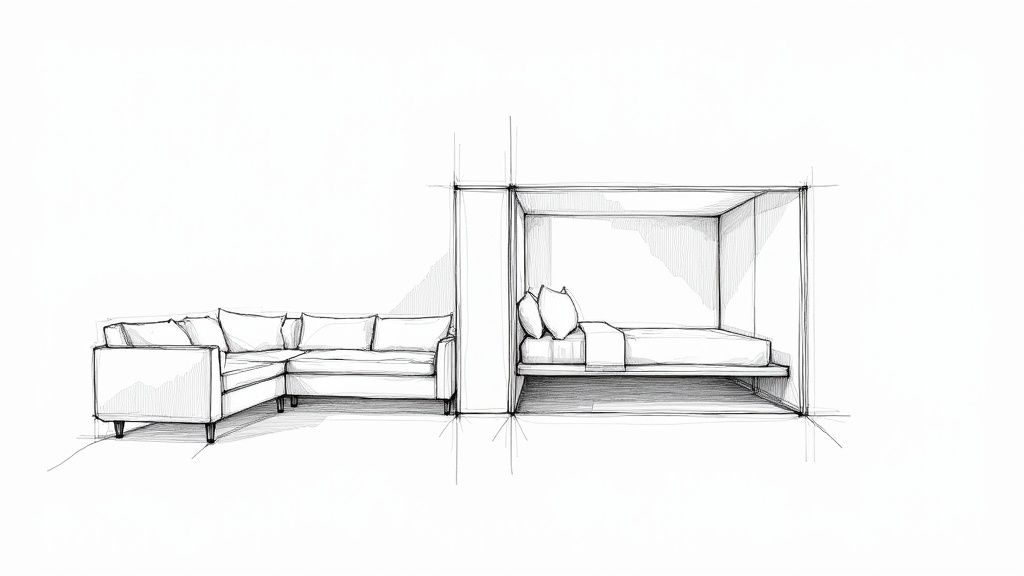
A Murphy bed is much more than just a piece of furniture; it’s a dynamic space-saving system. Imagine a single room that works as your home office from 9-to-5, then becomes a yoga studio in the evening, and finally converts into a fully furnished guest bedroom at night. That’s the practical magic a wall bed delivers.
Unlike a bulky, traditional bed that permanently eats up a huge chunk of your floor, a Murphy bed gives that space right back to you. When it’s stored away, it looks just like a sleek cabinet or a decorative wall unit, completely hiding the mattress and frame. This design makes it a perfect fit for anyone trying to get the most out of their home, especially in smaller apartments.
Why Choose a Murphy Bed?
The main reason people love them is efficiency. In urban apartments or smaller homes where every square foot is precious, dedicating an entire room to guests who only visit occasionally is a luxury most of us can’t afford. A Murphy bed reclaims that space for your daily life without forcing your visitors to sleep on an uncomfortable pull-out couch.
Here are the key benefits that really make a difference:
- Space Optimization: It frees up a massive amount of floor space, making your rooms feel larger and more open.
- Multifunctional Rooms: A single space can effortlessly shift between a living area, workspace, and bedroom.
- Superior Comfort: Unlike most sleeper sofas, a Murphy bed uses a standard mattress, promising a truly comfortable night’s sleep.
A Murphy bed provides the ultimate functionality—a comfortable, real bed that disappears when you don’t need it. It’s an investment in making your home more versatile and adaptable to your changing needs.
Quick Look at Key Features
To really get what a Murphy bed is all about, it helps to break it down into its core components. The table below gives you a quick snapshot of the essential parts and why they matter. This is the first step toward exploring the diverse world of modern wall beds available today.
Murphy Bed At a Glance
| Feature | Description | Primary Benefit |
|---|---|---|
| Cabinet Enclosure | The housing that conceals the bed when folded up. Often includes shelves or other space-saving cabinets for small spaces. | Integrates seamlessly with your room’s decor. |
| Lifting Mechanism | A spring or piston system that assists in lifting and lowering. | Makes operating the bed safe and nearly effortless. |
| Integrated Frame | A sturdy bed frame attached directly to the cabinet and wall. | Provides stable, reliable support for a standard mattress. |
Understanding these basic features makes it much easier to see how a Murphy bed could work for you and what to look for when you start shopping.
An Invention Born from Necessity
The Murphy bed wasn’t just some clever gimmick; it was a solution born out of a very real problem. The story starts over a century ago in San Francisco with a young inventor, William Lawrence Murphy. Like a lot of people living in packed cities today, Murphy was making do in a tight, one-room apartment.
His small space created a bit of a social snag. Back in the early 1900s, the moral customs were strict—it was considered improper for a gentleman to entertain a lady in a room that had a bed in it. This was a major roadblock for Murphy, who was courting an opera singer and needed a respectable place to host her.
The Birth of the Disappearing Bed
That social pressure kicked Murphy’s ingenuity into high gear. He needed his bed to just vanish during the day, turning his sleeping quarters into a proper parlor. This very personal dilemma led him to tinker with a folding mechanism that would let him pivot his bed right into a closet, hiding it completely.
His invention wasn’t about fancy mechanics; it was a straightforward fix for a cultural roadblock. By making his bed disappear, he instantly created a dual-purpose room that met the social standards of the day. This simple but brilliant idea laid the foundation for what would become an icon of space-saving design.
The Murphy bed, named after the man himself, became a symbol of urban problem-solving. Murphy filed his first patent for a folding bed around 1900, followed by a more polished version patented as the ‘Disappearing Bed’ in 1912. The bed’s popularity really took off when the Murphy Bed Company moved to New York City and started mass production, cranking out over 100,000 beds annually by the mid-1920s. You can explore the detailed history of this fascinating invention to see its full evolution.
From Social Solution to Urban Staple
As cities swelled and apartment living became the norm, the Murphy bed’s appeal grew far beyond its original purpose. The 1920s, an era of booming cities and modern thinking, saw the wall bed’s popularity explode. It was no longer just a workaround for a social dilemma—it became a symbol of smart, modern living.
The Murphy bed allowed people to live comfortably in smaller footprints, transforming tiny apartments into versatile and functional homes. It promised a full, comfortable bedroom at night and a spacious living area during the day.
This functionality was a perfect match for the changing American landscape. As people flocked to cities for jobs, space became a premium. The Murphy bed offered a practical and stylish way to maximize every last square foot, a principle that’s just as relevant today. It even became a standard feature in many new apartment buildings built during that time.
The Lasting Legacy of a Simple Idea
The story of the Murphy bed is a great reminder of how a personal need can spark a world-changing invention. William Murphy wasn’t trying to start a furniture revolution; he was just trying to make his home work for his life. In doing so, he created a solution that has helped people live more efficiently for over a century.
His “Disappearing Bed” has stuck around through decades of design trends for one simple reason: it solves a fundamental problem. Here’s why its core idea is still so powerful:
- It creates dual-functionality: A room is no longer just a bedroom or just a living room. It can be both.
- It preserves floor space: By getting the biggest piece of furniture off the floor, it makes any room feel significantly larger.
- It offers real comfort: Unlike a futon or sleeper sofa, it provides the comfort of a standard mattress.
From a single San Francisco apartment to modern city lofts all over the world, the Murphy bed continues to be the ultimate answer to that timeless question: how do you make the most of a small space? Its history is a testament to the power of creative thinking and practical design.
How a Murphy Bed Actually Works
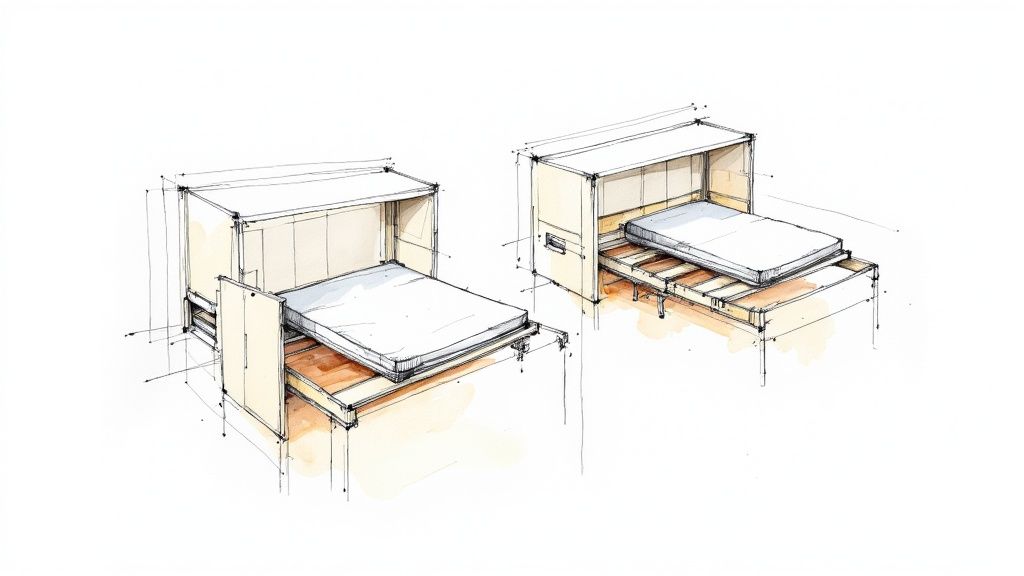
At first glance, the idea of lifting a full bed and mattress against gravity seems like a serious workout waiting to happen. But the reality of a modern Murphy bed is surprisingly smooth and almost effortless. It all comes down to a clever bit of engineering that uses basic physics to its advantage.
The magic isn’t about brute strength—it’s about a finely tuned counterbalance system that does the heavy lifting for you. This system can make a queen-size mattress feel as light as a feather. Forget those clunky, dangerous contraptions from old cartoons; today’s wall beds are safe, reliable, and built for the rigors of daily use.
The Three Core Components
To really get how it all comes together, let’s break down the main parts of the system. Each piece has a specific job that makes the bed’s operation smooth and safe.
- The Cabinet (or Enclosure): This is the sturdy outer shell that mounts securely to your wall. It doesn’t just hide the bed when it’s folded away; it’s the foundational anchor for the whole mechanism, making sure everything is stable and secure.
- The Bed Frame: This is the integrated frame that holds the mattress, and it’s attached to the cabinet with a pivot point. Modern frames are designed to be lightweight yet incredibly strong, often using steel or aluminum to cut down on the total weight that needs to be lifted.
- The Lifting Mechanism: This is the heart of the Murphy bed. It’s the powerhouse that counteracts the weight of the mattress and frame, letting you move the bed with minimal effort. This is where the real engineering shines.
The Powerhouse Lifting Mechanisms
The lifting mechanism is what makes a Murphy bed so easy to operate. While there are a few variations out there, nearly all modern systems use one of two proven technologies to get the job done. Think of it as assisted lifting, where the mechanism does 90% of the work.
- Spring Systems: This is the classic, time-tested approach. A series of heavy-duty springs are calibrated to the exact weight of your mattress and frame. Much like a garage door, the springs store tension when the bed is down and release that energy to help you lift it back into the cabinet with total ease.
- Piston Systems: A more modern option uses gas-pressurized pistons, a lot like the ones that lift the rear hatch on an SUV. These pistons give you a smooth, controlled, and quiet motion as you raise or lower the bed. They generally offer a slightly more fluid and silent operation than springs.
Whichever system is used, the principle is the same: the mechanism is precisely balanced against the weight of the bed. This balance point makes the bed feel almost weightless, allowing for a safe and gentle transition from the wall to the floor and back again.
Many people also explore other space-saving alternatives, and it’s helpful to understand the full range of options. You can discover more about compact designs by learning about freestanding Murphy cabinet and chest beds, which offer similar benefits without requiring wall installation.
Exploring Modern Murphy Bed Designs
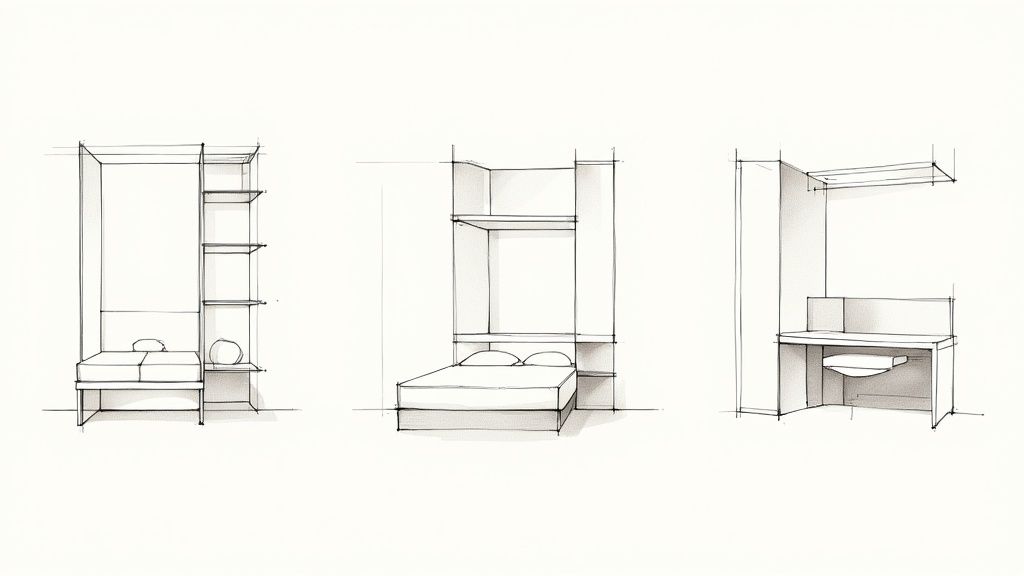
The Murphy bed has come a long way from its original, simple “disappearing bed” concept. Today’s designs are sophisticated systems that blend form and function, transforming not just a room’s purpose but its entire vibe. Forget the clunky, obvious cabinets of the past; modern wall beds are fully integrated furniture solutions designed for how we live now.
These systems are all about creating a seamless, polished look, making the bed completely vanish when it’s not needed. Concealed hinges are key to sleek cabinetry, and it’s this kind of smart hardware that gives modern wall beds their magic. The goal is to make the unit look like it was always part of the room’s architecture.
Vertical Vs. Horizontal Orientations
One of the first big decisions you’ll make is choosing the bed’s orientation. This isn’t just about style—it’s about the real-world layout and limitations of your space.
- Vertical Murphy Beds: This is the classic setup. The bed stands tall against the wall, stored upright. This design needs a higher ceiling but uses less horizontal wall space, making it a great fit for rooms with standard ceiling heights but not a lot of width.
- Horizontal Murphy Beds: Sometimes called a side-tilt or landscape wall bed, this design stores the bed longways. It’s the perfect fix for rooms with lower or sloped ceilings—think attics, basements, or spaces with awkward bulkheads. It needs more wall width, but it doesn’t stick out into the room as much when it’s open.
Getting the orientation right is the first step to a successful setup. A vertical queen bed, for example, needs at least an 8-foot ceiling. A horizontal model, on the other hand, can often tuck comfortably under lower ceilings, solving a super common design headache.
The Rise Of Multifunctional Systems
The real genius of modern Murphy beds is that they do more than just hide a mattress. They’ve become hardworking, multifunctional hubs that pack several pieces of furniture into one smart footprint. Think of them as a “room in a box.”
These integrated systems are an absolute game-changer for small-space living, especially in city apartments where one room has to wear many hats. They make it possible to have a dedicated home office, a comfortable living area, and a proper guest room, all in the same space.
A multifunctional Murphy bed doesn’t just save space—it creates entirely new possibilities for how you can use your home. It’s the ultimate tool for adapting a room to your needs throughout the day.
Popular Integrated Murphy Bed Styles
Modern engineering has cooked up an incredible variety of designs that combine the bed with other essential furniture. This adaptability is what makes them so valuable. Here are a few of the most popular combinations you’ll find:
- Murphy Bed with Desk: This is probably the most popular combo out there. By day, it’s a full-on home office with a great desk. By night, the bed folds down right over the desk (often without you having to clear anything off!), and your office is now a bedroom.
- Murphy Bed with Sofa: This system attaches a comfy sofa to the front of the bed cabinet. It lets you have a dedicated living room seating area that turns into a guest room in seconds. Best of all, it uses a real, standard mattress, making it way more comfortable than a sleeper sofa.
- Murphy Bed with Shelving or Bookcase: If you’re craving storage, a wall bed flanked by bookcases is the perfect solution. The shelving gives you space for books, decor, or supplies, while the bed stays hidden until you need it. Some really clever designs even have shelves that pivot or slide out of the way as the bed comes down.
These systems offer incredible value, though their mechanics differ from other compact furniture. For instance, knowing how wall-hugger futon frames operate can help you compare how different solutions maximize floor space.
To help you sort through the options, we’ve put together a quick comparison of these popular styles. This should give you a better idea of which one might be the best fit for your home.
Comparing Murphy Bed Styles and Systems
| Bed Style | Primary Use Case | Space Requirement | Pros | Cons |
|---|---|---|---|---|
| Bed with Desk | Home Office / Guest Room | Moderate | Creates a dedicated workspace; desk items can often stay in place. | Can be more complex to operate; desk depth may be limited. |
| Bed with Sofa | Living Room / Studio Apt | High | Provides comfortable daily seating; eliminates need for a separate couch. | Requires more floor space for the sofa; can be a larger investment. |
| Bed with Shelving | Any Room Needing Storage | Varies | Maximizes vertical storage; keeps the room functional and organized. | Access to shelves can be blocked when the bed is down. |
Each design offers a unique way to reclaim your space. By weighing the pros and cons, you can find the perfect system that not only saves room but also enhances how you live in it.
Making the Right Choice for Your Home
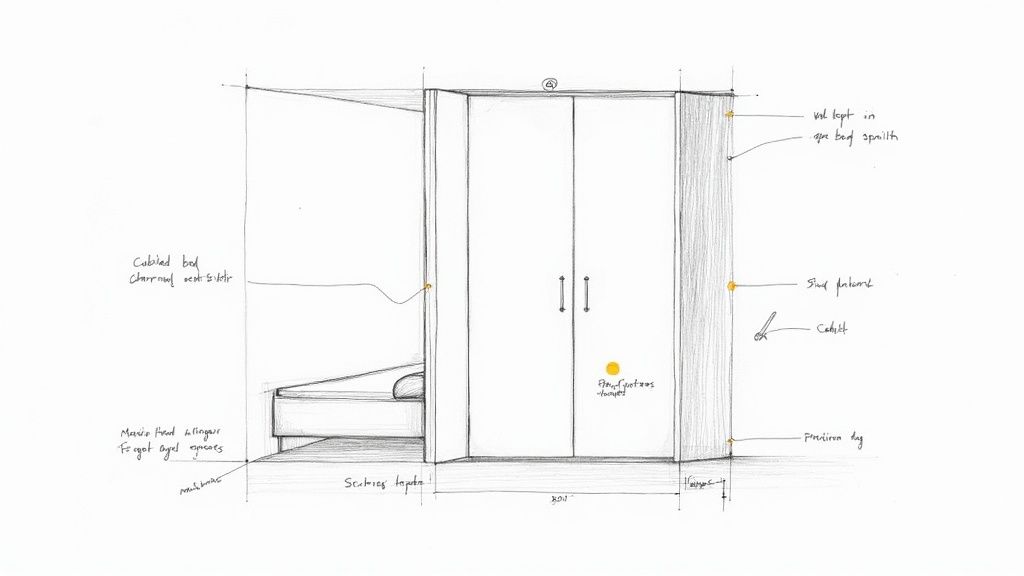
Buying a Murphy bed isn’t just about picking out new furniture; it’s a strategic upgrade that can completely change how you use a room. To make sure that investment pays off, you’ll need to do a little homework first. Before you fall in love with a particular design, it’s time to become an expert on your own space.
That means grabbing the tape measure and getting specific. A classic mistake is only measuring for the closed cabinet. You absolutely have to account for the bed’s projection—how far it sticks out into the room when it’s fully open. This simple step ensures you’ll have room to walk around it and that the bed won’t hit your desk or coffee table on its way down.
Measuring for Success
Getting the measurements right is the foundation of a happy installation. It’s what stands between you and the frustration of ordering a beautiful unit that just won’t fit. Think of it as creating a blueprint for your new, more flexible room.
Here are the key dimensions you need to nail down:
- Wall Height and Width: Start with the total wall space available to make sure the cabinet itself has a home.
- Ceiling Height: This one is critical, especially for vertical beds. Most need at least an 8-foot ceiling to tilt open without any trouble.
- Bed Projection: Look at the product specs to see how far the bed extends when lowered. Use painter’s tape to mark this footprint on your floor so you can truly visualize how it will fill the space.
Planning is not just about avoiding problems; it’s about maximizing potential. Accurate measurements ensure your Murphy bed integrates perfectly, transforming your room without creating a new set of spatial challenges.
The Importance of Wall Structure
A Murphy bed is a serious piece of furniture with a big moving part. Its entire safety and stability hinge on being securely anchored to the wall. This is a step you can’t afford to get wrong.
The unit must be bolted directly into your wall’s studs—the vertical wood or metal beams that make up your home’s skeleton. Attaching it only to drywall is a recipe for disaster. The weight will eventually pull the unit right off the wall, causing major damage or even serious injury. A stud finder is your best friend here; use it to locate those support beams before you do anything else.
Choosing the Right Mattress
Sorry, but you can’t just throw any old mattress onto a Murphy bed. The lifting mechanism is carefully balanced for a specific weight and thickness. Using a mattress that’s too heavy or too thick can strain the pistons or springs, making it hard to lift, or even prevent the bed from closing at all.
Keep these factors in mind when mattress shopping:
- Thickness: Most systems are built for mattresses between 10 to 12 inches thick.
- Weight: Always check the manufacturer’s specs for the recommended mattress weight. A typical queen mattress for a Murphy bed should be under 80 lbs.
- Type: Memory foam and hybrid mattresses are great choices because they hold their shape well and don’t require a bulky box spring.
For a detailed breakdown of mattress specs across different models, check out the helpful info in our comprehensive Futonland sizing charts to guide your choice.
DIY vs Professional Installation
While DIY kits exist, installing a Murphy bed is a pretty involved project. It requires precision, the right tools, and a good grasp of basic home construction. Plus, assembling and lifting the heavy cabinet pieces is definitely a two-person job.
Getting the installation wrong can void your warranty, damage your walls, or create a serious safety hazard. Our professional installers have seen it all—from uneven floors to tricky wall structures. They make sure the unit is perfectly level, securely anchored, and operates like a dream. Investing in professional installation protects your purchase, guarantees your safety, and saves you from what could be a very long and frustrating weekend.
Got Questions About Murphy Beds? We’ve Got Answers
Even after getting the full picture, it’s natural to have a few lingering questions. Thinking about how a big piece of furniture will actually work in your day-to-day life is the most important step before you decide. We hear the same questions all the time, so let’s tackle the biggest ones head-on.
We’ll cover everything from how they feel to how they hold up, giving you the direct answers you need to feel great about your choice.
Are Murphy Beds Actually Comfortable for Everyday Use?
Absolutely. This isn’t your grandma’s lumpy sofa bed. Modern Murphy beds are built to hold a real, high-quality mattress, usually up to 10-12 inches thick.
Unlike a futon or sleeper sofa that forces you to compromise with a thin or foldable pad, a wall bed lets you use the same comfortable memory foam, latex, or innerspring mattress you’d put on a traditional bed frame. That means the sleep quality is identical, making it a fantastic solution for a primary bed in a studio or any room where you refuse to sacrifice comfort for space.
But Are They Safe?
Yes, a modern, properly installed Murphy bed is incredibly safe. The designs have come a long way. They now use sophisticated counterbalance systems—either powerful springs or smooth pistons—that do most of the heavy lifting for you. This makes opening and closing the bed feel almost weightless and prevents it from ever slamming down unexpectedly.
Most high-quality systems also have safety latches that lock the bed securely in the upright position, so there are no surprises. The real key to safety, though, is proper installation. The cabinet must be anchored correctly to the studs in your wall. That’s why we always recommend professional installation; it guarantees everything is secure and functions exactly as it should for years to come.
A properly installed Murphy bed is a safe and reliable piece of furniture. The engineering behind modern mechanisms is designed for thousands of cycles of use, ensuring smooth, predictable, and secure operation for years.
The global market for wall beds has swelled to over $1.2 billion, which tells you something about their comeback. As apartments in cities like New York get smaller, the demand for smart, safe, and reliable furniture just keeps growing.
At Futonland, we live and breathe space-saving solutions. Our team is here to help you find the perfect wall bed to transform any room into a smarter, more functional space. Explore our collection and find your perfect fit at https://futonland.com.